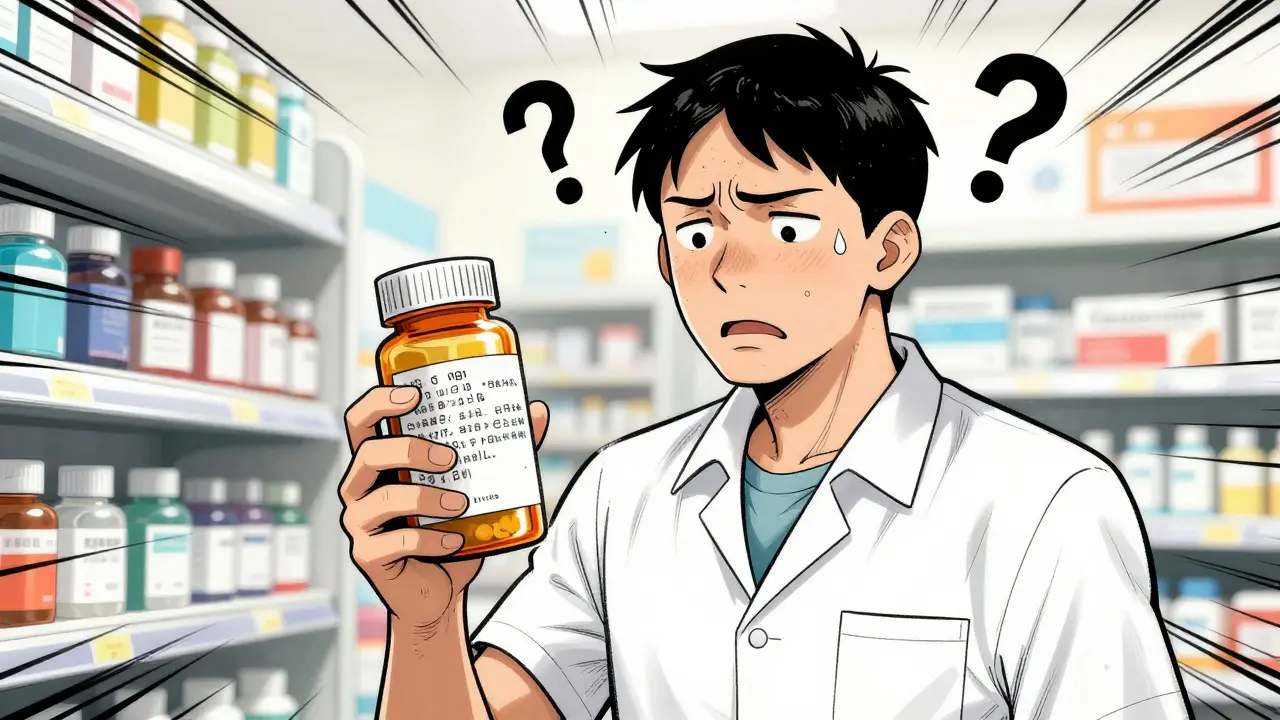
You pick up your bag from the counter. You walk out. You get home. And then you stare at the bottle. Is that really what the doctor ordered? Did you just miss a crucial instruction about taking it with food? It happens more often than you think. In fact, medication errors are a massive public health issue, with over 1.3 million incidents occurring annually in the U.S., and nearly a quarter of them stem directly from misunderstanding the label on your prescription bottle.
That little piece of paper sticking out of your medicine bottle isn't just administrative clutter. It is your primary safety net. According to data from the FDA (Food and Drug Administration), prescription labeling serves as the critical communication bridge between healthcare professionals and patients. But let's be honest-most labels are dense, full of jargon, and sometimes printed in font sizes that require a magnifying glass. If you don't know what to look for, you might walk away with the wrong information, or worse, no information at all.
The Non-Negotiable Basics: The '5 Rights' Check
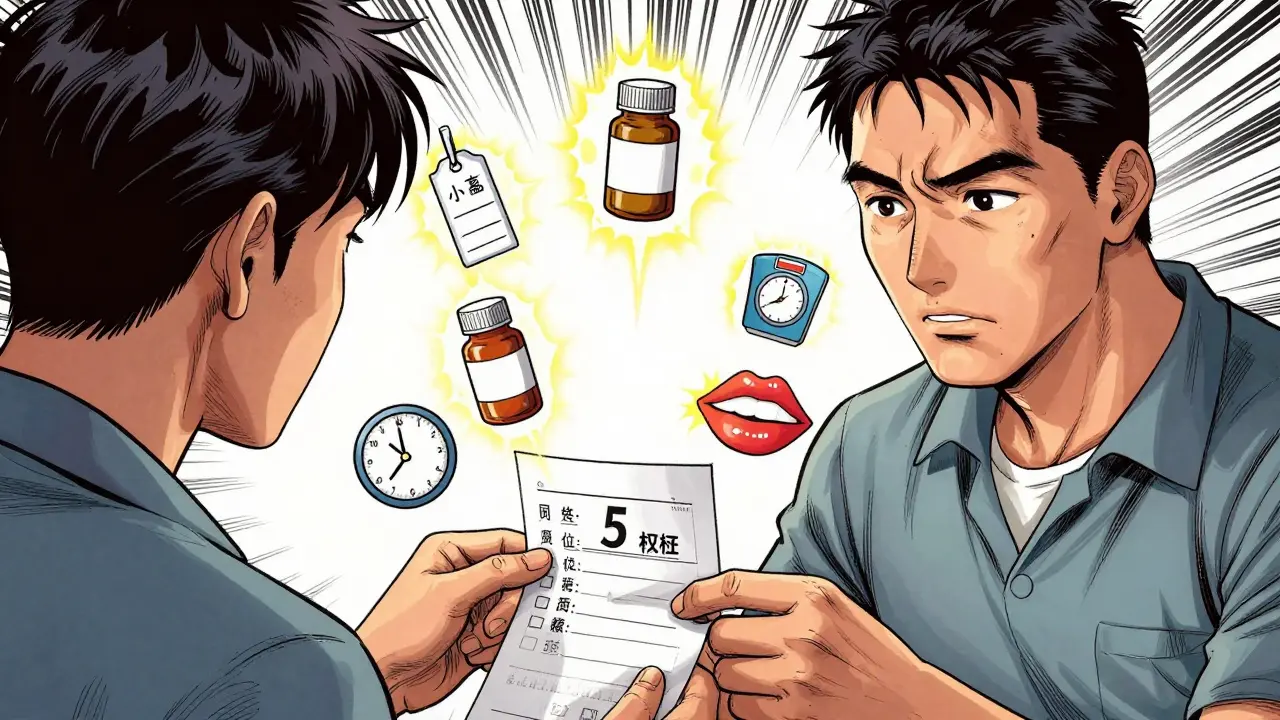
Before you even ask questions, you need to run a quick self-check. Pharmacists use a system called the "5 Rights" to ensure safety, and you can use it too. This framework was established by the Institute for Safe Medication Practices (ISMP) in 1999 and remains the gold standard for preventing mistakes. It’s simple, but effective.
- Right Patient: Does the name on the label match yours exactly? Even a typo like "John" vs. "Jon" can be a red flag.
- Right Medicine: Do you recognize the drug name? If your doctor prescribed "Lipitor" but the label says "atorvastatin," that’s fine-they are the same-but if it looks completely different, stop.
- Right Amount: Is the dosage strength correct? 10mg is not the same as 100mg.
- Right Way: How do you take it? By mouth? Under the tongue? As a cream?
- Right Time: When do you take it? Once daily? Twice? Before bed?
Taking just two minutes to verify these five points can reduce your risk of medication errors significantly. Studies suggest that patients who actively engage with their labels reduce adverse drug events by up to 47%. Don’t rush this step.
Decoding the Directions: What Those Abbreviations Mean
This is where most people get stuck. The directions section often uses Latin abbreviations that sound like code. "QD" doesn't mean "quickly done." "BID" isn't a bid for an auction. Here is what you need to know:
- BID: Twice a day.
- TID: Three times a day.
- QD: Once a day.
- QHS: Every night at bedtime.
- AC: Before meals.
- PC: After meals.
If you see any abbreviation that confuses you, ask the pharmacist to write it out in plain English. For example, instead of "Take 1 tab PO BID AC," ask them to print "Take one tablet by mouth twice a day before eating." Clarity saves lives. A common mistake involves antibiotics; some must be taken on an empty stomach to work properly, while others cause nausea if taken without food. If the label says "with food" but you’re used to taking pills with water only, clarify that now.
Storage Secrets: Why Your Fridge Matters
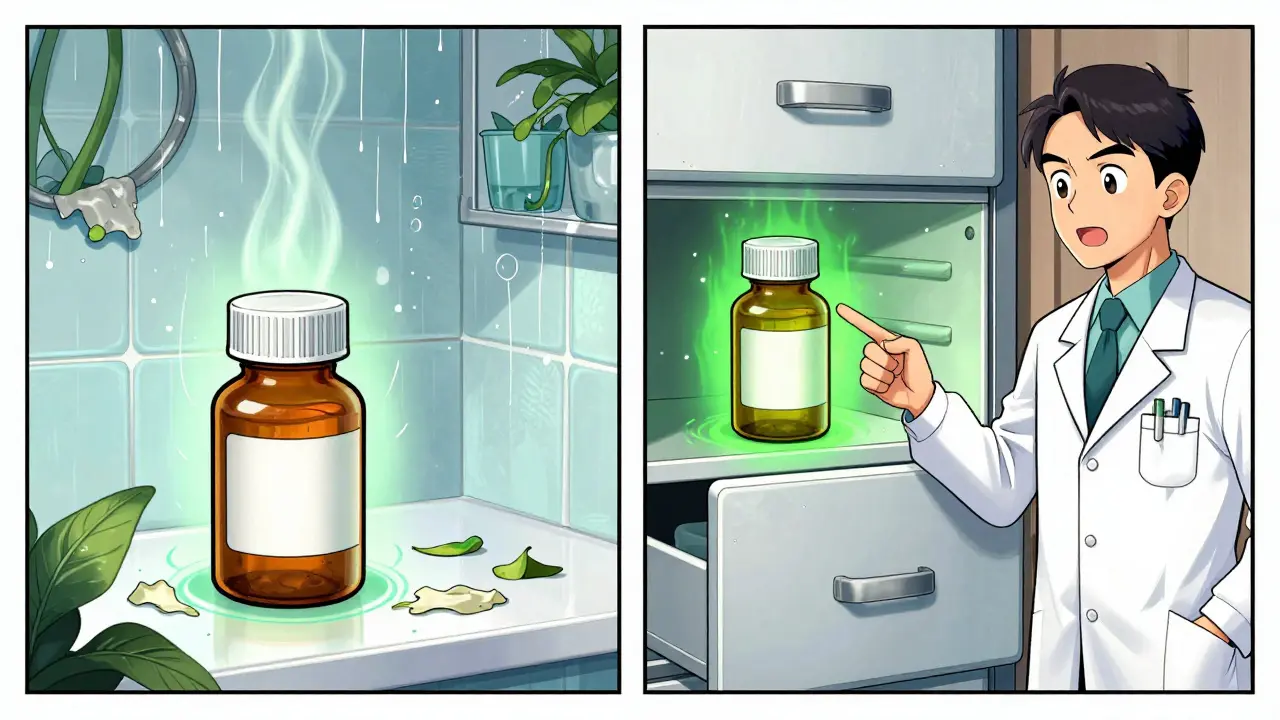
You’d be surprised how many people ignore storage instructions until their medication stops working. Most drugs (about 78%) are fine at room temperature (68-77°F or 20-25°C). But 15% require refrigeration (36-46°F or 2-8°C). Think of insulin, certain liquid antibiotics, or eye drops. If you leave those on the kitchen counter for two weeks, they may lose potency or become unsafe.
Look for keywords like "Refrigerate," "Keep Cool," or "Do Not Freeze." If the label doesn't say anything, assume room temperature is fine, but avoid storing meds in the bathroom. The humidity and heat fluctuations in a bathroom can degrade medications faster than a dry closet drawer. If you have a medication that requires special storage, ask the pharmacist: "Does this need to stay cold, and what happens if I accidentally leave it out overnight?" Knowing the limits helps you plan for travel or power outages.
The Refill Trap: Avoiding Gaps in Treatment
Running out of medication mid-cycle is dangerous, especially for conditions like high blood pressure, diabetes, or mental health disorders. The label will state the number of refills authorized. "Refills: 3" means you can pick up the medication three more times after today. "Refills: 0" means you need a new prescription from your doctor.
Here is a pro tip: Don't wait until the last pill is gone to refill. Many insurance plans have rules about when you can start refilling early. If you travel frequently or forget easily, ask your pharmacist to set up automatic refills or text reminders. Also, check the expiration date. While most pills last months or years, compounded medications (those mixed specifically for you) often expire within days or weeks. If the expiration date is sooner than you expect, ask why.
High-Risk Alerts: When to Read the Fine Print
Some medications come with extra warnings because they carry higher risks. The FDA requires Medication Guides for over 100 specific high-risk drugs, including opioids, isotretinoin (Accutane), and certain blood thinners. These guides are often tucked inside the pharmacy bag. They are not optional reading; they are critical safety documents.
If your label has a bold warning box or mentions "Black Box Warning," pay attention. These warnings highlight serious side effects like severe bleeding, liver damage, or birth defects. Ask your pharmacist: "What are the top three side effects I should watch for, and which ones mean I should call the doctor immediately?" Understanding the difference between a mild headache and a sign of an allergic reaction can prevent emergency room visits.
Making It Work for You: Accessibility and Tech
Not everyone reads well. About 36% of U.S. adults struggle with health literacy, and millions have visual impairments. If you find the label hard to read, you have rights. Under federal law, pharmacies receiving funds must provide language assistance. You can request:
- Large-print labels: Available at over 90% of U.S. pharmacies.
- Translation services: If English is not your first language, ask for a translated guide or interpreter.
- Digital options: Many pharmacies now offer QR codes on labels that link to video instructions or digital copies of the Medication Guide.
Technology is changing how we interact with prescriptions. Some pharmacies use augmented reality apps that overlay dosage instructions on your bottle via smartphone camera. If you’re tech-savvy, ask if your pharmacy offers a patient portal app where you can view your history, refill status, and detailed drug information digitally. It’s easier to search "side effects" on a phone screen than to squint at a tiny paper label.
| Label Element | What It Means | Why It Matters |
|---|---|---|
| Patient Name | Your full legal name | Ensures the med is for you, not someone else |
| NDC Number | National Drug Code (unique ID) | Identifies the exact manufacturer and strength |
| Lot Number | Batch identifier | Used for recalls; keep record if issues arise |
| Expiration Date | Last safe use date | Using expired meds can be ineffective or harmful |
| Pharmacy Info | Name, address, phone | Contact for questions or lost labels |
Frequently Asked Questions
What should I do if my prescription label is missing or torn?
Do not guess. Return to the pharmacy immediately. Pharmacists can reprint the label using your account records. Taking medication without clear instructions is risky, especially regarding dosage and timing.
Can I ask the pharmacist to change the wording on my label?
Yes. Pharmacists can add notes like "Take with food" or "Avoid alcohol" if your doctor agrees. They can also simplify abbreviations into plain language to help you understand better.
Why does my label say "Dispense as Written"?
This means your doctor specifically requested the brand-name drug, usually because generic versions aren't suitable for your condition. It may affect your insurance coverage and cost, so ask about pricing if concerned.
How long should I keep old prescription bottles?
Once the medication is finished or expired, dispose of it safely. Do not flush unless instructed. Many pharmacies have drop-off bins for safe disposal. Keep the empty bottle only if you need proof of purchase for insurance claims.
What if I can't afford the medication listed on the label?
Ask the pharmacist about generic alternatives, coupon programs, or patient assistance foundations. Sometimes a slight change in formulation can lower costs significantly without sacrificing effectiveness.
Is it safe to share medication with family members who have similar symptoms?
Never. Prescription labels are personalized based on your medical history, allergies, and other drugs you take. Sharing meds can lead to dangerous interactions or incorrect dosages for the other person.
What does "Auxiliary Label" mean on my prescription?
These are small stickers added by the pharmacist for extra warnings, such as "May cause drowsiness," "Shake well," or "Keep away from children." They supplement the main instructions and should always be followed.
How can I tell if my medication has been tampered with?
Check the seal on the bottle cap. If it’s broken, missing, or looks re-taped, do not use the medication. Contact the pharmacy immediately. Tampering is rare but serious.