
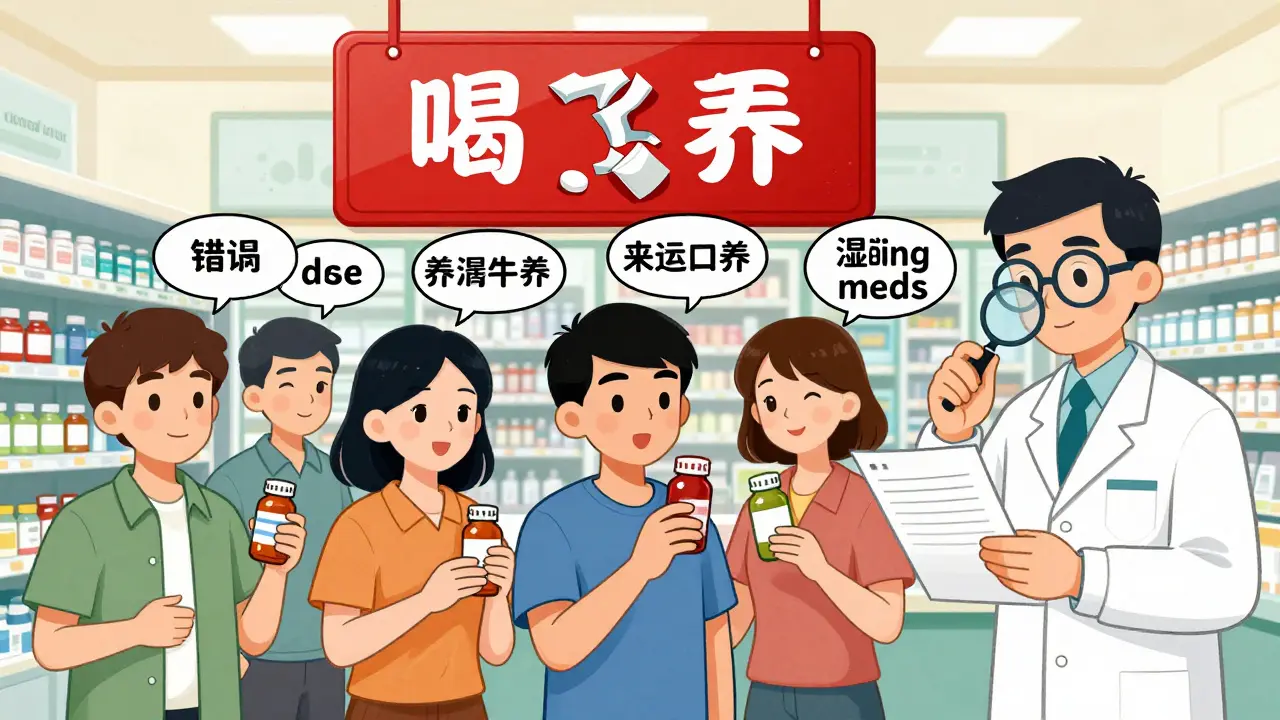
Every year, more than 1.5 million people in the U.S. end up in the emergency room because of problems with their medications. Many of these cases aren’t accidents-they’re preventable. Medication safety isn’t just a hospital policy or a checklist for nurses. It’s something that affects every single person who takes a pill, uses an inhaler, or gets an injection. Whether you’re managing diabetes, taking blood pressure meds, or just popping an occasional painkiller, understanding medication safety could literally save your life.
What Exactly Is Medication Safety?
Medication safety means making sure you get the right drug, in the right dose, at the right time, in the right way-and that nothing bad happens because of it. It’s not just about doctors writing clear prescriptions. It covers everything: how the drug is made, stored, prescribed, filled, given to you, and even how you take it at home.
The World Health Organization calls it ‘Medication Without Harm,’ and for good reason. A medication error isn’t just a mix-up between two similar-looking pills. It’s any mistake that could lead to harm-even if you never notice it. That includes taking too much, taking the wrong drug, mixing medications that shouldn’t be mixed, or skipping doses because you’re confused or can’t afford them.
It’s not just hospitals. These errors happen in clinics, pharmacies, nursing homes, and your own kitchen. In fact, about 38% of all medication errors happen at the prescribing stage-when a doctor writes the order. Another 26% happen when the medicine is given to you, whether by a nurse, a caregiver, or even yourself.
Why Should You Care? The Real Costs
Let’s talk numbers. In U.S. hospitals alone, around 400,000 preventable injuries from medication errors happen every year. That’s not a typo. That’s more than the population of many small cities. And it’s not just about hospital stays. These mistakes cost the healthcare system over $42 billion annually.
But the human cost is even higher. Elderly patients over 65 make up half of all medication-related hospitalizations. Kids under 18 account for 20% of emergency visits due to adverse drug events. And pregnant women face unique risks-some medications can harm a developing baby, even if they’re safe for anyone else.
And it’s not always obvious. You might think, “I’m healthy, I only take one or two pills.” But even simple regimens can go wrong. A patient in Vancouver took 10 mg of Xanax instead of 1 mg because the handwriting on the prescription was unclear. She ended up in the hospital for three days. That kind of thing happens more often than you’d think.
The Nine Stages Where Things Can Go Wrong
Medication safety isn’t one step-it’s nine. And each one is a potential point of failure:
- Procurement-how the drug is ordered and received by the pharmacy
- Storage-keeping meds at the right temperature, away from kids, not mixed with other drugs
- Prescribing-what the doctor writes down
- Transcribing-when someone copies the order into a system
- Preparing-pharmacists counting pills or mixing liquids
- Dispensing-giving you the right bottle
- Administration-when you or someone else gives you the drug
- Documentation-recording that you took it
- Monitoring-checking if it’s working or causing side effects
Each stage has its own risks. For example, liquid medications are especially dangerous because of dosage confusion. A teaspoon vs. a tablespoon? That’s a 3x difference. And if you’re using a kitchen spoon instead of the measuring cup that came with the medicine? You’re already in danger.
High-Risk Medications You Need to Watch
Not all drugs are created equal. Some are called “high-alert medications” because even a small mistake can lead to serious harm or death. These include:
- Insulin-responsible for 17% of serious errors. Too much can drop your blood sugar to deadly levels.
- Opioids-14% of fatal errors. Overdoses are common, especially when mixed with alcohol or sleep aids.
- Anticoagulants (like warfarin or Eliquis)-12% of errors. Too much causes internal bleeding; too little leads to clots.
- Intravenous oxytocin-used during childbirth. If given too fast, it can cause uterine rupture.
If you’re on any of these, ask your doctor or pharmacist: “What are the signs I’m getting too much? What should I do if I miss a dose?” Don’t assume they’ll tell you unless you ask.
How Technology Is Helping-And Sometimes Hurting
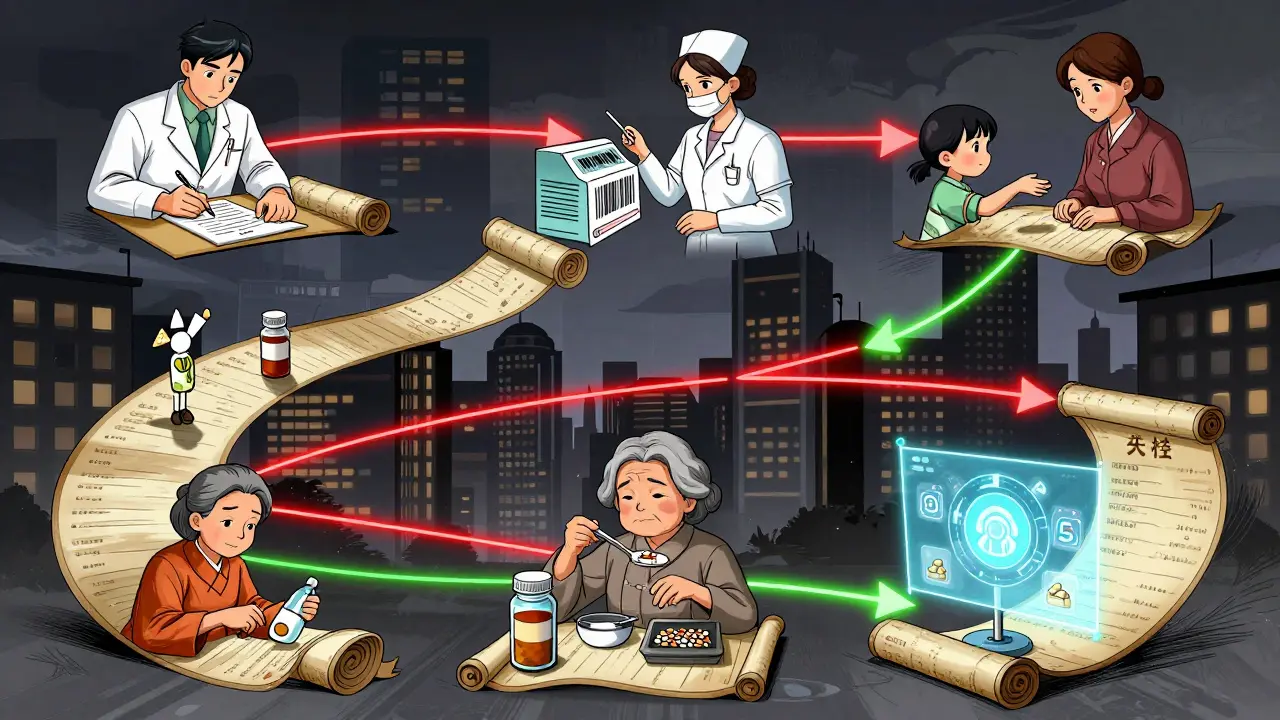
Electronic health records (EHRs) with built-in safety alerts have cut serious medication errors by nearly half. Barcode scanning at the bedside has reduced administration mistakes by 65%. That’s huge.
But there’s a catch. Too many alerts can backfire. If a nurse gets 30 pop-up warnings during one shift, they start ignoring them. That’s called “alert fatigue.” Studies show that when alerts exceed 25 per patient encounter, their effectiveness drops by 30%.
And new tech isn’t perfect. Telehealth visits have spiked since 2020-and with them, medication errors. Doctors can’t see you, can’t check your pill bottles, and sometimes prescribe based on incomplete info. In 2023, telehealth-related medication errors jumped 300% compared to 2022.
What You Can Do Right Now
You don’t need to be a doctor to protect yourself. Here’s what works:
- Keep a live medication list. Write down every pill, patch, injection, and supplement you take-including doses and why you take them. Update it every time something changes. The CDC says this reduces errors during hospital transitions by 45%.
- Ask questions. “What is this for?” “What happens if I miss a dose?” “Can this interact with my other meds?” Don’t be shy. Pharmacists are trained to answer these.
- Use the original container. Don’t dump pills into a pill organizer unless you’re sure of the dose. Some meds need to stay in their blister packs to stay stable.
- Check the label every time. Even if it’s the same pill you’ve taken for years. Labels change. Doses change. Pharmacies switch suppliers.
- Use a pill organizer with alarms. Especially if you take five or more meds a day. One study found patients using blister packs improved adherence by 60%.
- Don’t skip doses because of cost. Talk to your doctor. There are often cheaper alternatives, patient assistance programs, or generic versions.
One patient in Alberta told her story: She was taking three blood pressure pills and one for anxiety. She started skipping the anxiety pill because it made her drowsy. She didn’t tell anyone. A few weeks later, she had a panic attack that sent her to the ER. Turns out, the anxiety med was also helping her heart rhythm. She’d been unknowingly making her condition worse.
The Bigger Picture: Culture Matters Too
Here’s the hard truth: medication safety isn’t broken because people are careless. It’s broken because the system often blames individuals instead of fixing the design.
Only 35% of hospitals have truly non-punitive reporting systems. That means if a nurse makes a mistake, she might get written up instead of getting help to prevent the next one. Dr. Lucian Leape from Harvard put it best: “Medication safety is no longer just about catching errors-it’s about designing systems that make errors impossible to commit.”
That’s why programs like the “Five Rights” (right patient, drug, dose, route, time) are being expanded to include three more: right documentation, right reason, and right response. It’s not enough to give the right pill. You need to know why you’re giving it-and whether it’s working.
What’s Next? The Future of Safety
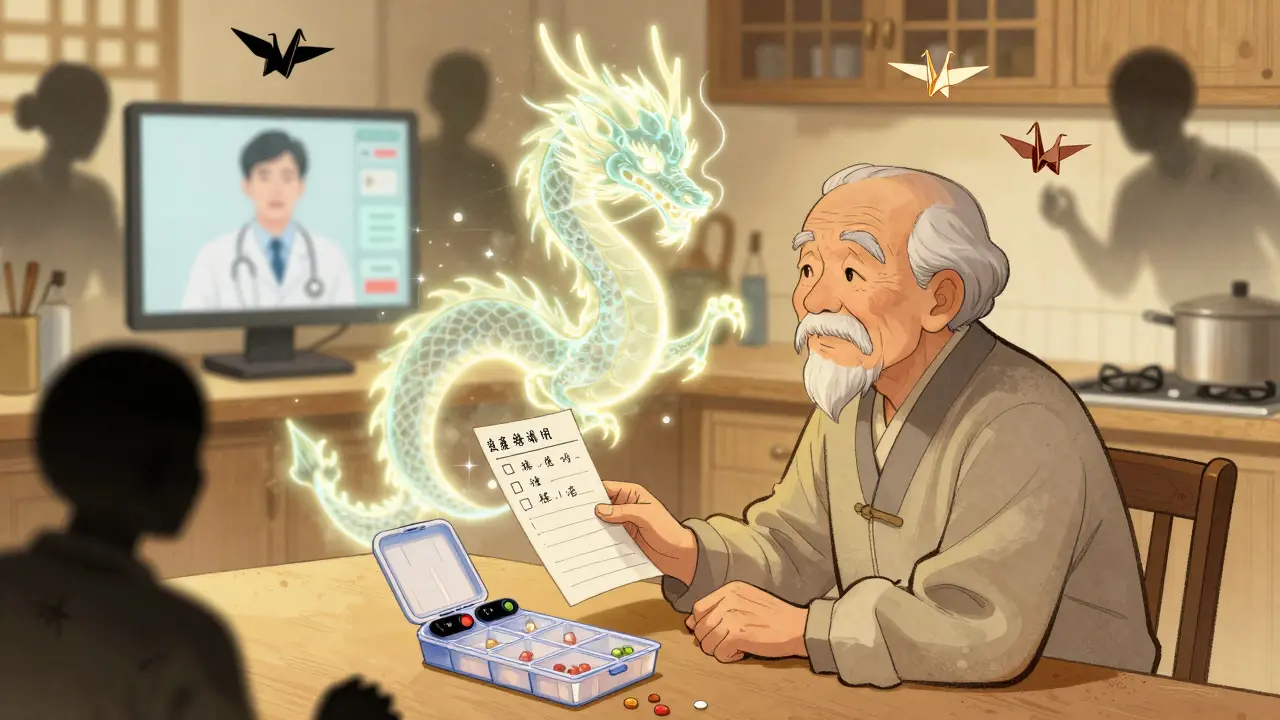
The FDA just started requiring all prescription labels to use standardized numeric dosing-no more “0.5 mg” written as “.5 mg.” That tiny change has already cut decimal point errors by 32% in pilot programs.
AI tools are being tested to predict which patients are most likely to have an adverse reaction based on their history, genetics, and other meds. Early results show a 40% drop in potential harm.
Blockchain is being used in Europe to track drug supply chains and cut down on fake pills. In trials, it reduced counterfeit medication by 65%.
But the biggest win? Money. Every $1 spent on medication safety returns $4.20 in saved hospital costs, fewer lawsuits, and better outcomes. That’s a return most businesses would kill for.
Final Thought: Your Life Is in Your Hands
Medication safety isn’t just something hospitals do. It’s something you do every day. You’re the last line of defense. You hold the bottle. You swallow the pill. You notice the side effect. You remember to take it.
If you’re on multiple meds, if you’re over 65, if you’re caring for someone who is, or if you’ve ever been confused by a prescription-this matters. Not someday. Now.
Write down your meds. Ask questions. Don’t guess. Don’t assume. Don’t wait for someone else to fix it. You have more power than you think.
What is the most common cause of medication errors?
The most common cause is prescribing errors, which make up 38% of all medication mistakes. This includes wrong doses, wrong drugs, or unclear handwriting. But errors also happen during administration (26%) and dispensing (16%). Many of these are preventable with better communication, electronic systems, and patient involvement.
Can I trust my pharmacist to catch all medication errors?
Pharmacists are trained to catch errors, but they’re not mind readers. If you’re taking multiple drugs, especially from different doctors, they might not know about all of them unless you tell them. Always bring a full list of your medications to every pharmacy visit. Never assume they’ll know what you’re taking just because you’ve been a regular customer.
Are generic medications less safe than brand-name ones?
No. Generic medications must meet the same FDA standards as brand-name drugs for strength, purity, and effectiveness. The only differences are in color, shape, or inactive ingredients-which rarely cause problems. If you notice a change in how a generic makes you feel, talk to your pharmacist. It might be a different filler, not the active drug.
What should I do if I think I’ve had a medication error?
If you suspect a mistake-like taking the wrong dose, experiencing unexpected side effects, or noticing your pill looks different-stop taking it and call your doctor or pharmacist immediately. If it’s an emergency, go to the ER. Then report it. Most hospitals and pharmacies have a way to report errors anonymously. Your report could help prevent it from happening to someone else.
How can I tell if my medication is interacting with another drug?
Always tell every healthcare provider about everything you take-including vitamins, supplements, herbal remedies, and over-the-counter drugs. Some interactions are dangerous. For example, mixing blood thinners with certain painkillers can cause internal bleeding. Use a free online checker like Medscape’s Drug Interaction Checker, but never rely on it alone. Talk to your pharmacist for the most accurate advice.
Why do I keep getting different pill colors or shapes for the same drug?
This usually means your pharmacy switched suppliers. Generic drugs come from different manufacturers, and each uses different fillers and dyes. It doesn’t mean the medicine is less effective. But if the new pill looks completely different, or you feel different after switching, ask your pharmacist to confirm it’s the same medication. Never assume.
Is it safe to crush or split pills?
Only if your doctor or pharmacist says it’s okay. Some pills are designed to release slowly over time. Crushing or splitting them can release the full dose at once, which can be dangerous. Others, like enteric-coated pills, are meant to dissolve in the intestines-not the stomach. Always check before altering any pill.
Next Steps: What to Do Today
Don’t wait for a crisis. Here’s your action plan:
- Open your medicine cabinet. Write down every medication and supplement you take right now.
- Call your pharmacy and ask them to print you a current list-most will do it for free.
- Compare the two. Are they the same? If not, find out why.
- Set a reminder on your phone to review your list every three months-or after any doctor’s visit.
- Next time you pick up a prescription, ask: “Is this the same as last time? Has anything changed?”
Medication safety isn’t complicated. It’s just consistent. And it’s personal. Your life depends on it.
8 Comments
Let’s be real - 38% of errors happen at prescribing? That’s not incompetence, that’s systemic negligence. Doctors are overworked, underpaid, and still expected to juggle 20 patients an hour while typing into an EHR that feels like a 1998 dial-up interface. The system isn’t broken - it was designed this way to maximize profit, not safety. And now we’re supposed to blame patients for not catching every typo?
Meanwhile, the pharmaceutical industry is laughing all the way to the bank. Every ‘preventable error’ is just another ER visit, another refill, another $800 copay. You want medication safety? Ban direct-to-consumer ads. Ban profit-driven formularies. Ban the entire goddamn incentive structure.
Man, this post hit different. I’ve been on five meds since my last heart scare, and I swear I’ve had three different pill colors for the same generic blood pressure drug. Last time I asked my pharmacist why, she just shrugged and said, ‘We got a new batch.’
So I started keeping a little notebook - meds, doses, times, why I take ‘em. I even took a pic of each bottle and labeled it. Now when I go to the clinic, I hand them the whole folder. They look at me like I’m weird… until they realize I caught a duplicate prescription they missed.
Turns out, being the weirdo with the notebook is the only thing keeping me alive. If you’re on more than two pills, do this. Your future self will high-five you.
So let me get this straight - we’ve got AI predicting drug reactions, blockchain tracking fake pills, and electronic alerts that scream like a broken fire alarm every time you try to prescribe aspirin… and yet, someone still takes 10mg of Xanax instead of 1mg because a doctor’s handwriting looks like a toddler’s doodle?
Look, I’m all for tech. But if your solution to human error is to add 17 more pop-ups, you’re not fixing the problem - you’re just making the nurses want to quit and open a goat farm in Montana.
Maybe, just maybe, we should hire more pharmacists. Or pay doctors enough so they don’t have to rush through 30 patients in two hours. Or - wild idea - use actual handwriting training? Just a thought.
The data presented in this article is both compelling and sobering. The statistical prevalence of preventable medication errors underscores a critical gap in the current healthcare delivery paradigm. While technological interventions such as electronic prescribing and barcode verification demonstrate measurable improvements, their efficacy is contingent upon human compliance and systemic integration.
It is imperative that patient education initiatives be institutionalized as a standard of care, rather than an afterthought. The development of standardized, multilingual medication literacy materials - distributed at point of prescription - could significantly reduce errors across socioeconomic strata. Furthermore, longitudinal studies tracking patient adherence and error rates following structured counseling interventions are urgently needed to validate best practices.
USA is a joke. You people let your doctors write like chickens scratched the paper and then blame the patient for not knowing the difference between 1mg and 10mg? 😂
Where I come from, we don’t have this mess. Pharmacies are run by trained professionals, not cash-register monkeys. And if you’re on insulin? You better believe your doctor calls YOU to explain it - not just scribbles it and runs off to his yacht.
Also, why are you all using kitchen spoons? Are you cooking soup or taking medicine? 😑
Stop being lazy. And stop letting corporations run your health. Africa has better systems than this. Just saying. 🇳🇬💪
My grandma took 8 pills a day. One day she skipped her blood thinner because she thought it was a vitamin. Didn’t tell anyone. Two weeks later - stroke.
After that, I made her a color-coded pill box with alarms. She still hates it. But she’s alive. And she doesn’t go to the hospital anymore.
Don’t wait for a crisis. Just do the thing. Write it down. Ask the question. Use the measuring cup. It’s not hard. It’s just boring. And boring beats dead.
Wait - you’re telling me I’m supposed to remember every single pill I’ve ever taken? And call my pharmacy every time I get a new script? And check the label every. single. time?
Wow. So basically, my entire life is now a compliance audit.
And you wonder why people just stop taking their meds?
Also, who the hell has time for this? I work two jobs and still can’t afford my prescriptions. Now I’m supposed to be a full-time medication detective too? Thanks, healthcare system. You’re a real lifesaver.
You people are so careless. In my country, we teach children from age 5 that medicine is not candy. You don’t just swallow whatever looks like a little rainbow. You don’t skip doses because you’re ‘feeling fine.’ You don’t mix pills like you’re making a smoothie.
It’s not about technology. It’s about discipline. It’s about respect. You treat your body like a garbage can, and then you wonder why you’re sick?
My grandmother lived to 98 because she followed her doctor’s instructions exactly. No excuses. No shortcuts. Just obedience.
Maybe if you stopped being so entitled, you’d live longer.
Write a comment