
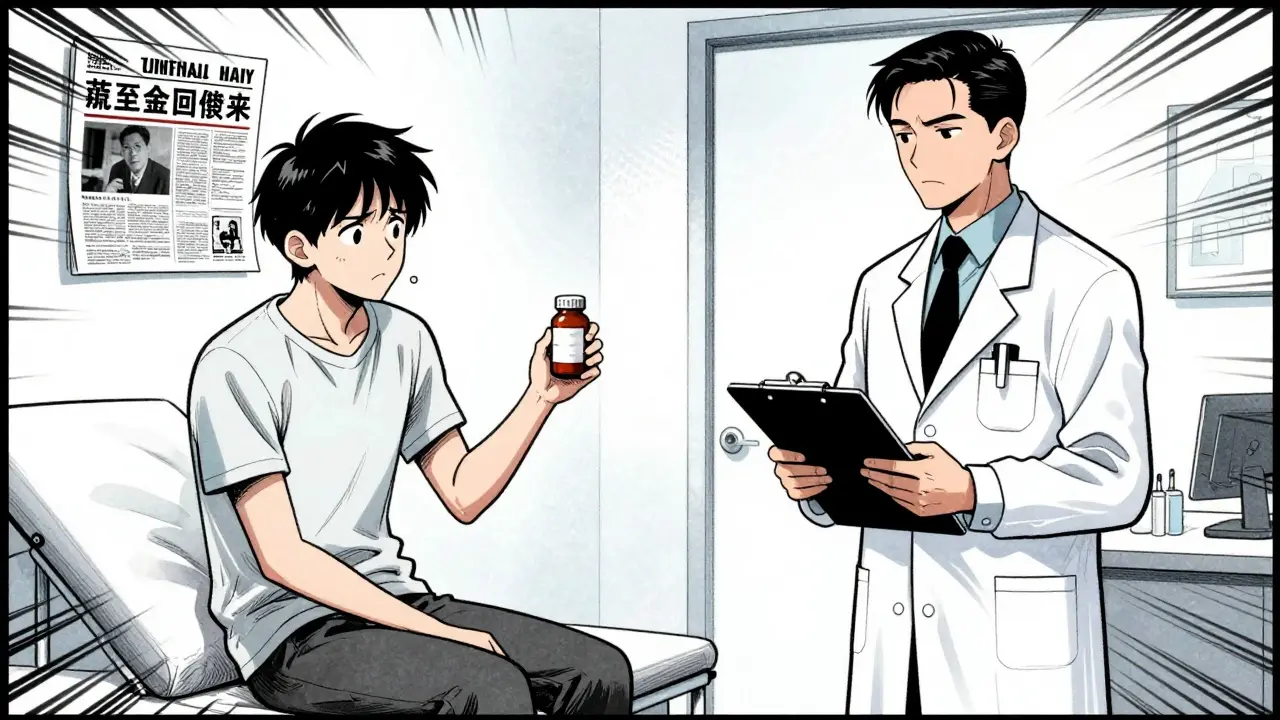
You’re sitting in your doctor’s office. The prescription pad is out. You’ve taken this medication for months, or maybe it’s brand new. Suddenly, you remember seeing a news headline about a warning related to that exact drug. Or perhaps your pharmacist hands you a new leaflet with bold red text. That moment of hesitation-"Is this still safe?"-is exactly why Drug Safety Communications exist.
These aren’t just routine updates. They are official notifications issued by the U.S. Food and Drug Administration (FDA) when new information emerges about the risks or benefits of a medication already on the market. If you are a patient, a healthcare provider, or simply someone trying to navigate the complex world of pharmaceuticals, understanding these communications is vital. They can change how you take your medicine, whether you continue taking it at all, or how your doctor monitors you.
The Core Purpose: Why the FDA Speaks Up After Approval
When a drug is first approved, the FDA relies on data from clinical trials involving thousands of participants. While rigorous, these trials have limitations. They run for limited times, often exclude older adults or people with multiple conditions, and cannot detect extremely rare side effects. This is where post-marketing surveillance comes in.
A Drug Safety Communication (DSC) is the FDA’s primary tool for sharing critical safety findings discovered after a drug is widely used. The FDA defines these as issues that "have the potential to alter the benefit-risk analysis for a drug." In plain English: the agency has found something significant enough that the way we think about the drug’s safety might need to change.
The legal backbone for this power was strengthened by the Food and Drug Administration Amendments Act (FDAAA), signed into law in 2007. Before this act, the FDA had limited ability to mandate post-market studies or enforce strict risk management plans. Today, the Center for Drug Evaluation and Research (CDER) uses enhanced authorities to issue these communications, ensuring that both doctors and patients have the most current evidence to make informed decisions.
How the FDA Decides to Issue a Communication
Not every side effect report triggers a Drug Safety Communication. The process is highly structured and data-driven. The FDA evaluates signals from several sources:
- Adverse Event Reports: Data submitted through the MedWatch program by patients, doctors, and manufacturers.
- Epidemiologic Studies: Large-scale population studies that look for patterns in health outcomes.
- Clinical Trial Data: New findings from ongoing studies required as part of approval conditions.
- The Sentinel Initiative: A massive electronic database monitoring over 300 million patient records across 16 data partners, allowing for near-real-time detection of safety signals.
For a communication to be issued, the safety issue must meet specific criteria. It typically involves serious adverse events, product quality problems, or medication errors that could impact prescribing decisions. For example, if data suggests a certain blood thinner increases bleeding risk more than previously thought in elderly patients, CDER will evaluate whether this changes the overall benefit-risk profile.
In recent years, the volume of these communications has surged. In 2024, the FDA issued 187 Drug Safety Communications, compared to just 42 in 2008. This 345% increase reflects not only more drugs on the market but also significantly improved surveillance capabilities. The agency now shares information earlier in the evaluation process, sometimes even while they are still determining if regulatory action is needed.
Decoding the Structure of a Drug Safety Communication
If you read a DSC, you’ll notice a consistent format designed for clarity. This standardization helps busy healthcare providers and concerned patients find what matters quickly. Most communications include four key sections:
- What Safety Concern Is FDA Announcing? A clear summary of the new finding. For instance, a July 2025 communication regarding opioid pain medicines highlighted risks of misuse and overdose associated with long-term use.
- Recommendations for Health Care Professionals: Actionable steps for doctors, such as adjusting doses, ordering specific lab tests, or counseling patients differently.
- Recommendations for Patients: Guidance written in layperson terms, advising when to seek medical help or how to discuss alternatives with their provider.
- Additional Information: Links to scientific literature, previous warnings, or details on regulatory actions like labeling changes.
This structure ensures that the message isn’t lost in jargon. However, the complexity of the underlying science remains high. As Dr. Jerry Avorn, a professor at Harvard Medical School, noted, these communications incorporate complex methodologies investigating both risks and relative benefits. Clinicians must interpret these nuances carefully to avoid unnecessary alarm or complacency.
Real-World Impact: From Alert to Action
Knowing what a DSC is doesn’t help much unless you understand how it plays out in practice. Let’s look at two contrasting scenarios.
The Citalopram Case: Years ago, the FDA issued a communication regarding citalopram (Celexa), an antidepressant, and its link to QT prolongation-a heart rhythm issue. The recommendation was clear: limit the dose in elderly patients. Dr. Sarah Chen, a geriatrician in Boston, reported that this was "immediately actionable." Her team reduced dosing protocols, and they observed fewer arrhythmias in their senior patients. This is the ideal outcome: a clear signal, a clear recommendation, and a measurable improvement in patient safety.
The PPI and C. Difficile Link: Conversely, consider the 2022 communication linking proton pump inhibitors (PPIs) like omeprazole to an increased risk of Clostridioides difficile infection. While 73% of patients who received this information discussed it with their providers, only 38% actually changed their medication use. Why? Because for many patients, the immediate relief from acid reflux outweighed the perceived, albeit real, risk of a rare infection. This highlights a common challenge: awareness does not always equal behavior change.
| Audience Group | Awareness Rate | Action Taken | Primary Barrier |
|---|---|---|---|
| Hospital Pharmacists | 68% check weekly | High protocol adherence | Alert fatigue |
| Community Pharmacists | 42% check weekly | Moderate counseling integration | Lack of time/resources |
| Patients | Varies by condition | Low (<38% in some cases) | Risk-benefit perception gap |
The Challenge of Alert Fatigue
With nearly 200 communications issued annually, a major problem has emerged: alert fatigue. Healthcare professionals are bombarded with information. A Reddit discussion among pharmacists in early 2025 revealed frustration, with one user stating, "I receive 3-4 DSCs weekly, making it difficult to prioritize which require immediate practice changes."
This noise can dilute the impact of truly critical warnings. To combat this, the American College of Physicians recommends that clinicians allocate 15-20 minutes weekly specifically to review new Drug Safety Communications. But for patients, the barrier is higher. Most don’t have time to scan FDA websites daily.
To bridge this gap, the FDA offers email subscriptions and RSS feeds. As of January 2025, nearly 148,000 healthcare professionals were subscribed. Major Electronic Health Record (EHR) systems like Epic and Cerner have also integrated these alerts directly into clinician workflows. However, a 2024 study in JMIR found that only 58% of these systems properly categorized DSCs by urgency, leading to inconsistent decision support. When a critical warning gets buried under routine updates, patient safety suffers.
Regulatory Actions Beyond the Communication
A Drug Safety Communication is often the first step, but not always the last. Depending on the severity of the risk, the FDA may pursue further regulatory actions under Section 505(o)(3) of the Federal Food, Drug, and Cosmetic Act. These can include:
- Labeling Changes: Updating the package insert to include new warnings, contraindications, or dosage adjustments. This is the most common outcome.
- Risk Evaluation and Mitigation Strategies (REMS): For drugs with serious risks, the FDA may require a REMS plan. This could involve mandatory training for prescribers, restricted distribution networks, or regular patient testing. Opioids and isotretinoin (Accutane) are well-known examples.
- Post-Marketing Trials: Requiring manufacturers to conduct additional studies to clarify the risk.
- Market Withdrawal: In rare, extreme cases where risks clearly outweigh benefits, the drug may be removed from the market entirely.
Understanding these potential next steps helps patients and providers anticipate how treatment landscapes might shift. If you see a DSC, ask your doctor: "Does this mean my label will change? Do I need to join a special registry? Should I switch medications?"
Future Trends: AI and Faster Detection
The landscape of drug safety is evolving rapidly. In 2025, the FDA implemented AI-assisted signal detection tools. This technology has already reduced the median time from initial safety signal identification to public communication from 2.6 years to 1.8 years. By analyzing vast datasets from EHRs and claims databases, algorithms can spot emerging patterns faster than human reviewers alone.
Looking ahead to late 2026, the FDA plans to integrate these insights with its AI/ML Software as a Medical Device framework. This will enable real-time safety signal analysis, potentially issuing warnings within weeks rather than months. Additionally, patient-focused content is expanding. Between 2023 and 2025, 47% of DSCs included dedicated patient information sections, up from just 28% in the previous three-year period.
However, challenges remain. A 2025 Johns Hopkins study found that only 61% of critical DSC recommendations resulted in measurable changes in prescribing patterns within six months. Closing this gap requires better communication strategies, not just more data.
Who should read Drug Safety Communications?
Primarily, healthcare professionals including doctors, pharmacists, and nurses. However, patients and caregivers should also be aware of them, especially if they take chronic medications. The FDA provides separate sections for patients to ensure the language is accessible.
Where can I find past Drug Safety Communications?
The FDA maintains an online repository on its website. You can search by drug name, date, or therapeutic area. The site includes filters for healthcare professionals and patient-focused information, making it easy to find relevant historical data.
Does a Drug Safety Communication mean the drug is unsafe?
Not necessarily. It means new information has emerged that alters the known risk-benefit profile. The drug may still be safe for many people, but usage guidelines might change, such as lowering doses for certain age groups or avoiding it in patients with specific conditions.
How do I get notified about new communications?
You can subscribe to the FDA’s email updates or RSS feeds on their Drug Safety webpage. Many hospital systems also push these alerts directly to clinicians via Electronic Health Records. Patients can ask their pharmacists to monitor for alerts related to their specific medications.
What is the difference between a DSC and a Recall?
A recall usually involves a manufacturing defect or contamination in a specific batch. A Drug Safety Communication addresses broader safety issues related to the drug’s inherent properties, side effects, or interactions, affecting all batches currently on the market.

15 Comments
It is truly disheartening to observe the sheer intellectual laziness displayed by the general populace when confronted with such rudimentary pharmacological realities, as if one requires a hand-holding guide from a government bureaucracy to comprehend that substances ingested into the human body may possess deleterious effects beyond their intended therapeutic scope, thereby necessitating a continuous re-evaluation of the benefit-risk matrix which is not static but rather a dynamic equilibrium subject to the whims of epidemiological data accumulation and post-marketing surveillance mechanisms that are often underfunded and understaffed despite their critical importance in maintaining public health standards.
The notion that patients should be expected to navigate this labyrinthine regulatory framework without the guidance of properly credentialed medical professionals is not only absurd but also indicative of a broader societal decline in respect for expertise and evidence-based medicine, where anecdotal experience and social media misinformation hold sway over rigorous scientific inquiry and peer-reviewed literature that forms the bedrock of modern clinical practice and pharmaceutical regulation.
One must consider the epistemological implications of relying on state-sanctioned narratives regarding bodily autonomy and chemical intervention, for the FDA's communications are not merely informational bulletins but rather ideological instruments designed to maintain a specific hegemony over the medical-industrial complex, thereby shaping the collective consciousness of what constitutes 'safety' and 'risk' within a capitalist framework that prioritizes liability mitigation over holistic well-being and individual sovereignty in matters of health and healing.
I've been looking into how the Sentinel Initiative actually works because it seems like a massive undertaking to monitor 300 million records in real-time, and I'm curious about the technical infrastructure required to process that much data without significant latency or error rates that could lead to false positives or negatives in safety signal detection.
You're all missing the forest for the trees here, you absolute troglodytes, because the core issue isn't just about reading a press release but understanding the complex interplay between pharmacovigilance databases, adverse event reporting biases, and the inherent limitations of retrospective cohort studies which are fraught with confounding variables that even the most sophisticated statistical models struggle to adequately control for, let alone the layperson who thinks they can interpret a DSC based on a headline.
Furthermore, the increase in DSC volume is directly correlated with the expansion of electronic health record integration and the mandatory reporting requirements imposed by FDAAA, which means we are seeing more noise alongside the signal, requiring a nuanced approach to data interpretation that involves multivariate regression analysis and propensity score matching to isolate true causal relationships from mere associations, something your average Reddit user is woefully unprepared to handle without causing unnecessary panic or complacency in their patient population.
The verisimilitude of these official decrees is quite charming, really, as if the FDA were some benevolent oracle dispensing wisdom from on high, whereas in reality, they are merely bureaucrats reacting to the inevitable fallout of bringing thousands of novel chemical entities to market with incomplete long-term safety profiles, thus creating a perpetual cycle of warning and adjustment that serves more to protect institutional liability than to enlighten the common man who simply wishes to take his pills without fear of sudden cardiac arrest or renal failure.
Honey, listen to me, this is why we need stronger borders and better domestic manufacturing because these drugs are coming from overseas factories that don't follow our standards, and when the FDA has to step in with all these warnings, it's a clear sign that our national security and health are being compromised by foreign entities who care nothing for American lives, so we need to bring production back home and stop trusting these global supply chains that leave us vulnerable to exactly these kinds of safety lapses.
Great summary! Here are a few key takeaways: 1) Always check the FDA website for updates on your meds; 2) Talk to your doctor before stopping anything; 3) Use MedWatch to report side effects; 4) Remember that awareness leads to action! Stay safe everyone!!!
It is morally reprehensible that pharmaceutical companies are allowed to profit from selling medications with known risks while simultaneously lobbying against stricter regulations that would require them to conduct more comprehensive long-term studies before approval, thus shifting the burden of risk assessment onto the unsuspecting patient and the overworked healthcare provider who must then navigate this minefield of potential adverse events without adequate compensation or protection from malpractice suits arising from unforeseen complications.
This systemic failure reflects a deeper ethical rot in our society where corporate greed supersedes human welfare, and until we address this fundamental imbalance through robust legislative reform and increased transparency in drug development processes, we will continue to see these preventable tragedies unfold in our communities, leaving families devastated and questioning the integrity of the entire medical establishment.
omg u ppl r so naive thinking the fda cares abt ur safety lol its all about big pharma money and keeping us sick so we keep buying their poison, dont trust these govt agencies they lie 2 u everyday, stay woke and natural only no chemtrails in ur veins!!
The discourse surrounding Drug Safety Communications is invariably marred by a lack of critical engagement with the underlying statistical methodologies employed by the CDER, resulting in a superficial understanding of risk-benefit analyses that fails to account for the nuances of Bayesian inference and hierarchical modeling used to detect signals in large datasets, thereby perpetuating a cycle of misinformed anxiety among patients who lack the quantitative literacy necessary to interpret these findings accurately and appropriately.
i guess its good to know there are these alerts out there, i try to stay informed but sometimes its hard to keep up with everything, glad people are talking about it tho
It is imperative to note that the structural integrity of a Drug Safety Communication relies heavily on the clarity of its recommendations for both healthcare professionals and patients, ensuring that the translation of complex epidemiological data into actionable clinical guidance is executed with precision and empathy, thereby facilitating informed decision-making at the point of care and empowering individuals to engage proactively in their own health management protocols.
yeah i mean its kinda scary how many warnings come out but i guess thats just part of life now, my pharmacist always tells me to ask questions if im unsure about any changes to my prescription so i just do that and try not to stress too much about it
The so-called 'Sentinel Initiative' is nothing more than a sophisticated surveillance apparatus designed to track citizen behavior and health outcomes for purposes far removed from genuine public health, leveraging vast databases of personal information under the guise of safety monitoring while simultaneously obscuring the true agenda of pharmaceutical corporations and government agencies seeking to expand their control over individual autonomy and biological integrity, thus creating a panopticon of medical compliance that erodes privacy rights and fosters a culture of dependency on state-approved interventions.
they want u to believe its for safety but its just another way to control the population thru meds, wake up sheeple the fda is owned by big pharma and they dont care about u they care about profits and keeping u dependent on their chemicals, dont fall for the propaganda
Write a comment