

Ever looked at your medication bottle and felt like you were reading a secret code? Between the shorthand, the tiny print, and the technical names, a simple prescription label can feel overwhelming. But here is the scary part: medication errors contribute to roughly 7,000 deaths every year in the U.S. alone. Often, these mistakes happen not because the doctor got the drug wrong, but because the person taking it misinterpreted a label. Knowing exactly what every line on that sticker means is one of the simplest ways you can protect your own health.
| Term/Symbol | What it Means | Patient Action |
|---|---|---|
| Generic Name | The active chemical ingredient | Use this to check for allergies/interactions |
| Dosage Strength | Amount of drug per pill/ml | Verify this matches your doctor's order |
| Indication | The reason you are taking the drug | Confirm it's for the correct condition |
| Expiration Date | When the drug may lose potency | Discard and replace after this date |
The Basics: Who, What, and How Much
The most critical part of any prescription labels is the identification section. It starts with your name. It sounds obvious, but verifying your name is the first line of defense against the 1.5 million medication errors that happen annually. Always double-check that the name on the bottle is yours before you even open the cap.
Next, you'll see the medication name. Most labels list both the brand name and the generic name. For example, you might see "Abstral" (the brand) and "fentanyl" (the generic). The generic name is the actual active pharmaceutical ingredient. This is the name you should use if you're checking for drug interactions or searching for side effects, as brand names can change, but the chemical ingredient stays the same.
Then there is the dosage strength. This isn't just "one pill"; it's the specific amount of medicine in each unit. You might see "100 mcg" or "50 mg". If your doctor told you that you're on a 50mg dose but the label says 100mg, stop immediately and call the pharmacy. A simple typo in the dosage strength can lead to a serious overdose or an ineffective treatment.
Decoding the Instructions and Timing
The administration instructions are where most confusion happens. These are the directions that tell you how often to take the drug and any special requirements. You'll see things like "take one tablet every 4 hours" or "take with food."
One area where patients often struggle is with abbreviations. The BeMedWise "Know Your Dose" campaign found that 43% of parents misinterpret liquid medication because labels use terms like "tsp" instead of spelling out "teaspoon." If you see an abbreviation you don't recognize, don't guess. Ask your pharmacist to write it out in plain English.
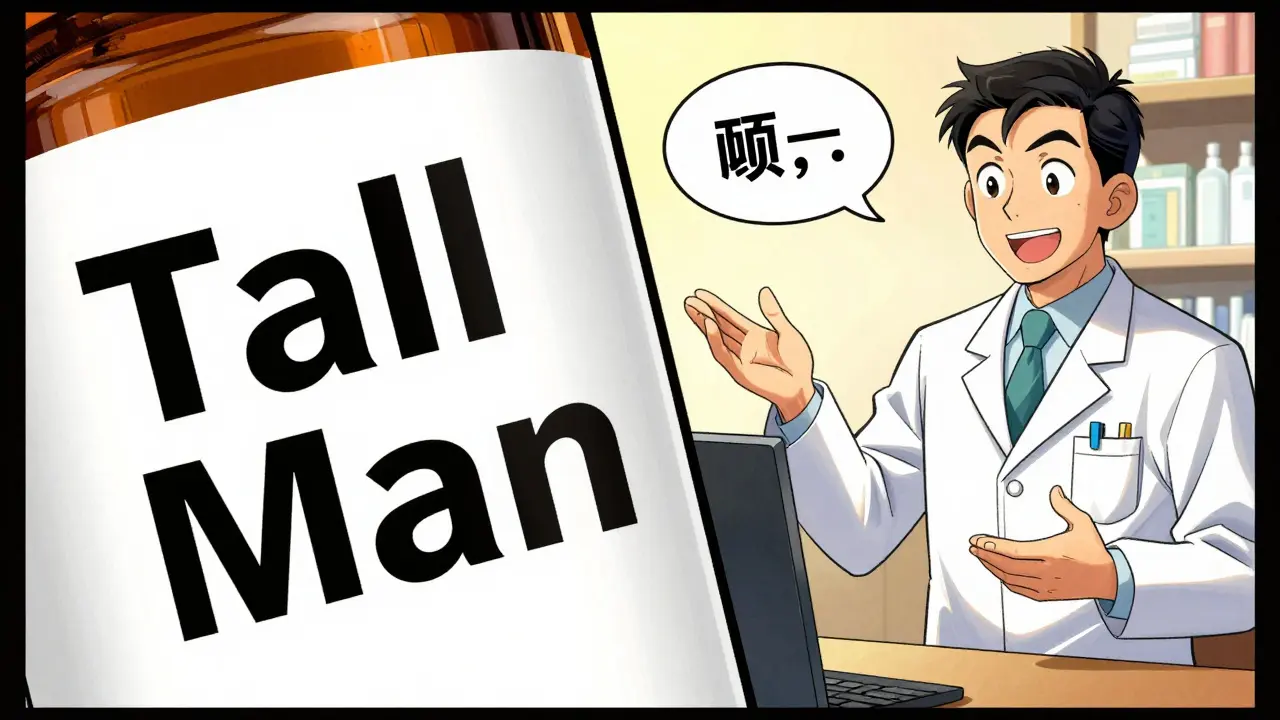
Some pharmacies now include a "Tall Man" lettering system. This is a safety technique where parts of a drug name are capitalized to distinguish it from another drug that looks similar. For instance, you might see predniSONE versus predniSOLONE. This isn't a typo-it's a deliberate design to prevent you from grabbing the wrong medication, a move that the Institute for Safe Medication Practices reports has reduced confusion errors by 47%.
The Safety Net: Warning Labels and Expirations
Look for the brightly colored stickers-usually red or yellow-that warn you about side effects. These might say "May cause drowsiness" or "Do not drink alcohol while taking this medication." These aren't just suggestions; they are critical safety warnings. Some labels also include contraindications, which are specific reasons why a person should not take the drug (like if you are pregnant or have kidney disease).
Then there is the expiration date. According to United States Pharmacopeia standards, most medications have a shelf life of 12 to 18 months from the date they were dispensed. Once a drug passes its expiration date, it can lose its potency, meaning it won't work as well, or in rare cases, it could become unsafe.
Finally, check the storage instructions. Many people just throw their meds in the bathroom cabinet, but the heat and humidity from the shower can actually break down certain chemicals. If your label says "store at 20°-25°C (68°-77°F)" or "refrigerate," follow it strictly to ensure the medicine remains effective.
The "Missing Piece": Knowing the Why
Have you ever looked at a pill and forgotten what it's actually for? You're not alone. The FDA found that 78% of patients in focus groups took medications incorrectly because they didn't understand why they were prescribed. This is known as the "indication."
While not every pharmacy does this yet, the best labels include the reason for the drug, such as "for high blood pressure" or "for cholesterol." Including this simple phrase can reduce "wrong-drug" errors by 55%. If your label doesn't say what the drug is for, ask your pharmacist to add it. It's a small change that prevents dangerous mistakes, like accidentally taking a blood pressure pill for a headache.
The Pharmacy's Role and the Rx Number
Every bottle has an Rx number. This is a unique identifier for your specific prescription. If you need a refill or have a question, this is the number the pharmacist will ask for. It's a tracking tool that ensures the pharmacy gives you the exact same dose and drug every time you return.
The label also lists the dispensing pharmacy's contact info and your prescriber's name. If the instructions are blurry or you're confused about a dose, these are your direct lines of support. Remember, pharmacists are highly trained clinicians. Even though they might only spend a few minutes with you during a pickup, that time is vital for verifying that you understand how to use the medication safely.
Practical Steps for Your Next Pharmacy Visit
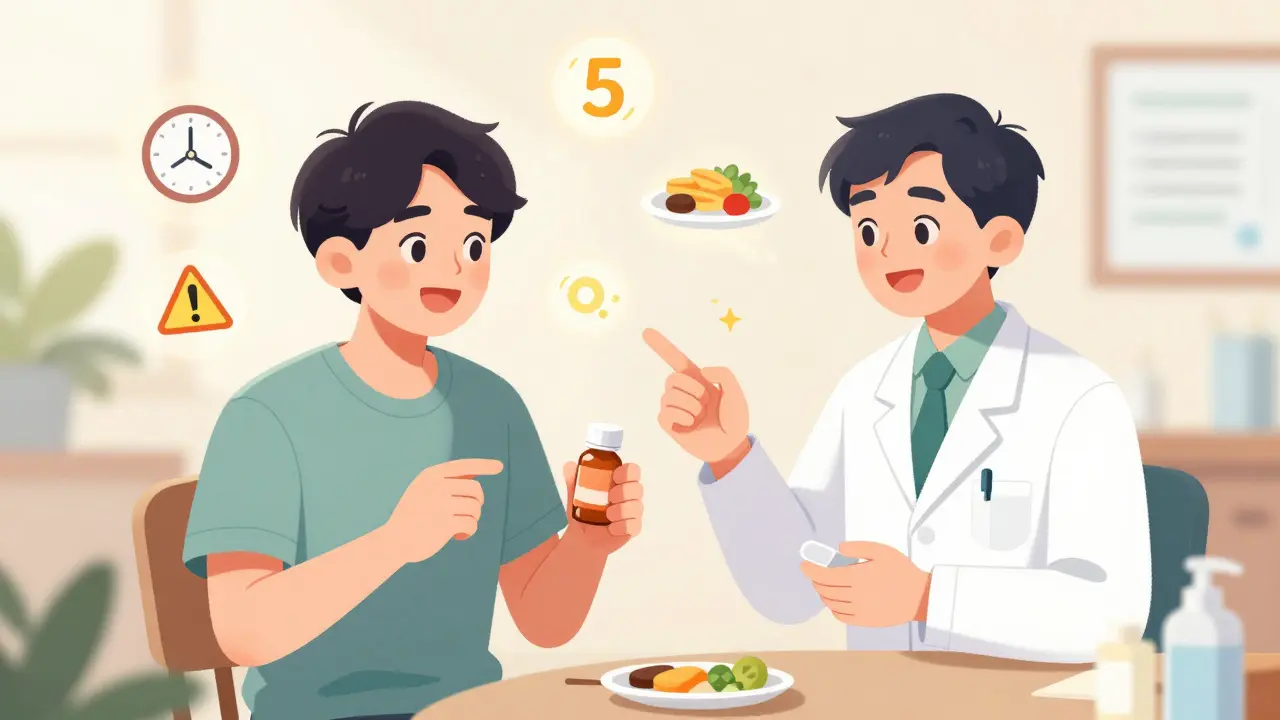
To make sure you're getting the most out of your prescription, don't just grab the bag and go. Use the "5 Questions" framework recommended by the FDA:
- What is the name of the medication and what is it for?
- How and when do I take it?
- What should I do if I miss a dose?
- What side effects should I expect?
- Will this medication interact with other medications I'm taking?
Another great tip is the "teach-back" method. After the pharmacist explains the label, try explaining it back to them in your own words. For example, say, "So, I'm taking one 50mg tablet of this for my blood pressure every morning with breakfast, and I should avoid grapefruit juice. Is that right?" This simple habit has been shown to improve medication adherence by 28%.
What is the difference between the brand name and generic name on my label?
The brand name is the trademarked name given by the company that developed the drug (e.g., Lipitor). The generic name is the official chemical name of the active ingredient (e.g., Atorvastatin). Both contain the same active medication, but the generic name is the one used globally by healthcare providers to ensure accuracy.
Can I still take medication after the expiration date on the label?
It is generally not recommended. After the expiration date, the drug may lose its potency, meaning it might not treat your condition effectively. In some cases, the chemical composition can change, making it unsafe. Always consult your pharmacist before using expired medication.
Why does my label have weird capitalization like "predniSONE"?
This is called "Tall Man lettering." It is used to highlight the differences between two drugs that have very similar names but different effects. This visual cue helps pharmacists and patients avoid picking up the wrong medication.
What should I do if my label doesn't say what the medication is for?
You should ask your pharmacist to add the "indication" (the reason for use) to the label. Knowing why you are taking a drug significantly reduces the chance of taking the wrong medication for a specific symptom.
Is the Rx number on my label the same as the NDC number?
No. The Rx number is unique to your specific prescription and your patient profile at that pharmacy. The National Drug Code (NDC) is a universal identifier for the manufacturer, the product, and the package size, used across the entire healthcare system.

10 Comments
The emphasis on the "teach-back" method is particularly important. In clinical practice, we often see a significant gap between what a patient hears and what they actually comprehend. By asking the patient to repeat the instructions, the healthcare provider can identify specific misunderstandings before the patient leaves the pharmacy, which is the most effective way to prevent medication errors.
why do we act like labels matter when the whole systemic medical complex is just a lottery anyway everything is a guess and we just pretend there is a logic to the labels to feel safe in our little bubble of delusions lol
Oh wow, so you're telling me that reading the bottle actually helps? Truly groundbreaking stuff here, I'll be sure to alert the media immediately.
I've definitely been in that spot where I forgot what a pill was for. It's honestly so stressful when you're dealing with multiple meds and the labels are just generic. I'm definitely going to start asking my pharmacist to add the indication to my bottles from now on.
just ask the pharmacist man why you gotta overthink it just get the info and move on stop making it a science project
This is so helpful! 💊 I always forget about the storage part, I keep everything in the bathroom. I'll move my stuff to a cool dry place now! Thanks for sharing! 😊✨
Only in America do we need a whole guide just to read a bottle because the system is so bloated and incompetent it is a tragedy that weve come to this point where a label is a riddle
Tall man lettering is a smart move. Simple and works.
It is so wonderful to see these safety measures being highlighted. For anyone feeling overwhelmed by their prescriptions, please know that it is completely okay to ask for a few extra minutes of the pharmacist's time. You are your own best advocate and taking that extra moment can make a world of difference in your health journey. Keep staying proactive and positive about your care!
While I find the structural layout of this guide to be marginally acceptable, the sheer audacity of suggesting that patients should perform a "teach-back" method is simply laughable. Imagine the sheer social awkwardness of repeating a sentence back to a stranger in a retail environment just to ensure I don't accidentally poison myself. It is an utterly absurd expectation for the average consumer who just wants to get their meds and leave the building. Truly a peak example of over-engineering the human experience for the sake of a statistic. I cannot even fathom the level of patience required to actually follow all five of these steps every single time you visit the store. It's just too much work for a Tuesday.
Write a comment