Polypharmacy Interaction Risk Calculator
According to medical research, the risk of adverse drug interactions doesn't just add up—it multiplies. Enter the total number of distinct medications (including supplements) you are currently taking to see your potential interaction profile.
The Math
Potential pairwise interactions are calculated using the combination formula:
n(n - 1) / 2
With 0 medications, there are 0 unique pairs where a chemical clash could occur.
Clinical Context
Please enter a value to see analysis.
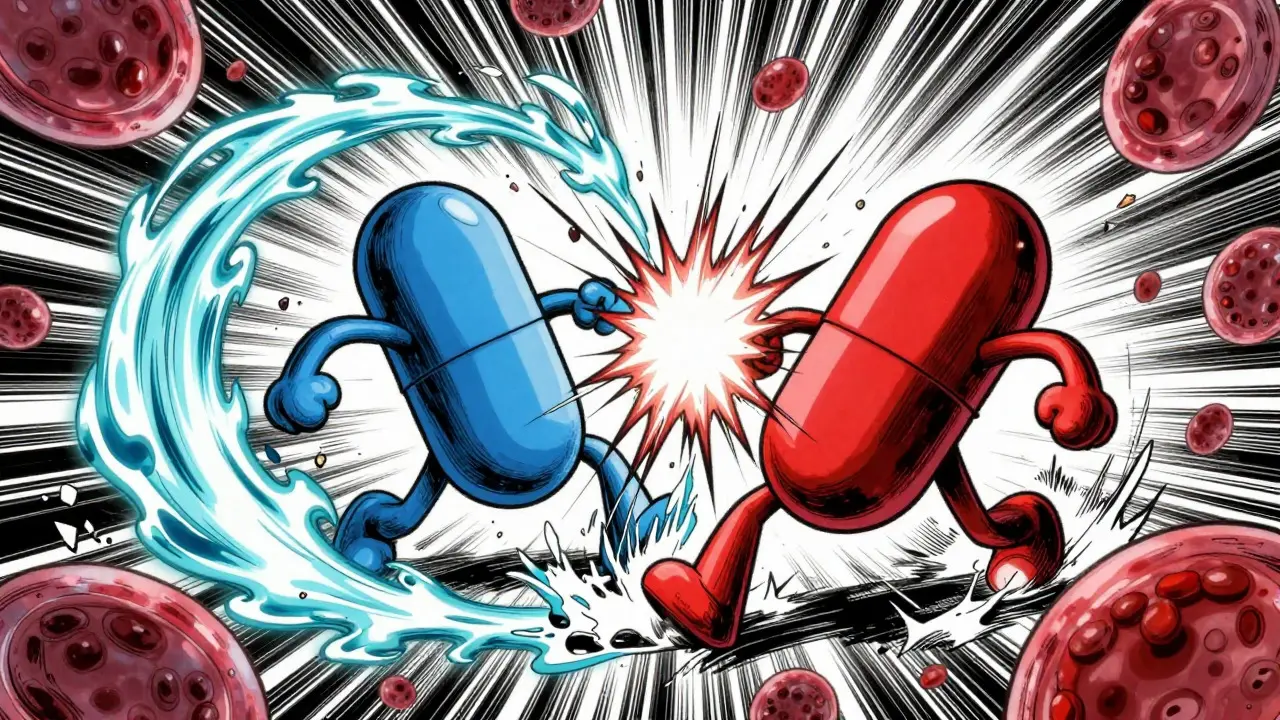
Imagine taking two perfectly safe medications, only to end up in the hospital because they fought each other in your bloodstream. It sounds like a plot from a medical thriller, but it happens every day. These are drug-drug interactions, defined as situations where one medication alters the effect of another, leading to unexpected side effects or reduced efficacy. They aren't just theoretical risks; they account for roughly 3% to 5% of all hospital admissions among older adults. Understanding how these interactions work isn't just academic-it’s a matter of personal health safety.
We often think of drugs as isolated tools that do one specific job. But inside your body, they are part of a busy chemical ecosystem. When you introduce a second drug, you’re not just adding another tool; you’re changing the environment. This article breaks down exactly how these collisions happen, why some combinations are dangerous, and what you can do to protect yourself.
The Two Main Ways Drugs Clash
To understand drug interactions, we need to look at the two primary mechanisms: pharmacokinetic and pharmacodynamic. Think of it this way: pharmacokinetics is about what your body does to the drug, while pharmacodynamics is about what the drug does to your body.
Pharmacokinetic interactions occur when one drug changes the concentration of another drug in your blood. If Drug A stops your liver from breaking down Drug B, Drug B builds up to toxic levels. Conversely, if Drug A speeds up the breakdown of Drug B, Drug B might disappear before it has a chance to work. This category covers absorption, distribution, metabolism, and excretion.
Pharmacodynamic interactions happen when two drugs affect the same biological system directly. They don’t change each other’s blood levels; instead, they amplify or cancel out each other’s effects. For example, taking two sedatives together doesn’t necessarily mean there’s more "sedative" in your blood-it means your brain gets hit with double the calming signal, which can lead to dangerous respiratory depression.
Metabolism: The Liver’s Busy Factory
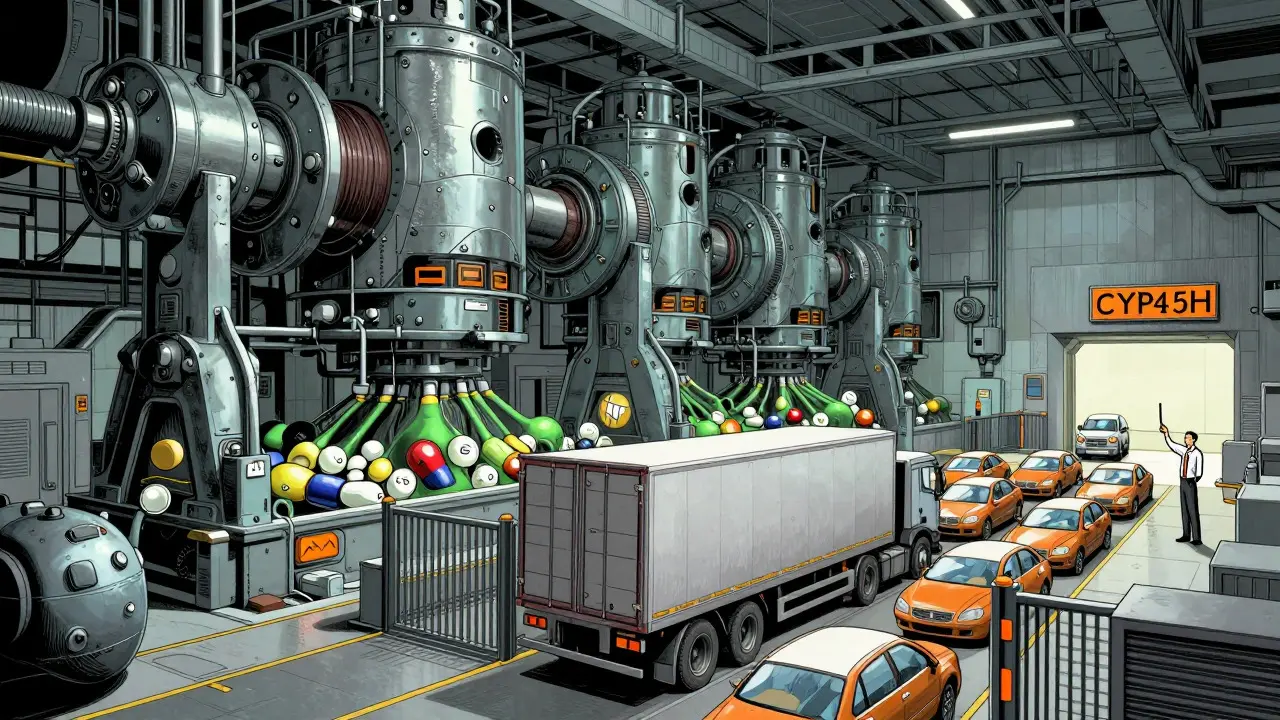
The most common source of pharmacokinetic interactions is metabolism, specifically involving the cytochrome P450 enzyme system. Your liver uses these enzymes to break down toxins and medications so they can be flushed out. About 70% to 80% of all drugs are metabolized by this system.
Here is where it gets tricky. Some drugs act as inhibitors, blocking these enzymes. Others act as inducers, forcing the liver to produce more enzymes.
- Inhibition: Imagine a factory assembly line (the enzyme) that processes cars (the drug). An inhibitor is like someone parking a truck in front of the factory gate. The cars pile up outside. In medical terms, this leads to higher drug concentrations and increased risk of toxicity. A classic example is ketoconazole, an antifungal medication that strongly inhibits CYP3A4. If taken with simvastatin (a cholesterol drug), ketoconazole can raise simvastatin levels by 10 to 20 times, drastically increasing the risk of rhabdomyolysis-a severe muscle breakdown condition.
- Induction: Now imagine the factory manager seeing a backlog and hiring three extra shifts to clear it faster. An inducer makes the liver process drugs too quickly. St. John’s Wort, a popular herbal supplement, is a potent inducer of CYP3A4. It can reduce the effectiveness of critical drugs like cyclosporine (used to prevent organ rejection) by 50% to 60%, potentially leading to organ failure.
The most important player here is CYP3A4, an enzyme responsible for metabolizing approximately 50% of all clinically used drugs. Because it handles so many medications, it is the hotspot for interactions. Other key players include CYP2D6, CYP2C9, and CYP2C19.
Absorption and Transport: Getting Into the Bloodstream
Before a drug reaches the liver, it must get into your bloodstream through your gut. This is where absorption interactions come into play. Some drugs change the pH of your stomach or slow down gut motility (how fast food moves through your intestines).
For instance, antacids can alter the acidity of the stomach, preventing certain antibiotics like tetracycline from dissolving properly. If the drug doesn’t dissolve, it can’t be absorbed, and you get no therapeutic benefit.
There’s also a complex network of transport proteins that move drugs in and out of cells. One major transporter is P-glycoprotein (P-gp), a protein that pumps drugs out of cells back into the gut or urine. If you take a drug that inhibits P-gp, such as verapamil (a heart medication), along with digoxin (another heart drug), the digoxin can’t be pumped out effectively. This causes digoxin levels to rise by 50% to 100%, which can trigger life-threatening irregular heartbeats.
Pharmacodynamic Clashes: Opposites Attract (and Repel)
While metabolic interactions are about chemistry, pharmacodynamic interactions are about physiology. These occur when two drugs target the same receptor or pathway in the body.
These interactions can be synergistic (adding up) or antagonistic (canceling out). Synergistic interactions are often the most dangerous because the combined effect is greater than the sum of its parts.
| Drug Combination | Mechanism | Clinical Risk |
|---|---|---|
| ACE Inhibitors + Potassium-Sparing Diuretics | Both drugs increase potassium retention | Hyperkalemia (dangerously high potassium levels), which can stop the heart |
| Fluoroquinolones + Macrolides | Both prolong the QT interval on an ECG | Torsades de pointes, a fatal arrhythmia, risk increases 5.7-fold |
| NSAIDs + Anticoagulants | NSAIDs irritate the stomach lining; anticoagulants thin the blood | Gastrointestinal bleeding risk increases 3-5 times |
| Sedatives + Alcohol | Both depress the central nervous system | Respiratory depression, extreme drowsiness, overdose risk |
Notice the pattern? The danger isn’t always that the drugs fight chemically; sometimes, they just agree too well. When two drugs try to do the same thing-like lowering blood pressure or slowing heart rate-they can push your body past a safe threshold.
Who Is Most at Risk?
Not everyone faces the same level of risk. Several factors make certain groups more vulnerable to adverse drug interactions.
Polypharmacy: This is the medical term for taking multiple medications simultaneously. The risk of an interaction doesn’t just add up; it multiplies. If you take five drugs, you have ten potential pairwise interactions. If you take ten drugs, you have forty-five. Elderly patients are particularly susceptible because they often manage multiple chronic conditions like hypertension, diabetes, and arthritis.
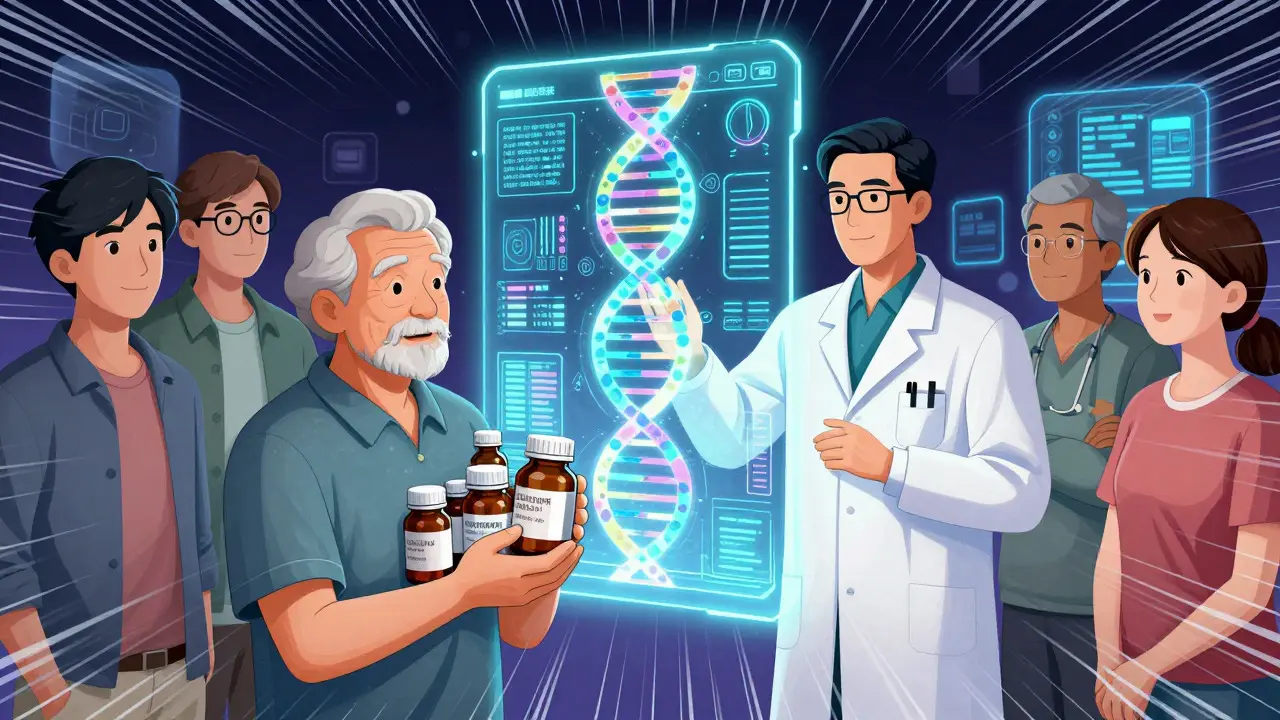
Genetics: Your DNA plays a huge role in how you metabolize drugs. Genetic polymorphisms can make you a "poor metabolizer" or an "ultrarapid metabolizer." For example, people who are poor metabolizers of CYP2D6 may not convert codeine into morphine effectively, rendering it useless. Conversely, ultrarapid metabolizers might convert it too quickly, leading to accidental opioid overdose. The Clinical Pharmacogenetics Implementation Consortium (CPIC) provides guidelines to help doctors navigate these genetic differences.
Age and Organ Function: As we age, our liver and kidney function naturally decline. Since these organs are responsible for clearing drugs from the body, even standard doses can accumulate to toxic levels if combined with interacting medications.
The Role of Technology and Prevention
You might wonder, "If these interactions are so well understood, why do they still happen?" The answer lies in the complexity of modern healthcare and the limitations of current technology.
Electronic Health Records (EHRs) have built-in alert systems to warn doctors about potential interactions. However, these systems are notorious for generating false alarms. Studies show that 80% to 90% of DDI alerts are considered non-actionable or low-risk. This leads to "alert fatigue," where clinicians become desensitized and override warnings, potentially missing the rare but critical ones.
Despite these challenges, prevention strategies are improving. Here is how you can stay safe:
- Maintain a Master Medication List: Include prescription drugs, over-the-counter medications, vitamins, and herbal supplements. Many people forget that St. John’s Wort or garlic supplements can interact with blood thinners.
- Use One Pharmacy: Having all your prescriptions filled at the same pharmacy allows the pharmacist to see your complete medication profile and catch interactions that separate prescribers might miss.
- Ask About OTCs: Never assume over-the-counter drugs are safe to mix. Acetaminophen, ibuprofen, and cold medicines can all interact with prescription drugs.
- Consult Before Starting Supplements: Herbal products are not regulated as strictly as pharmaceuticals, but their bioactive compounds can still inhibit or induce liver enzymes.
Community pharmacists are your best defense. Research indicates that pharmacist interventions can reduce clinically significant drug interactions by up to 37%. Don’t hesitate to ask them to review your regimen, especially if you’ve recently started a new medication.
Looking Ahead: Personalized Medicine
The future of managing drug interactions lies in personalized medicine. Artificial intelligence models are now being trained on millions of patient records to predict interactions with greater accuracy than traditional rule-based systems. Early studies suggest AI can predict DDIs with nearly 95% accuracy.
Furthermore, pharmacogenomics-the study of how genes affect a person's response to drugs-is moving from research labs to clinical practice. Guidelines from organizations like CPIC are helping doctors tailor prescriptions based on a patient’s genetic makeup, reducing the trial-and-error approach that often leads to interactions.
Until then, vigilance remains your strongest tool. Drug-drug interactions are a complex interplay of chemistry and biology, but understanding the basic mechanisms empowers you to ask the right questions and advocate for your own health.
What is the difference between pharmacokinetic and pharmacodynamic interactions?
Pharmacokinetic interactions involve one drug changing the concentration of another drug in the body (e.g., by affecting liver metabolism). Pharmacodynamic interactions occur when two drugs affect the same biological system, amplifying or canceling out each other's effects without necessarily changing blood levels.
Can herbal supplements cause drug interactions?
Yes. Herbal supplements like St. John’s Wort can induce liver enzymes, speeding up the breakdown of other drugs and reducing their effectiveness. Others, like grapefruit juice, can inhibit enzymes, leading to toxic drug buildup.
Why are elderly patients more prone to drug interactions?
Elderly patients often take multiple medications (polypharmacy), increasing the number of potential interaction pairs. Additionally, age-related declines in liver and kidney function can impair the body's ability to clear drugs, making them more sensitive to concentration changes.
What should I do if I suspect a drug interaction?
Contact your doctor or pharmacist immediately. Do not stop taking prescribed medications without professional advice, as abrupt cessation can also be dangerous. Provide a full list of all medications and supplements you are taking.
How do CYP450 enzymes influence drug interactions?
CYP450 enzymes, particularly CYP3A4, metabolize the majority of drugs. If a drug inhibits these enzymes, other drugs processed by the same enzyme can build up to toxic levels. If a drug induces these enzymes, other drugs may be cleared too quickly, becoming ineffective.