
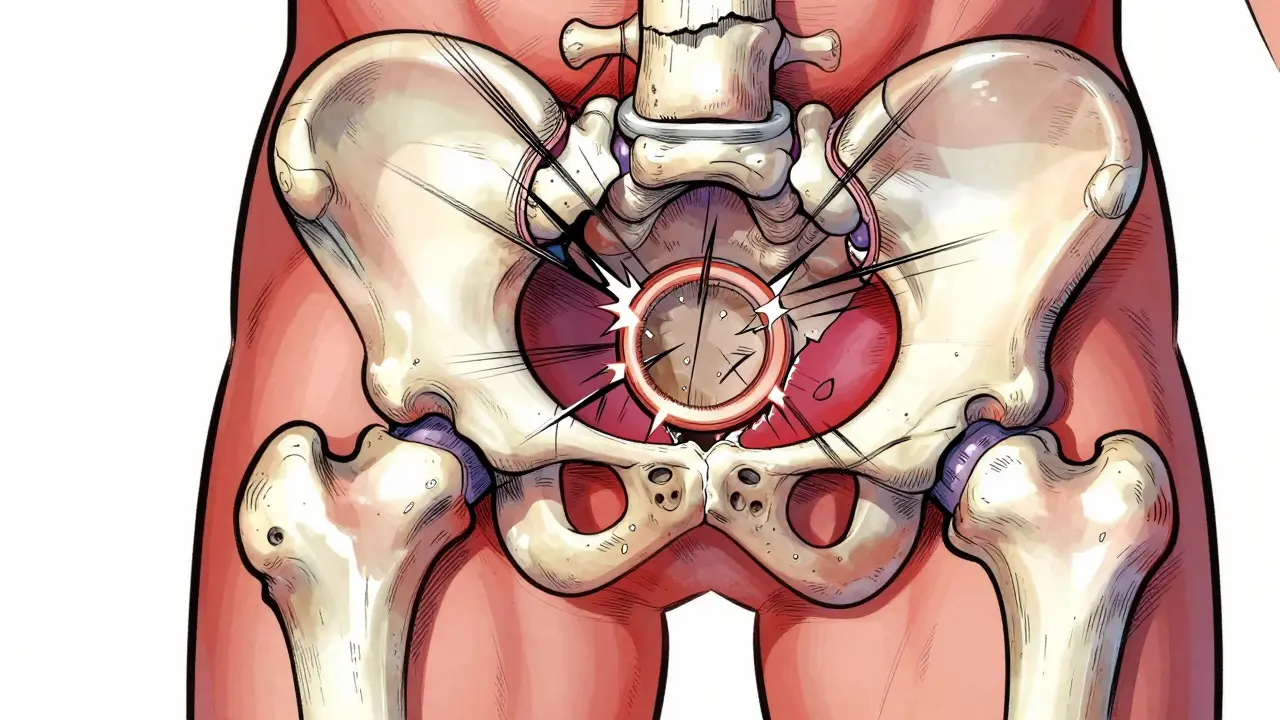
That sharp pinch in your groin or a deep ache in the buttock that won't go away is more than just bad luck. It’s often a sign of structural trouble inside the hip joint. For many people, this pain stems from two interconnected issues: labral tears, which are injuries to the cartilage rim of the hip socket, and hip osteoarthritis, the wear-and-tear degeneration of joint cartilage. Understanding how these conditions interact is key to stopping the cycle of pain and preserving your mobility without rushing into surgery.
The hip joint is designed for stability and weight-bearing, not extreme flexibility. When the ball (femoral head) and socket (acetabulum) don’t fit perfectly, they grind against each other. This friction can damage the acetabular labrum, a ring of fibrocartilage that acts as a seal and shock absorber. Once that seal breaks, pressure builds up, accelerating cartilage loss. The good news? You have control over how fast that process moves. By understanding your anatomy and modifying your daily movements, you can significantly reduce pain and delay the need for invasive procedures like total hip replacement.
Understanding the Root Cause: Labral Tears and Impingement
To fix the problem, you first need to know what’s broken. Most labral tears aren’t caused by a single traumatic event like falling off a bike. Instead, they result from Femoroacetabular Impingement (FAI). FAI occurs when extra bone grows on either the femoral head (cam-type), the acetabular rim (pincer-type), or both (mixed-type). This abnormal bone contact pinches the labrum during movement.
Think of the labrum as the rubber gasket on a car tire. If the rim is bent, the gasket gets crushed every time you drive. In the hip, this happens thousands of times a day. Research shows that 70-90% of patients with FAI have associated labral damage. Without treatment, this constant pinching strips away the protective cartilage, leading to early-onset arthritis. Recognizing this link is crucial because treating the symptoms alone-like taking painkillers-doesn’t stop the mechanical grinding.
The Arthritis Connection: A Bidirectional Relationship
For years, doctors viewed labral tears and arthritis as separate stages. We now know they feed each other. A torn labrum increases contact stress on the articular cartilage by nearly 92%, according to biomechanical studies. This accelerates the development of Hip Osteoarthritis (OA).
Conversely, if you already have mild arthritis, the joint becomes less stable, making the remaining labrum more vulnerable to tearing. This creates a vicious cycle. Dr. Brian White’s research highlights that a compromised labral seal reduces synovial fluid retention by 40-60%. Synovial fluid is the lubricant that keeps joints moving smoothly. Less fluid means more friction, which means more pain and faster degradation. Breaking this cycle requires addressing both the structural impingement and the resulting inflammation.
Activity Modification: Your First Line of Defense
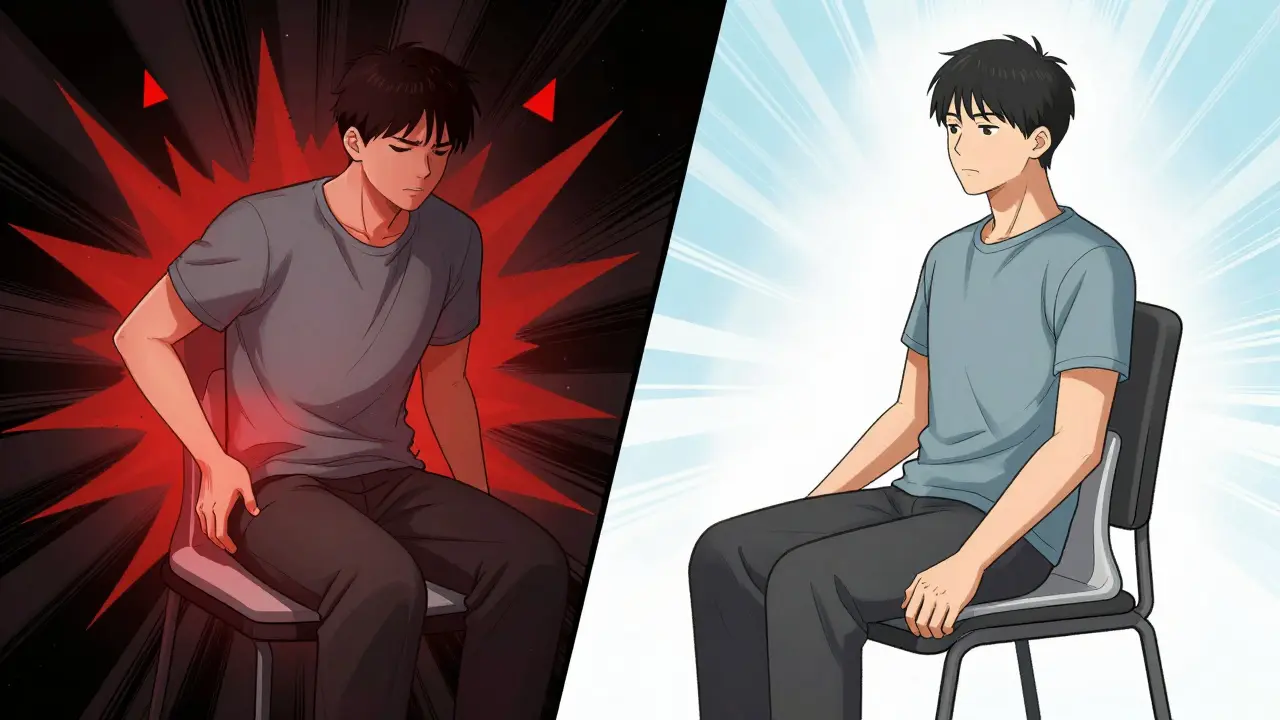
Before considering injections or surgery, activity modification is the most effective tool for managing hip pain. This isn’t about stopping all movement; it’s about avoiding specific positions that trigger impingement. The goal is to keep the hip within its "safe zone" where the bones don’t collide.
Here are the critical movements to avoid:
- Deep Flexion: Avoid bending your hip beyond 90 degrees. This includes sitting cross-legged, squatting deeply, or kneeling.
- Internal Rotation with Flexion: Don’t twist your knee inward while bending your hip. This combination is the primary driver of cam-type impingement.
- Prolonged Sitting: Sitting for more than 30-45 minutes increases intra-articular pressure. Stand up and walk around every hour.
Modifying these habits can reduce pain episodes by up to 52% in some cases. It forces the body to adapt and strengthens the surrounding muscles, particularly the glutes and core, which help stabilize the joint during daily activities.
Practical Adjustments for Daily Life
Knowing what to avoid is one thing; living with it is another. Small ergonomic changes can make a huge difference in your comfort levels throughout the day.
| Activity | Problematic Position | Modified Solution |
|---|---|---|
| Sitting at Desk | Hips lower than knees | Use a higher chair or wedge cushion to keep hips above 90 degrees |
| Driving | Hip flexed >90 degrees | Move seat back and use a lumbar support to maintain neutral spine |
| Toilet Use | Deep squat position | Install a raised toilet seat to reduce hip flexion by 15-20 degrees |
| Sleeping | Legs crossed or twisted | Sleep on your side with a pillow between knees to prevent internal rotation |
| Exercise | Deep squats/lunges | Switch to swimming, elliptical, or shallow box squats (<90 degrees) |
These adjustments might feel restrictive at first, but they protect the joint from further damage. For example, using a raised toilet seat isn’t just about convenience; it mechanically prevents the femoral head from jamming into the acetabulum. Similarly, placing a pillow between your knees while sleeping stops the top leg from rolling forward, which puts strain on the labrum.
Treatment Options: Conservative vs. Surgical
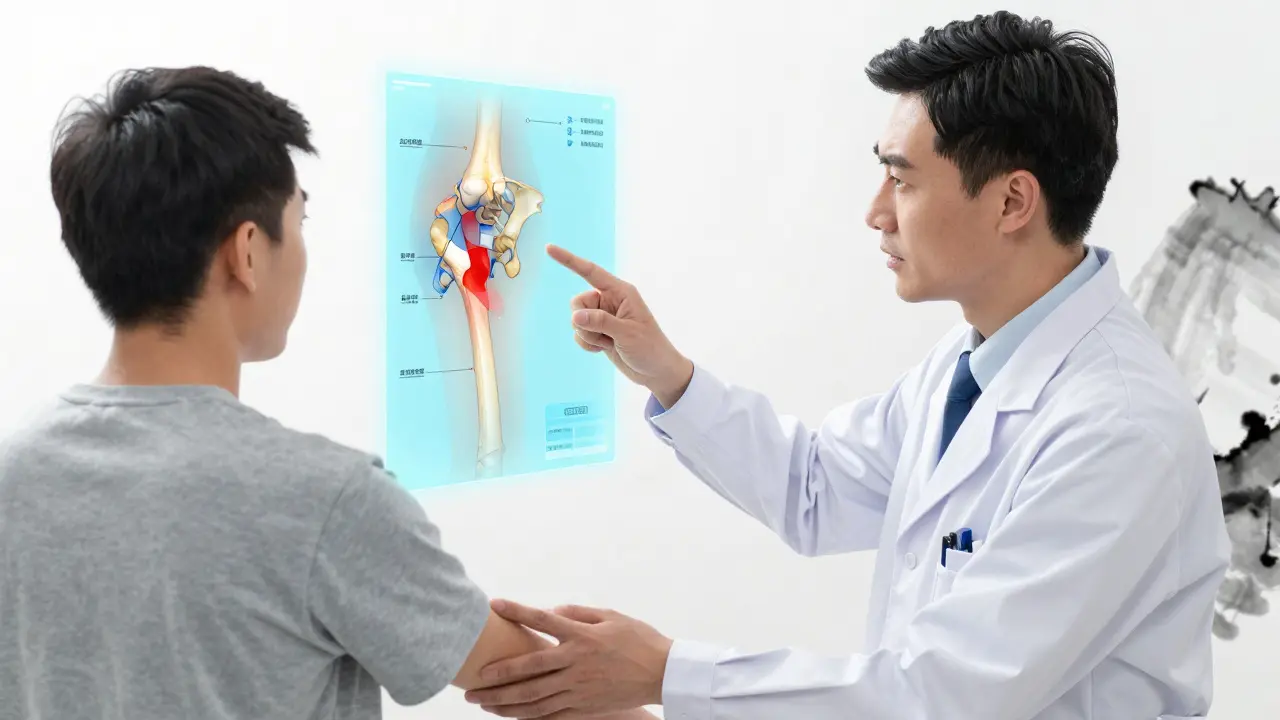
If activity modification doesn’t provide enough relief, medical interventions come into play. The choice depends heavily on your age, the severity of arthritis, and the type of impingement.
Conservative Management: This includes physical therapy focused on strengthening hip abductors and external rotators. NSAIDs like ibuprofen (400-800mg) can manage inflammation, but they don’t fix the mechanical issue. Corticosteroid injections offer temporary relief (average 3.2 months) for 68% of patients, but repeated use carries a risk of cartilage damage. Viscosupplementation (gel injections) has shown modest benefits, reducing pain by 15-20% in some cases, though effects often diminish after six months.
Surgical Intervention: For younger patients with significant FAI and minimal arthritis, Hip Arthroscopy is highly effective. Surgeons can shave down the excess bone (osteoplasty) and repair the labrum. Repair yields better long-term outcomes than simply trimming (debridement) the torn tissue, with satisfaction rates of 85-92% at five years. However, if you have advanced arthritis (Kellgren-Lawrence Grade 3-4), arthroscopy rarely helps, and total hip replacement may be the only viable option.
When to Seek Professional Help
You shouldn’t ignore persistent hip pain. Early intervention can delay the progression to severe arthritis by several years. Consult an orthopedic specialist if:
- Pain interferes with sleep or daily activities despite rest.
- You experience clicking, catching, or locking sensations in the hip.
- You have a limited range of motion, especially when putting on shoes or socks.
- Pain persists for more than 4-6 weeks despite activity modification.
Diagnosis typically involves a physical exam and imaging. MRI scans can detect early cartilage changes before they show up on X-rays. Quantitative MRI techniques, now available at major centers, allow doctors to see subtle degenerative changes, enabling earlier and more targeted treatment plans.
Can a labral tear heal on its own?
Labral tears rarely heal completely on their own because the labrum has poor blood supply. However, symptoms can improve significantly with activity modification and physical therapy. The goal is often to manage pain and strengthen surrounding muscles rather than expecting the tear to knit back together without surgical repair.
Is hip arthroscopy always necessary for a labral tear?
No. Many patients find success with conservative treatments like physical therapy, anti-inflammatory medications, and lifestyle modifications. Surgery is typically recommended if conservative measures fail after 3-6 months, or if there is significant mechanical impingement (FAI) that continues to damage the joint cartilage.
What exercises should I avoid with hip impingement?
Avoid exercises that combine deep hip flexion with internal rotation. This includes deep squats, lunges, yoga poses like pigeon pose or lotus position, and running on uneven surfaces. Low-impact activities like swimming, cycling (with proper seat height), and using an elliptical machine are generally safer alternatives.
How does arthritis affect the decision to repair a labral tear?
If significant arthritis is present, repairing the labrum is often ineffective because the underlying cartilage damage is the primary source of pain. In cases of moderate to severe osteoarthritis, surgeons usually recommend against arthroscopy, focusing instead on pain management or discussing total hip replacement options.
Can activity modification reverse hip arthritis?
Activity modification cannot reverse existing cartilage loss, but it can slow the progression of arthritis. By reducing mechanical stress and inflammation, you can preserve the remaining healthy cartilage for longer, potentially delaying the need for surgical intervention by several years.
1 Comments
I really appreciate this breakdown because it feels so much more manageable than just being told to 'rest'. The part about the safe zone is huge for me personally. I used to think I had to stop everything, but modifying how I sit and sleep has actually made a bigger difference than I expected. It’s nice to have concrete steps instead of vague advice.
Write a comment