
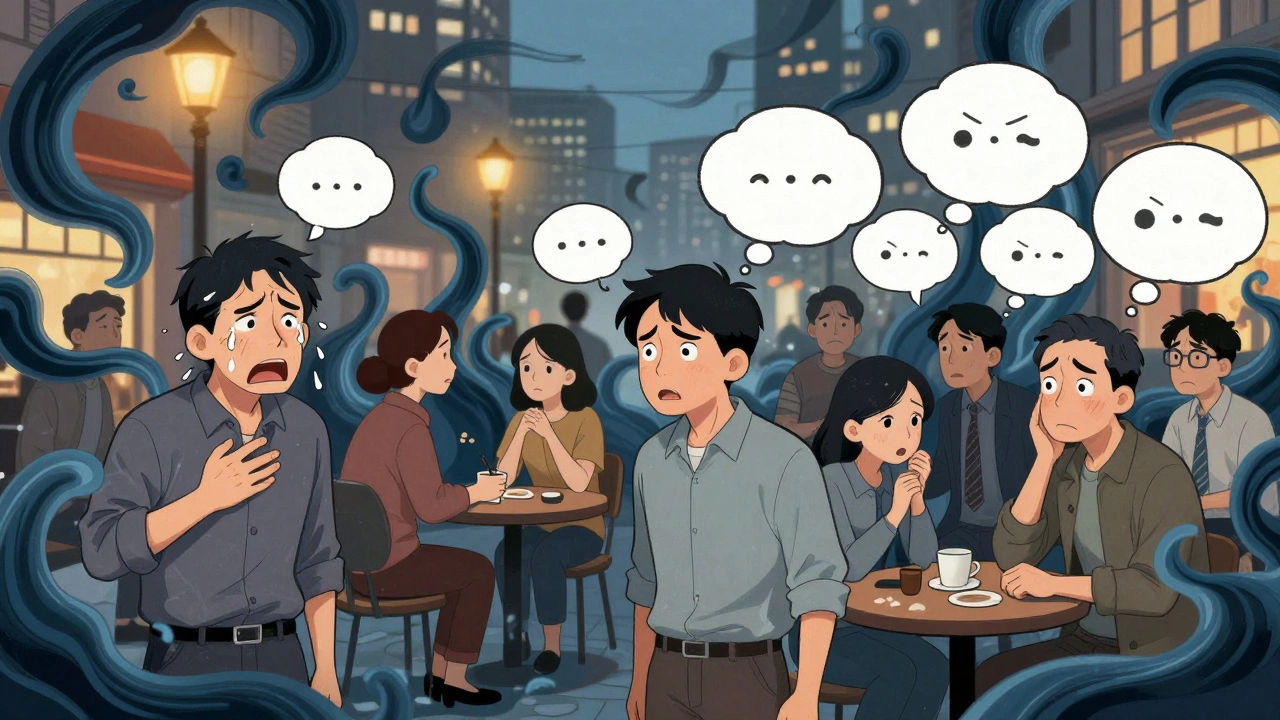
One in five adults in the U.S. deals with an anxiety disorder every year. That’s not rare. It’s common. And yet, many people suffer in silence, thinking they’re just ‘too stressed’ or ‘overreacting.’ The truth is, anxiety disorders aren’t just nervousness. They’re real, measurable, and treatable conditions that hijack your body and mind-often without warning.
What Are the Main Types of Anxiety Disorders?
Anxiety isn’t one thing. It shows up in different forms, each with its own pattern of fear and physical reactions. The DSM-5, the official guide doctors use to diagnose mental health conditions, lists seven main types. Here’s what they look like in real life.Generalized Anxiety Disorder (GAD) is when worry doesn’t turn off. It’s not about a specific event-it’s about everything. You might lie awake at 3 a.m., replaying conversations from three days ago, dreading a meeting that hasn’t even been scheduled yet. This isn’t just being cautious. It’s constant, uncontrollable tension that lasts six months or longer. About 3.1% of U.S. adults live with GAD.
Panic Disorder strikes suddenly. One moment you’re fine. The next, your heart pounds like it’s trying to escape your chest. You can’t breathe. Your hands shake. You think you’re having a heart attack. These panic attacks happen without a trigger-and then you start fearing the next one. That fear becomes its own prison. Around 2.7% of adults experience this.
Social Anxiety Disorder isn’t shyness. It’s terror of being judged. You avoid parties, skip work meetings, or stay silent in class because you’re convinced everyone is watching you, waiting for you to mess up. Even ordering coffee can feel like a performance review. This affects 7.1% of adults, making it one of the most common anxiety disorders.
Specific Phobias are intense fears of particular things-spiders, heights, flying, needles. The fear isn’t rational, but the physical reaction is real. Your body goes into full survival mode. Eight-point-seven percent of adults have at least one specific phobia. Many live with them quietly, avoiding triggers rather than seeking help.
Separation Anxiety Disorder isn’t just for kids. Adults can feel overwhelming panic when separated from a partner, child, or even a pet. You might call constantly, refuse to travel, or feel physically ill when alone. It’s not clinginess-it’s a deep, biological fear of abandonment. About 4.1% of U.S. adults have this.
Obsessive-Compulsive Disorder (OCD) is often misunderstood. It’s not about being tidy. It’s about intrusive thoughts-like fearing you’ll hurt someone, or that you didn’t lock the door-and the rituals you do to silence them. You wash your hands until they bleed. You check the stove ten times. You count steps. These rituals don’t bring peace-they bring temporary relief before the cycle starts again. OCD affects 1.2% of adults.
Selective Mutism is rare in adults but starts in childhood. A child who talks freely at home won’t speak at school-even when asked directly. It’s not defiance. It’s terror. Their voice locks up because the anxiety is too overwhelming. It affects less than 2% of school-aged kids.
What Do the Symptoms Really Feel Like?
Symptoms aren’t just ‘feeling nervous.’ They’re physical, mental, and emotional storms that crash over you.Physically, your body reacts like you’re being chased by a bear-even when you’re sitting at your desk. Heart rates spike to 110-140 beats per minute. You sweat so much your clothes stick to your back. Your hands tremble. You feel dizzy, nauseous, or like you’re going to pass out. Ninety-two percent of people with panic disorder report sweating during attacks. Eighty-seven percent feel trembling.
Mentally, your brain gets stuck on repeat. You can’t focus. You read the same sentence five times. Your thoughts race so fast you can’t catch them. You imagine worst-case scenarios-your boss hates you, your partner is leaving, you’re going to collapse in public. Eighty-nine percent of people with GAD say they can’t concentrate. Ninety-one percent get stuck in rumination, endlessly replaying mistakes.
Emotionally, you feel like you’re losing control. You fear you’re going crazy. You feel an overwhelming sense of doom, even when everything is fine. Ninety-five percent of people having a panic attack describe this feeling. You’re not being dramatic. Your nervous system is screaming danger-even when there’s none.
What Treatments Actually Work?
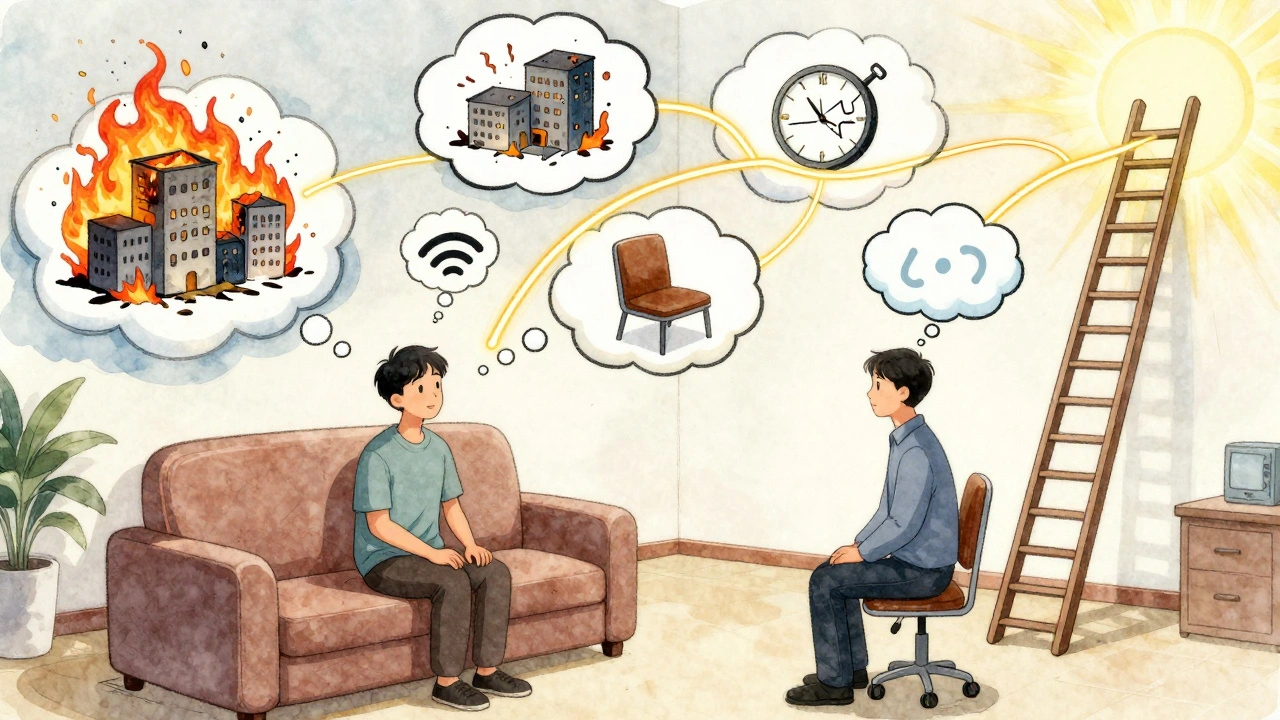
The good news? Anxiety disorders respond well to science-backed treatments. You don’t have to live like this forever.Cognitive Behavioral Therapy (CBT) is the gold standard. It’s not just talking. It’s training your brain to think differently. In CBT, you learn to spot distorted thoughts-like ‘Everyone thinks I’m weird’-and replace them with facts. You also face your fears gradually, in a controlled way. This is called exposure therapy. For social anxiety, that might mean saying hello to a stranger. For panic disorder, it could mean letting your heart race without running away. Studies show CBT reduces symptoms by 50-60%. Most people see real change by week 12.
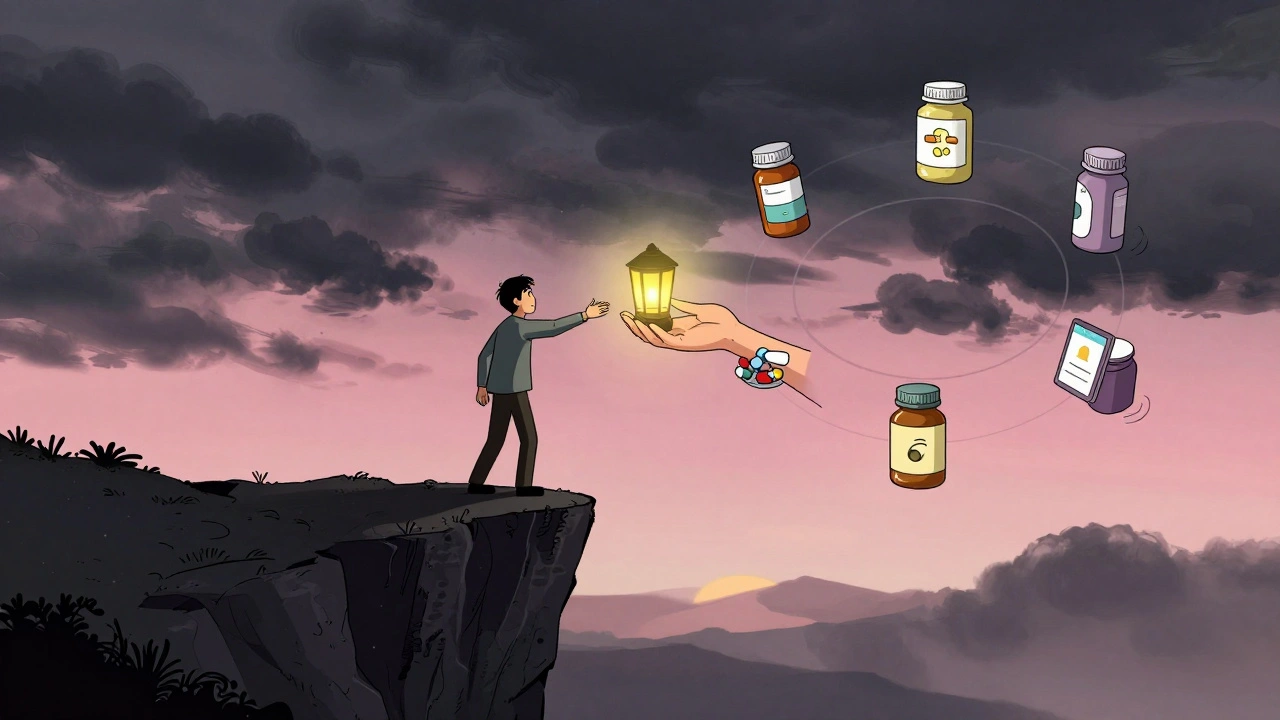
Medication helps too-especially SSRIs like sertraline (Zoloft) or fluoxetine (Prozac). These aren’t ‘happy pills.’ They slowly balance brain chemicals over 6-12 weeks. About 40-60% of people respond well. Side effects like nausea or sleep changes usually fade after a few weeks. SNRIs like venlafaxine work similarly. Benzodiazepines like Xanax give fast relief but are risky long-term. They can cause dependence, memory problems, and withdrawal. Doctors now recommend them only for short bursts.
Newer options are emerging. Zuranolone (Zurzuvae), approved in 2023, is the first oral pill specifically for postpartum anxiety. It works in days, not weeks. Acceptance and Commitment Therapy (ACT) is now considered as effective as CBT-it teaches you to sit with discomfort instead of fighting it. Ketamine-assisted therapy is showing promise for treatment-resistant cases, with 65% of patients reporting rapid relief in early trials.
What Gets in the Way of Recovery?
Knowing what works doesn’t mean everyone gets it.Wait times for therapists can be 6-8 weeks. Insurance often limits therapy sessions to 10-12 per year. Many people drop out because exposure therapy feels unbearable at first. One Reddit user wrote: ‘I wanted to quit after my first exposure session-I felt like I was going to die.’ But that’s normal. Temporary worsening is part of the process.
Medication side effects can be tough. Some people feel emotionally flat on SSRIs. Others can’t tolerate the nausea. That’s why finding the right fit matters. Switching from an SSRI to buspirone, for example, helped one user regain emotional balance without losing progress.
And then there’s stigma. Even in 2025, some people still think anxiety is ‘all in your head.’ But it’s not. Brain scans show real differences in how anxious people process threat. It’s a biological condition, not a personality flaw.
What Can You Do Right Now?
You don’t need to wait for a therapist to start feeling better.Try diaphragmatic breathing. Breathe in slowly through your nose for 5 seconds, hold for 2, then exhale through your mouth for 6. Do this for 2 minutes when you feel panic rising. It signals your body to calm down.
Use a free app like nOCD or Wysa. These are FDA-cleared digital tools that guide you through CBT exercises. Users report 35-45% symptom reduction in just 8 weeks.
Join a support group. The Anxiety and Depression Association of America hosts over 300 weekly groups. Talking to someone who gets it-without judgment-can be as powerful as therapy.
Track your symptoms. Write down when panic hits, what you were doing, and what thoughts popped up. Patterns emerge. You’ll start seeing triggers you didn’t notice before.
Hope Is Real
Anxiety disorders are chronic-but not permanent. With the right tools, most people go from barely functioning to living full, meaningful lives. You don’t have to fix everything at once. Just take the next small step. Call a therapist. Try one breathing exercise. Write down one thought that scared you. Progress isn’t linear. But it’s possible. And you’re not alone.
11 Comments
Man, I used to think I was just 'overthinking' until I got diagnosed with GAD last year. Now I look back and realize I was running on fumes for years-sleepless nights, sweating through meetings, avoiding calls just to dodge small talk. It’s wild how normal it all felt until you hear someone describe it exactly like your inner monologue. I started CBT and holy hell, it’s not magic but it’s the closest thing. My brain’s still noisy, but now I’ve got tools to quiet it down. You’re not broken. You’re just wired different.
It is imperative to underscore the empirical validity of Cognitive Behavioral Therapy (CBT) as the first-line intervention for anxiety spectrum disorders, as evidenced by meta-analytic reviews from the Journal of the American Medical Association and the Cochrane Database. Furthermore, the pharmacological efficacy of SSRIs, particularly sertraline and fluoxetine, demonstrates statistically significant reductions in symptom severity (p < 0.01) when administered over a 12-week therapeutic window. The integration of exposure hierarchies remains the cornerstone of behavioral intervention, with neuroimaging studies corroborating decreased amygdalar hyperactivity post-treatment.
Everyone these days says they have anxiety. Back in my day, we just dealt with it. You don’t need therapy-you need discipline. Stop overthinking. Go for a walk. Pray. Stop being so soft. This isn’t a medical condition, it’s a lack of willpower.
lol another ‘anxiety is real’ post. i’m just here for the memes. 😴
I’ve been sitting here reading this for like 20 minutes because I kept getting distracted by my own thoughts-wondering if I’m actually anxious or just tired, or if I’m just pretending to be anxious because it’s trendy now, or if maybe I’m overanalyzing the fact that I’m overanalyzing… Anyway, I think what really hit me was the part about panic attacks feeling like your heart’s trying to escape. I had one last summer at the grocery store. I thought I was dying. Turns out, I just needed to breathe. Not sure why it took me this long to realize it wasn’t a heart attack but a nervous system glitch. I’m still learning how to sit with it instead of running. It’s slow. But I’m trying.
I’ve been on Zoloft for six months now. The first month was rough-nausea, weird dreams, feeling like a zombie. But around week 10, something shifted. I didn’t wake up with that knot in my chest anymore. I started actually enjoying coffee in the morning instead of just drinking it to stay awake. It’s not a cure, but it’s like someone turned down the volume on the panic. I still have bad days. But now I know they’re temporary. And I’m not ashamed to say I take a pill every morning. It’s not weakness. It’s maintenance.
Let’s be honest-this is just the medical-industrial complex profiting off modern weakness. Anxiety? Just stop being dramatic. Go outside. Get a job. Stop scrolling. The DSM is a marketing tool, not science. People used to endure hardship without labeling it a disorder. This is the age of victimhood.
WAIT-ZURANOLONE?!!??!!?? WHO IS PAYING FOR THIS??!!??!!?? THEY’RE HIDING THE TRUTH!!??!!??!! THE PHARMA COMPANIES ARE IN BED WITH THE DSM!!??!!??!! AND WHY IS KETAMINE BEING PUSHED??!!??!!??!! THIS IS A COVER-UP FOR THE 5G ANXIETY AGENT!!??!!??!! I’VE BEEN RESEARCHING FOR 3 YEARS AND THIS IS A PSYOP!!??!!??!!
i had panic attacks for years and i just started doing breathin right and it helped. no meds no therapy. just breathe in 4 out 6. its that simple. why do people make it so hard??
CBT works. tried it. saved my life. no drama.
Ah, the existential liminality of somatic dysregulation in late-stage capitalism-fascinating! The commodification of therapeutic modalities, particularly the rise of digital CBT apps, mirrors the neoliberal co-optation of affective labor. One must ask: Are we healing, or merely optimizing our distress for productivity? 🤔 But seriously, the nOCD app is legit. I’ve used it. It’s like a mindfulness app designed by a therapist who’s been through it. Also, ketamine’s not magic-it’s a doorway. And sometimes, you gotta walk through the door even if you’re terrified. 🌌
Write a comment