
Don’t Just Take It-Check It
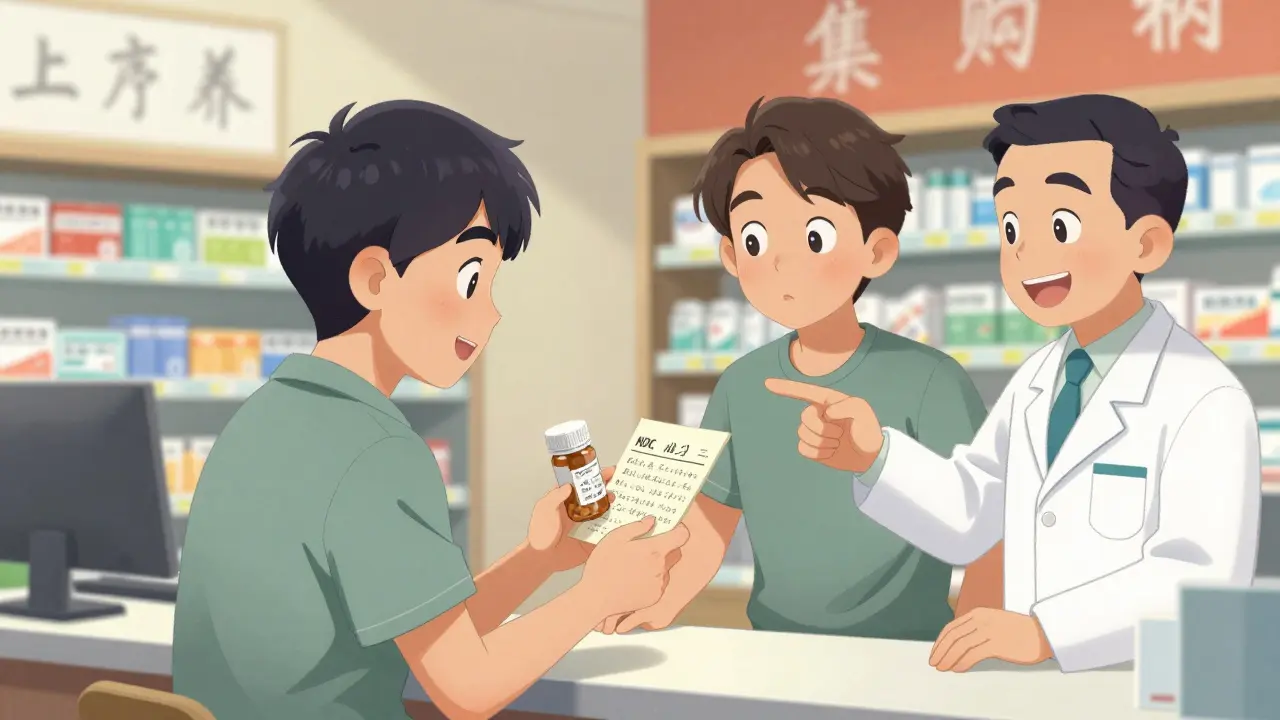
You walk up to the counter, the pharmacist hands you a bag with your pills, and you walk out. But what if that bottle isn’t yours? What if the strength is wrong? Or worse-what if it’s not even the right medicine? Every year, over 1.5 million people in the U.S. are harmed by medication errors, and many of them happen right at the pharmacy counter. The good news? You don’t have to be a victim. You’re the last line of defense-and you don’t need a medical degree to stop a mistake.
Seven Things to Check Before You Leave the Pharmacy
Spending just three minutes checking your prescription can prevent a dangerous error. Here’s exactly what to look for.
- Your name and date of birth-Make sure they match your ID. Pharmacists are human. Mix-ups happen, especially when names sound similar. One patient in Vancouver caught a mix-up because the label said "Linda Smith" but she’s "Linda Smithe." That extra "e" almost cost her a dangerous drug interaction.
- The drug name and strength-Compare the label to what your doctor told you. If your doctor prescribed 10 mg of lisinopril, but the bottle says 20 mg, don’t assume it’s a typo. Ask. Dosage errors are the most common type of pharmacy mistake, making up over one-third of all errors.
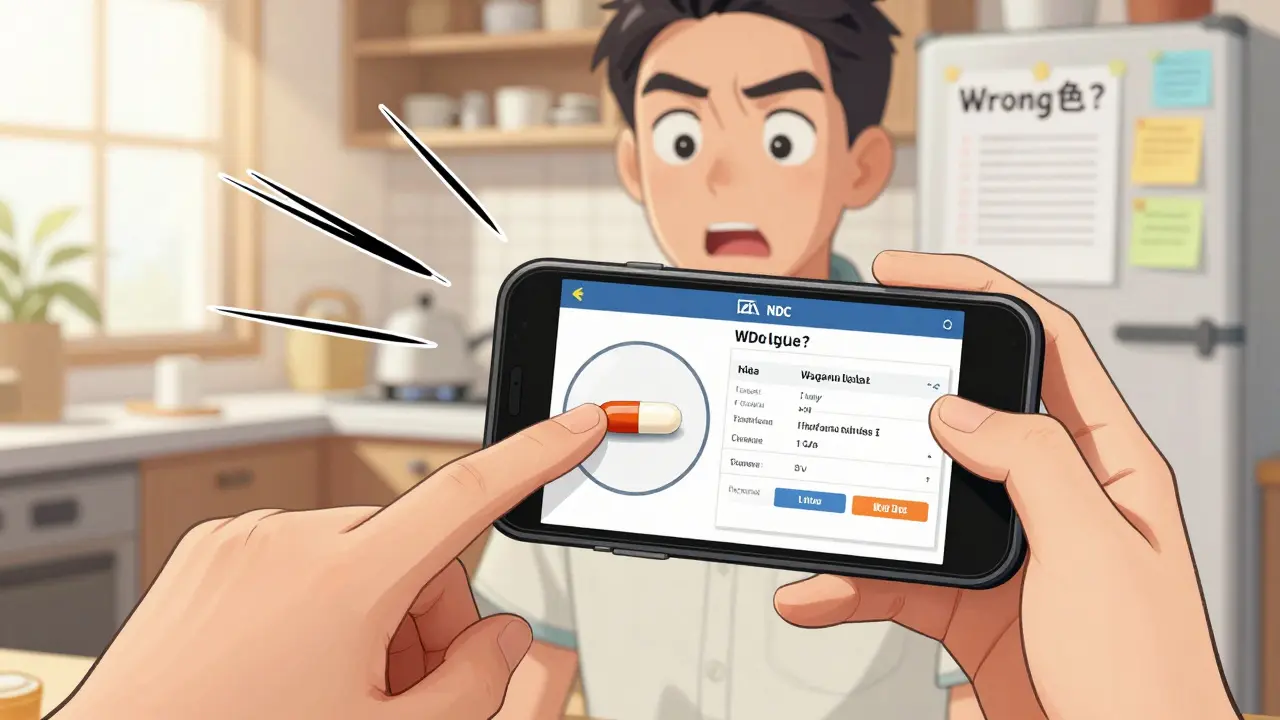
- The National Drug Code (NDC)-This is the 11-digit number on the label. You can look it up on the FDA’s NDC directory online. If the drug looks different than usual-say, your usual blue pill is now white-this is how you catch a substitution error. About 8% of errors involve the wrong medication, even when the label looks right.
- The quantity-Count the pills. If your prescription is for 30 pills and you get 28, ask why. Missing tablets happen more often than you think. One study found that over 22% of quantity errors are caught only when patients count right away.
- The instructions-"Take one by mouth daily" sounds simple, but what does "daily" mean? Morning? Night? With food? If the label says "QD" or "BID," ask what that means. Over 18% of errors come from unclear or missing instructions.
- The expiration date and packaging-Check the date. Expired meds don’t work-and some can be dangerous. Also, look for torn blister packs, leaking bottles, or labels that look smudged or poorly printed. The FDA has recalled pills with wrong labels because of packaging issues.
- Controlled substances-If you’re picking up opioids, sleep aids, or stimulants, the pharmacy is legally required to verify your address and ID. If they don’t ask, speak up. Pharmacies are now required to follow stricter DEA rules for these drugs.
Why This Works: The Numbers Don’t Lie
It’s not just advice-it’s science. Studies show that when patients actively check their prescriptions, medication errors drop by nearly 37%. In one hospital system, patients who asked to see the bottle before leaving caught 65% of potential errors. That’s not luck. That’s vigilance.
Pharmacists know this. According to the American Pharmacists Association, 92% of them encourage patients to verify their meds. And yet, only about 29% of patients actually do it. Why? Most people trust the system. But trust doesn’t replace verification. Even the best pharmacies make mistakes. And you’re the only one who knows what your body should be getting.
What to Say When Something Feels Off
You don’t need to be aggressive. Just clear and calm. Here are three simple phrases that work:
- "Can you show me the bottle before you label it?"-This catches 80% of mix-ups between similar-looking drugs, like metoprolol and propranolol.
- "This doesn’t look like my usual pill. Can you confirm this is right?"-Generic brands change color and shape. If your usual white oval is now a blue capsule, it’s worth asking.
- "What is this for?"-If the pharmacist says, "It’s for your blood pressure," but you’re not on blood pressure meds, that’s a red flag.
And if they brush you off? Say: "I’d like to speak to the pharmacist in charge." Most pharmacies have a protocol for this. If they still won’t help, file a report with the state board of pharmacy. You have the right to be safe.
Common Problems-and How to Fix Them
- Small print on the label?-Ask for a magnifying glass. Over 76% of pharmacies keep them behind the counter. Or use your phone’s camera to zoom in.
- Generic vs. brand confusion?-Your doctor may have prescribed "Lipitor," but you got "atorvastatin." That’s normal. But make sure the strength matches. The FDA says generics must be identical in dosage and effect.
- Too busy to ask questions?-Pharmacists are stretched thin. But if you’re in a rush, say: "I need to check this before I leave-can you hold it for a minute?" Most will wait. If they don’t, go to a different pharmacy. Your safety isn’t negotiable.
Mail-Order and Online Pharmacies: A Different Risk
Getting meds delivered? The risk goes up. Telehealth prescriptions have a 40% higher error rate than in-person ones. Why? No face-to-face check. No chance to see the bottle before it’s shipped.
For mail-order: Open the box in front of a mirror or with someone else. Check all seven items on the list. Keep the original packaging until you’ve verified everything. If something’s wrong, take a photo. Report it immediately. Many online pharmacies now let you scan a barcode on their app to see a photo of the actual pill before delivery. Use it.
What’s Changing in 2026
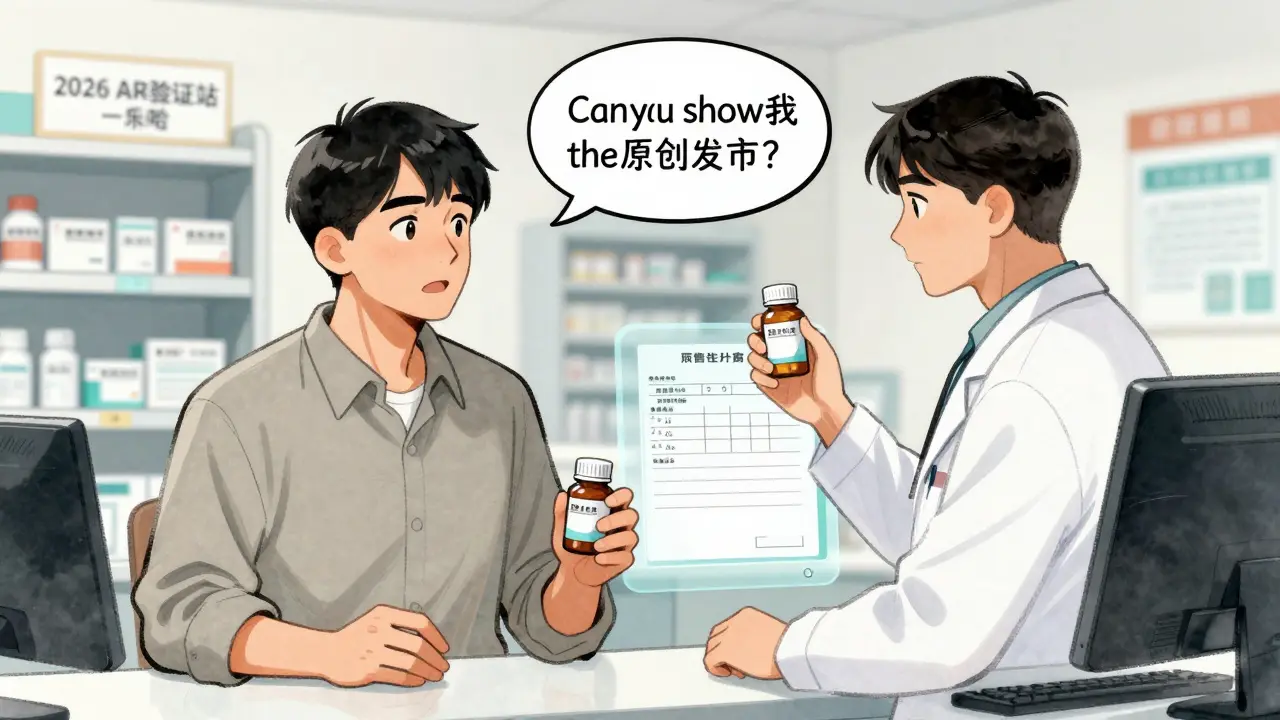
Pharmacies are upgrading fast. By 2026, most major chains will have digital verification stations-tablets where you can scan your prescription and see a picture of the pill, its dosage, and even a short video on how to take it. Some are even testing augmented reality apps: point your phone at the bottle, and it shows you the correct label and warnings.
But until then, you still have to do the work. Technology helps-but it doesn’t replace your eyes and your voice.
One More Thing: Keep a Medication List
Write down every drug you take-name, dose, why you take it, and when. Keep it in your wallet or phone. When you get a new prescription, compare it to your list. If it’s not there, ask why. If it’s a duplicate, speak up. Therapeutic duplication (taking two drugs that do the same thing) is a silent killer-and pharmacists can miss it if they’re not told your full list.
Final Thought: You’re Not Being Difficult. You’re Being Smart.
Some people feel awkward asking questions. They worry they’ll seem like they don’t trust the pharmacist. But here’s the truth: the best pharmacists want you to ask. They’ve seen what happens when no one checks. They’ve seen the hospitalizations, the falls, the overdoses-all preventable.
Verifying your prescription isn’t about doubting your pharmacist. It’s about partnering with them. You know your body. They know the medicine. Together, you’re unstoppable.
What should I do if I realize I got the wrong medication after I leave the pharmacy?
Stop taking the medication immediately. Call the pharmacy and explain what happened. They’ll likely ask you to return it. Then call your doctor to confirm the correct prescription. If you’ve already taken a dose and feel unwell, go to an urgent care center or call Poison Control at 1-800-222-1222. Don’t wait for symptoms to get worse.
Can I ask to see the original prescription from my doctor?
Yes. Pharmacists are required to have the original prescription on file. If you’re unsure whether the medication matches what your doctor ordered, ask to see a copy. Most pharmacies will show you the electronic or printed version. This is especially important for controlled substances or high-risk drugs like insulin or blood thinners.
Is it normal for the pill to look different than last time?
Yes-if your pharmacy switched to a different generic manufacturer. Generic drugs can change color, shape, or markings. But the active ingredient and strength must be the same. Always check the drug name and dosage on the label. If you’re unsure, ask the pharmacist to confirm it’s the same medication, just a different brand. Don’t assume it’s safe just because it’s "the same drug."
What if I don’t understand the instructions on the label?
Never guess. Ask the pharmacist to explain it in plain language. Write it down. If they use abbreviations like "QHS" (at bedtime) or "TID" (three times a day), ask what they mean. You can also ask for a printed sheet with simple instructions. The FDA recommends patients always ask: "What is this for?", "How and when should I take it?", and "What side effects should I watch for?"
Do I need to verify my prescription every time, even if I’ve taken it before?
Yes. Medication errors happen most often with drugs you’ve taken before. That’s because you assume it’s right. But your dose could have changed. The manufacturer could have switched. The pharmacy could have pulled the wrong bottle. Always check. Even if you’ve taken it for years.
Can I get help verifying my prescriptions if I have vision problems or a disability?
Yes. Pharmacies are required to provide reasonable accommodations. Ask for large-print labels, audio instructions, or help reading the label. Many pharmacies offer free home delivery with verification calls. You can also bring a family member or caregiver with you. Your safety matters more than convenience.
10 Comments
I used to just grab my scripts and go until my grandma had a bad reaction to a mix-up. Now I check everything. Took me 3 minutes once and caught a 20mg instead of 10mg. Pharmacist apologized and said most people don’t look. Honestly? I’m glad they don’t.
This checklist is naive. The FDA’s NDC database is riddled with inaccuracies. I’ve seen the same drug listed under three different NDCs. Pharmacies don’t even verify against the original script-many rely on automated systems that auto-populate from telehealth APIs. And don’t get me started on how generics are repackaged in warehouses with zero quality control. This isn’t patient vigilance-it’s a band-aid on a hemorrhage.
Let’s be real-37% error reduction? That’s from one study with a sample size of 200 in a single hospital. Meanwhile, the CDC says 70% of medication errors occur due to prescriber handwriting or electronic prescribing glitches. You’re blaming the patient for systemic failures. Also, why is no one talking about how insurance companies force generic substitutions without consent? This whole thing feels like corporate gaslighting dressed as empowerment.
There’s a metaphysical layer here, don’t you think? The pill is not just a chemical compound-it’s a symbol of institutional trust, fractured by capitalism’s commodification of healing. When you hold that bottle, you’re holding the weight of a broken healthcare covenant. The label? A performative artifact. The real prescription is your awakening to the absurdity of surrendering autonomy to systems designed to optimize profit, not presence. Check the NDC? Yes. But first, check your soul’s alignment with the ritual of consumption.
People are lazy. I live in India, we don’t have fancy pharmacies, but we check everything because we know no one else will. You think a pharmacist in America cares? They’re paid by the hour. You want to live? Do the work. No excuses.
This is such a helpful guide. I’ve shared it with my mom who’s on six meds and gets confused easily. She said she feels more in control now. Small steps matter. You don’t need to be a doctor to protect yourself. Just be present. And if you’re nervous asking questions-just say, 'I want to make sure I’m doing this right.' They’ll appreciate it.
I used to think checking my meds was overkill until I got a bottle of amoxicillin that looked like a different color and had no expiration date. I called the pharmacy and they said, 'Oh, we switched suppliers last week.' No warning. No note. I just got lucky I noticed. Now I take a photo of every new script before I leave. Even if I’ve taken it for 10 years. I’ve caught two errors this way. One was a 50mg instead of 5mg. That’s a whole other life.
I used to feel silly asking questions. Like I was wasting their time. But after my aunt ended up in the ER because of a wrong blood thinner dose, I stopped caring about being polite. Now I say, 'I need to verify this is safe for me.' And I say it calmly but firmly. The best pharmacists don’t mind. The bad ones? They’re the ones you should report.
They’re watching you. The pills, the labels, the NDC scans-it’s all part of the data harvest. Your medication history is sold to insurers, pharma, and who knows what else. The 'check your prescription' advice? It’s a distraction. They want you to think you’re safe because you’re checking labels, while your entire health profile is being monetized behind the counter. Don’t be fooled.
Bro, this is gold. In India, we don’t have the luxury of big pharmacies, so we learn early-check the name, check the number, check the color. But honestly? The biggest thing is just talking. I always ask my pharmacist, 'Is this what my doctor said?' And I say it with a smile. Makes them feel seen. And sometimes they’ll say, 'Oh wait, this is wrong,' before I even finish. People forget-pharmacists are humans too. They want to get it right. Just give them a chance to.
Write a comment