
Tyramine Food Checker
Check food safety while taking MAOIs. Foods with over 25mg tyramine per 100g can cause dangerous blood pressure spikes.
The tool compares your input against a database of tyramine levels. Foods with:
- Over 25mg/100g - High risk (avoid)
- 10-25mg/100g - Moderate risk (limit)
- Under 10mg/100g - Low risk (safe)
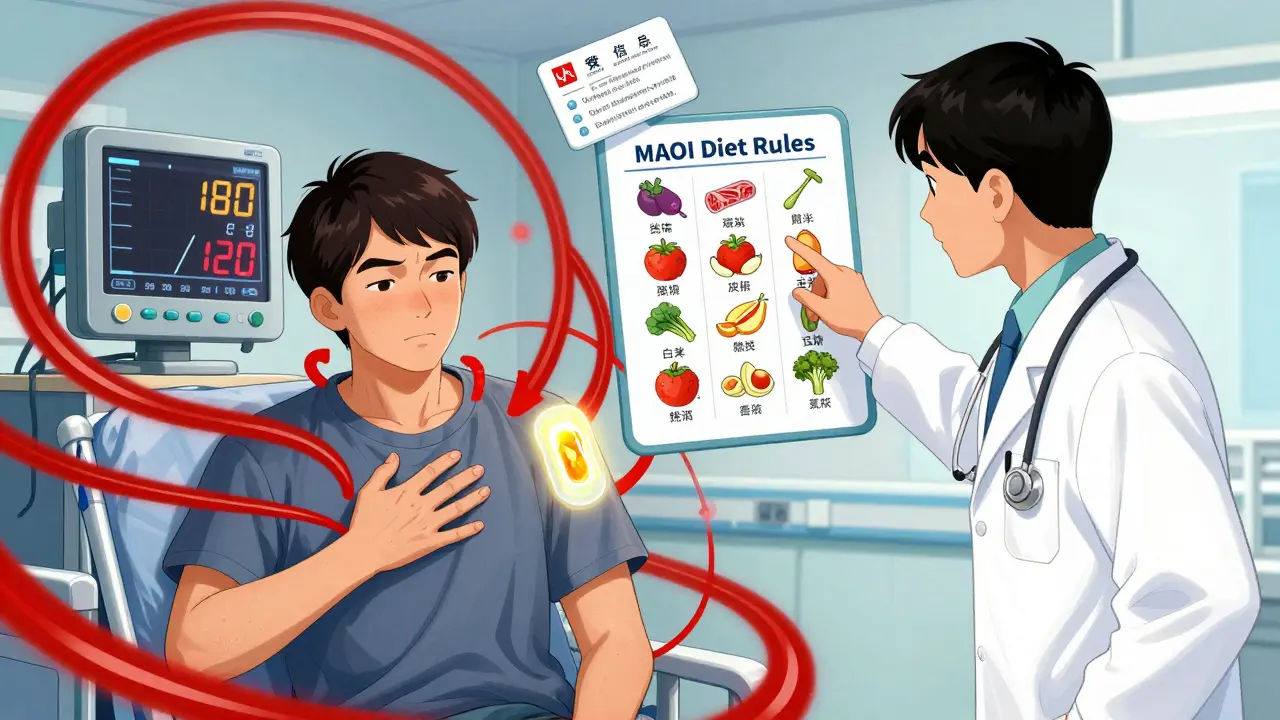
When you're taking MAOIs for depression, what you eat isn't just about nutrition-it can be a matter of life or death. Monoamine Oxidase Inhibitors (MAOIs) like phenelzine, tranylcypromine, and isocarboxazid work by blocking enzymes that break down brain chemicals like serotonin and norepinephrine. But they also block the enzyme that breaks down tyramine, a naturally occurring compound in certain foods. When tyramine builds up in your system, it can trigger a sudden, dangerous spike in blood pressure-sometimes above 180/120 mmHg. This isn't a theoretical risk. It’s a real, documented emergency that has sent people to the ICU.
Why Tyramine Is Dangerous with MAOIs
Normally, your body uses an enzyme called MAO-A to break down tyramine right after you eat it-mostly in your gut and liver. That keeps tyramine levels low. But MAOIs shut down MAO-A completely. When that happens, tyramine slips into your bloodstream unchecked. Once there, it forces your nerve cells to dump stored norepinephrine, which acts like a full-throttle signal to your heart and blood vessels. Your blood pressure rockets up. Symptoms include pounding headache, blurred vision, chest pain, rapid heartbeat, and nausea. In rare but severe cases, it can lead to stroke or brain hemorrhage.
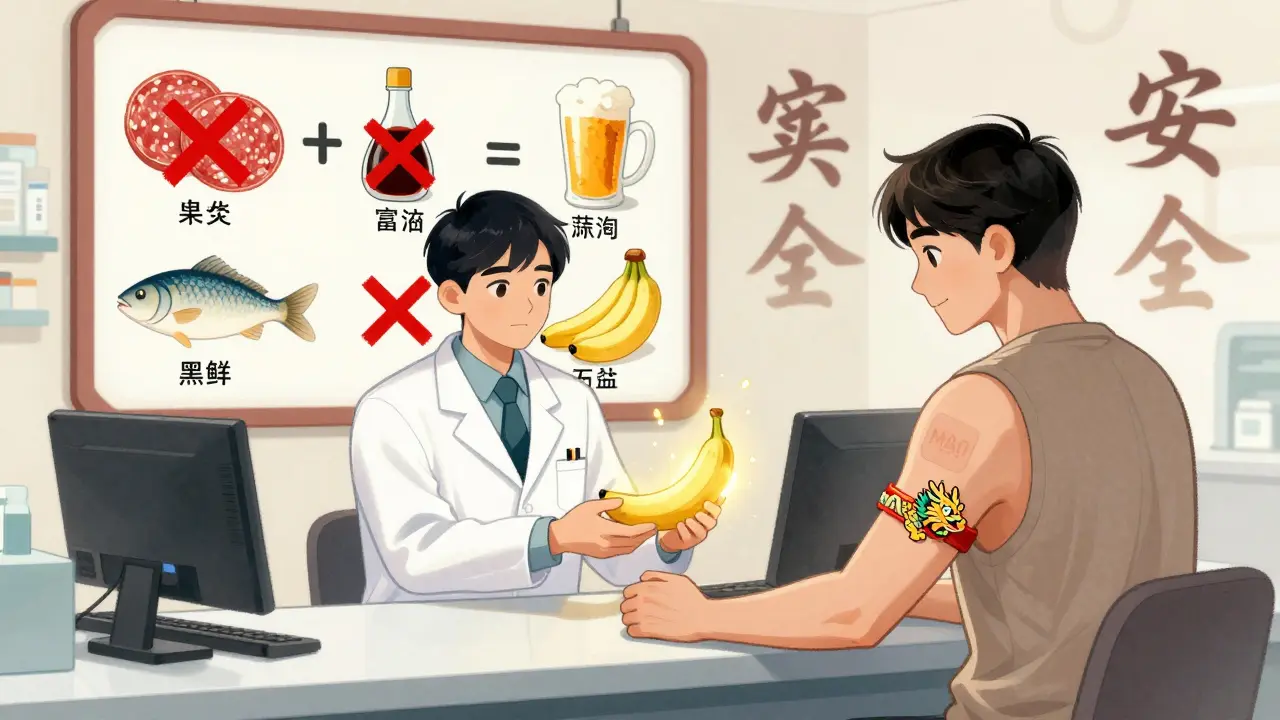
The amount of tyramine needed to trigger this reaction is surprisingly small. Just 10 to 25 milligrams-about the amount in one ounce of salami or two tablespoons of soy sauce-can be enough if you're on an irreversible MAOI. And because these drugs bind permanently to the enzyme, your body needs two to four weeks to rebuild new MAO-A enzymes after you stop taking them. That means dietary restrictions don’t end when you feel better.
Foods That Can Trigger a Hypertensive Crisis
Not all foods are risky. Tyramine forms when proteins break down over time-through aging, fermentation, or spoilage. That’s why fresh foods are generally safe, and aged or preserved ones are not.
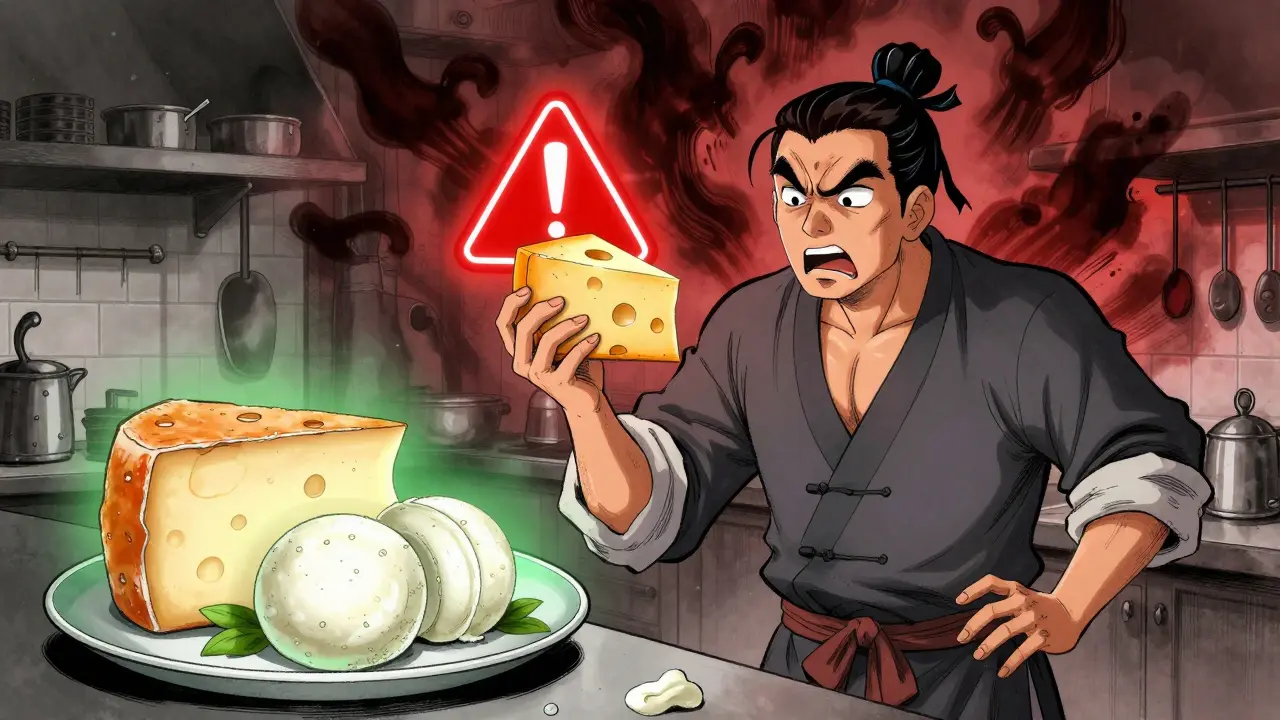
- Aged cheeses: Cheddar, Swiss, blue cheese, Parmesan, and feta contain 50 to 400 mg of tyramine per 100 grams. A single slice of aged cheddar can have 30 mg. Fresh mozzarella, cottage cheese, and cream cheese are fine.
- Dried or cured meats: Salami, pepperoni, summer sausage, and corned beef can contain 50 to 100 mg per ounce. Deli meats labeled "fresh" or "unaged" are safer, but always check the label.
- Fermented soy products: Traditional soy sauce, miso, and tempeh can have 30 to 50 mg per tablespoon. Many commercial soy sauces now have lower levels-around 30 mg per 100 ml-but it’s still too high for MAOI users. Tamari and coconut aminos are better alternatives.
- Fermented or spoiled fish: Smoked or pickled fish like herring, caviar, and anchovies are risky. Even slightly spoiled fish can contain dangerous levels. Stick to fresh, frozen, or canned fish packed in water or oil.
- Overripe fruits: Bananas, avocados, and raisins become risky when they’re very ripe or starting to brown. One overripe avocado can hit 10 mg of tyramine. Stick to firm, just-ripe fruit.
- Tap beer and homebrewed beer: These contain 10 to 30 mg of tyramine per 100 ml due to natural fermentation. Bottled or canned beer is usually fine in moderation. Wine (especially Chianti) and distilled spirits like whiskey or vodka are generally safe in small amounts.
There’s a myth that you have to avoid all fermented foods. That’s not true. Yogurt, kefir, and most pickled vegetables (like dill pickles) have very low tyramine and are safe. The key is knowing what’s aged, fermented, or spoiled-and avoiding it.
Modern MAOIs Are Safer-But Not All Are Equal
Not every MAOI carries the same risk. The old ones-phenelzine and tranylcypromine-are irreversible and non-selective. They block both MAO-A and MAO-B, so dietary restrictions are strict.
But newer forms change the game. The transdermal selegiline patch (Emsam), for example, delivers the drug through the skin. At the lowest dose (6 mg/24 hours), it doesn’t inhibit MAO-A in the gut, so you can eat most foods without restriction. At higher doses, restrictions return. Oral selegiline at doses under 10 mg/day also has less risk because it targets MAO-B more than MAO-A.
Even better, newer drugs like befloxatone (currently in Phase III trials) are designed to be reversible MAO-A inhibitors. That means tyramine can still be broken down if it builds up-making dietary rules much looser. These drugs may soon make strict diets a thing of the past.
Right now, about 75% of MAOI prescriptions in the U.S. are for the selegiline patch, largely because of its safety profile. If your doctor suggests an MAOI, ask if a transdermal option is right for you.
What About Other Medications and Supplements?
It’s not just food. Many over-the-counter and prescription drugs can also cause dangerous interactions.
- Decongestants: Pseudoephedrine and phenylephrine (found in Sudafed, Claritin-D, and many cold medicines) can cause the same blood pressure spike as tyramine. Use saline sprays or antihistamines instead.
- SSRIs and SNRIs: Never start an SSRI like fluoxetine or sertraline while on an MAOI. The combination can cause serotonin syndrome-a potentially fatal condition with high fever, seizures, and muscle rigidity. You must wait at least 14 days after stopping an MAOI before starting an SSRI.
- St. John’s Wort: This popular herbal supplement for depression also increases serotonin and can trigger serotonin syndrome with MAOIs.
- OTC cough syrups: Dextromethorphan (in Robitussin DM and others) can be dangerous. Use plain guaifenesin instead.
Always carry an MAOI alert card or wear a medical ID bracelet. Emergency responders need to know you’re on an MAOI before giving you any meds.
How to Stay Safe: Practical Tips
Managing MAOIs isn’t about perfection-it’s about awareness and smart choices.
- Read labels. Look for words like "aged," "fermented," "cured," or "smoked."
- When in doubt, don’t eat it. If you’re unsure whether a food is safe, skip it.
- Keep a food journal for the first few weeks. Note what you eat and any symptoms like headache or dizziness.
- Shop fresh. Buy produce and meats in small amounts and use them quickly. Avoid leftovers stored for more than a day or two.
- Ask your pharmacist to review all your medications-including vitamins and supplements.
- Never stop an MAOI suddenly. Taper under your doctor’s guidance.
Many people on MAOIs live full, healthy lives. The key isn’t fear-it’s knowledge. You don’t have to give up flavor. You just need to know which foods to swap.
What Happens After You Stop Taking MAOIs?
You can’t just stop and go back to your old diet. Even after you stop taking the medication, your body needs time to rebuild MAO-A enzymes. That process takes two to four weeks. During that time, you still need to avoid high-tyramine foods. Jumping back into aged cheese or salami too soon can still trigger a hypertensive crisis.
Once the enzyme levels are restored, you can gradually reintroduce foods. But only under your doctor’s supervision. Some people choose to stay on low-tyramine diets long-term, especially if they’ve had a reaction before.
Is an MAOI Right for You?
MAOIs aren’t first-line treatment anymore. But they’re still one of the most effective options for treatment-resistant depression, especially when other meds have failed. They’re also often used for atypical depression-where someone feels tired, sleeps too much, and gains weight instead of losing it.
Between 2019 and 2023, MAOI prescriptions rose by 18% annually in the U.S., not because they’re trendy, but because doctors are getting better at matching the right patient to the right drug. With the selegiline patch and better patient education, the risk of serious side effects has dropped below 0.5% per year.
If you’re considering an MAOI, talk to your doctor about alternatives. But if you’ve tried other antidepressants and they didn’t work, don’t rule out MAOIs. With the right precautions, they can be life-changing.
Can I drink alcohol while taking MAOIs?
Moderate amounts of wine or distilled spirits like vodka, whiskey, or gin are generally safe. But avoid tap beer, homebrewed beer, and fermented drinks like kombucha. These contain tyramine and can trigger a blood pressure spike. Also, alcohol can worsen dizziness or low blood pressure, which are common side effects of MAOIs. Stick to one drink, if any, and never mix with other medications.
Are there any safe cheeses I can eat?
Yes. Fresh cheeses like mozzarella, ricotta, cottage cheese, cream cheese, and goat cheese are safe. Avoid any cheese that’s aged, blue-veined, or labeled "sharp." If a cheese is hard and crumbly, it’s likely aged and risky. When in doubt, ask the deli counter if the cheese is fresh or aged.
What if I accidentally eat a high-tyramine food?
If you eat something risky and feel a sudden headache, chest tightness, rapid heartbeat, or blurred vision, seek emergency help immediately. Don’t wait. Call 911 or go to the nearest ER. These symptoms can escalate quickly. Keep your MAOI alert card with you so paramedics know what’s happening.
Can I take MAOIs with supplements like omega-3 or vitamin D?
Yes. Omega-3 fatty acids, vitamin D, magnesium, and most standard multivitamins are safe. Avoid supplements that contain tyramine, like certain protein powders or amino acid blends. Also avoid St. John’s Wort, 5-HTP, and L-tryptophan-they can cause serotonin syndrome when mixed with MAOIs.
How long do I need to follow a low-tyramine diet?
You must follow the diet for as long as you’re on the MAOI, and for at least two to four weeks after you stop. That’s how long it takes your body to make new MAO-A enzymes. Some doctors recommend staying on the diet for six weeks to be extra safe. Never assume it’s safe to go back to old habits just because you feel better.

12 Comments
So let me get this straight - I can’t eat my favorite pepperoni pizza anymore? Bro, I just started this med and my life is already a bland documentary.
As someone who’s been on selegiline patch for 18 months, I can confirm: the dietary restrictions are real, but the freedom at low dose is life-changing. I eat aged cheese now without sweating. Just don’t go above 6 mg/day and you’re golden.
One thing the article doesn’t emphasize enough: the timeline for enzyme regeneration is critical. Many patients stop the MAOI, feel great, and immediately go back to their old diet - then end up in the ER three weeks later. MAO-A isn’t like a light switch. It’s a slow rebuild. Your liver needs 2-4 weeks minimum. Some studies suggest up to 6 weeks for full recovery, especially in older adults or those with liver comorbidities. Don’t gamble with it. Keep the journal. Keep the alert card. This isn’t just advice - it’s survival protocol.
While the article provides a comprehensive overview of tyramine-containing foods, it neglects to address the pharmacokinetic variability across ethnic populations. For instance, Indian subcontinental populations exhibit higher expression of hepatic MAO-A isoforms, which may influence the threshold for tyramine-induced hypertensive crisis. Additionally, the widespread consumption of fermented soy products in South Asian cuisine - such as soybean paste and fermented fish - warrants culturally tailored dietary guidance. The current guidelines, largely derived from Western cohorts, may underestimate risk in populations with higher baseline tyramine exposure.
The assertion that "commercial soy sauce has lower levels" is misleading. While some brands reduce tyramine via filtration, enzymatic degradation during fermentation is non-linear and batch-dependent. The FDA does not regulate tyramine content in condiments. Therefore, labeling "low tyramine" is not standardized. Patients should treat all soy sauce as high-risk unless verified via HPLC analysis - which is not feasible in clinical practice. Tamari is not inherently safer; it’s merely less processed. The only reliable strategy is avoidance.
Everyone’s freaking out about cheese but nobody mentions that red wine has more tyramine than most aged cheddars. And yes I know it’s "generally safe" - until you drink two glasses and your head explodes. Also why is this even a thing? Why can’t we just have better drugs instead of making people live like monks?
Oh please. You’re telling me I can’t have my beloved blue cheese because some doctor says so? I’ve been on MAOIs for five years and I’ve eaten everything. I’m fine. Your fear-mongering is what’s actually dangerous - it makes people stop their meds. I’d rather die happy with a wedge of stilton than live a zombie on Zoloft.
So the real takeaway is: if you want to eat like a normal human, don’t take MAOIs. You’re not a patient. You’re a lab rat with a grocery list. Meanwhile, Big Pharma is quietly rolling out reversible MAO-A inhibitors - because even they know this is ridiculous. The fact that we’re still teaching patients to avoid "overripe bananas" in 2025 is a tragedy wrapped in a medical textbook.
I’ve been on MAOIs for two years and I’ve learned that the real challenge isn’t the food - it’s the social isolation. Birthday parties, family dinners, international travel - every gathering becomes a minefield. I’ve had to politely decline homemade lasagna because of the aged Parmesan, explain why I can’t have beer at a BBQ, and carry my own food to potlucks. It’s not just about avoiding tyramine. It’s about constantly defending your choices to people who think you’re being dramatic. The article mentions awareness - but doesn’t talk about the emotional toll. I’ve lost friends over this. And I’m still here, reading labels at 2 a.m., wondering if this is worth it. Maybe it is. But it’s not just a diet. It’s a lifestyle prison.
Overripe avocado = 10mg tyramine? Okay.
Let’s be real - if you’re on an MAOI and you’re not also doing therapy, you’re doing it wrong. These drugs don’t just change your brain chemistry. They change your identity. You go from "I’m depressed" to "I’m a walking biohazard." That’s heavy. The diet is just the surface. The real work is learning to live with the weight of your own survival. And yeah, sometimes you eat the cheese anyway. And you live. And you cry. And you keep going. That’s not noncompliance. That’s humanity.
I just started MAOIs and I’m already mad. Why do we have to be so careful? I mean, I take vitamin D and omega-3s and I’m not even sure if they’re really helping. Maybe I should just quit and get a pet rock instead. At least my rock won’t judge me for eating blue cheese. Also I think I read somewhere that chocolate has tyramine? Idk I’m confused now. 😔
Write a comment