
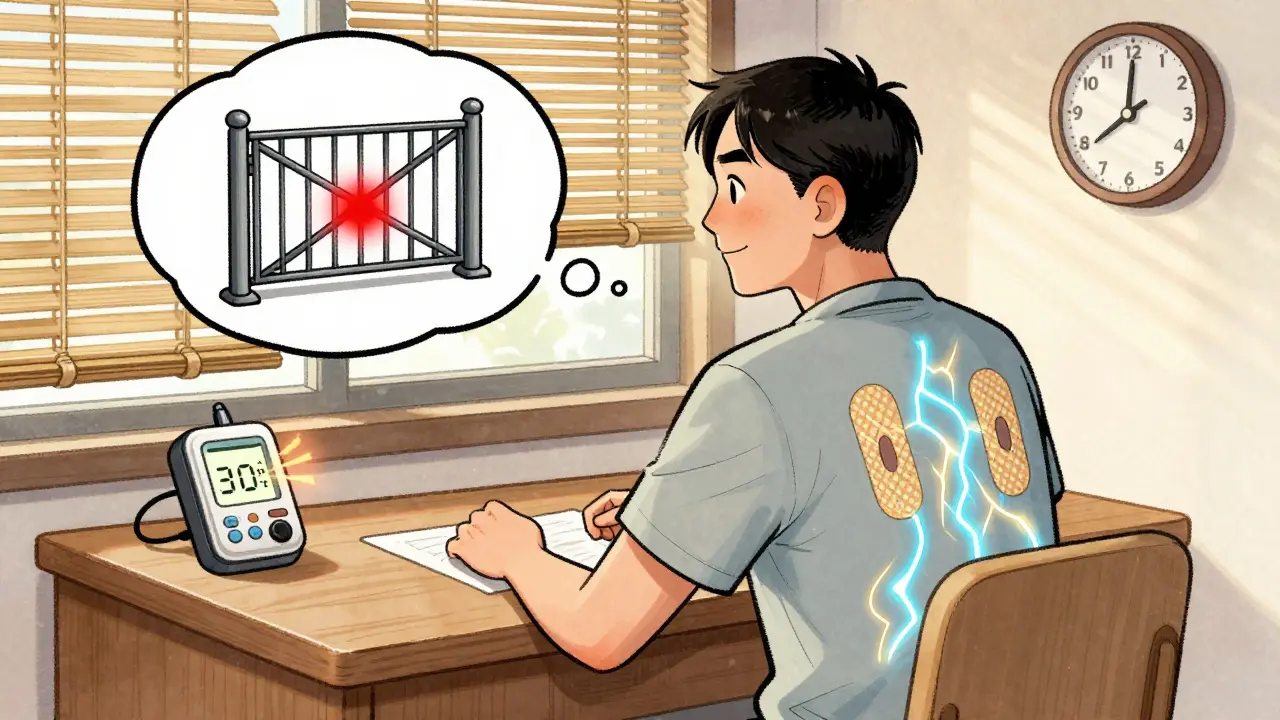
When you're dealing with chronic back pain, arthritis flare-ups, or post-surgery discomfort, reaching for another pill isn't always the best option. That’s where TENS therapy comes in - a simple, non-drug way to manage pain using a small device that sends gentle electrical pulses through your skin. No prescriptions. No side effects. Just a way to quiet the pain signals your body is sending. And it’s not just a gimmick - millions of people use it every day, and doctors are starting to recommend it more than ever.
How TENS Therapy Actually Stops Pain
TENS stands for Transcutaneous Electrical Nerve Stimulation. That’s a mouthful, but it’s really just a fancy way of saying: "electric pulses through your skin to block pain." The idea isn’t new. Back in 1965, researchers Ronald Melzack and Patrick Wall came up with the "Gate Control Theory" - basically, your nervous system has a gate that can be shut by non-pain signals. Think of it like turning up the volume on music to drown out a noisy neighbor. TENS does the same thing: it floods your nerves with harmless tingling sensations so your brain can’t focus on the pain.
There are two main ways TENS works, depending on how you set it:
- High-frequency TENS (50-100 Hz): This gives you a strong tingling feeling. It works fast, blocking pain signals right at the spinal cord level. Best for sudden, sharp pain like after surgery or a sprained ankle.
- Low-frequency TENS (2-5 Hz): This one feels like a deep pulse or muscle twitch. It doesn’t just block pain - it tells your body to release its own natural painkillers, like endorphins. This works better for long-term pain, like arthritis or chronic lower back pain.
Some newer units even have a "burst mode" that mixes both. It’s like getting the quick relief of high-frequency and the lasting effect of low-frequency in one setting.
What Conditions Does TENS Help With?
TENS isn’t a cure-all, but it’s been proven effective for several common pain problems:
- Lower back pain: A 2015 review found TENS reduced pain by 35.7% in people with osteoarthritis-related back pain - far better than placebo.
- Arthritis: Especially knee and hand osteoarthritis. Many users report being able to move more freely during and after sessions.
- Post-surgical pain: Studies show people using TENS after surgery needed 27% fewer opioids and had less nausea and drowsiness.
- Labor pain: A 2020 Cochrane review found TENS cut labor pain by 31% compared to no treatment.
- Neuropathic pain: Nerve pain from diabetes or shingles can respond well, though results vary.
But it doesn’t work as well for diffuse pain like fibromyalgia. Only about 38% of fibromyalgia patients get meaningful relief. That’s why it’s best used as part of a bigger plan - not a standalone fix.
Why People Love (and Hate) TENS Machines
Real users have strong opinions. On Amazon, over 1,200 reviews show 78% of people praise the immediate relief. One user wrote: "I use it at my desk every day. My sciatica flare-ups are gone in 10 minutes." Another said: "I stopped taking ibuprofen every night. No more stomach issues."
But it’s not perfect. The biggest complaints?
- It doesn’t always work: A study found 68% of failed TENS treatments happened because the intensity was too low. If it doesn’t feel strong enough, you’re not getting the full benefit.
- Skin irritation: 34% of users report redness or itching from the electrodes. Using conductive gel helps - it cuts signal loss by 63% and improves contact.
- Battery life: Most units last 8-10 hours at full power. Push the intensity high, like some users do, and you might need to recharge every 90 minutes.
- Placement matters: If the electrodes aren’t placed within 1-2 inches of the pain site, effectiveness drops by 41%. A physical therapist can show you the right spots.
One Reddit user put it perfectly: "TENS works great for my sciatica - but only if I crank it to 85%. Anything less just tickles. And yeah, the battery dies fast."
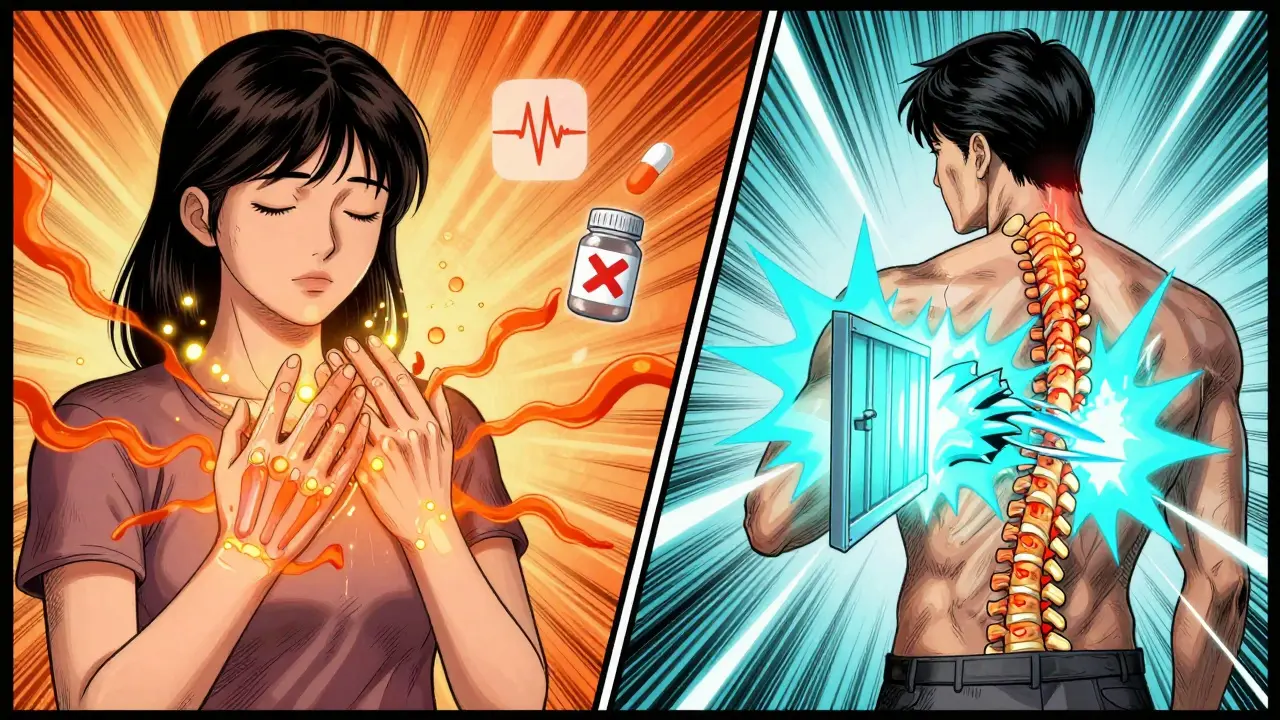
How to Use TENS Right
Using a TENS unit isn’t rocket science, but it’s not plug-and-play either. Here’s how to get it right:
- Start low: Set the intensity so you feel a strong tingling - not pain. If it hurts, turn it down.
- Place electrodes correctly: Put them on either side of the painful area, or along the nerve pathway. For lower back pain, place one on each side of your spine, just above the hips. For knee pain, place them above and below the kneecap.
- Choose the right mode: Use high frequency (80-100 Hz) for sharp, recent pain. Use low frequency (2-5 Hz) for dull, long-term pain.
- Time it right: 20-30 minutes per session, 2-3 times a day. Don’t overdo it - your nerves can get used to it.
- Use conductive gel: Especially if you have dry skin. It makes the connection better and reduces irritation.
Most manufacturers give you a 6-page manual. But if you’re serious about it, look for a unit with a 100+ page clinical guide - like the Omron Max Power - or ask your physical therapist for their protocol. Clinics that supplement manufacturer instructions see 85% better results.
What’s New in TENS Technology
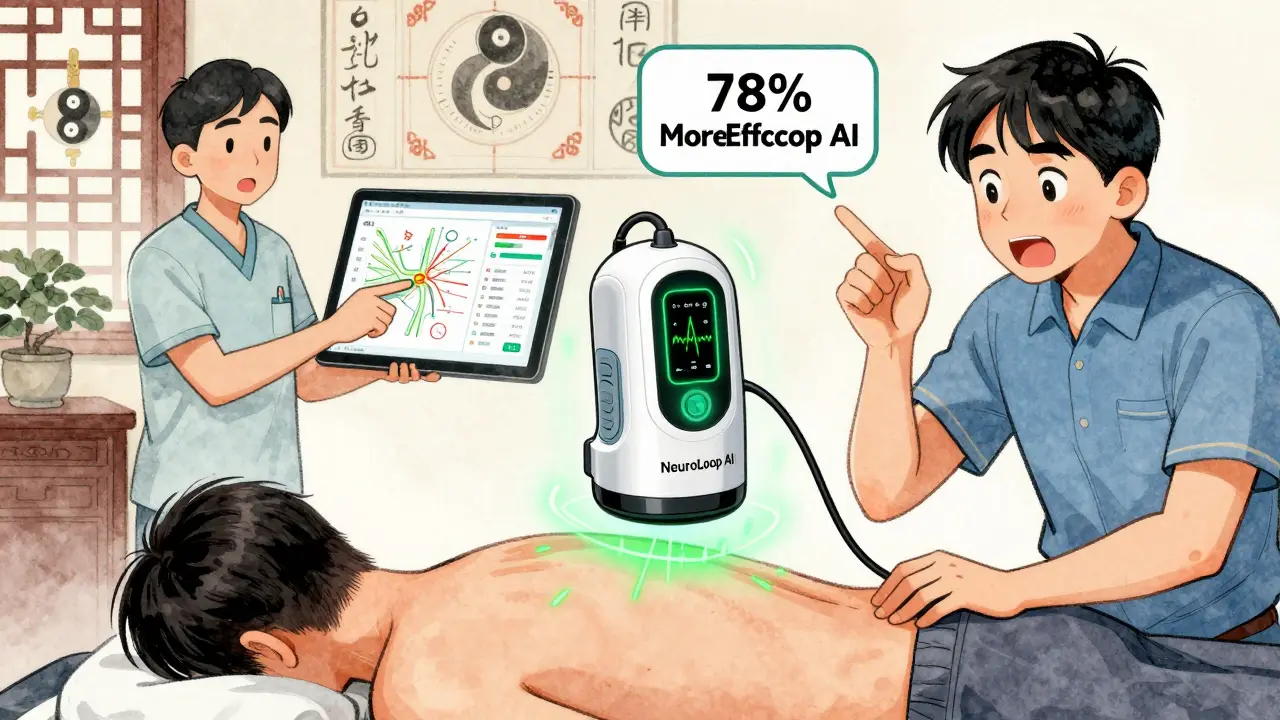
The field is moving fast. In May 2023, the FDA cleared the first AI-powered TENS device - NeuroLoop AI. It uses real-time feedback from your skin to adjust pulse strength automatically. In a trial, it reduced pain 44% more than standard units.
Also in development: "smart electrodes" with tiny sensors that check your skin’s resistance and tweak the current on the fly. The NIH just funded $2.4 million to bring this to market.
And it’s not just about the device. More pain clinics are linking TENS units to apps that track your usage and suggest optimal settings. By 2025, 78% of pain specialists believe TENS will be a standard part of digital pain management programs.
Is TENS Right for You?
TENS is a great option if you:
- Want to cut back on painkillers or avoid opioids
- Have localized pain - not widespread or internal
- Are willing to experiment with placement and settings
- Don’t have a pacemaker or are pregnant (talk to your doctor first)
It’s probably not for you if:
- Your pain is deep inside your body (like from an organ)
- You’re on high-dose opioids - some studies suggest they interfere with TENS’s opioid-triggering effect
- You’re looking for a magic fix. TENS takes practice.
The CDC’s 2023 guidelines now list TENS as a first-line non-drug treatment for chronic pain. And with the opioid crisis still raging, it’s no surprise that 28.7% of U.S. physical therapy clinics use it as a first-line treatment.
What to Look for in a TENS Unit
Not all TENS machines are created equal. Here’s what to check:
| Feature | Consumer Grade (e.g., TechCare) | Professional Grade (e.g., Omron Max Power) |
|---|---|---|
| Adjustable Intensity | 0-20 mA | 0-80 mA |
| Frequency Range | 10-80 Hz | 1-150 Hz |
| Pulse Width | Fixed | 10-500 microseconds |
| Channels | 1 | 2 (can treat two areas at once) |
| Pre-set Programs | 3-5 | 10-15 (including back, knee, sciatica) |
| Battery Life | 6-8 hours | 10-12 hours |
| Price | $30-$60 | $120-$200 |
If you’re serious about using it daily, spend the extra $80-$100. You’ll get more control, longer battery life, and better results. Medicare and some private insurers even cover TENS units under code E0720 - so check if you’re eligible.
Final Thoughts
TENS therapy isn’t magic. It doesn’t fix the source of your pain. But it gives you real, immediate control over it - without pills, without needles, without side effects. It’s not for everyone. But for millions of people with back pain, arthritis, or post-surgery discomfort, it’s become a daily tool - like a heating pad or ice pack, but smarter.
If you’ve tried painkillers and they left you feeling foggy or sick, or if you’re tired of popping pills just to get through the day - TENS might be the quiet revolution you’ve been looking for. Try it. Adjust it. Stick with it. And don’t be surprised if, after a few tries, you start wondering how you ever managed without it.
Can TENS therapy be used every day?
Yes, most people use TENS therapy daily, especially for chronic pain. Sessions typically last 20-30 minutes, 2-3 times a day. There’s no evidence that daily use causes harm, but if your skin becomes irritated or the pain worsens, take a break and check your electrode placement. Always follow the manufacturer’s guidelines and consult your physical therapist if you’re unsure.
Is TENS therapy covered by insurance?
Some insurance plans, including Medicare, cover TENS units under the medical equipment code E0720. Coverage usually requires a prescription from a doctor and proof that other treatments (like physical therapy or medication) haven’t worked. Out-of-pocket costs range from $30 for basic units to $200 for advanced models. Check with your provider - many will cover part or all of the cost if you meet their criteria.
Can I use TENS if I have a pacemaker or other implant?
No. TENS should never be used if you have a pacemaker, defibrillator, spinal cord stimulator, or other implanted electronic device. The electrical pulses can interfere with these devices and cause serious harm. Also avoid TENS if you have a heart condition, epilepsy, or are pregnant - unless cleared by your doctor. Always talk to your healthcare provider before starting TENS therapy if you have any implants or medical conditions.
Why doesn’t TENS work for everyone?
TENS effectiveness depends on three things: correct placement, proper intensity, and the type of pain. If electrodes aren’t placed within 1-2 inches of the pain source, the signal won’t reach the right nerves. If the intensity is too low - which happens in nearly 70% of failed attempts - the gate control mechanism won’t activate. Also, TENS works best for localized pain, not widespread conditions like fibromyalgia. Individual nerve sensitivity and even genetics can play a role. It’s trial and error - but when it works, it works well.
How long does it take for TENS to work?
You should feel relief within minutes - often during the first session. High-frequency TENS blocks pain almost immediately. Low-frequency TENS may take 15-20 minutes to trigger endorphin release. For chronic pain, consistent daily use over 1-2 weeks often leads to longer-lasting benefits. Some users report pain relief lasting hours after the session ends. Don’t expect overnight results, but don’t give up after one try.
Are there side effects of TENS therapy?
TENS is very safe for most people. The most common side effect is mild skin irritation under the electrodes - which can be reduced with conductive gel or changing pad placement. Some users report temporary muscle twitching or tingling after use. Rarely, people with sensitive skin develop a rash. There are no known long-term side effects. The biggest risk comes from using it incorrectly - like placing electrodes over the heart, neck, or head. Always follow safety guidelines.

15 Comments
I've been using TENS for my lower back for years and it's been a game changer
Used to rely on ibuprofen every day now I barely touch it
The key is cranking the intensity up until it feels like a strong buzz not just a tickle
Most people give up because they don't go hard enough
And yeah the battery dies fast but I just keep a spare charger at my desk
My mom swears by this thing for her knee arthritis
She uses it every morning before her walk and says she can finally bend without wincing
She got the omron one and it's worth every penny
Also the gel makes a huge difference no more red spots
Let me guess this is one of those 'miracle cures' the pharmaceutical industry doesn't want you to know about
Of course it works it's just electricity how is this not a placebo
And why are we celebrating a device that's been around since the 70s
Also why does every article about this have the same exact structure
It's like they're all copy pasted from the same template
Yesss I'm so glad someone finally wrote a real guide about this
So many people think TENS is just a vibe but the science is legit
High freq for sharp pain low freq for deep ache
And placement matters so much I used to put the pads on my hip for sciatica and it did nothing
Then my PT showed me to go along the glute nerve and boom instant relief
Also use conductive gel it's not optional it's essential
My skin used to look like I got a sunburn from the pads now it's smooth
Interesting how this ties into the gate theory from Melzack and Wall
It's funny how something so simple can bypass the brain's pain narrative
Kinda makes you wonder what other things we've been ignoring because they seem too basic
Like breathing techniques or cold exposure
Maybe the real revolution isn't the device but the shift in how we think about pain
Not as something to eliminate but as something to communicate with
Just a thought
I've been using TENS daily for 18 months now and I've noticed something interesting
My tolerance for pain has increased overall
Not because I'm numb but because my nervous system seems less reactive
It's like the device trains my body to stop screaming over small signals
Also I used to think it was just for back pain but I've started using it on my neck and shoulders
Surprisingly effective for tension headaches too
For anyone considering this: it's not a magic wand but it's one of the few non-pharmaceutical tools that actually works for localized pain
Don't expect it to fix your herniated disc but if you're dealing with flare-ups from arthritis or muscle strain it's worth trying
And yes the professional units are worth the extra cost
More control means better results
Also check with your insurance - mine covered 80% of the cost with a script
It's important to note that TENS is not recommended for individuals with cardiac implants
There are documented cases of interference with pacemakers even with low settings
Always consult with your physician before use
And while anecdotal evidence is strong the clinical data varies by condition
It's effective for osteoarthritis and postoperative pain but less so for fibromyalgia
Context matters
Look I get it TENS is cool but have you seen the prices
Basic ones are $40 and the fancy ones are $200
Meanwhile in China you can get a legit TENS unit for $15 with 8 channels and Bluetooth
Why are we paying 10x more for branding
Also the FDA cleared AI TENS in 2023 but the app is still trash
It's like they're selling a Ferrari with a flip phone navigation system
Been using mine for 3 years and it's saved my job
My office chair is murder on my back
15 mins before work and I'm good to go
High freq for sharp pain low freq for the dull ache
And yes I crank it to 85% too
It's not a tickle it's a vibe 😎
Don't sleep on the gel honestly
My first unit came with sticky pads that felt like sandpaper
Then I tried the conductive gel and it was like night and day
Less irritation better connection longer battery
Also the burst mode is a hidden gem
It gives you the quick zap and the slow release in one go
My PT told me to try it for sciatica and it's been my go-to ever since
You people are so naive
This is just another corporate scam
Why do you think the FDA cleared AI TENS right after the opioid crisis hit
It's not about pain relief it's about controlling the narrative
They want you to think you're healing when really you're just being distracted
And don't even get me started on the insurance coverage
It's all part of the system to keep you dependent on devices instead of real healing
Wake up
I tried TENS and it did nothing
Maybe I'm just wired wrong
Or maybe I need to go to a different country to find the right one
But honestly I think it's all placebo
And the fact that people are so attached to it makes me wonder what else they're clinging to
Did you know the government is using TENS to control people's pain perception
It's all connected to the 5G network
They're testing how much electrical stimulation the body can take before it stops reporting pain
That's why they're pushing this so hard
They want you to feel fine while they monitor your nervous system
And the battery life? That's not a bug it's a feature - keeps you hooked
I've been using TENS for my chronic back pain for over five years now and I can't imagine going back to how I used to live
At first I was skeptical too - I thought it was just another gimmick like those magnetic bracelets
But after I learned how to place the electrodes properly and actually used enough intensity (which I didn't at first - I was too scared it would hurt) it became a daily ritual
I use it before yoga, after sitting at my desk too long, even while watching TV
The difference isn't just in pain reduction - it's in my overall mood
I sleep better, I move more, I don't dread mornings anymore
And I've tried everything else - acupuncture, physical therapy, chiropractors, even CBD oil
Nothing else gives me that consistent, reliable, drug-free relief
It's not magic, but it's close
And if you're on the fence - give it a real shot
Don't just put the pads on and turn it to 3
Go for 8 or 9
And use the gel
And don't give up after one try
It takes patience but it's worth it
Write a comment