Statins & Exercise Safety Calculator
How Safe is Your Exercise Routine?
Answer these questions to get personalized advice based on current medical research.
Why This Matters
Research shows moderate exercise is safe and beneficial for statin users.
A 2023 study found that 45 minutes of moderate cycling at 60% VO2 max showed no increased muscle damage for statin users.
Moderate exercise lowers heart attack risk by 20-30%, while statins reduce risk by 25-35%.
More than 38 million Americans take statins to lower cholesterol and protect their hearts. But many of them stop moving - not because they can’t, but because they’re afraid. Afraid that working out might hurt their muscles. Afraid that the soreness they feel after a walk or bike ride isn’t normal. Afraid that their statin is secretly damaging them.
The truth? You don’t have to choose between a healthy heart and an active body. Statins and exercise can work together - if you know how to do it right.
Why Do People Think Statins Cause Muscle Damage?
Statins block an enzyme in your liver that makes cholesterol. But they also accidentally reduce another important compound: coenzyme Q10 (CoQ10). CoQ10 helps your muscles produce energy. When levels drop, some people feel tired, stiff, or sore - especially after physical activity.
Studies show that about 10% to 20% of statin users report muscle discomfort. But here’s the catch: in most cases, it’s not actual damage. It’s just discomfort. A 2023 study from the Journal of the American College of Cardiology looked at 100 people aged 55 to 73 who took statins and did 45 minutes of moderate cycling. Even those who said they had muscle pain before the workout didn’t show more muscle injury than people not taking statins.
The real issue? Blood tests. When people on statins run marathons or do intense workouts, their creatine kinase (CK) levels - a marker of muscle stress - often spike. Higher than normal. But that doesn’t mean their muscles are torn or dying. Many people with elevated CK still feel fine and keep their strength.
So if your muscles ache after a workout, it’s probably not your statin. It’s likely just normal soreness… or something else.
What Kind of Exercise Is Safe?
Not all exercise is created equal when you’re on statins.
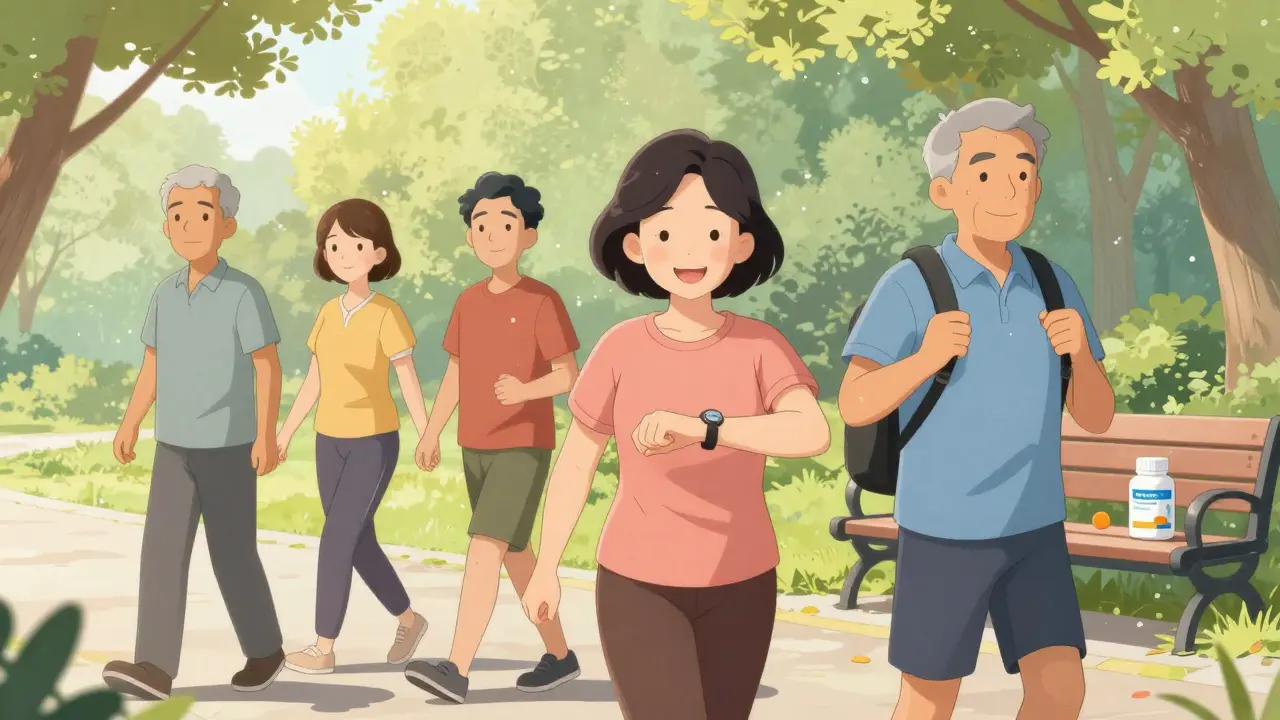
Research shows that moderate-intensity exercise is not only safe - it’s protective. That means:
- Walking at a brisk pace (you can talk but not sing)
- Cycling on flat ground
- Swimming or water aerobics
- Light resistance training with bands or dumbbells
These activities stay under 60% of your maximum heart rate. That’s about a 5 or 6 on a scale of 1 to 10 for effort. The 2023 study used exactly this level: 45 minutes of cycling at 60% VO2 max. No increase in muscle damage. No drop in strength. Just steady, safe movement.
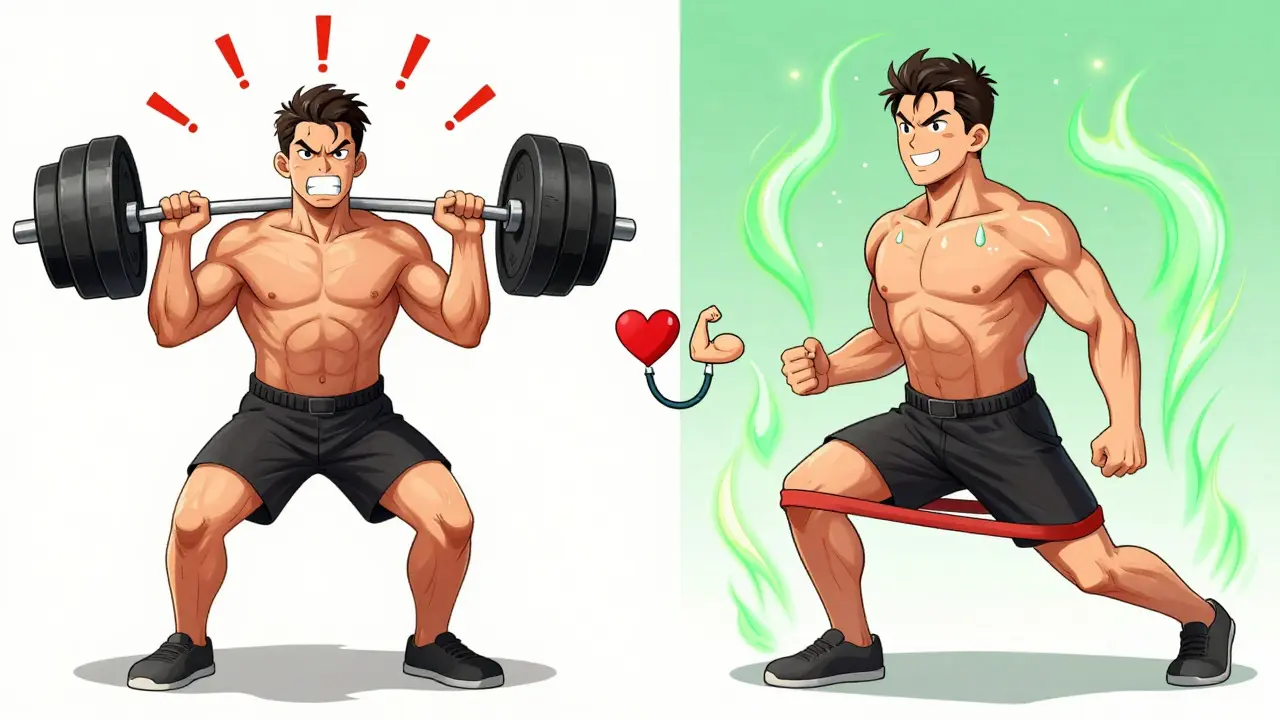
What’s risky? High-intensity stuff. Marathon running. Heavy weightlifting. HIIT workouts. The Boston Marathon study found that statin users had significantly higher CK levels after the race than non-users. And older adults were especially vulnerable.
But here’s the key insight: your body adapts. A 2010 mouse study showed that animals trained gradually over two weeks didn’t lose muscle strength - even when given a statin. The same seems true for humans. People who stick with regular, moderate exercise often find their muscle symptoms fade after a few months.
7 Proven Ways to Prevent Muscle Pain While Taking Statins
If you’re worried about soreness or want to stay active without risking injury, here’s what actually works - backed by science and real-world experience.
- Start slow and build up - Don’t go from sitting all day to running 5K. Increase your workout time by no more than 10% each week. That gives your muscles time to adjust. People who rushed into intense routines were 3 times more likely to quit.
- Choose moderate over intense - Swap HIIT for steady walking. Swap heavy squats for bodyweight lunges. You still get heart benefits - without the muscle stress. One Reddit user reported a 60% drop in muscle pain after switching from daily sprint intervals to daily 45-minute walks.
- Time your workouts - Most statins peak in your bloodstream 2 to 4 hours after you take them. If you can, exercise before your dose or wait 6 hours after. It’s not proven, but many patients say it helps. No harm in trying.
- Check your vitamin D - Low vitamin D is linked to higher risk of statin-related muscle pain. Get tested. If your level is under 30 ng/mL, your doctor may recommend 1,000-2,000 IU daily. Simple fix. Big difference.
- Watch for drug interactions - Avoid combining statins with fibrates (like gemfibrozil). That combo can raise your risk of serious muscle injury by 3 to 5 times. Always tell your doctor what else you’re taking - even over-the-counter supplements.
- Try a different statin - Not all statins are the same. Hydrophilic statins like pravastatin and rosuvastatin are less likely to enter muscle tissue than lipophilic ones like simvastatin and atorvastatin. Studies show 23% fewer muscle symptoms with hydrophilic options. Talk to your doctor about switching if you’re struggling.
- Listen to your body - but don’t panic - Mild soreness that fades in 1-2 days? Normal. Pain that lasts more than 72 hours? Or dark, cola-colored urine? That’s a red flag. It could mean rhabdomyolysis - a rare but serious condition. Call your doctor immediately if you see these signs.
What About Stopping Statins to Avoid Muscle Pain?
Some people quit their statin because of muscle discomfort. That’s dangerous.
Statins reduce heart attacks and strokes by 25% to 35% in people who need them. Exercise lowers that risk by 20% to 30%. Together, they’re a powerhouse. Walking away from one - or both - puts your heart at risk.
Dr. Paul D. Thompson, a leading cardiologist, put it plainly: “Discontinuing exercise would be more harmful than continuing statin therapy.”
And here’s the data: 72% of statin users who stuck with moderate exercise reported better muscle tolerance after six months. Their pain didn’t go away overnight - but it got better. With time, movement became easier.
If you’ve stopped exercising because you’re scared, start again. Slowly. You’re not broken. You’re just learning how to move safely with your medication.
What the Experts Say
Dr. Neeltje Allard, lead author of the 2023 study, says: “Prolonged moderate-intensity exercise is safe for statin users and can be performed to maintain a physically active lifestyle.”
Dr. Robert Rosenson, who’s studied this for decades, warns that muscle complaints are one of the top reasons people stop taking statins - even when they’re not truly harmful. That’s a tragedy. Because those people are missing out on life-saving protection.
And the American Heart Association’s 2023 guidelines are clear: “The cardiovascular benefits of regular physical activity outweigh potential risks of statin-exercise interactions.”
You’re not choosing between pills and movement. You’re choosing the best version of yourself - healthy heart, strong muscles, and a body that moves without fear.
Real-Life Example: How Sarah Got Back on Her Feet
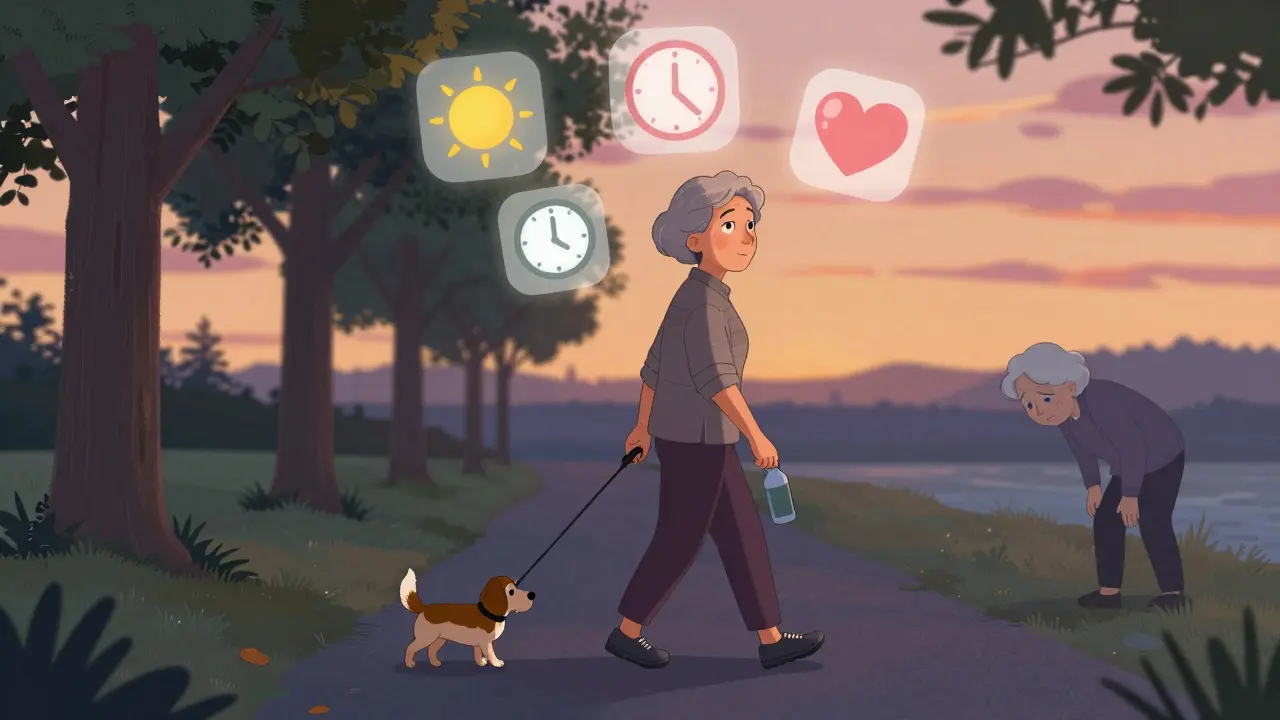
Sarah, 68, from Portland, started taking atorvastatin after a mild heart episode. Within weeks, she stopped walking her dog. “Every step hurt,” she said. “I thought the statin was eating my muscles.”
She saw her doctor. Got her vitamin D checked - it was 22 ng/mL. Switched to rosuvastatin. Started walking 20 minutes a day, five days a week. No rushing. No hills. Just slow, steady steps.
Three months later? She’s walking 45 minutes daily. Her pain is gone. Her cholesterol is down. And she’s not scared anymore.
She didn’t need to quit. She just needed to adjust.
Can statins cause permanent muscle damage?
No, statins do not cause permanent muscle damage in the vast majority of cases. Temporary soreness or fatigue is common, especially when starting or increasing activity, but true muscle injury (like rhabdomyolysis) is extremely rare - occurring in fewer than 1 in 10,000 users per year. If symptoms resolve after stopping exercise or switching statins, your muscles are fine.
Should I stop exercising if my muscles hurt on statins?
No - unless you have severe, persistent pain or dark urine. Mild soreness that fades within 48 hours is normal and often improves with time. Stopping exercise increases your risk of heart disease more than continuing statins. Instead, lower the intensity, slow down, and give your body time to adapt.
Does taking CoQ10 supplements help with statin muscle pain?
Some people report feeling better taking CoQ10, but large clinical trials haven’t proven it works consistently. A 2021 review in Circulation found no significant benefit over placebo. It’s safe to try (50-200 mg daily), but don’t expect miracles. Focus on proven strategies like exercise pacing, vitamin D, and statin switching first.
Can I still lift weights on statins?
Yes - but go light and slow. Avoid max lifts or high-rep failure sets. Stick to moderate weights (50-70% of your max), 2-3 sets of 10-15 reps, and rest at least 48 hours between sessions targeting the same muscles. Many statin users successfully maintain strength training with this approach. If you feel sharp pain or unusual fatigue, scale back.
Is it safe to run a marathon on statins?
It’s possible, but not recommended for most people, especially over 60. Marathon running causes large spikes in creatine kinase - and statin users are more likely to have extreme levels. While most won’t have serious harm, the risk of rhabdomyolysis, though tiny, increases. If you’re determined to run, talk to your doctor first, get blood tests before and after, and consider switching to a lower-risk statin like pravastatin.
How do I know if my muscle pain is from statins or something else?
Statins typically cause symmetric muscle aches - both legs, both arms - not just one joint or tendon. Pain that gets worse with activity and improves with rest is common. If pain is localized (like a knee or shoulder), it’s more likely arthritis or overuse. Blood tests (CK levels) and symptom patterns help your doctor tell the difference. Don’t assume it’s the statin - get it checked.
What if I can’t tolerate any statin?
You’re not out of options. Other cholesterol-lowering drugs exist - ezetimibe, PCSK9 inhibitors, bempedoic acid. They don’t cause muscle pain the same way. But they’re more expensive and usually reserved for people who truly can’t take statins. Lifestyle changes - diet, walking, weight loss - can also lower cholesterol by 20-30%. Work with your doctor to find a plan that keeps your heart safe without making you feel worse.
What to Do Next
Don’t wait for pain to get worse. Don’t quit movement because you’re scared.
Start today:
- Walk for 20 minutes - no phone, no rush.
- Ask your doctor for a vitamin D test.
- Write down your muscle symptoms: when they happen, how bad they are, what you were doing.
- Bring that list to your next appointment. Ask: “Could I switch to a different statin?” or “Is it safe for me to increase my walking?”
You don’t need to be perfect. You just need to move - safely, consistently, without fear.
Your heart needs you to stay active. And your muscles? They’re stronger than you think.