
Imagine your heart working overtime while you sleep, struggling against a silent enemy that strikes every few minutes. For millions of people, this isn't a nightmare-it's reality. Sleep apnea is a common sleep disorder where breathing repeatedly stops and starts during sleep, affecting roughly 1 billion people globally. But it’s not just about snoring or daytime fatigue. The real danger lies in what happens to your heart and blood vessels when oxygen levels drop night after night.
You might think high blood pressure or heart disease are solely the result of diet, exercise, or genetics. Yet, an undiagnosed breathing problem could be the missing piece of the puzzle. Current medical consensus establishes moderate to severe sleep apnea as an independent cardiovascular risk factor. It increases the risk of coronary artery disease by 30%, congestive heart failure by 140%, and stroke by significant margins. Despite this, 80% of moderate to severe cases remain undiagnosed, leaving hearts vulnerable to damage they don’t have to endure.
The Hidden Mechanism: Why Stopped Breathing Hurts Your Heart
To understand why sleep apnea is so dangerous for your heart, we need to look at what happens inside your body during an apneic episode. When your airway collapses (in obstructive sleep apnea) or your brain fails to signal breathing (in central sleep apnea), oxygen levels plummet-a condition known as hypoxemia. Simultaneously, carbon dioxide builds up, creating hypercarbia.
This chemical imbalance triggers a panic response in your nervous system. Studies from the European Society of Cardiology show that catecholamine levels-stress hormones like adrenaline-can spike 2 to 4 times higher during sleep in OSA patients compared to normal sleepers. Your heart races, and your blood vessels constrict. This isn't a one-time event; it can happen hundreds of times a night.
Furthermore, the physical act of trying to breathe against a closed airway creates negative intrathoracic pressure swings. Imagine sucking on a nearly empty straw with all your might; that strain pulls on the heart, increasing cardiac afterload by 30-50%. Over time, this chronic stress leads to systemic inflammation, with C-reactive protein levels elevated by 35-50% in OSA patients. Endothelial dysfunction sets in, reducing flow-mediated dilation by 25-40%, meaning your blood vessels lose their ability to relax and widen properly. Oxidative stress also skyrockets, with malondialdehyde levels reaching 2-3 times higher than in healthy controls.
Blood Pressure: The Most Direct Link
Hypertension is the most established cardiovascular consequence of sleep apnea. If you’ve been told you have resistant hypertension-defined as blood pressure remaining above 140/90 mmHg despite taking three different antihypertensive medications-there is a strong chance sleep apnea is the culprit. Up to 80% of patients with resistant hypertension have undiagnosed sleep apnea.
The pattern of blood pressure throughout the day matters just as much as the numbers themselves. In a healthy person, blood pressure dips by 10-20% at night, giving the cardiovascular system a rest. However, 70-80% of OSA patients exhibit "non-dipping" or even "reverse-dipping" patterns, where blood pressure stays high or actually rises during sleep. The Wisconsin Sleep Cohort Study demonstrated that OSA patients face a 2-3 times higher risk of developing hypertension within 4-5 years compared to those without the disorder.
This nocturnal surge doesn't just raise your numbers; it damages the arterial walls. The constant hammering of high pressure combined with low oxygen accelerates atherosclerosis, the buildup of plaque in arteries. This makes blood pressure management incredibly difficult if the underlying breathing issue isn't addressed. You can take the best medication, but if your body is flooding with stress hormones all night, those drugs will struggle to keep pace.
Heart Disease and Stroke: Escalating Risks
When blood vessels are damaged and inflamed, the door opens for more serious events. Moderate to severe Obstructive Sleep Apnea (defined by an Apnea-Hypopnea Index, or AHI, of 15 or higher) is associated with a 1.3 times higher incidence of myocardial infarction (heart attack) and a 1.6 times higher risk of fatal coronary events.
The timing of these events is telling. A 2024 study from UT Southwestern, analyzing data from nearly 10,000 adults, found that 26.5% of heart attacks in OSA patients occurred between midnight and 6 AM. In non-OSA patients, that figure was only 16.5%. This morning surge aligns perfectly with the period of highest sympathetic nervous system activation and blood pressure variability caused by sleep apnea.
Stroke risk is equally alarming. Data from the American Heart Association indicates that OSA increases the risk of incident stroke by 2.5 times and stroke recurrence by 3.2 times. The severity of nocturnal hypoxemia plays a critical role here; if oxygen saturation drops below 90% for more than 12% of sleep time, the risk of stroke mortality jumps by 4.3 times. The brain is highly sensitive to oxygen deprivation, and repeated nightly insults weaken the blood-brain barrier and promote clot formation.
Heart Failure and Arrhythmias: A Bidirectional Trap
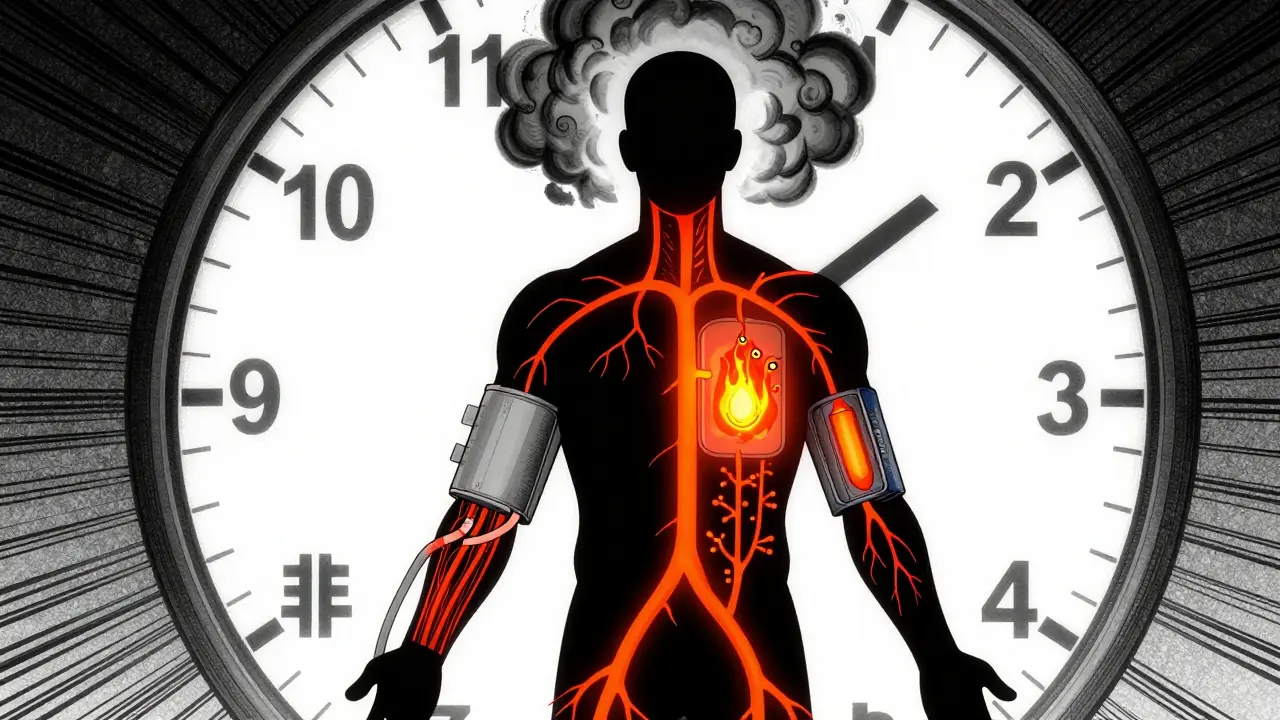
Heart failure and sleep apnea share a complex, bidirectional relationship. Roughly 40-60% of heart failure patients have concomitant sleep apnea, and having OSA increases the risk of developing heart failure by 140%. The extra strain on the right side of the heart from lung pressure changes, combined with the left ventricular hypertrophy driven by hypertension, eventually overwhelms the heart's pumping ability.
Atrial fibrillation (AFib), an irregular and often rapid heart rhythm, is another major concern. OSA patients are 2-4 times more likely to develop AFib. A 2022 registry from the Heart Rhythm Society showed that 49% of patients with paroxysmal AF had undiagnosed OSA, compared to only 21% in control groups. This connection is crucial because untreated sleep apnea reduces the success rate of AF treatments. For instance, catheter ablation has a 30% lower success rate in AF patients who continue to suffer from untreated OSA.
| Condition | Risk Increase | Key Mechanism |
|---|---|---|
| Hypertension | 2-3x higher risk | Sympathetic activation & non-dipping BP |
| Myocardial Infarction | 1.3x higher incidence | Atherosclerosis & morning thrombosis |
| Stroke | 2.5x higher risk | Hypoxemia & endothelial dysfunction |
| Heart Failure | 140% increased risk | Bidirectional strain on ventricles |
| Atrial Fibrillation | 2-4x higher likelihood | Atrial stretch & autonomic instability |
Who Is Most at Risk? The Younger Generation
We often associate heart disease with aging, but sleep apnea is changing the timeline. Recent research highlights that the cardiovascular impact of OSA is magnified in younger populations. The same UT Southwestern study revealed that adults aged 20-40 with OSA symptoms had a 45% higher likelihood of hypertension, a 33% higher risk of diabetes, and a 25% higher prevalence of metabolic syndrome compared to age-matched controls.
In contrast, these ratios were substantially lower (1.10-1.12) in adults over 41. This suggests that OSA may accelerate cardiovascular disease onset in younger individuals, setting them up for decades of premature heart strain. With obesity rates rising, we are seeing sleep apnea diagnoses dropping into younger age brackets, making early screening more critical than ever.
Treatment Challenges: Does CPAP Fix the Heart?
If sleep apnea causes such severe cardiovascular damage, shouldn't treating it cure the heart problems? The answer is nuanced. Continuous Positive Airway Pressure (CPAP) therapy is the gold standard treatment, keeping the airway open with pressurized air. However, its direct impact on blood pressure is modest. Meta-analyses show CPAP reduces blood pressure by only 2-3 mmHg in hypertensive patients.
Why the small effect? Adherence is the biggest hurdle. Only 46% of CPAP users maintain adequate compliance, defined as using the device for at least 4 hours a night on 70% of nights. Many people find the mask uncomfortable or claustrophobic, leading to inconsistent use. Without consistent use, the cardiovascular benefits never fully materialize.
That said, CPAP does show significant benefits in specific areas. It reduces stroke recurrence by 37% and improves outcomes in heart failure patients with central sleep apnea, as documented in the 2022 SLEEP-HF trial. The key is consistency. For those who struggle with CPAP, alternative therapies like oral appliances, weight loss programs, or positional therapy may offer partial relief, though they generally lack the robust cardiovascular data backing CPAP.
Screening and Diagnosis: What You Can Do
Given that 80% of cases go undiagnosed, proactive screening is essential. The American Heart Association calls for sleep apnea consideration in all patients with hypertension, atrial fibrillation, stroke, coronary artery disease, or heart failure, especially when treatment response is suboptimal.
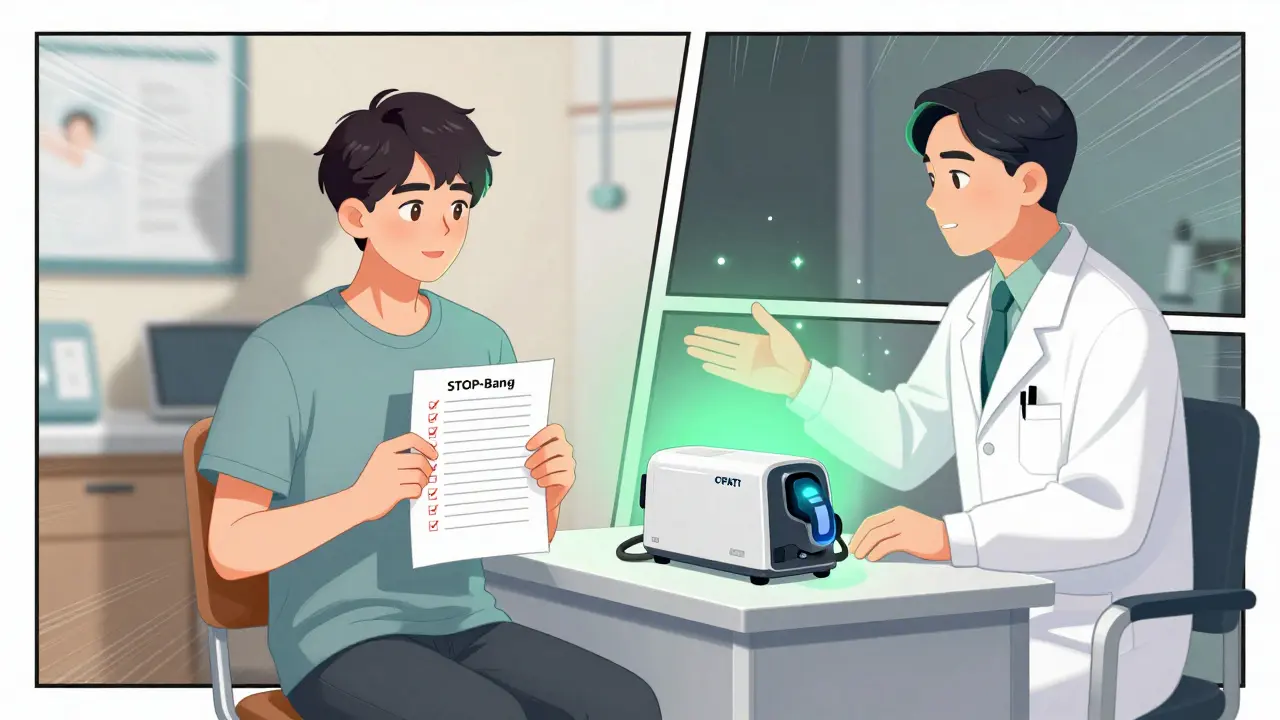
Cardiologists are increasingly using simple screening tools like the STOP-Bang questionnaire in clinics. This tool assesss Snoring, Tiredness, Observed apnea, Pressure (blood pressure), BMI, Age, Neck circumference, and Gender. It has a sensitivity of 84% for detecting moderate-severe OSA. If you score high, a home sleep apnea test (HSAT) might be the next step. HSATs have 85-90% sensitivity for moderate-to-severe cases, though they miss up to 40% of mild cases. Polysomnography, an overnight lab study, remains the gold standard but is less accessible due to cost and availability.
Don't wait for a heart attack to investigate your sleep. If you wake up gasping, have unexplained morning headaches, or feel exhausted despite sleeping 8 hours, talk to your doctor. Integrating care between cardiologists, pulmonologists, and sleep specialists is the future of managing this silent epidemic.
Can treating sleep apnea reverse heart damage?
Treating sleep apnea with CPAP can prevent further damage and reduce the risk of future events like stroke or heart failure progression. While it may not fully reverse existing structural heart damage like left ventricular hypertrophy, it significantly lowers the physiological stress on the heart, allowing other treatments to work more effectively. Early intervention yields the best outcomes.
How do I know if my high blood pressure is caused by sleep apnea?
If your blood pressure remains high despite taking multiple medications (resistant hypertension), or if your blood pressure readings are consistently higher in the morning than in the evening, sleep apnea is a likely contributor. Other signs include loud snoring, witnessed breathing pauses, and excessive daytime sleepiness. A sleep study can confirm the diagnosis.
Is CPAP therapy effective for everyone with heart disease?
CPAP is most effective when used consistently. Its direct impact on lowering blood pressure is modest (2-3 mmHg), but it significantly reduces stroke recurrence and improves heart failure outcomes. Success depends heavily on patient adherence. If CPAP is not tolerated, alternatives like oral appliances or weight loss should be discussed with a healthcare provider.
What is the STOP-Bang questionnaire?
The STOP-Bang questionnaire is a validated screening tool used to identify the risk of obstructive sleep apnea. It evaluates eight factors: Snoring, Tiredness, Observed apnea, Pressure (high blood pressure), BMI over 35, Age over 50, Neck circumference over 40cm, and Gender (male). A high score indicates a need for further diagnostic testing.
Does losing weight help with sleep apnea and heart risk?
Yes, weight loss is one of the most effective long-term strategies for reducing sleep apnea severity. Since 70% of OSA cases are linked to obesity, even modest weight reduction can decrease the Apnea-Hypopnea Index (AHI) and improve cardiovascular markers like blood pressure and inflammation. It complements other treatments like CPAP.