
When a patient walks into a clinic with a prescription for a brand-name drug, the provider’s first thought isn’t always about cost-it’s about whether the medication will work. But in today’s healthcare system, that question has become more complicated. Generic medications are now the norm, not the exception. They make up 90% of all prescriptions filled in the U.S., yet many providers still wrestle with doubts, patient pushback, and confusing regulations. This isn’t theoretical. It’s daily practice.
It Works-Most of the Time
For most common conditions, switching to a generic drug is straightforward. Statins like atorvastatin, blood pressure meds like lisinopril, and antidepressants like sertraline have been used in generics for years. Providers who track outcomes report no difference in effectiveness. A 2019 study in JAMA Internal Medicine looked at 10 drugs with both brand and generic versions. It found no meaningful difference in heart attacks, hospitalizations, or seizure control. Patients on generics were just as likely to stick with their treatment as those on brand-name versions. In fact, adherence is often better with generics. Lower out-of-pocket costs mean patients are less likely to skip doses or stop taking the medication altogether. One study showed a 13% increase in adherence when patients started on generics instead of brand-name drugs. That’s not just a cost saving-it’s a health win.When Things Get Tricky: Narrow Therapeutic Index Drugs
Not all medications are created equal. Some drugs have what’s called a narrow therapeutic index-meaning the difference between a dose that works and one that’s dangerous is very small. For these, providers get cautious. Drugs like warfarin (a blood thinner), levothyroxine (for thyroid conditions), and immunosuppressants like cyclosporine fall into this category. A small change in how the drug is absorbed can lead to serious consequences-bleeding, organ rejection, or thyroid dysfunction. A 2015 review found that nearly half of all studies on generic substitution focused on epilepsy and transplant patients. In epilepsy, even minor fluctuations in drug levels can trigger seizures. There are documented cases where patients stabilized on brand lamotrigine had breakthrough seizures after switching to a generic version. When switched back, the seizures stopped. That’s not a fluke-it’s a pattern. For these drugs, many providers write “dispense as written” on prescriptions. They don’t trust automatic substitution. Even though the FDA says generics are bioequivalent, real-world experience tells a different story. The difference isn’t in the active ingredient-it’s in the fillers, coatings, and how the pill breaks down in the body.The Concerta Case: When the FDA Steps In
In 2016, the FDA did something rare. It changed the therapeutic equivalence rating for two generic versions of Concerta, a popular ADHD medication. Originally rated “AB”-meaning fully interchangeable-the FDA downgraded them to “BX” after receiving dozens of complaints from patients and providers. Parents reported loss of symptom control. Teachers noticed increased hyperactivity. Patients said the medication just didn’t work like it used to. The FDA didn’t just rely on lab data. They looked at real-world reports, tested the pills in labs, and consulted experts. What they found: the generic versions didn’t release the drug the same way as the brand. The tablet design was different. The release profile was off. This case changed how providers think. It proved that not all generics are equal-even if they’re approved by the FDA. The Orange Book, which lists therapeutic equivalence ratings, became more than a reference. It became a tool for clinical decision-making.
State Rules Are a Mess
If you think the rules around generics are consistent, think again. Every state has its own laws. Nineteen states require pharmacists to substitute generics automatically. Seven states and Washington, D.C., require patient consent before switching. Twenty-four states don’t protect pharmacists from liability if something goes wrong after a substitution. That means pharmacists are caught in the middle-torn between cost-saving mandates and fear of lawsuits. Providers have to navigate this patchwork. A patient might get a generic in one state, then get the brand in another. Or worse-they might get a different generic every time they refill. One patient might receive a generic from Teva one month, Mylan the next, and Sun Pharma the third. All contain the same active ingredient. But different fillers, different coatings, different release profiles. Patients notice. They get confused. And they lose trust.Patients Don’t Trust Generics-Even When They Should
Providers often assume patients are happy to save money. But many aren’t. A 2024 survey in Greece found that while most patients followed their doctor’s advice to switch, nearly a third still believed generics were inferior. Some thought generics were “made in China” and therefore unsafe. Others remembered a bad experience with a previous generic and refused to try another. The problem isn’t just misinformation. It’s inconsistency. When patients get a different-looking pill every month, they assume it’s a different drug. They worry it won’t work. They stop taking it. Providers who take five minutes to explain the difference between brand and generic-what’s the same, what’s different, why it’s safe-see much higher acceptance rates. One study showed that after a simple conversation, patient willingness to switch increased by 40%.Authorized Generics: The Hidden Middle Ground
There’s a version of generics that many providers don’t talk about: authorized generics. These are the exact same drug as the brand-name version, just sold without the brand name. Made by the original manufacturer. Same factory. Same formula. Same packaging-except the logo is gone. Authorized generics (AGs) are often cheaper than brand-name drugs but more consistent than regular generics. They’re especially useful for patients on narrow therapeutic index drugs. Some providers quietly prescribe AGs when they want the reliability of the brand without the cost. The catch? They’re not always available. And pharmacists don’t always know they exist. Most electronic prescribing systems don’t flag them. Providers have to know to ask for them-and patients have to be willing to pay slightly more than a regular generic.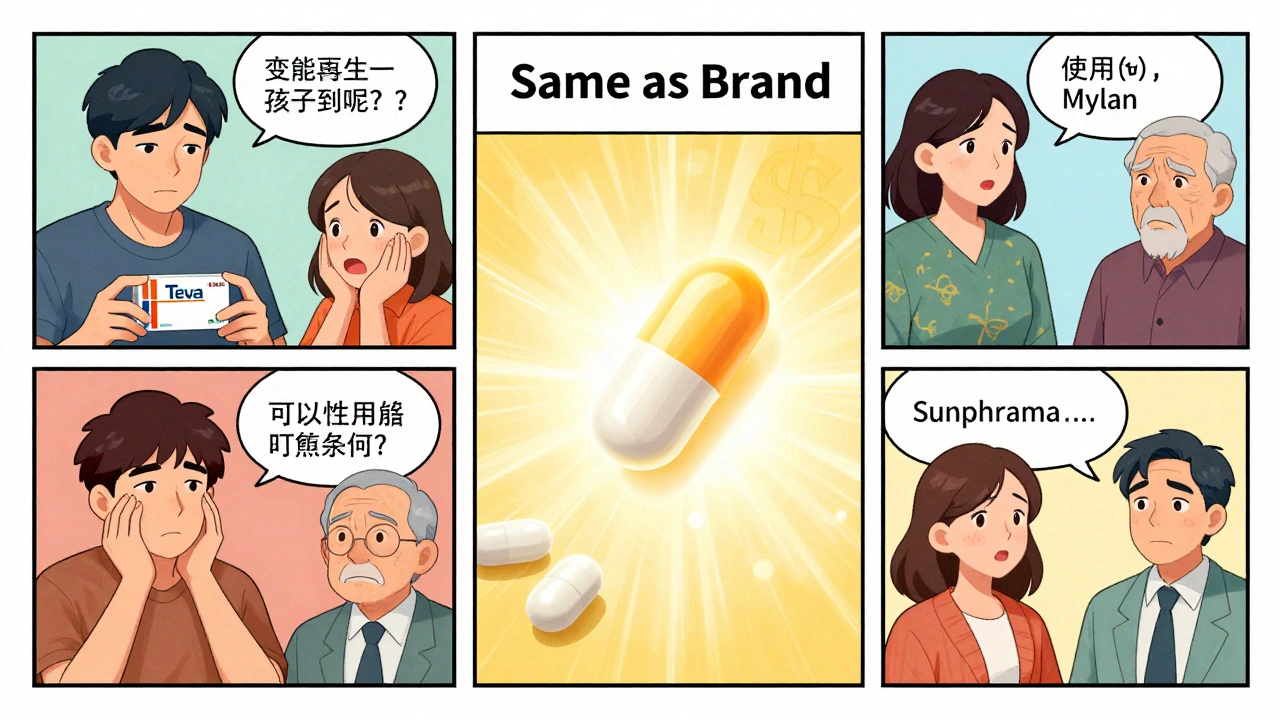
What Works in Practice
After years of experience, providers have learned what actually moves the needle:- For statins, blood pressure meds, and most antidepressants: Substitution is safe, effective, and encouraged. No need for extra steps.
- For epilepsy, thyroid, transplant, and anticoagulant drugs: Avoid automatic substitution. Use “dispense as written.” Educate patients upfront.
- For ADHD, asthma inhalers, and topical creams: Be cautious. These are complex formulations. Generic versions vary more.
- Always explain: A two-minute conversation reduces anxiety and improves adherence.
- Use the Orange Book: Check therapeutic equivalence ratings before prescribing. AB = safe to substitute. BX = proceed with caution.
The Bigger Picture: Why This Matters
Generics saved the U.S. healthcare system over $300 billion between 2009 and 2019. That’s money that went back into care, not drug company profits. With the Inflation Reduction Act pushing for lower drug prices, generics will become even more central. But savings mean nothing if patients don’t take their meds. If a patient stops taking their generic because they’re scared, or because they got a different pill each time, the cost savings vanish-and health risks rise. The goal isn’t just to prescribe cheaper drugs. It’s to prescribe the right drug, at the right time, in a way the patient will actually use. That’s where experience matters. That’s where providers step in.What’s Next?
The FDA is now using real-world data from millions of patients to monitor generic performance-something they couldn’t do 15 years ago. Machine learning models are being trained to predict which patients are most likely to have issues with substitution. Some clinics are starting to track which generic manufacturers their patients respond to best. This isn’t about resisting change. It’s about improving it. Generics are here to stay. But they’re not one-size-fits-all. The best providers don’t just prescribe them-they understand them.Are generic medications as effective as brand-name drugs?
For most medications, yes. The FDA requires generics to deliver the same amount of active ingredient into the bloodstream at the same rate as the brand-name version. Studies show no difference in outcomes for common drugs like statins, blood pressure meds, and antidepressants. But for drugs with a narrow therapeutic index-like warfarin, levothyroxine, or antiepileptics-some patients may respond differently due to variations in inactive ingredients or how the drug is released. Always check the Orange Book’s therapeutic equivalence rating (AB = safe to substitute, BX = use caution).
Why do some patients have seizures after switching to a generic epilepsy drug?
While generics are required to be bioequivalent, small differences in how the drug is absorbed can matter for epilepsy patients. The body’s response to a 10% change in drug levels might be negligible for most people, but for someone with epilepsy, it can be enough to trigger a seizure. Case reports show that switching from brand lamotrigine to a generic version led to breakthrough seizures in some patients-symptoms that disappeared when they returned to the brand. This is why neurologists often recommend avoiding automatic substitution for antiepileptic drugs unless the patient and provider agree.
What does "AB" and "BX" mean on the Orange Book?
The FDA’s Orange Book rates generic drugs for therapeutic equivalence. "AB" means the generic is considered interchangeable with the brand-name drug-it meets all bioequivalence standards. "BX" means it’s not rated as equivalent. This could be due to inconsistent absorption, formulation issues, or real-world reports of poor effectiveness. A drug downgraded to BX, like certain generic Concerta versions in 2016, should not be substituted without careful review.
Can I ask my pharmacist for an authorized generic?
Yes. Authorized generics are made by the same company that makes the brand-name drug, just sold under a different label. They’re identical in formulation and performance. They’re often cheaper than the brand but slightly more expensive than regular generics. Not all pharmacies stock them, and they’re rarely flagged in e-prescribing systems. You can ask your provider to write "dispense as written" and then ask the pharmacist if an authorized generic is available.
Why do I get a different-looking pill every time I refill my generic?
There are often multiple generic manufacturers for the same drug. Each one uses different fillers, colors, and shapes. The active ingredient is the same, but the pill looks different. This can confuse patients, who may think they’re getting a different medication. Some patients stop taking their drug because they’re worried it’s not the same. Providers can help by explaining that the pill’s appearance doesn’t affect its effectiveness-and by choosing a consistent generic when possible.
Do state laws affect whether I can get a generic?
Yes. In 19 states, pharmacists must substitute generics automatically unless the doctor says otherwise. In seven states and Washington, D.C., they must get your consent first. In 24 states, pharmacists aren’t protected from liability if something goes wrong after a substitution. This means you might get a generic in one state and the brand in another-even with the same prescription. Always ask your pharmacist if a substitution was made and whether it’s approved for your condition.

8 Comments
For most patients, generics are a lifesaver-literally. I’ve seen people who couldn’t afford their brand-name statins stop taking them entirely. Switch them to atorvastatin, and suddenly they’re showing up to follow-ups, BP under control, LDL down. The science is solid. The real issue isn’t efficacy-it’s communication. Patients need to understand that a different-looking pill isn’t a different drug. A five-minute chat changes everything.
YES!! 🙌 I work in a clinic and this is SO true. One lady cried because she thought her new generic antidepressant was ‘fake’-the pill was white instead of blue. We spent 10 mins showing her the FDA info and the active ingredient. She hugged me. 😭💊
lol generics are just big pharma’s way of tricking you. The fillers are laced with microchips to track you. I switched back to brand after my ‘generic’ Zoloft made me dream about aliens. 🛸
While the empirical data may suggest equivalence, the ontological assumption that bioequivalence equates to therapeutic equivalence is a reductive fallacy. The pharmacokinetic variance in excipients, even at subclinical levels, introduces epistemic uncertainty into clinical decision-making. One cannot dismiss anecdotal evidence from neurologists who observe seizure recurrence post-substitution. The regulatory framework is fundamentally inadequate to account for individual physiological variability.
As a nurse practitioner, I’ve learned to always ask patients: ‘Have you ever had a bad reaction to a generic?’ If they say yes-I don’t push it. We go with the brand or an authorized generic if we can. It’s not about being expensive-it’s about trust. And trust takes time to build. I’ve had patients who refused to take any generic for 5 years… until we found one from the same manufacturer as their original brand. Then they were fine. It’s not magic. It’s consistency.
Authorized generics are the secret weapon we’re not talking about. 🚀 I’ve started prescribing them for my epilepsy and thyroid patients-same pill as brand, 40% cheaper. Only problem? Most pharmacies don’t stock them. Gotta call ahead. Pro tip: Ask for the ‘same as X brand but no logo.’ They’ll know what you mean. 🤫💊
It’s fascinating how this issue reveals the tension between systemic efficiency and individualized care. On one hand, generics save billions and improve access. On the other, we’re treating patients like data points. The FDA’s AB/BX system is a good start, but it’s not enough. We need real-time, patient-reported outcome dashboards integrated into EHRs. Imagine if your provider could see: ‘Patient X had 3 seizures after switching from Brand A to Generic Y.’ That’s the future. We’re not just prescribing pills-we’re managing trust.
THEY’RE LYING TO US. 🚨 I’ve been on the same generic for years, but last month I got a different one and my anxiety spiked so bad I called 911. Turns out, the FDA doesn’t test the pills after they leave the factory! They just approve the formula. What if the generic makers are using cheap Chinese fillers that turn into poison over time? My neighbor’s cousin’s dentist says the fillers are made from recycled hospital gowns. I’m switching back to brand. Even if it costs $500. I’d rather die rich than live on a conspiracy pill. 💊💀
Write a comment