
Prednisone Mood Tracker
Track Your Mood Daily
Your Mood Patterns
| Date | Dose (mg) | Sleep | Mood | Energy | Notes |
|---|
Why Prednisone Makes You Feel Like You’re Losing Control
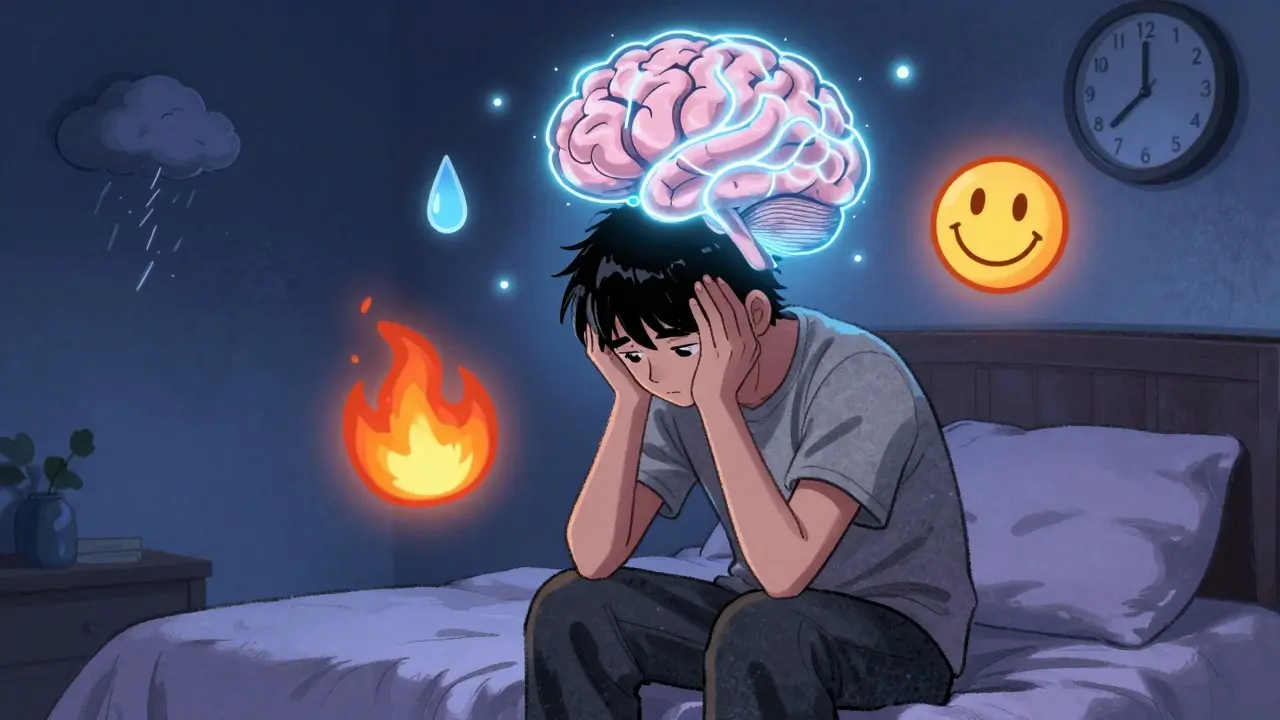
When you start taking prednisone, you might expect swelling, weight gain, or trouble sleeping. But few people prepare for the emotional rollercoaster: sudden rage, crying for no reason, panic attacks, or feeling unrealistically happy. These aren’t just "bad days." They’re direct effects of the drug on your brain.
Prednisone is a synthetic version of cortisol, your body’s natural stress hormone. It doesn’t just calm inflammation-it floods your brain with signals that disrupt serotonin and dopamine, the chemicals that regulate mood. Within days, you might notice you’re snapping at loved ones, feeling anxious for no reason, or having trouble focusing. Studies show between 18% and 47% of people on prednisone experience these changes. That’s nearly half of everyone taking it.
It’s not weakness. It’s biology. And it’s more common than doctors admit. A 2021 survey found only 32% of primary care doctors talk to patients about mood swings before prescribing prednisone. If you’re feeling off, it’s not you-it’s the medication.
When Do Mood Swings Start-and How Long Do They Last?
Unlike side effects like moon face or fluid retention, which take weeks to appear, mood changes can hit within 5 to 7 days of starting prednisone. Some people report feeling different even after the first dose. The drug crosses the blood-brain barrier in under an hour, and brain imaging shows changes in the amygdala (your fear center) and prefrontal cortex (your decision-making area) within 72 hours.
The timing matters. If you’re on a high dose-40mg or more-you’re over three times more likely to have severe mood swings than someone on 10mg. Even after you stop, the effects don’t vanish right away. Because prednisone sticks around in your system for 18 to 36 hours per dose, and your brain needs time to reset, emotional symptoms can linger for 5 to 14 days after your last pill. One patient in a MedShadow case report had panic attacks start five days after finishing a 19-day course. No one warned her.
Who’s Most at Risk?
Not everyone reacts the same way. People with a history of depression, anxiety, bipolar disorder, or other mental health conditions are at much higher risk. Research shows they’re nearly five times more likely to have severe mood disturbances. But even if you’ve never had a mental health diagnosis, you’re not immune.
Older adults, people on long-term therapy, and those taking prednisone for autoimmune conditions like Crohn’s disease or rheumatoid arthritis report the most intense symptoms. One study of 15,000 patients found 6% developed symptoms severe enough to need psychiatric help. About 1.3% had episodes that looked like bipolar mania-racing thoughts, little sleep, impulsive behavior-followed by deep depression.
If you’ve ever felt overwhelmed by stress, had trouble sleeping, or felt emotionally sensitive before, your brain might be more vulnerable to prednisone’s effects. That doesn’t mean you shouldn’t take it. It means you need to plan ahead.

What the Experts Say: Real Strategies That Work
Doctors know this is a problem. The Mayo Clinic, NHS, and American College of Rheumatology all list mood changes as a serious side effect-and they have clear advice.
- Track your mood daily. Keep a simple journal. Note your dose, sleep hours, energy level, and emotional state. You’ll start seeing patterns. Many people feel worst in the afternoon or evening. Schedule tough conversations for the morning, when effects are lowest.
- Don’t isolate yourself. Tell your partner, family, or close friends what’s happening. Say, "I’m on prednisone, and it’s making me irritable. It’s not you-it’s the drug." This reduces guilt and prevents misunderstandings. Members of MyCrohnsAndColitisTeam say this simple step cut their relationship stress in half.
- Maintain sleep hygiene. Prednisone messes with your circadian rhythm. Avoid caffeine after noon. Keep your bedroom cool and dark. Try to wake up and go to bed at the same time-even on weekends. Poor sleep makes mood swings worse.
- Move your body. A 2022 study showed 30 minutes of daily walking or light exercise lowers cortisol levels by 27%. You don’t need to run a marathon. Just get outside. Sunlight helps regulate mood chemicals.
- Try mindfulness. Ten to fifteen minutes of deep breathing or meditation twice a day can calm your nervous system. Apps like Insight Timer or free YouTube guided meditations work. One survey found 43% of prednisone users who practiced mindfulness regularly reported fewer emotional spikes.
When to Call Your Doctor-And What They Can Do
Not every mood swing needs emergency care. But some signs mean you need help right away:
- Thoughts of hurting yourself or others
- Extreme confusion or hallucinations
- Manic behavior-spending recklessly, going days without sleep, talking nonstop
- Depression so deep you can’t get out of bed
If you experience any of these, contact your doctor immediately. Don’t wait. Your doctor can:
- Adjust your dose or speed up your taper
- Prescribe a short-term anti-anxiety or antidepressant medication (like an SSRI), which studies show can reduce mood swings by over 50%
- Refer you to a psychiatrist who understands steroid-induced mood disorders
Some doctors are hesitant to prescribe additional meds, but if your mood is unmanageable, it’s worth pushing for. The American Psychiatric Association says medication-induced mood disorders are real, diagnosable, and treatable.

What Not to Do
When you’re feeling out of control, it’s tempting to try quick fixes. But some things make it worse.
- Don’t quit cold turkey. Stopping prednisone suddenly can cause adrenal crisis-low blood pressure, vomiting, fainting. Always taper under medical supervision.
- Don’t drink alcohol. Alcohol worsens depression and anxiety, and it interacts with prednisone, increasing liver stress.
- Don’t blame yourself. You’re not "overreacting." Your brain chemistry is chemically altered. This isn’t a personality flaw.
- Don’t hide it. Silence makes it feel worse. Talk to someone. Even if it’s just a text to a friend saying, "I’m having a rough day with prednisone. Just needed to say it."
Hope After the Storm
It’s hard to believe when you’re in the middle of it, but these mood swings are temporary. Once you’re off prednisone and your brain recalibrates, most people return to their normal emotional baseline. For some, it takes weeks. For others, months. But recovery happens.
One woman on Reddit, after 8 months of mood swings from a high-dose course for lupus, wrote: "I thought I’d never feel like myself again. Now I’m back to hiking, laughing with my kids, and sleeping through the night. It took time, but I got here. You will too."
You’re not alone. Thousands are going through this right now. The key is recognizing it for what it is-a side effect, not a failure. With the right support and strategies, you can get through it without losing your relationships, your sense of self, or your peace of mind.
Can prednisone cause depression or anxiety?
Yes. Prednisone can cause both depression and anxiety. It affects brain chemicals like serotonin and dopamine, which control mood. Studies show up to 47% of users experience mood changes, with anxiety and irritability being the most common. These aren’t "in your head"-they’re chemical side effects of the drug.
How long do prednisone mood swings last after stopping?
Mood swings can last 5 to 14 days after your last dose. Prednisone has a half-life of 18-36 hours, meaning it stays in your system for days. Your brain also needs time to rebalance its neurotransmitters. Some people report lingering anxiety or low mood for weeks, especially after high doses or long-term use. Patience and self-care help speed recovery.
Is it safe to take antidepressants with prednisone?
Yes, under medical supervision. Low-dose SSRIs like sertraline or escitalopram have been shown in clinical trials to reduce prednisone-induced mood swings by 58%. While this use is off-label, doctors frequently prescribe it for patients on long-term steroids. Always tell your doctor about any medications you’re taking to avoid interactions.
Can prednisone trigger bipolar episodes?
Yes. In rare cases, prednisone can trigger manic or hypomanic episodes that mimic bipolar disorder-racing thoughts, little sleep, impulsive behavior-followed by depression. This happens in about 1.3% of users, according to the American College of Rheumatology. If you have a personal or family history of bipolar disorder, your doctor should monitor you closely and consider alternatives.
Should I avoid prednisone because of mood swings?
No-not if you need it. Prednisone can be life-saving for conditions like severe asthma, autoimmune diseases, or allergic reactions. The key is managing the side effects, not avoiding the drug. Work with your doctor to use the lowest effective dose for the shortest time possible. Use coping strategies like sleep, exercise, and mood tracking. Most people get through it without long-term issues.
Do all steroids cause mood swings?
Not all, but most corticosteroids do. Prednisone, methylprednisolone, and dexamethasone are known to cause mood changes. Topical or inhaled steroids (like nasal sprays or inhalers) rarely affect mood because they don’t enter the bloodstream in high amounts. The risk increases with oral or IV use, higher doses, and longer treatment duration.

15 Comments
I was on prednisone for 6 months for my lupus flare. The mood swings were brutal-crying in the grocery store over cereal boxes, then laughing hysterically 10 minutes later. No one warned me. I thought I was losing my mind. But tracking my mood like the article said? Game changer. I started writing down when I felt worst-always after 3 PM. Learned to schedule everything important before lunch. And yes, I told my partner: 'It’s not you, it’s the drug.' Saved our relationship.
Still get anxious sometimes, but now I know it’s temporary. You’re not broken. You’re just chemically hijacked.
It is both scientifically and phenomenologically compelling to observe that corticosteroid-induced neuropsychiatric dysregulation constitutes a direct pharmacological perturbation of the hypothalamic-pituitary-adrenal axis, which, in turn, exerts cascading effects upon monoaminergic neurotransmission-specifically, the serotonergic and dopaminergic pathways. The fact that clinical literature estimates up to 47% of patients experience such alterations underscores not merely a pharmacological side effect, but a systemic neurochemical recalibration event. One must consider, then, that the human psyche is not an inert vessel, but a dynamic, chemically sensitive organism-rendering the notion of "personal weakness" not only inaccurate, but ontologically indefensible. The real tragedy lies not in the drug, but in the medical profession’s persistent failure to acknowledge the existential gravity of these effects prior to prescription.
Therefore, I posit that informed consent must be redefined to include a psycho-neurological risk disclosure, not merely a checkbox on a consent form. Otherwise, we are complicit in a form of therapeutic paternalism that borders on unethical.
Oh sweetie, you think THIS is dramatic? I once took prednisone for poison ivy and spent three days screaming at my cat because she looked at me wrong. Then I cried for an hour because the cat left a hair on my pillow. I felt like a Shakespearean tragic heroine trapped in a CVS receipt.
My therapist said, "Lucy, you’re not losing control-you’re just on a 10-day acid trip without the fun." And honestly? She was right. I started journaling. I wrote a poem called "The Cortisol Queen". It went viral. Now I have 12k followers on TikTok. I’m basically a mental health influencer now. Thank you, prednisone. You monster. You beautiful, terrifying monster.
Most of this is common sense. You’re taking a potent immunosuppressant, of course it affects your brain. Why are people acting like this is some groundbreaking revelation? Also, "mindfulness"? That’s a $100 app subscription and a bunch of people pretending to breathe. Get a therapist if you’re losing it. And stop blaming the drug. You’re just weak.
Also, don’t drink alcohol? Duh. Who thought this needed an article?
Stop being dramatic. If you can’t handle a little mood swing, maybe you shouldn’t be on steroids. My cousin took it for years and never cried once. You’re just lazy.
I’ve been on prednisone for 14 months now-Crohn’s flare-up. I’ve had panic attacks, rage episodes, and nights where I just sat in the dark and wondered if I’d ever feel normal again. But I’ve also found that walking 20 minutes after dinner-just outside, no phone-helps more than any meditation app. The air. The quiet. The fact that the world doesn’t care if I’m falling apart. It just keeps turning.
And yes, I told my wife. She didn’t understand at first. Now she brings me tea when I’m shaking. I’m not fixed. But I’m not alone.
Also, don’t quit cold turkey. I almost did. Almost died. Don’t be me.
Hey, I’m from India and my cousin in Delhi just finished a 3-week prednisone course for asthma. He had the same thing-sudden crying at Bollywood songs, then laughing at commercials. His family thought he was possessed. I sent him this article. He cried (again) but said, "Thank you for not making me feel crazy."
It’s wild how universal this is. Culture doesn’t matter. Biology does. Glad someone finally wrote this in plain English. Share it with your doctor. Seriously.
People need to stop making excuses. If you’re on prednisone and you’re losing it, maybe you should’ve thought about that before you took it. It’s not a magic pill. It’s a chemical bomb. You knew the risks. Stop whining and take responsibility.
Also, meditation? Please. You’re not a monk. Go do push-ups instead.
As a nurse who’s seen 80+ patients on long-term steroids, I can confirm: the emotional toll is underreported. One patient, a 72-year-old woman with RA, started yelling at her grandchildren because they "looked at her funny." She didn’t remember it later. We started her on sertraline-low dose-and within a week, she was back to knitting and telling jokes.
Doctors need to screen for mental health history BEFORE prescribing. And patients? Don’t suffer in silence. Say something. Even if it’s just, "I feel weird." That’s enough.
And yes, you can take SSRIs with prednisone. I’ve seen it work. It’s not weakness. It’s smart medicine.
So I took prednisone for a bad case of poison ivy… and ended up crying at a dog food commercial. Then I bought three dogs. Then I cried again because I couldn’t afford them. Then I gave them to my neighbor. Then I cried because I missed them.
It was like my brain turned into a soap opera written by a drunk poet. I didn’t sleep for 5 days. I wrote 17 poems. One was just the word "why?" repeated 200 times.
My therapist said it was "a temporary dissociative episode induced by synthetic cortisol." I said, "Cool. Can I get a refund?"
Now I’m off it. I miss the dogs. But I don’t miss the crying. Or the poems. Or the existential dread during Target runs.
Also, don’t drink alcohol. I did. I yelled at a mannequin. It didn’t yell back. I felt worse.
My buddy got on prednisone for his back and started sending me texts like "the walls are breathing" and "I think my dog is the president." We thought he was on mushrooms. Turns out it was the steroid.
He did the walking thing. Started meditating with YouTube videos. Told his wife. She just hugged him and said, "You’re not crazy. You’re just chemically confused."
He’s back to normal now. Still a weirdo. But normal weirdo.
Also, don’t quit cold turkey. I saw a guy do that. He passed out in a Walmart. Not cool.
I took prednisone for 2 weeks. I screamed at my mom because she folded my towels wrong. Then I cried because I loved her. Then I deleted all my social media because I felt like a monster.
My therapist said, "Your brain is on fire." And I believed her.
Now I’m off it. Still have bad days. But I know it’s not me. It’s the damn drug.
And yeah, I still hate when people fold towels like that.
Everyone’s acting like this is news. I’ve been on prednisone for 7 years. I’ve been suicidal, manic, and emotionally numb. I’ve been hospitalized twice. My doctor didn’t care until I threatened to sue. Then he gave me a referral. Took 6 months.
So don’t tell me to "just meditate." Don’t tell me to "just talk to my partner." I did. I screamed at my partner until he left. Then I cried for three days.
If you’re on this drug long-term, you need a psychiatrist. Not a blog. Not a Reddit post. A REAL doctor who knows what steroid psychosis looks like.
And if your doctor won’t help? Find a new one. Your life matters more than their laziness.
So you’re telling me that a drug that changes your brain chemistry… changes your brain? Groundbreaking. Next you’ll tell me water is wet.
Also, 47%? That’s just people who can’t handle life. I’ve been on prednisone since 2018. I’m fine. You’re just weak.
And mindfulness? LOL. What’s next? Crystal healing?
Wait-so prednisone affects mood? Wow. I guess that’s why my uncle started yelling at pigeons and then gave his entire retirement fund to a guy on Instagram who said he could "fix your cortisol with a smoothie." Just saying: if you’re going to take a drug that turns your brain into a malfunctioning toaster, maybe don’t take it unless you absolutely have to.
Also, I once took a steroid for a rash and started believing I was a time-traveling Viking. That was fun. Didn’t last. But the memes? Legendary.
Write a comment