
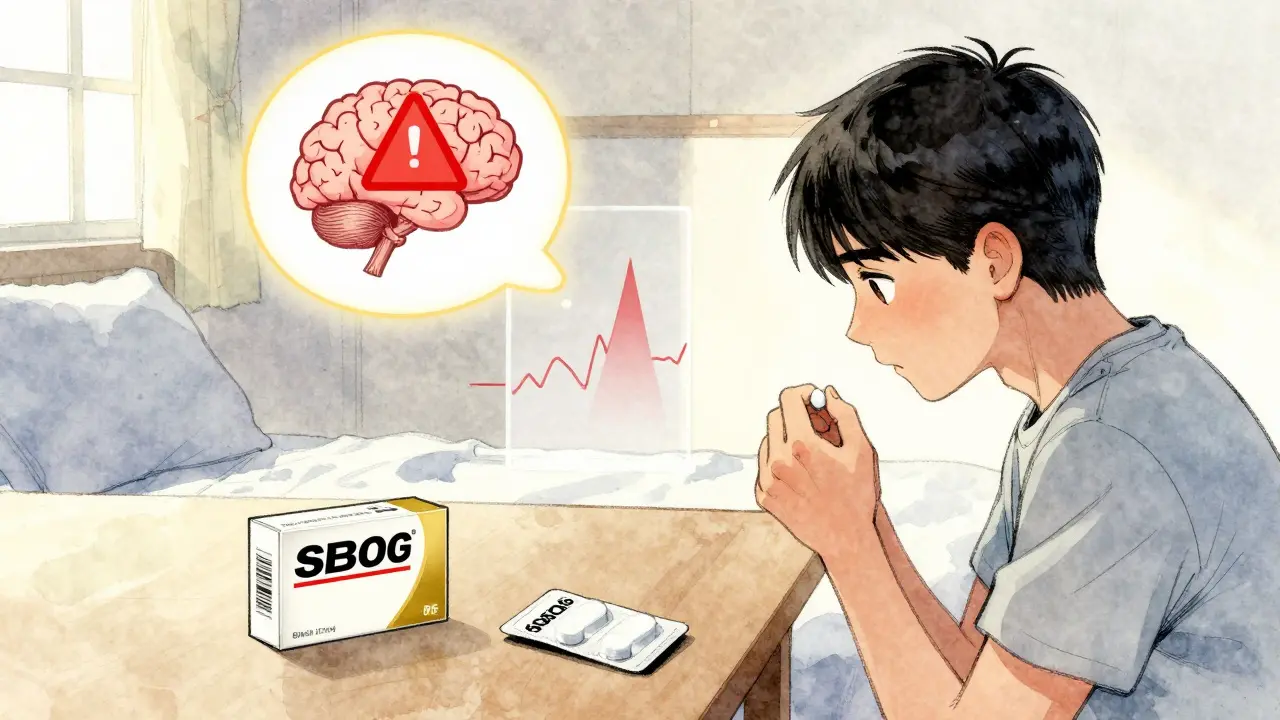
When you switch from a brand-name pill to a generic version, your body doesn’t change-but your brain might. Even though the active ingredient is identical, many people report feeling worse after the switch. Blood pressure climbs. Anxiety returns. Pain comes back. The chemistry hasn’t changed. But something else has: expectation.
Why a Generic Pill Can Feel Different
A 2014 study from the University of Auckland gave people identical placebo pills-but labeled them as either a well-known brand-name painkiller or a generic version. The brand-labeled pills reduced headache pain by nearly the same amount as real ibuprofen. The generic-labeled ones? Half as effective. The pills were the same. The difference was in the label. This isn’t just about painkillers. In antidepressant trials, patients on generic sertraline dropped out at 22% higher rates than those on the exact same drug labeled as the brand name. Their symptoms didn’t worsen because the medicine changed-they worsened because they believed it had. Brain scans show why. When people think they’re taking a brand-name drug, their dorsolateral prefrontal cortex lights up 27% more than when they think they’re taking a generic. That part of the brain controls expectations, attention, and how we interpret bodily sensations. Stronger activation means stronger relief-even if nothing physical has changed.The Cost-Perception Trap
We’ve been trained to believe price equals quality. In one experiment, healthy volunteers received fake painkillers labeled at $2.50 per pill versus $0.10. The expensive ones worked better-by 64%. The pills were identical. The only difference was the price tag. That’s why generic medications, even when FDA-approved as bioequivalent, struggle with perception. The U.S. generic market fills 90% of prescriptions but accounts for only 23% of drug spending. Why? Because many patients-and even some doctors-still think cheaper means weaker. This belief has real consequences. A 2016 study found that patients on brand-name blood pressure pills stayed on their medication 18.3% longer than those switched to generics-even though the pills were chemically identical. The difference? Psychological comfort.Nocebo Effect: When Expectations Backfire
The placebo effect isn’t the only psychological force at play. There’s also the nocebo effect: when negative expectations cause real symptoms. In statin trials, patients told they were taking a generic version reported muscle pain at rates 3 to 4 times higher than those told they were on the brand name-or those who didn’t know the label at all. One patient in a 2019 case report stopped taking generic escitalopram because she felt her anxiety had returned. Blood tests confirmed her drug levels were exactly the same as before. Her brain had convinced her the medicine wasn’t working-and so her body responded accordingly. Even pill appearance matters. The FDA found that changing the color or shape of a generic pill increased discontinuation rates by 29%. People don’t just trust the label-they trust the look. A familiar blue oval feels more reliable than a new white oval, even if both contain the same dose of atorvastatin.
What Doctors Are Doing About It
Some healthcare providers are learning how to talk about generics without triggering fear. A 2021 JAMA study tested a simple 3-minute conversation before switching patients:- Explain the FDA’s strict bioequivalence rules: generics must deliver 80-125% of the brand’s active ingredient into the bloodstream.
- Acknowledge that some people feel different-even if it’s not because the medicine changed.
- Give a two-week window to adjust, with a follow-up to check in.
What Patients Are Saying
On forums like Drugs.com and Reddit, stories pour in:- “My blood pressure jumped after switching to generic levothyroxine. My doctor said it was the same, but I felt like I was back to square one.”
- “I switched to generic sertraline and felt flat for weeks. My psychiatrist warned me this might happen psychologically. I stuck with it, and now I’m fine.”
- “I didn’t even know I was switched to generic until I checked the bottle. I felt no difference.”
How to Make the Switch Work for You
If you’re considering switching to a generic-or already did and feel something’s off-here’s what to do:- Ask your doctor to explain the FDA’s bioequivalence standards. Knowing the numbers helps quiet fear.
- Don’t assume a change in how you feel means the drug failed. Give it two weeks. Your brain needs time to recalibrate.
- Track your symptoms in a simple journal: mood, energy, pain levels, sleep. Compare before and after.
- If you still feel worse after two weeks, talk to your provider. It might be a real issue-but it might also be your brain’s habit of expecting less.
- Stick with the same generic manufacturer if possible. Even small changes in pill shape or color can trigger nocebo responses.
The Bigger Picture
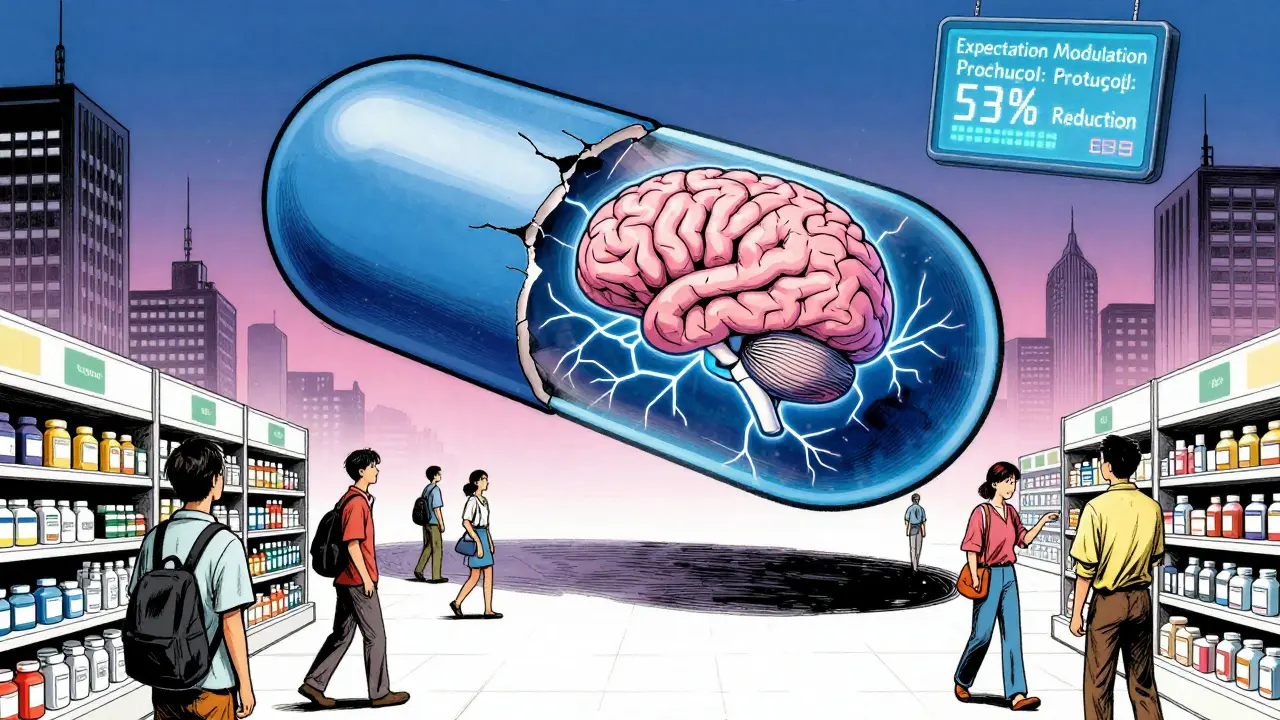
The placebo effect isn’t a flaw-it’s a feature of how our bodies work. Our minds are part of the medicine. Ignoring that doesn’t make it go away. It just makes the gap between science and experience wider. The U.S. healthcare system loses $1.4 billion a year because people stick with expensive brand names out of fear, not evidence. That money could fund real care for people who need it. New tools are emerging. A digital program called the “Expectation Modulation Protocol”-a 12-minute video and interactive module-reduced negative expectations by 53% in clinical trials. It’s under FDA review. Soon, patients might get this before their first generic prescription. For now, the best tool we have is honest communication. Not hype. Not deception. Just facts: This is the same medicine. Your brain might take a little time to catch up. That’s normal.Frequently Asked Questions
Are generic drugs really the same as brand-name drugs?
Yes, by FDA standards. Generic drugs must contain the same active ingredient, strength, dosage form, and route of administration as the brand-name version. They must also deliver the same amount of medicine into your bloodstream within the same time frame-within 80% to 125% of the brand’s performance. The FDA requires this for every approved generic. Differences in inactive ingredients (like fillers or dyes) don’t affect how the drug works in your body.
Why do I feel worse on a generic medication?
It’s likely not because the drug is weaker. More often, it’s because your brain expects it to be. Studies show that when people know they’re taking a generic, they’re more likely to notice and interpret normal fluctuations-like a bad day or stress-as side effects or failure. This is called the nocebo effect. Give yourself two weeks to adjust. If symptoms persist, talk to your doctor. But don’t assume the medicine is the problem before you’ve given your mind time to adapt.
Can pill color or shape affect how well a generic works?
Not pharmacologically-but psychologically, yes. The FDA found that changing a generic pill’s color or shape increases discontinuation rates by nearly 30%. People associate familiar looks with reliability. If your generic suddenly looks different, your brain might interpret it as a change in quality-even if the medicine inside hasn’t changed at all. If you notice this, ask your pharmacist to keep you on the same version if possible.
Should I avoid generics because of the placebo effect?
No. The placebo effect works both ways. If you believe a generic will work, it likely will. Avoiding generics because of fear costs the U.S. healthcare system over $1 billion a year in unnecessary brand-name prescriptions. Generics are safe, effective, and rigorously tested. The issue isn’t the drug-it’s the story we tell ourselves. With the right information, most people adjust just fine.
What should I ask my doctor before switching to a generic?
Ask: “Is this generic approved by the FDA as bioequivalent?” “Will the pill look different?” “What should I expect in the first few weeks?” And most importantly: “If I feel different, does that mean it’s not working-or is it just my mind adjusting?” A good doctor will explain the science without dismissing your experience. They’ll help you separate real side effects from psychological shifts.

12 Comments
I switched to generic levothyroxine and thought I was dying for a week 😭 Turns out my brain just needed a pep talk. Now I’m fine and saving $40/month. 🙌
This is why I refuse to take anything but brand-name. I don’t care if it’s ‘the same’-if my body feels different, it’s different. Science can’t explain everything, and I’m not a lab rat.
I used to be super skeptical about generics until my mom got switched to generic sertraline after her insurance changed. She was convinced it wasn’t working-until she kept a journal. Turns out her ‘worse’ days were just rainy Mondays. The meds never changed. Her brain just needed to stop panicking.
It’s wild how much our minds control our bodies. We treat pain like it’s purely physical, but it’s half perception. That’s why placebo-controlled trials are so important.
Also, I’ve noticed I get way more anxious when I see a new pill shape. Like, I’ll stare at it for five minutes wondering if it’s ‘the real thing.’ We’re so conditioned to trust appearances.
My therapist says this is called ‘embodied expectation.’ Sounds fancy, but it’s just our brain playing tricks on us to feel safe.
Doctors need to talk about this more. Not like, ‘it’s all in your head,’ but like, ‘your head is part of the treatment.’
I wish pharmacies had little cards with the pills: ‘This is the same medicine. Your brain might need 14 days to catch up.’
And honestly? I’d pay extra for a blue pill that looks like the brand. Not because it works better-but because it feels better. And sometimes, that’s enough.
It is an undeniable fact that the American pharmaceutical industry has been systematically undermined by regulatory capture and the commodification of health. The FDA’s bioequivalence standards are laughably lenient-80% to 125%? That is not equivalence. That is a gamble. And now we are told to trust a white oval because the government says so? This is not medicine. This is social engineering.
Our ancestors did not take pills from unbranded manufacturers. They trusted tradition, lineage, and quality. Today, we are being conditioned to accept mediocrity in the name of cost savings. The cost is not monetary-it is psychological. And the psychological cost is measured in lost trust, lost health, and lost dignity.
When a man’s body responds to a placebo because he believes he is taking a brand, it is not a triumph of science. It is a failure of culture.
Y’all are overthinking this. If you feel worse, switch back. No shame. Your body knows what it needs. And if you’re saving money, good for you-but don’t pretend your mental health is just ‘in your head.’ It’s real. And if a blue pill makes you feel safer? Then let it be blue. No one’s stopping you.
Wait… so you’re telling me the government is secretly using pill colors to control our minds? That’s why they changed the shape of my Adderall last year-same active ingredient, totally different vibe. I swear I felt more paranoid after. Coincidence? I think not. Big Pharma and the FDA are in bed together. They want you dependent on their branding. And now they’re pushing generics to make you doubt yourself. Wake up, sheeple.
You people are pathetic. You let a pill’s color dictate your mental state? You’re not sick-you’re weak. If you can’t handle a change in pill shape, you shouldn’t be on medication at all. This isn’t therapy. This is self-indulgence dressed up as science. Your brain is a muscle. Train it. Stop whining.
The phenomenon described here is not unique to pharmaceuticals-it is a universal feature of human cognition. We are meaning-making creatures. The form of the object becomes inseparable from its function in our perception. A cup is not merely a vessel for liquid; it is a ritual, a symbol, a comfort. So too is the pill.
The placebo effect, as it is called, is not a flaw in medicine-it is evidence of the mind’s capacity to modulate physiology. To dismiss it as ‘psychological’ is to reduce the human being to a machine. The body does not operate in isolation. It is a symphony of biology, belief, and context.
Perhaps the real question is not whether generics work-but why we have allowed the medical system to divorce the act of healing from the act of meaning.
Yeah, and if you tell someone their generic is ‘just as good,’ they’ll feel worse because they know you’re lying. People aren’t stupid. They’ve seen the prices. They know the brand costs ten times more. Of course they think it’s better. That’s not psychology-that’s capitalism.
So basically, we’re all just gullible sheep who need a blue pill to feel better? Cool. I’ll stick with the brand. At least I’m not deluding myself into thinking I’m saving money when I’m just paying for a placebo.
Oh honey, you think you’re the first person to notice this? In India, we’ve known for decades that the ‘Indian generic’ looks different, tastes different, and sometimes feels different. We call it ‘brand loyalty by default.’ But here’s the twist: after six months, 80% of people don’t care anymore. The brain adapts. The body adapts. The fear fades. It’s not magic-it’s habit.
Also, if your pill changed color and you panicked? That’s not the drug’s fault. That’s your pharmacy’s fault for not telling you. Simple fix: ask for the same manufacturer. Done.
ok so like… i switched to generic zoloft and felt like a zombie for 3 weeks. my doc said ‘it’s all in your head’ and i was like… bro, my head is the problem. i’m not a robot. if i feel like crap, it’s not ‘expectation’-it’s my body screaming. i went back to brand. i don’t care about the cost. i care about not crying in the shower every day.
Write a comment