

You get sick, you go to the doctor, and then you get a bill that looks like it was written in a foreign language. It’s a scenario millions of Americans face every year. But here is the good news: the legal landscape has shifted dramatically in your favor. Over the last few years, federal and state lawmakers have rolled out powerful new consumer protection laws designed specifically to shield patients from predatory billing, surprise charges, and invasive data practices.
If you are feeling overwhelmed by medical bills or worried about how your health data is used, you need to know your rights. These regulations aren't just bureaucratic red tape; they are tools you can use to protect your wallet and your privacy. From the federal No Surprises Act to strict new rules in states like New York, the goal is simple: transparency. Let’s break down exactly what these laws mean for you, how they work, and what you should do if a provider tries to cut corners.
The No Surprises Act: Your Shield Against Unexpected Bills
Imagine you go to an emergency room because your chest hurts. The hospital is in-network with your insurance. But the doctor who treats you? Out-of-network. In the past, this meant you could be hit with a massive balance bill for services you never agreed to pay for at that rate. That nightmare is largely over thanks to the No Surprises Act, which took effect on January 1, 2022.
This federal law prohibits "surprise billing" for most emergency services and certain non-emergency services provided by out-of-network providers at in-network facilities. Here is what you need to remember:
- Emergency Services: If you go to an ER, the provider cannot bill you more than your in-network cost-sharing amount (like your copay or deductible). They have to sort out the payment dispute with your insurer behind the scenes.
- Non-Emergency Care: If you visit an in-network facility but see an out-of-network assistant surgeon or anesthesiologist, you generally shouldn’t be balance billed unless you signed a specific waiver acknowledging the risk.
- Ground Ambulances: Even ground ambulance providers are now protected under this act, meaning you won’t face surprise bills for emergency transport.
If you do receive a surprise bill, look for the "Good Faith Estimate" notice. Providers are required to give you this estimate before you receive care if you are self-pay or uninsured. If the final bill is $400 or more higher than the estimate, you have the right to file a dispute through the federal government’s independent resolution process.
New York’s Strict Rules on Consent and Credit Cards
While federal laws set the baseline, some states have gone much further. New York State implemented three significant health care consumer protection laws effective October 20, 2024. These laws fundamentally change how providers handle patient consent and payment processes, setting a national example for patient advocacy.
According to Leah Ranke of Colligan Law, these regulations target healthcare providers with specific requirements regarding consent procedures and financial transactions. The primary purpose is to protect patients from predatory financial practices while ensuring transparency in medical billing. This comes at a critical time, as the Consumer Financial Protection Bureau (CFPB) finalized a rule in 2024 to remove medical bills from credit reports, addressing the issue that 74.6 million Americans faced medical debt issues according to 2022 Kaiser Family Foundation data.
Separating Treatment from Payment
One of the biggest changes is found in Public Health Law Section 18-c. Previously, many clinics used a single intake form where you signed once for everything-consent for treatment, consent for payment, and release of information. This bundled approach often led patients to unknowingly agree to high-interest financing options.
Under the new rule, providers must obtain separate patient consent for treatment and payment. You cannot be forced to sign a blanket agreement that ties your medical care to a specific financial product. Violators face fines of $2,000 per incident. While there has been some confusion regarding the enforcement status of Section 18-c following advisories from firms like Goldsand Friedberg in August 2025, the principle remains clear: your decision to get treated should not be coerced by a signature on a loan application.
No More Forced Credit Card Applications
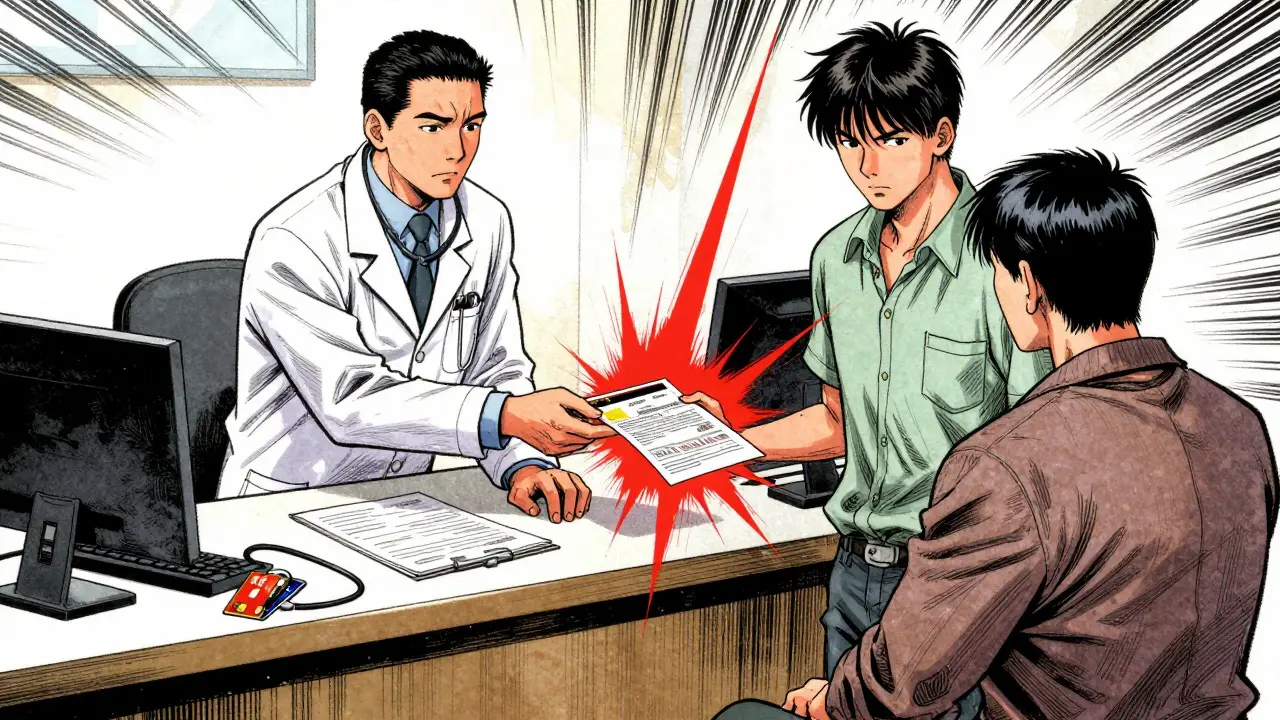
Have you ever felt pressured by front-desk staff to apply for a medical credit card like CareCredit® just to get your appointment scheduled? General Business Law Section 349-g in New York now explicitly prohibits healthcare providers from completing any portion of a patient's application for medical financial products.
The New York State Department of Health clarified that while staff may answer questions, the application must be completed wholly by the patient. Providers cannot arrange or establish applications that are not completely filled out by patients themselves. This stops the practice of pre-filling forms to make signing up easier-and more likely. Violations can result in fines up to $5,000 per violation.
Protecting Emergency Patients from Credit Checks
Perhaps the most impactful rule is General Business Law Section 519-a. It prohibits requiring credit card preauthorization or keeping credit cards on file before providing emergency or medically necessary services. Think about that for a second: no one should be denied life-saving care because their credit card was declined or because they didn’t have one handy.
Furthermore, providers must inform patients about the financial risks of paying with traditional credit cards. This is crucial because traditional credit card debt does not enjoy the same protections as healthcare-specific financing. As noted by Barclay Damon, patients using traditional credit cards lose access to protections against wage garnishment and liens on primary residences that might apply to other types of medical debt arrangements.
HIPAA: Keeping Your Data Private
Beyond money, there is privacy. The Health Insurance Portability and Accountability Act (HIPAA) is the federal standard for protecting sensitive patient data. Enforced by the U.S. Department of Health and Human Services (HHS), HIPAA ensures that your health information stays confidential.
Here is what HIPAA guarantees you:
- Right to Access: You can request and receive copies of your medical records.
- Right to Amend: If you find an error in your records, you can ask for corrections.
- Right to an Accounting of Disclosures: You can find out who else has seen your data (with some exceptions for treatment and payment).
- Breach Notification: If your data is hacked or leaked, providers must notify you within 60 days.
In 2024, the Office for Civil Rights (OCR) continued to enforce these rules strictly, issuing penalties for organizations that failed to secure patient data properly. Always read the Notice of Privacy Practices when you check into a clinic-it tells you exactly how your data will be used.
Federal Momentum: Removing Medical Debt from Credit Reports
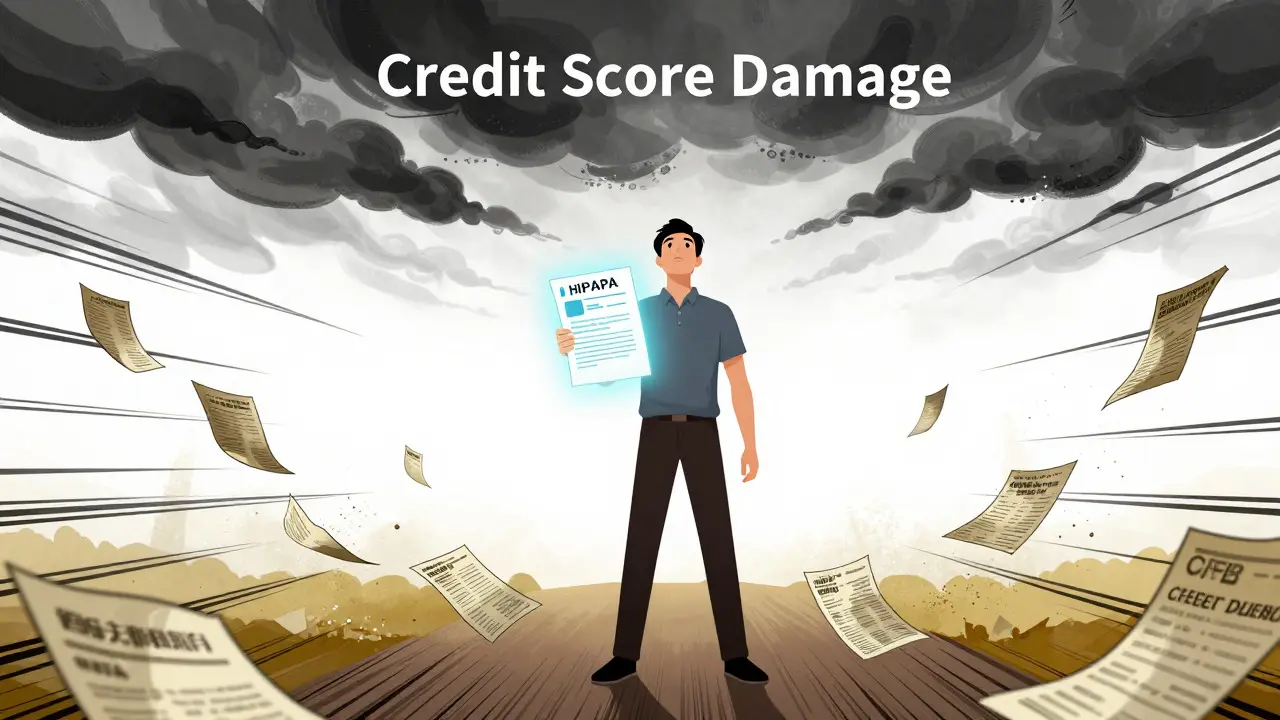
The fight against medical debt isn't just happening in hospitals; it's happening at the credit bureaus. In 2024, the Consumer Financial Protection Bureau (CFPB) finalized a rule that effectively removes medical collection debt from credit reports. This is a game-changer.
Previously, a single unpaid medical bill could tank your credit score, making it harder to rent an apartment, buy a car, or get a mortgage. Now, major credit reporting agencies (Equifax, Experian, and TransUnion) are required to exclude medical collection debt from your credit files. Additionally, existing medical debts already on your report were removed in large batches during 2024.
This aligns with broader trends. According to the CFPB, 100 million Americans held $195 billion in medical debt as of 2023. By removing this debt from credit reports, regulators acknowledge that medical debt is often involuntary-you don't choose to get cancer or have a car accident. Penalizing people financially for getting sick is no longer the norm.
| Protection Area | Federal Rule (e.g., No Surprises Act) | New York State Specifics (2024) |
|---|---|---|
| Surprise Billing | Prohibited for emergency and certain non-emergency services. | Follows federal standards; focuses on in-network transparency. |
| Consent Forms | General informed consent required. | Separate consent required for treatment vs. payment (Section 18-c). |
| Credit Card Financing | No specific federal ban on provider-assisted applications. | Providers cannot complete any part of the application (Section 349-g). |
| Emergency Access | EMTALA requires stabilization regardless of ability to pay. | Cannot require credit card pre-auth before emergency care (Section 519-a). |
| Credit Reporting | CFPB rule removes medical debt from credit reports (2024). | Complements federal rule; emphasizes disclosure of credit card risks. |
What You Should Do: A Practical Checklist
Knowing the laws is half the battle. Using them is the other half. Here is how to protect yourself during your next medical visit:
- Ask for a Good Faith Estimate: If you are uninsured or self-pay, ask for this in writing before your procedure. Keep it safe. If the bill is much higher, you have grounds for a federal dispute.
- Read Before You Sign: If a clinic hands you a stack of papers, take a moment. Look for sections about "financial responsibility" or "credit applications." If you feel rushed, say so. Under New York law, they cannot force you to sign a bundled consent.
- Question Financing Pressure: If a staff member starts filling out a CareCredit or Prosper Healthcare form for you, stop them. Politely ask to fill it out yourself or decline entirely. Remember, you are not obligated to take on debt for care.
- Check Your Credit Report: Go to AnnualCreditReport.com and check your credit annually. If you see old medical debt, dispute it. Thanks to the 2024 CFPB rules, it should be gone. If it’s still there, file a complaint with the CFPB.
- Save Everything: Keep copies of all bills, explanations of benefits (EOBs) from your insurance, and correspondence with providers. If a surprise bill arrives, you’ll need proof of what was discussed.
Looking Ahead: The Future of Patient Rights
The regulatory environment is moving quickly. Experts predict that other states will follow New York’s lead in implementing similar protections, particularly regarding credit card payment disclosures and consent separation. The long-term viability of these laws seems strong, given their alignment with broader consumer protection trends.
As we move through 2026, expect even stricter scrutiny on how healthcare providers handle financial interactions. The era of opaque billing and aggressive debt collection is fading. Your role is to stay informed and assertive. You have the law on your side-use it.
What is the No Surprises Act?
The No Surprises Act is a federal law that went into effect on January 1, 2022. It protects patients from unexpected medical bills, known as "balance bills," when they receive emergency services or care from out-of-network providers at in-network facilities. It prevents providers from billing you more than your in-network cost-sharing amount.
Can a doctor force me to apply for a medical credit card?
In many states, including New York, providers cannot force you to apply for medical credit cards like CareCredit. Under New York’s General Business Law Section 349-g, providers are prohibited from completing any portion of the application for you. You must complete it wholly on your own if you choose to use such financing.
Will medical debt affect my credit score in 2026?
Generally, no. Thanks to a rule finalized by the Consumer Financial Protection Bureau (CFPB) in 2024, medical collection debt is being removed from credit reports. Major credit bureaus are required to exclude this type of debt, offering significant relief to the millions of Americans carrying medical debt.
What is a Good Faith Estimate?
A Good Faith Estimate is a written prediction of the costs you will incur for medical services if you are uninsured or self-pay. Providers are required to give you this estimate before you receive care. If the final bill is $400 or more higher than the estimate, you have the right to file a dispute through the federal government’s independent resolution process.
How does HIPAA protect my privacy?
HIPAA (Health Insurance Portability and Accountability Act) sets national standards for protecting sensitive patient data. It gives you the right to access your medical records, request amendments, and receive notifications if your data is breached. It restricts who can see your health information without your permission.
Can a hospital deny emergency care if I don't have a credit card?
No. Under federal EMTALA laws and strengthened by New York’s General Business Law Section 519-a, providers cannot require credit card preauthorization or keep cards on file before providing emergency or medically necessary services. Care must come first; billing comes later.

8 Comments
Let's be real here, most of this is just bureaucratic noise designed to make you feel safe while they keep the margins intact. The No Surprises Act has loopholes wide enough to drive a truck through if you know who to call at the insurance company. I've seen providers 'accidentally' code services as non-emergency after the fact to bypass the protections. It’s not a shield; it’s a speed bump.
omg yes!! i got hit with a bill for $4k last month because the anesthesiologist was technically out of network even though i went to the main hospital lol its a scam
Hey everyone, great discussion points here. While Earl makes some valid concerns about enforcement gaps, the structural shift toward transparency is undeniably positive for the average consumer. The key takeaway is leveraging the Good Faith Estimate mechanism effectively before any procedure. If you document everything and cite the specific federal statutes during disputes, you often find that administrative teams are more willing to settle than fight a legal battle. Keep pushing for those written estimates!
It is absolutely disgusting how they treat us like ATMs instead of human beings. I remember when my sister needed emergency care and they made her fill out credit applications while she was in pain. It feels like they are punishing people for being sick. We deserve better than this predatory system where your health is tied to your credit score. It’s morally bankrupt.
they should just ban profit in healthcare entirely why are we still debating billing practices when the whole model is broken
The distinction between treatment consent and payment consent under New York’s Section 18-c is a significant procedural safeguard. It ensures that financial coercion does not compromise medical decision-making. Patients should familiarize themselves with these specific statutory requirements to ensure their rights are upheld during intake processes.
In India, we have our own struggles with out-of-pocket expenses, but seeing the US finally address surprise billing is interesting. Though one must wonder if separating consent forms truly helps when the underlying cost structure remains opaque. Perhaps the real issue is not just how we pay, but why healthcare is treated as a luxury commodity rather than a fundamental right. A philosophical shift might be required alongside legislative ones.
i dont buy it they will just raise the prices on the in network stuff to cover the losses from the out of network bans typical government solution
Write a comment