
Opioid Overdose Risk & Response Simulator
Enter observed vital signs or select a scenario to understand the physiological impact of Opioid-Induced Respiratory Depression (OIRD) and the critical window for intervention.
You take a painkiller. It works. The ache fades. But ten minutes later, your lips turn blue, and you stop responding to your name. This isn't just deep sleep; it's Opioid-Induced Respiratory Depression (OIRD). It is the primary reason people die from opioid overdoses. In 2022 alone, over 107,000 Americans died from drug overdoses, with opioids involved in roughly 80% of those cases according to CDC data. Understanding why this happens-and how fast it happens-could save a life.
What Actually Happens When You Stop Breathing?
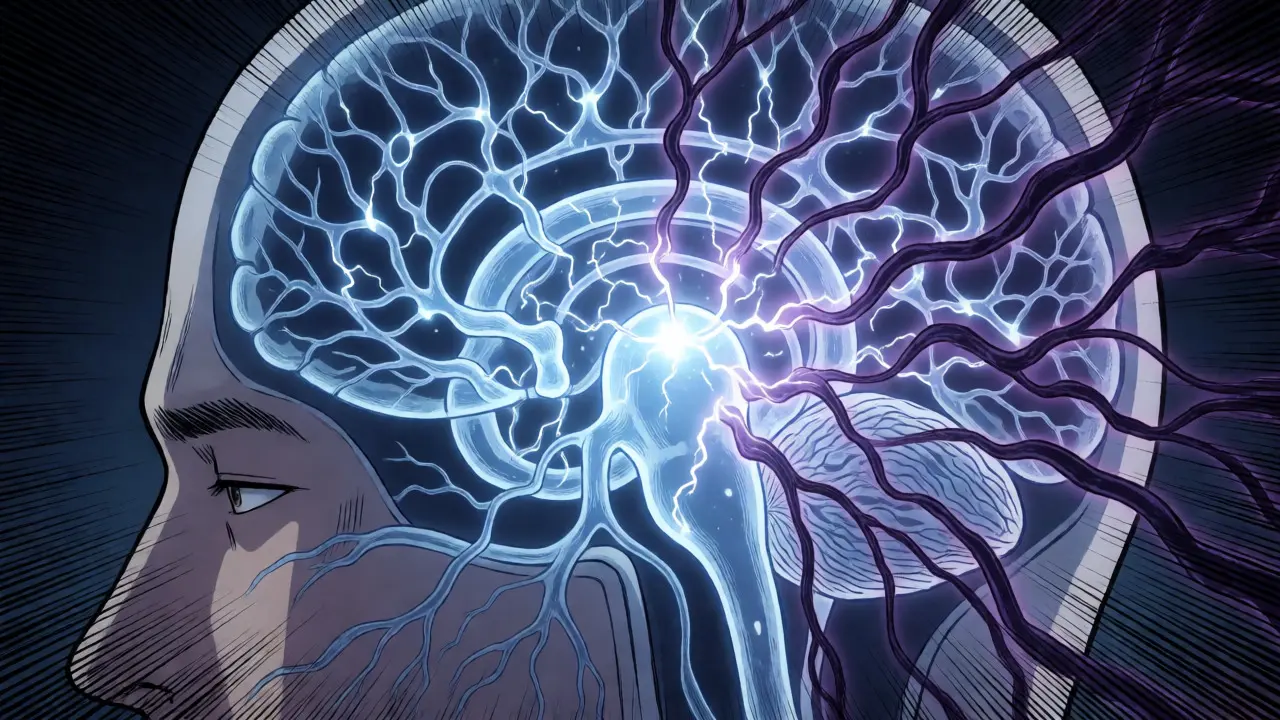
Most people think an overdose means the heart stops first. It doesn’t. The brainstem controls your breathing automatically, even when you’re unconscious. Opioids interfere with this automatic pilot. Specifically, they target neurons that express the mu-opioid receptor (MOR). When these receptors are activated, they don’t just make you feel good; they silence the electrical signals telling your lungs to expand.
Recent research has shifted our understanding from a vague "general sedation" to precise circuit disruption. A landmark 2021 study published in PNAS by Liu et al. identified specific neurons in the lateral parabrachial nucleus (PBL) as critical control points. These neurons act like a master switch for respiratory rhythm. When morphine hits them, their activity drops sharply. The correlation between their firing rate and your breathing rate is strong under normal conditions (r=0.87), but morphine injection completely breaks this link. Your body forgets how to breathe on its own.
| Parameter | Normal State | OIRD State (Moderate) | Clinical Risk |
|---|---|---|---|
| Respiratory Rate | 12-20 breaths/min | <8 breaths/min | Hypoxia begins within 5-7 mins |
| Tidal Volume | ~500 mL/breath | Mildly reduced | Less affected than rate initially |
| Expiratory Time | ~0.8 seconds | >2.3 seconds | Air trapping and poor gas exchange |
| SpO2 (Oxygen Saturation) | 95-100% | <90% | Brain injury risk increases rapidly |
The Neural Switch: Parabrachial Nucleus and PreBötzinger Complex
To understand why some patients need massive doses of naloxone while others wake up instantly, you have to look at two specific brain regions: the preBötzinger Complex (preBötC) and the parabrachial nucleus/kölliker-fuse complex. Think of the preBötC as the engine generator for your breathing rhythm. Opioids hyperpolarize these neurons, making them harder to fire. Studies show this reduces spike counts by over 60%. But here’s the catch: silencing the engine alone only slows things down moderately.
The real killer is what happens in the Kölliker-Fuse nucleus. This area manages the transition between inhaling and exhaling. Opioids cause a significant prolongation of the expiratory phase. Instead of a quick push out, the breath gets stuck. Research by Palkovic et al. showed that deleting mu-opioid receptors specifically in this region reduced respiratory depression by nearly 40% at low doses. This explains why simply reversing the sedation effect isn’t always enough-you have to fix the mechanical timing of the breath too.
Fentanyl Changed the Game
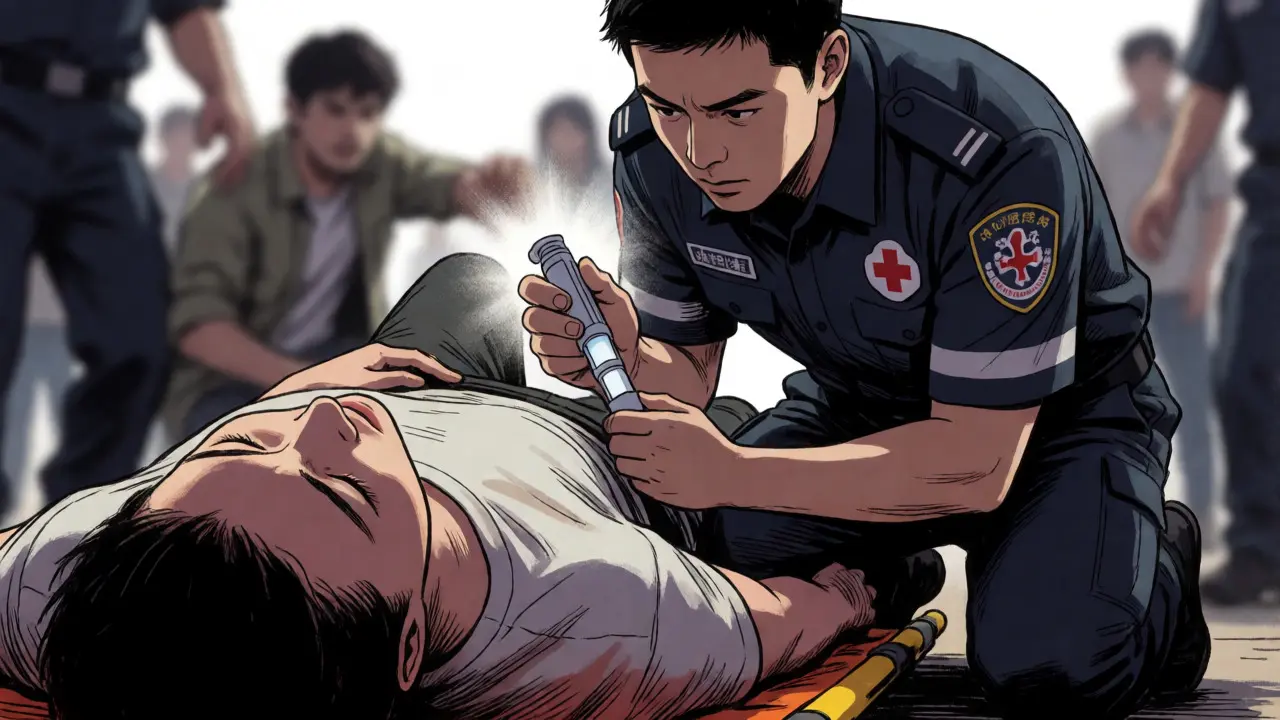
If you’re used to stories about heroin or prescription pills, fentanyl throws a wrench into everything. Heroin might peak in 20 minutes; fentanyl peaks in 5. And it’s potent. While morphine requires milligrams, fentanyl works in micrograms. This speed creates a dangerous window. By the time someone realizes the person next to them isn’t waking up, oxygen levels may already be critically low.
Paramedics report a troubling trend: persistent respiratory rates below 8 breaths per minute despite standard naloxone doses. One emergency medic noted on Reddit that fentanyl overdoses "just don't bounce back like heroin did." You often need continuous monitoring for four hours or more because the drug redistributes in the body. If you give one shot of naloxone and leave, the patient can slip back into apnea once the naloxone wears off-which happens faster than many synthetic opioids clear the system.
Spotting the Signs Before It’s Too Late
Waiting for lips to turn blue is waiting too long. Pulse oximetry (the finger clip) lags behind reality. Capnography, which measures carbon dioxide in exhaled air, detects trouble 60 to 90 seconds before oxygen saturation drops. If you’re in a hospital setting, ask for capnography if you’re on high-dose opioids. At home, look for these subtle cues:
- Slow Exhalations: Watch the chest rise. Does it hang there longer than usual? An expiratory pause exceeding 1.5 seconds is a red flag.
- Gurgling Sounds: Often called the "death rattle," this indicates secretions pooling because the swallow reflex is suppressed.
- Unresponsiveness: Shake and shout. If they don’t wake up easily, check breathing immediately.
- Purple or Gray Skin: Especially around the fingertips and lips (cyanosis).
A simulation study found that novice clinicians miss early signs in nearly 40% of cases. Don’t rely solely on appearance. Count the breaths. If it’s fewer than 10 in a minute, intervene.
How Naloxone Works (And Why It Sometimes Fails)
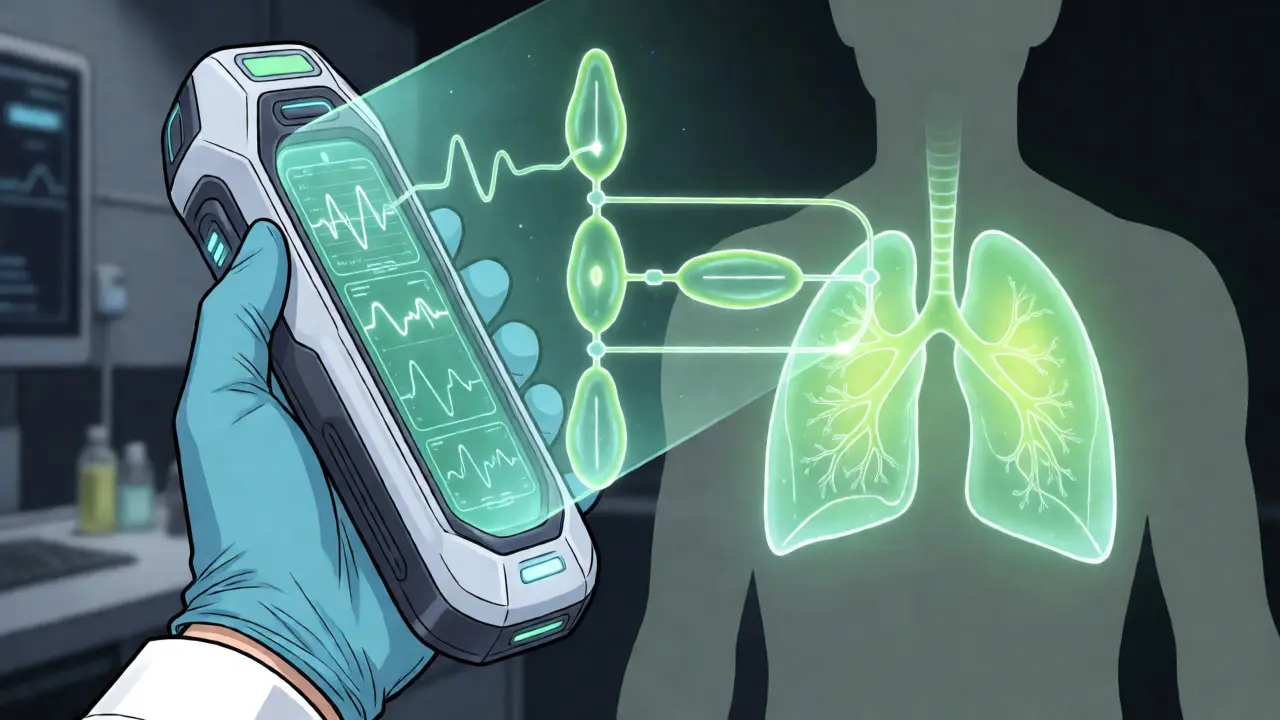
Naloxone is an opioid antagonist. It races to the same receptors opioids occupy and kicks them off. For most traditional opioids, this works well. But Dr. Jan-Marino Ramirez, a leading researcher in this field, notes that we must overcome both neuronal hyperpolarization and synaptic transmission deficits. Because opioids attack multiple layers of the breathing network, naloxone doesn’t always fix the problem completely.
This leads to the "therapeutic dilemma." Giving too much naloxone can precipitate acute withdrawal, causing vomiting, agitation, and severe pain. Patients sometimes leave against medical advice because they feel awful. Conversely, giving too little leaves them vulnerable to re-narcotization. The current gold standard for titration is the 4-2-1 rule: administer 0.4 mg IV every 2 minutes until the respiratory rate exceeds 12 breaths per minute. This approach has an 87% success rate without triggering full withdrawal.
New Treatments on the Horizon
We aren’t stuck with old tools forever. Pharmaceutical companies are targeting the specific neural pathways involved in OIRD rather than just blocking all opioid effects globally. Brix51, a compound targeting GPR83 receptors in the parabrachial nucleus, showed a 78% recovery of respiratory rate in Phase II trials. Another promising candidate, TAK-861, acts as a biased agonist-it provides pain relief with significantly less respiratory depression in primate studies.
Technology is also advancing. The FDA approved the RespiRhythm Monitor in 2024, a biosensor that detects changes in neuron activity via skin impedance. It alerts caregivers 80 seconds before the breathing rate actually drops. These innovations aim to decouple pain relief from respiratory suppression, potentially saving thousands of lives annually.
Why does naloxone sometimes wear off before the opioid?
Naloxone has a shorter half-life (30-90 minutes) compared to many synthetic opioids like fentanyl or methadone. As the naloxone clears from the bloodstream, the remaining opioid molecules can re-bind to the receptors, causing the patient to fall back into respiratory depression. This is why observation periods of 4+ hours are often required after reversal.
Can I tell if someone is just sleeping or having respiratory depression?
Yes. Try to wake them by rubbing your knuckles firmly on their sternum (breastbone). If they don’t wake up, count their breaths for a full minute. Fewer than 10 breaths, or very shallow/slow breathing with prolonged exhales, indicates respiratory depression. Sleeping normally usually involves regular, unlabored breathing.
Is oxygen better than naloxone for an overdose?
No. Oxygen treats the symptom (low blood oxygen) but not the cause (brainstem suppression). Without ventilation support or naloxone, the patient will continue to retain carbon dioxide and eventually stop breathing entirely. Naloxone restores the drive to breathe; oxygen just buys time.
Why do paramedics use higher doses of naloxone now?
The prevalence of highly potent synthetic opioids like carfentanil (which is 10,000 times stronger than morphine) requires larger doses to displace the opioid from receptors effectively. Standard auto-injectors may deliver insufficient amounts for these extreme potency levels, necessitating multiple administrations.
Does everyone who takes opioids get respiratory depression?
Not necessarily. Tolerance develops to respiratory depressant effects with chronic use, meaning long-term users can tolerate higher doses without stopping breathing. However, tolerance does not develop equally to all side effects, and mixing opioids with alcohol or benzodiazepines can overwhelm even tolerant individuals.

13 Comments
It is fascinating how we treat breathing as this automatic, inviolable function until it isn't. We assume the body knows best, yet a simple molecule can hijack that ancient rhythm and silence us entirely. It feels less like a medical failure and more like a philosophical reminder of our fragility. We are so arrogant in our control over nature, yet one microgram shifts the balance from consciousness to oblivion. Maybe we should stop viewing these deaths as merely statistical anomalies and start seeing them as existential warnings. The brainstem doesn't care about your pain tolerance or your moral standing; it just stops listening. That terrifying indifference is what makes this topic so heavy. Yet, there is hope in the understanding itself. Knowing the mechanism gives us the power to intervene before the silence becomes permanent.
The article correctly identifies the parabrachial nucleus but fails to address the systemic negligence that allows this crisis to persist. It is not merely a biological issue; it is a moral failing of the pharmaceutical industry and regulatory bodies who prioritized profit over physiological safety. To suggest that new biosensors will save thousands implies that the current system was ever interested in saving lives rather than managing liability. We must demand accountability for the chemical agents that disrupt such fundamental neural circuits without adequate warning labels regarding respiratory timing. This is not science; it is corporate manslaughter disguised as healthcare innovation.
Great breakdown on the preBötzinger complex vs Kölliker-Fuse distinction. Most people think naloxone fixes everything instantly but the expiratory phase prolongation is the real silent killer here. I've seen patients where the rate looks okay-ish but the gas exchange is garbage because they aren't fully exhaling. That air trapping aspect is underrated in general public education. Good job highlighting the capnography point too since pulse ox lags way behind reality.
I appreciate the balanced perspective presented here. It is crucial to acknowledge that while fentanyl has indeed altered the pharmacokinetic landscape, the underlying physiological mechanisms remain rooted in basic neurobiology. We must approach this with respect for both the patient's suffering and the complexity of their condition. Blaming the individual ignores the structural factors at play. However, the emphasis on early detection through capnography is a commendable step forward. It bridges the gap between advanced clinical tools and practical emergency response. Let us continue to foster dialogue that respects boundaries while seeking truth.
honestly this whole thing is just another way for doctors to feel superior while people die anyway. the "therapeutic dilemma" sounds made up to excuse incompetence. if you cant titrate properly then dont give the drug. its lazy analysis wrapped in fancy words about neurons. nobody cares about the r=0.87 correlation when the person is blue. fix the system or shut up about the biology.
This is so important 🙏❤️ I lost my brother to an overdose last year and the fear of him stopping breathing while sleeping was constant 😰😰 Seeing the explanation about the Kölliker-Fuse nucleus really helped me understand why he looked like he was just resting peacefully right before the end 💔💔 Thank you for sharing this info 📚📚
The FDA approval of the RespiRhythm Monitor seems suspiciously convenient given the timing of recent opioid legislation changes 🤨🤨 Why would big pharma fund research into biased agonists that reduce respiratory depression unless they plan to increase dosages again? 🧐🧐 The data on GPR83 receptors might be cherry-picked to justify higher profits. 📉📉 One must question who benefits from this narrative shift. 🕵️♀️🕵️♀️
I want to offer some encouragement to everyone reading this because knowledge truly is the first step toward empowerment and survival. When we understand the intricate dance of the mu-opioid receptors and the specific vulnerabilities of the lateral parabrachial nucleus, we move from being passive victims of circumstance to active participants in our own health management. It is easy to feel overwhelmed by the sheer volume of statistics and the terrifying speed of synthetic opioids like fentanyl, but remember that every second of awareness counts. By learning to spot the subtle signs of prolonged expiration or unresponsiveness, you become a guardian of life for yourself and those around you. Do not let fear paralyze you; let it motivate you to carry naloxone and to learn how to use it effectively. The fact that researchers are uncovering these precise neural circuits means that better solutions are on the horizon, offering a beacon of hope in a dark time. Stay strong, stay informed, and know that your vigilance can make a tangible difference in preventing tragedy.
The reliance on 'r=0.87' correlations is intellectually lazy and ignores the confounding variables inherent in human physiology. Furthermore, the assumption that naloxone titration follows a predictable linear model is flawed due to receptor saturation kinetics which vary wildly among individuals. We are treating complex stochastic systems with deterministic tools and expecting miracles. This oversight suggests a deeper ignorance of non-linear dynamics in neuroscience.
It is high time society stopped blaming the user and started blaming the supplier. The moral decay of capitalism has led to a situation where profit margins outweigh human breath. If the pharmaceutical companies had been held accountable for the side effects of their products decades ago, we would not be facing this epidemic today. We need stricter regulations and harsher penalties for negligence. The sanctity of life should never be compromised for financial gain. This is a clear case of ethical bankruptcy.
love the deep dive into the kölliker-fuse stuff cause most ppl just see the sedation part and miss the mechanical timing glitch totally. that expiratory pause bit is huge for laypeople to watch for actually. also brix51 looking promising af for keeping the analgesia without killing the drive to breathe. good read no fluff just hard science facts 👌👌
I am particularly interested in the mention of the 4-2-1 rule for naloxone administration. Could you clarify if this protocol is standardized across all emergency departments or does it vary by institution? Additionally, how effective is this method when dealing with carfentanil specifically compared to standard fentanyl analogs?
Good questions Crystal. The 4-2-1 rule is a common guideline but protocols definitely vary by hospital policy and local EMS standards. For carfentanil you often see much higher initial doses required sometimes 2mg+ IV upfront before titrating down because the binding affinity is so intense. Standard auto-injectors rarely cut it alone for that level of potency.
Write a comment