
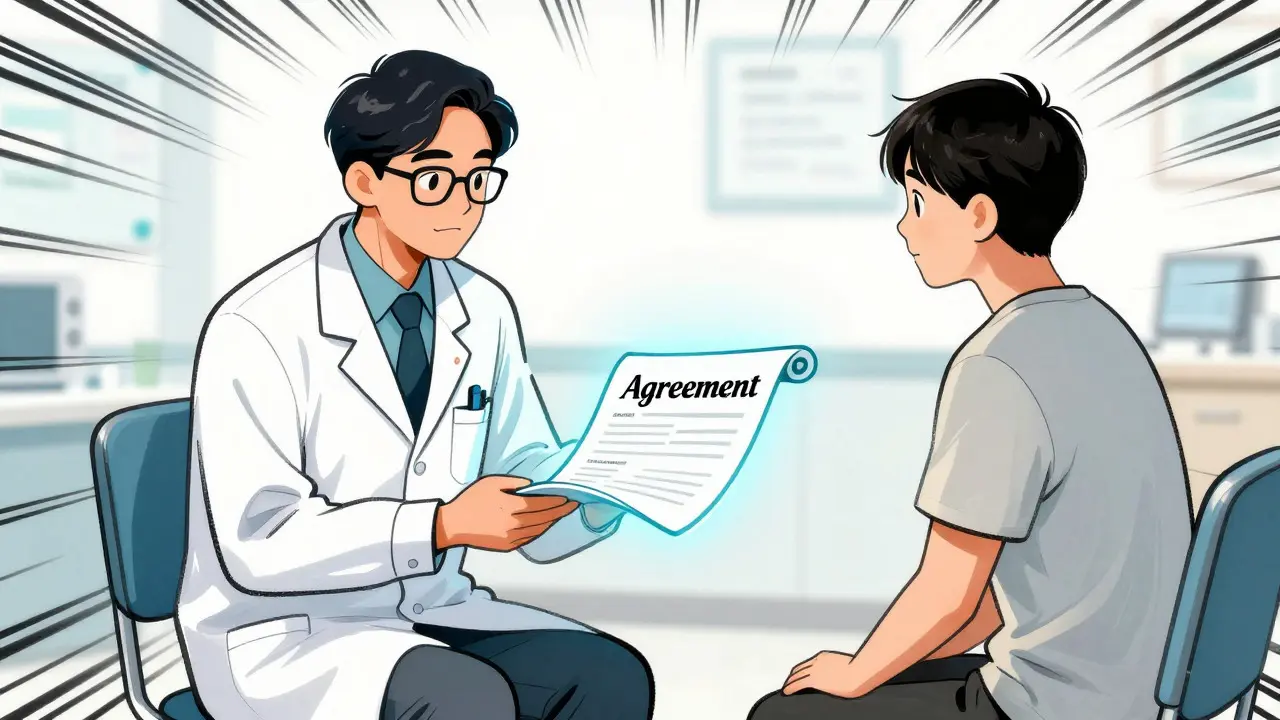
Prescribing opioids for pain is a balancing act. You need to relieve suffering without creating new risks. An Opioid Treatment Agreement, also known as a Pain Management Agreement or Opioid Contract, is the roadmap that keeps both you and your patient on track. It’s not just paperwork; it’s a clinical tool that sets clear expectations before the first pill is dispensed.
These agreements work best when paired with modern monitoring systems like Prescription Drug Monitoring Programs (PDMPs). Together, they form the backbone of safe prescribing practices in 2026. This guide breaks down what goes into these contracts, how to use monitoring data effectively, and how to navigate the legal and clinical requirements today.
What Is an Opioid Treatment Agreement?
An opioid treatment agreement is a written document signed by the patient and the prescriber. It outlines the rules of engagement for long-term opioid therapy. Think of it as a shared understanding of goals, responsibilities, and consequences.
Unlike a standard prescription, this contract addresses behavior. It tells the patient exactly what is expected regarding medication adherence, follow-up visits, and drug testing. For the clinician, it provides a framework for decision-making if things go off track. The CDC’s 2022 Clinical Practice Guideline emphasizes that while mandatory contracts aren't required by law everywhere, they are a standard of care for chronic pain management to ensure transparency.
| Component | Purpose | Clinical Value |
|---|---|---|
| Pain Goals | Define functional improvement targets | Shifts focus from pain score reduction to quality of life |
| Single Pharmacy Rule | Mandate filling all prescriptions at one location | Prevents duplicate dispensing and simplifies tracking |
| Urine Drug Testing | Verify adherence and detect illicit substances | Confirms the prescribed drug is in the system and no unexpected drugs are present |
| Risk Acknowledgment | Patient signs off on side effects and overdose risk | Ensures informed consent and reduces liability |
| Termination Criteria | List behaviors that end the agreement | Provides clear exit strategy for non-adherence or misuse |
The Role of PDMPs in Monitoring
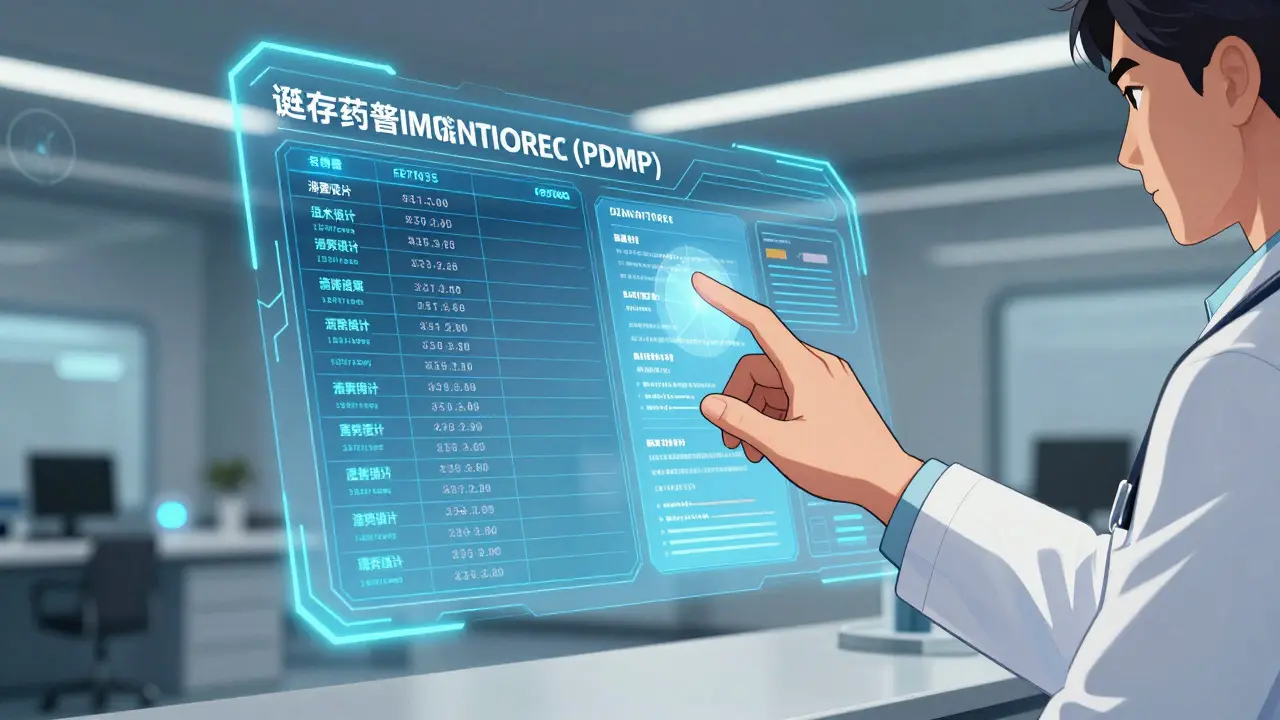
You can’t manage what you can’t see. This is where Prescription Drug Monitoring Programs (PDMPs) come in. A PDMP is a state-run electronic database that tracks controlled substance prescriptions. In 2026, all 50 U.S. states and D.C. operate these systems. They collect data from pharmacies within 24 hours of a prescription being filled.
The CDC recommends reviewing PDMP data before initiating opioid therapy and at least every three months during continued treatment. Ideally, you check it before every prescription. Why? Because patients might be seeing other providers. PDMPs help identify "doctor shopping"-visiting four or more providers for controlled substances within a year. Studies show consistent PDMP use correlates with a 12.3% reduction in this behavior.
However, standalone PDMP portals are clunky. Logging in, navigating separate sites, and interpreting raw data takes time. That’s why Electronic Health Record (EHR) integration is critical. When PDMP data flows directly into your EHR, query rates jump from 12% to 78%. It cuts the time burden from five minutes per patient to under one minute. If your clinic hasn’t integrated yet, push for it. It’s the single biggest efficiency gain for safe prescribing.
Setting Limits: MME and Dosage Guidelines
How much is too much? The metric used is Morphine Milligram Equivalents (MME). This standardizes different opioids so you can compare doses accurately. For example, 10 mg of oxycodone is roughly equivalent to 15 mg of morphine.
The CDC’s 2022 guidelines suggest caution when doses exceed 50 MME/day and recommend avoiding jumps to 90 MME/day unless absolutely necessary. Many states have adopted specific thresholds. As of 2023, 21 states have established mandatory review triggers, often set at 90 MME/day. These are sometimes called "triples rules." Exceeding these limits doesn’t automatically mean you stop prescribing, but it does require documentation of why higher doses are needed and closer monitoring.
- Low Risk: Less than 20 MME/day. Standard monitoring applies.
- Moderate Risk: 20-50 MME/day. Increased vigilance and regular reassessment.
- High Risk: Over 50 MME/day. Requires strong justification, frequent urine drug screens, and possibly specialist consultation.
Always calculate MME using a reliable calculator. Don’t guess. Errors here can lead to dangerous overdoses or unnecessary restrictions.
Practical Implementation Steps
Implementing these protocols requires a systematic approach. Here is how to structure your workflow for maximum safety and compliance.
- Register for State Access: Ensure you and your staff (NPs, PAs) are registered with your state’s medical board for PDMP access. Note that 37 states allow delegation to advanced practice providers.
- Integrate with EHR: Work with your IT team to embed PDMP queries into the charting workflow. Automated alerts for high MME or multiple prescribers are invaluable.
- Sign the Agreement Early: Discuss the opioid agreement before writing the first script. Make it a conversation, not an interrogation. Explain that it protects both parties.
- Schedule Regular Reviews: Set calendar reminders for PDMP checks and urine drug tests. Consistency builds trust.
- Document Everything: If you deviate from guidelines (e.g., prescribing >90 MME), document the clinical rationale clearly. This is your defense against liability and ensures continuity of care.
Challenges and Limitations
No system is perfect. PDMPs have blind spots. They don’t capture illicit opioid use, such as fentanyl bought on the street. They also miss medications dispensed in hospital inpatient settings, which may not report to state databases immediately. This is why urine drug testing remains essential. It catches what the database misses.
Data lag is another issue. While most pharmacies report within 24 hours, some states still have delays of 3-4 days. This makes same-day decisions tricky. If a patient claims they lost their pills, check the PDMP, but also look at the date of the last fill. If it was yesterday, they likely still have them.
Cross-state border issues persist. Only 42 states share data via the Prescription Monitoring Information Exchange (PMIX). If you treat patients who travel frequently across borders, you may need to manually query neighboring states’ databases. This adds time but prevents dangerous interactions.

Legal and Ethical Considerations
In 2022, major distributors settled opioid lawsuits for billions, funding national data clearinghouses. This money is flowing into better algorithms and real-time sharing. But legally, you are responsible for your prescribing decisions. The SUPPORT Act and CARA mandates reinforce the need for diligence.
Ethically, avoid stigma. An opioid agreement isn’t a punishment; it’s a safety plan. Treat patients with respect. If you terminate therapy due to non-compliance, taper slowly. Abrupt cessation causes withdrawal and drives patients to the black market. Offer alternatives like physical therapy, NSAIDs, or referral to addiction specialists if misuse is suspected.
Future Trends in Monitoring
By 2027, nearly 95% of EHR systems are projected to have full PDMP integration. Real-time data sharing-within two hours of dispensing-is becoming the norm in pilot programs funded by the CDC. Machine learning tools are starting to flag high-risk patterns automatically, scoring overdose risk based on complex variables beyond just MME.
Privacy concerns remain. Data breaches affect millions of records annually. Ensure your clinic uses secure, HIPAA-compliant platforms. Stay updated on state-specific regulations, as laws change frequently. The goal is balance: protecting public health while respecting patient privacy.
Is an opioid treatment agreement legally binding?
It depends on the state. In many jurisdictions, these agreements are considered part of the informed consent process rather than strict legal contracts. However, they hold significant weight in malpractice cases and disciplinary hearings as evidence of standard-of-care adherence. Always consult local legal counsel for specific enforceability.
How often should I check the PDMP?
The CDC recommends checking before initiating therapy and at least every three months. Best practice is to check before every prescription refill. With EHR integration, this takes less than a minute, making frequent checks feasible and safer.
What happens if a patient fails a urine drug test?
If the test shows the prescribed opioid is absent or illicit drugs are present, refer to your agreement’s termination criteria. Options include tapering off opioids, switching to non-opioid therapies, or referring to addiction medicine. Document the result and the clinical decision made.
Do PDMPs track over-the-counter medications?
No. PDMPs only track controlled substances (Schedules II-V). They do not monitor acetaminophen, ibuprofen, or benzodiazepines (which are Schedule IV but often tracked separately depending on state rules). Always ask about OTC use to avoid liver toxicity from hidden acetaminophen in combination products.
Can nurse practitioners sign opioid agreements?
Yes. In 37 states, NPs and PAs can access PDMPs and manage opioid therapy independently or under collaborative agreements. They are fully qualified to initiate, monitor, and terminate opioid treatment agreements following state scope-of-practice laws.

11 Comments
It is truly fascinating how we reduce human suffering to a series of checkboxes and urine samples. The 'Opioid Treatment Agreement' is less a contract and more a confession of our collective failure to treat pain with dignity. We are judging patients for surviving, all while hiding behind the shield of 'clinical value.' :/
Hi Alli! I totally get where you're coming from, but let's look at the practical side. These agreements aren't about judgment; they're about safety. When you have clear rules like the Single Pharmacy Rule or regular PDMP checks, it actually protects both the patient and the provider. It creates a structured environment where trust can grow because expectations are transparent. Plus, with EHR integration, checking PDMPs takes less than a minute, so it’s not a huge burden. It’s really about ensuring that if things go off track, there’s a plan in place rather than just reacting to a crisis. 🌟
look its not about dignity its about liability. doctors are terrified of lawsuits. the pdmp stuff is just data collection for legal defense. mme limits are arbitrary too. 50 mme vs 90 mme doesnt change much clinically but it changes insurance coverage. its all about control.
Oh, brilliant analysis, Sam. Because nothing says 'patient care' like 'it's all about control.' You know what else is about control? Ignoring the fact that doctor shopping is real and dangerous. But sure, let's pretend every patient who needs pain management is just trying to game the system. Your cynicism is as refreshing as a cold shower on a hot day. 🙄
Hey everyone! Let's try to keep the conversation positive. 😊 While the system isn't perfect, these tools help ensure safe prescribing. For instance, knowing that PDMPs can reduce doctor shopping by over 12% is a good thing. It helps protect vulnerable patients. And remember, many states now allow NPs and PAs to manage these agreements, which expands access to care. Let's focus on how we can improve patient outcomes together! 💪
The philosophical underpinnings of the Opioid Treatment Agreement suggest a shift from paternalistic medicine to collaborative governance. By defining termination criteria and risk acknowledgment, the agreement establishes a social contract between prescriber and patient. This formalization reduces ambiguity and aligns with ethical principles of autonomy and beneficence. However, one must consider whether such rigidity stifles the nuanced understanding required in chronic pain management.
John makes an excellent point regarding the social contract aspect. It is crucial to recognize that these agreements are not merely bureaucratic hurdles, but frameworks for informed consent. Over-punctuating my thoughts here: Indeed, the inclusion of urine drug testing serves a dual purpose. First, it verifies adherence. Second, it detects illicit substances. This transparency fosters a therapeutic alliance based on honesty. We must ensure that the language used in these contracts is inclusive and mentorship-oriented, guiding patients rather than policing them.
you guys are overthinking it. the pdmp is just a database. if you dont check it you get sued. simple as that. mme is a number. if the number is high you write more notes. its not philosophy its paperwork. stop making it deep.
Dennis, honestly, sometimes simplicity is key. But let's not dismiss the clinical rationale entirely. The CDC guidelines exist for a reason. If you're prescribing over 50 MME/day, you need to justify it. It's not just about notes; it's about patient safety. Also, did you know that only 42 states share data via PMIX? That's a huge gap for patients who travel. So yeah, it's paperwork, but it's necessary paperwork.
i think the main issue is trust. once you sign a contract it feels like you are already suspected. maybe the focus should be on building rapport first. then the agreement is just a formality. less drama more connection.
Sansaray, you hit the nail on the head. It's all about perception. If a patient walks in and the first thing they see is a 'contract,' they feel judged. But if you frame it as a 'safety plan' and discuss it as a conversation, it changes everything. The guide mentions this: 'Make it a conversation, not an interrogation.' Most providers miss this nuance. They treat it like a legal document instead of a clinical tool. It's funny how a few words can shift the entire dynamic.
Write a comment