
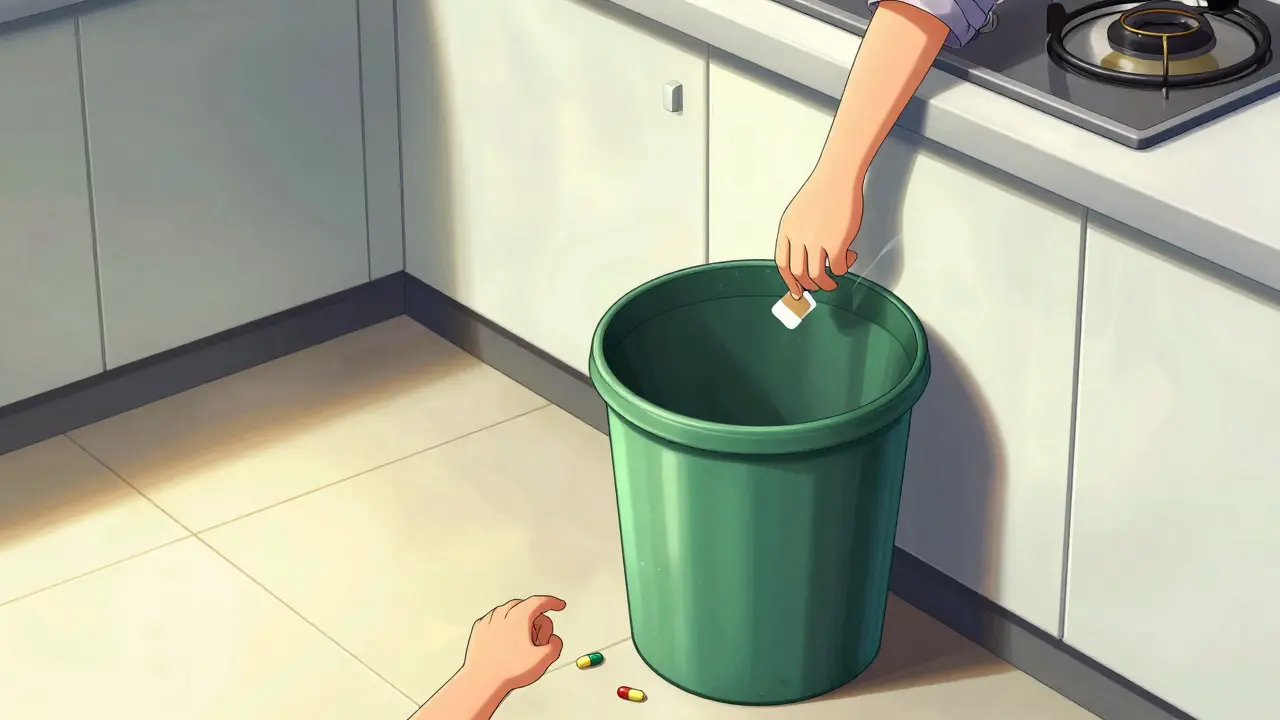
Imagine a scenario where a curious toddler finds a stray patch or a few leftover pills in a kitchen trash can. In many cases, this is a scary mistake that ends with a phone call to poison control. But for some medications, that one single discovery isn't just a "scare"-it's a lethal dose. This is why the FDA flush list is a specific set of high-risk medications that the U.S. Food and Drug Administration mandates be flushed down the toilet immediately rather than thrown in the household garbage.
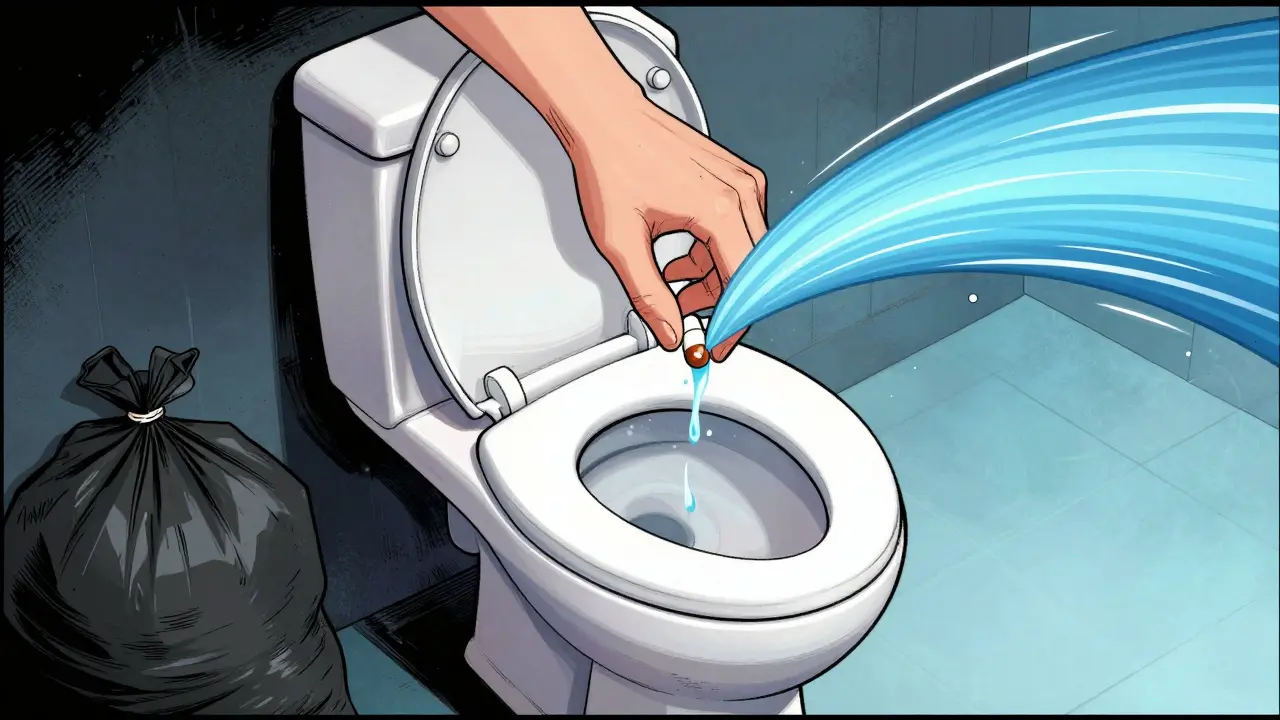
You've probably heard that you should never flush medicines because of water pollution. Usually, that's true. However, for a small group of powerful drugs, the risk of a fatal accidental overdose is so high that the government has decided the toilet is the safest place for them. If these drugs sit in a trash bag, they can be found by children, teenagers, or people struggling with addiction.
The Critical List: What Must Be Flushed?
Not every pill goes down the drain. The FDA has identified specific categories of drugs that are highly sought after for misuse and can cause death from a single dose. If you have any of the following, do not put them in the trash:
- Buprenorphine products: Including BELBUCA, BUAVAIL, BUTRANS, SUBOXONE, SUBUTEX, and ZUBSOLV.
- Fentanyl products: Including ABSTRAL, ACTIQ, DURAGESIC, FENTORA, and ONSOLIS. Note that fentanyl is 50 to 100 times more potent than morphine.
- Hydromorphone: Such as EXALGO.
- Meperidine: Such as DEMEROL.
- Methadone: Including DOLOPHINE and METHADOSE.
- Morphine: Including ARYMO ER, AVINZA, EMBEDA, KADIAN, MORPHABOND ER, MS CONTIN, and ORAMORPH SR.
- Oxymorphone: Such as OPANA and OPANA ER.
- Tapentadol: Including NUCYNTA and NUCYNTA ER.
- Sodium Oxybate: Such as XYREM and XYWAV.
- Diazepam Rectal Gel: Including DIASTAT and DIASTAT ACUDIAL.
- Methylphenidate Transdermal System: Specifically DAYTRANA.
These are primarily powerful opioids and controlled substances. The danger is real: CDC data shows that opioids contributed to 70% of drug overdose deaths in 2021. When these drugs are tossed in the trash, they become accessible. In fact, over half of the people who misuse prescription pain relievers report getting them for free from a friend or relative.
The Environmental Conflict: Safety vs. Water Quality
It feels wrong to flush chemicals into the water system. You aren't alone-surveys show about 68% of people hesitate to flush meds because they worry about the environment. The Environmental Protection Agency (or EPA) acknowledges that pharmaceuticals in our waterways are a problem, and some wastewater plants only remove 30% to 90% of these compounds.
But here is the trade-off: the FDA argues that for the "flush list" drugs, a human life is more important than the negligible environmental impact of a single patch or pill. A single fentanyl patch in a landfill is a potential death sentence for whoever finds it; a single patch in the sewer system is a manageable environmental trace. The immediate life-threatening risk of a child finding these drugs in the trash outweighs the long-term risk to aquatic wildlife.
| Drug Type | Primary Disposal Method | Why? | Risk of Trash Disposal |
|---|---|---|---|
| Flush List (e.g., Fentanyl) | Flush immediately | Immediate destruction | Lethal single-dose exposure |
| Standard Prescription | Take-back program or mixed trash | Environmental protection | Low immediate lethality |
| Over-the-Counter (OTC) | Mixed trash / Take-back | Low toxicity/abuse potential | General contamination |
How to Dispose of Everything Else
If your medication is not on the flush list, you should absolutely avoid flushing it. Instead, follow these steps to ensure they don't end up in the wrong hands or the water supply.
- Find a Take-Back Site: This is the gold standard. Many pharmacies, like Walgreens and CVS, have kiosks where you can drop off unused meds. Law enforcement facilities also often have secure collection boxes.
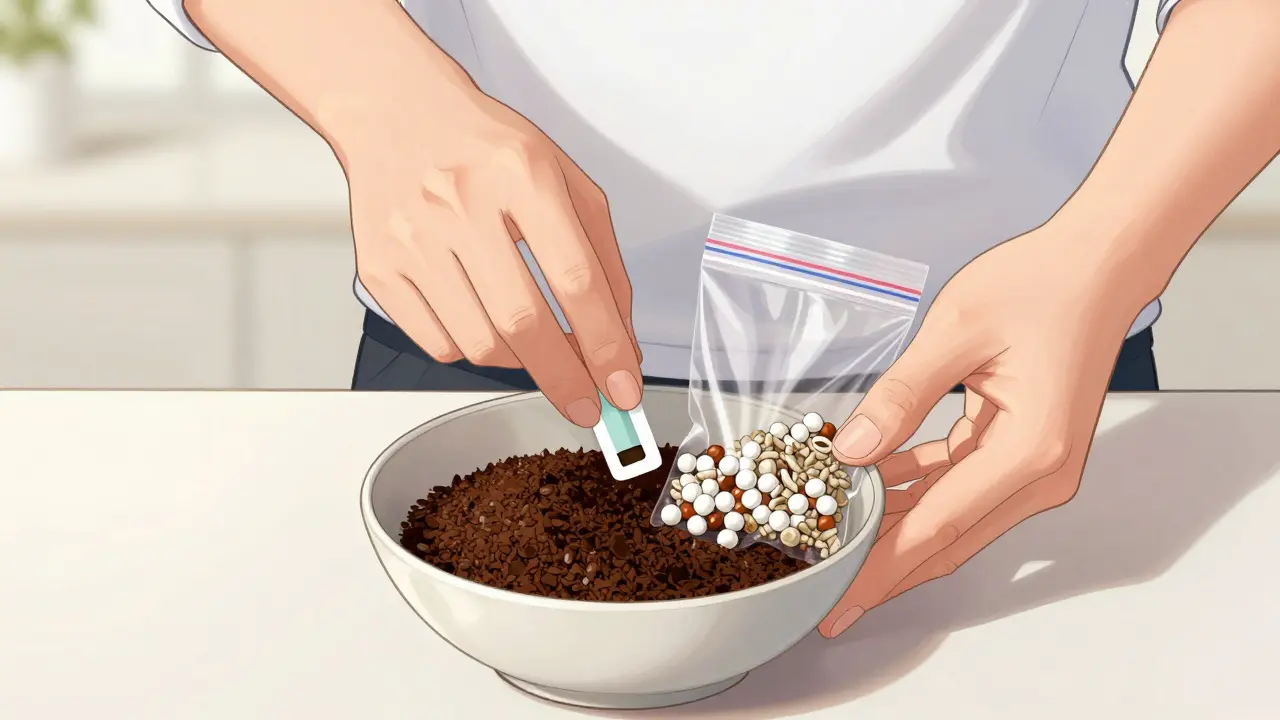
- The "Mix-In" Method: If you can't get to a take-back site, remove the drugs from their original bottles. Mix the pills or liquid with something unappealing-think used coffee grounds, kitty litter, or dirt. Do not crush the tablets; just mix them.
- Seal and Toss: Put that mixture into a sealed plastic bag or container and throw it in your household trash. This makes the medicine less appealing to pets or people scavenging through trash.
- Protect Your Privacy: Always scratch out your personal information and the prescription number on the empty bottle before recycling or tossing it.
Common Pitfalls and Mistakes
One of the biggest mistakes people make is assuming that "crushing" pills makes them safer. The FDA actually advises against crushing tablets or capsules before mixing them with coffee grounds for trash disposal. Why? Because altering the pill can sometimes release the medication into the air or create a mess that is harder to contain.
Another common error is waiting until the "end of the month" to clean out the medicine cabinet. If you have a medication on the flush list that you no longer need, do it now. Every hour a high-potency opioid stays in your home is an hour of risk. We've seen documented cases where children were hospitalized after finding unused patches in the trash-it only takes one mistake.
The Future of Drug Disposal
The industry is trying to move away from the "flush or trash" dilemma. New technologies, like single-use powder packets that render drugs non-retrievable in water, are starting to appear in pharmacies. There's also a push for "dispose-ready" packaging, such as envelopes containing activated charcoal, which could significantly reduce improper disposal rates.
Until these become the norm, the responsibility falls on the patient. If you aren't sure whether your medication is on the list, ask your pharmacist. It is better to ask a "silly" question than to leave a lethal dose in your garbage can.
Why can't I just put everything in the trash if I mix it with coffee grounds?
For most drugs, mixing them with coffee grounds is a great safety measure. However, for drugs on the FDA flush list, the potential for misuse is so high that even a "mixed" bag in the trash can be a target for diversion or a danger to a child who might ignore the coffee grounds. The risk of a single lethal dose is too high to leave them in the home at all.
Does flushing meds really hurt the environment?
Yes, it can. Pharmaceuticals can enter the water cycle and affect aquatic life or end up in drinking water because treatment plants can't filter everything out. This is why the FDA only recommends flushing for a very small, high-risk group of medications. For everything else, take-back programs are the best choice.
What should I do if I can't find a take-back kiosk?
If you have a non-flush medication and no local take-back option, use the FDA-recommended method: mix the medicine with an unappealing substance like cat litter or dirt, seal it in a plastic bag, and place it in your household trash.
Are all opioids on the flush list?
No, not all opioids are on the list, but the most potent ones and those with the highest abuse potential are. Always check the specific FDA list or ask your pharmacist to confirm if your specific brand or generic medication requires flushing.
Should I flush my liquid medications?
Only if the active ingredient is on the FDA flush list. If it isn't, follow the standard disposal protocol by mixing the liquid with an unappealing substance (like sawdust or kitty litter) before bagging and tossing it in the trash.

12 Comments
Just a heads up for anyone doing the mix-in method, using used coffee grounds is way better than fresh ones because it smells worse and really puts off anyone (or any animal) thinking of digging through the trash.
It is absolutely mind-boggling that we even have to have a list for this. The sheer incompetence of people leaving lethal narcotics in a plastic bag for a toddler to find is a special kind of negligence. We're basically playing Russian roulette with our kids because some adults are too lazy to drive to a pharmacy kiosk. It's a systemic failure of common sense and a total circus of a healthcare system.
glad this exists 🌸 honestly i just didnt know what to do with my old meds until now
It's wild how we've reached a point where the government tells us to pollute the water to prevent a different kind of tragedy. It's a classic utilitarian dilemma. You sacrifice the collective environmental health for the immediate survival of an individual. It makes you wonder if the 'safe' choice is just the least worst option we have left in a broken society.
The inclusion of the "mix-in" method is quaint, though remarkably simplistic. One would assume a person of any reasonable intellect would already be aware that rendering a substance unappealing is the baseline for disposal. The formatting of this guide is pedestrian at best, and the insistence on avoiding crushing tablets is a nuance that only the most rudimentary of users would fail to grasp. It is truly exhausting to cater to the lowest common denominator in public health literature.
Some of you are really struggling with the basic logic here. If the FDA says flush it, you flush it. It's not that deep. Just follow the rules and stop overcomplicating a simple set of instructions.
I wonder if anyone here has actually checked their cabinets lately or if they're just pretending to be responsible for the sake of the thread.
I completely disagree with the premise that flushing is the only solution!!! 🙄 Why can't we just mandate better pharmacy pickups??? 💊 The logic is flawed, and the execution is lacking!!! ❌
I think this is a great reminder. It's easy to forget these things when you're just trying to keep the house clean.
Finally some real American common sense in health guidelines! We need to prioritize our families and our kids over some fish in a pond! Protect the next generation first, that's what makes this country great!
didnt know about the coffee grounds trick... thx ✌️
It is indeed a complex balance between ecological stewardship and the preservation of human life. While the environmental impact is regrettable, the potential for a fatal accident is a burden too heavy for any family to bear. We must strive for a harmony where safety does not necessitate pollution, yet in the interim, we must accept the most prudent path forward.
Write a comment