Medication Glaucoma Risk Checker
Check if your medications could trigger acute angle-closure glaucoma. This tool identifies high-risk drugs and suggests safer alternatives based on the latest ophthalmology research.
Select medications to see your glaucoma risk assessment
Imagine waking up with severe eye pain, blurred vision, and halos around lights. For many, this isn't just a headache-it's a life-changing medication-induced glaucoma emergency triggered by common drugs they never knew could harm their eyes. Every year, thousands experience this sudden eye crisis, but it's often preventable with simple checks. Unlike gradual glaucoma forms, this type can destroy vision in hours if untreated.
What Exactly Is Medication-Induced Acute Angle-Closure Glaucoma?
Acute Angle-Closure Glaucoma is a sudden blockage in the eye's drainage system. Normally, fluid flows out through the trabecular meshwork. But when medications cause the iris to block this drainage, pressure builds rapidly. This can destroy the optic nerve in hours if untreated.
The trabecular meshwork is the eye's drainage system. When this gets blocked, fluid can't leave the eye, causing intraocular pressure to spike dangerously. Normal IOP is under 21 mm Hg. In medication-induced AACG, pressure often exceeds 40 mm Hg-enough to cause permanent vision loss within hours.
How Medications Trigger This Emergency
Drugs cause angle closure by interfering with the eye's natural fluid flow. Most commonly, they trigger pupillary block: when medication dilates the pupil, the iris presses against the lens, blocking fluid drainage. Other mechanisms include ciliary body swelling or anterior rotation of the ciliary processes.
People with narrow eye angles are most at risk. This anatomical trait is common in East Asian populations (8.5% prevalence) versus White populations (3.8%), according to the Singapore Eye Research Institute's 2020 study. Many don't know they have narrow angles until a medication triggers an attack.
High-Risk Medications and Safer Alternatives
| Medication Class | Common Examples | Risk Level | Safer Alternatives |
|---|---|---|---|
| Anticholinergics | Tropicamide (eye drops), Atropine | High | Phenylephrine (10% for eye exams) |
| Sulfonamides | Acetazolamide, Sulfa antibiotics | Moderate | Non-sulfa diuretics like furosemide |
| SSRIs | Paroxetine, Sertraline | Moderate | Bupropion (non-SSRI antidepressant) |
| Adrenergic Agents | Phenylephrine (nasal decongestants), Ephedrine | High | Pseudoephedrine (with caution) |
| Antihistamines | Diphenhydramine (Benadryl) | Moderate | Loratadine (Claritin), Cetirizine (Zyrtec) |
For example, tropicamide, a common eye drop used in routine exams, causes 28% of documented cases. But when doctors skip angle checks before dilation, patients face unnecessary risk.
Critical Symptoms to Recognize
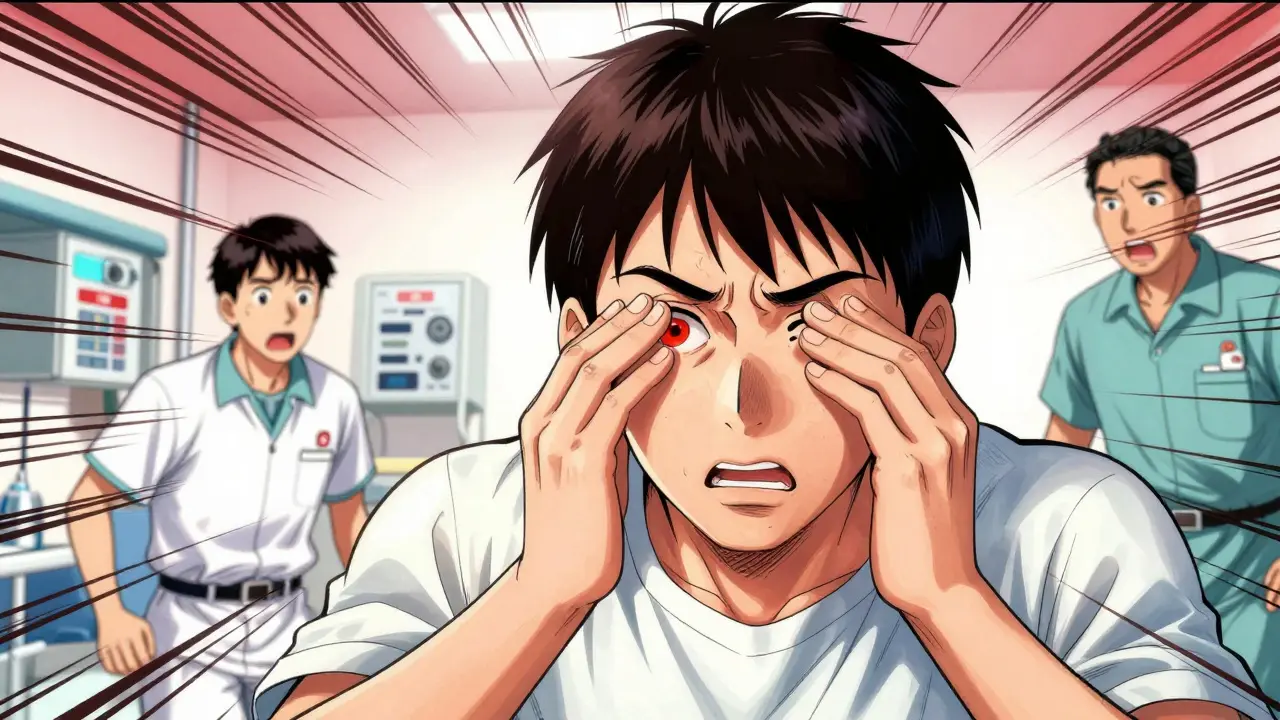
These symptoms develop rapidly and require immediate action:
- Severe eye pain (often described as "burning" or "stabbing")
- Blurred or cloudy vision
- Seeing rainbow-colored halos around lights
- Intense headache or nausea/vomiting
- Redness in the white part of the eye
Many patients initially mistake these for migraines or sinus issues. On the Glaucoma Research Foundation's forum, user "VisionWarrior42" shared: "After taking pseudoephedrine for allergies, I was misdiagnosed with a migraine. By the time I got the right treatment, I'd lost 20% of my peripheral vision."
Immediate Steps to Take During an Attack
If you experience these symptoms after taking medication:
- Go straight to an emergency room or ophthalmologist-do not wait
- Inform medical staff you suspect "medication-induced glaucoma" and list all recent drugs taken
- Avoid driving yourself; call emergency services if symptoms are severe
Emergency treatment includes pilocarpine eye drops (2% every 15 minutes for 1 hour) to constrict the pupil, intravenous mannitol to reduce fluid buildup, and laser surgery within 24 hours.
Prevention Through Screening and Communication
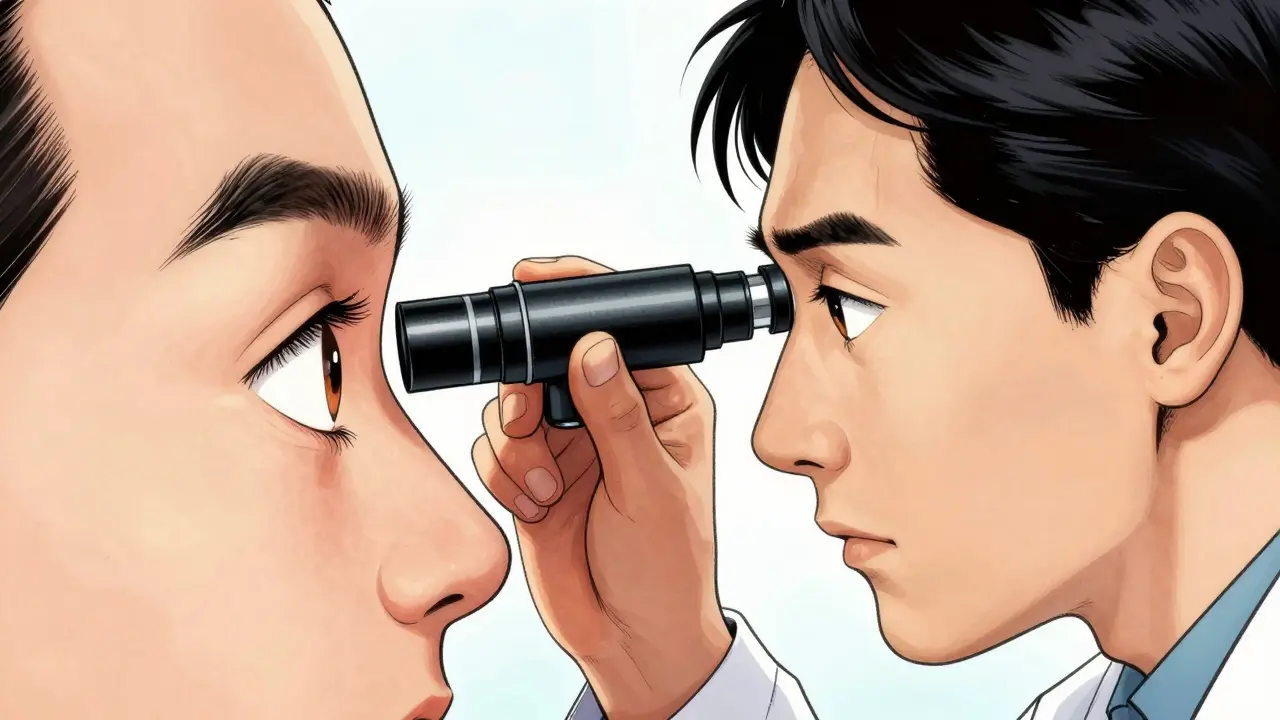
The good news: this is largely preventable. The American Academy of Ophthalmology recommends gonioscopy-a 5-minute eye exam using a special lens to check the drainage angle-before prescribing high-risk medications. This simple test identifies narrow angles in 94% of cases, according to a 2023 British Journal of Ophthalmology study.
Ask your doctor:
- "Have you checked my eye drainage angle?"
- "Is there a safer alternative to this medication?"
- "What symptoms should I watch for?"
Patients with known narrow angles should avoid all anticholinergic drugs unless absolutely necessary. For example, use loratadine instead of diphenhydramine for allergies, or formoterol instead of epinephrine for asthma.
Frequently Asked Questions
Can medication-induced glaucoma be reversed?
If treated within 6-12 hours, vision loss can often be prevented. However, optic nerve damage becomes permanent after 24 hours of high pressure. Early intervention is critical-never ignore sudden eye pain or vision changes.
Why do some people get this from eye drops during routine exams?
Dilating drops like tropicamide can trigger angle closure in people with narrow angles. Doctors should always check drainage angles before dilation. If they skip this step, it's a preventable error. Always ask, "Have you checked my angle width?" before receiving dilating drops.
Are there genetic tests for this risk?
Yes. The GLAUGEN Consortium identified 17 genetic markers linked to narrow angles in their 2022 Nature Genetics study. While not yet routine, genetic screening may become standard for high-risk groups like East Asians within the next 5 years.
What should I do if I'm prescribed a high-risk medication?
Ask for a gonioscopy exam first. If your angles are narrow, request alternatives. For example, switch from acetazolamide (sulfa-based) to furosemide for glaucoma treatment. Never stop prescribed medication without consulting your doctor, but always discuss risks before starting new drugs.
How common is misdiagnosis for this condition?
Very common. A 2021 JAMA Ophthalmology study found only 38% of emergency room cases were correctly diagnosed initially. Patients often get treated for migraines, sinus infections, or gastrointestinal issues instead. Always specify "medication-induced eye pressure emergency" when seeking help.