

It’s December 15, 2025. You’re rushing out the door, your keys in one hand, your EpiPen in the other. You glance at the expiration date on the side-November 2024. You think: It’s only a month past. It’ll probably still work. You’re not alone. Thousands of people make this same calculation every year. But with insulin, EpiPens, and nitroglycerin, that one-month delay can be the difference between life and a trip to the ER-or worse.
Why These Three Medications Are Different
Most pills and antibiotics don’t suddenly turn toxic after their expiration date. The FDA found that 90% of drugs tested years past their expiration still worked fine. But insulin, epinephrine, and nitroglycerin? They don’t play by those rules.Insulin is a protein. Like milk left out on the counter, it breaks down. Once it expires, especially if it’s been stored at room temperature, it loses potency fast. A 2022 study from the American Diabetes Association showed that insulin can lose up to half its effectiveness just six months past expiration. That means your blood sugar could spike uncontrollably-even if you’re giving the same dose you always have.
EpiPens contain epinephrine, a chemical that needs to hit your system with full force during anaphylaxis. If it’s expired, it might not deliver enough to stop your airway from closing. A 2021 study in Annals of Allergy, Asthma & Immunology found that EpiPens 12 months past expiration delivered only 52-68% of the labeled dose. That’s not a weak dose-it’s a dangerous one.
Nitroglycerin is even more fragile. It’s a liquid in tablet form, packed in a glass bottle to protect it from air and light. But once you open it, the clock starts ticking. Within 30 days, it loses 20% of its strength. By six months past expiration, it’s often useless. A 2023 study from Baptist Health showed that 78% of patients who used expired nitroglycerin during chest pain needed emergency treatment. Those with in-date nitroglycerin? Only 22% did.
What Happens When They Fail
Real people, real consequences.One Reddit user, u/InsulinWarrior, shared how they ended up hospitalized after using insulin two months past its date. Their blood sugar swung from 50 to 450 mg/dL-no warning, no pattern. They spent two days in the hospital. Another user in r/Allergy described their child’s anaphylactic reaction to a bee sting. The expired EpiPen didn’t work. They had to get three doses from paramedics to stabilize.
In San Antonio, cardiac patients reported nitroglycerin failing during chest pain. Eighty-three percent said the tablets didn’t relieve their symptoms. One man, 68, waited 10 minutes for relief. When none came, he called 911. He had a heart attack. His nitroglycerin was six months past expiration.
These aren’t rare stories. The American Heart Association says expired nitroglycerin can fail to stop a heart attack. The Cleveland Clinic warns that the wrong dose of these meds can trigger a medical emergency. And it’s not just about effectiveness-it’s about unpredictability. With insulin, you can’t tell if it’s working until your blood sugar crashes or spikes. By then, it’s too late.
Storage Matters More Than You Think
Expiration dates assume proper storage. But most people don’t store these meds right.Insulin? Keep unopened vials in the fridge at 2-8°C (36-46°F). Once opened, it lasts 28-42 days-no matter what the bottle says. Leave it in a hot car, or on a windowsill, and it can degrade in hours. I’ve seen patients keep insulin in their purse all day, then wonder why their numbers are off.
Nitroglycerin? Keep it in its original amber glass bottle. Never transfer it to a pill organizer. Sunlight and air kill it. Even if it’s not expired, if it’s been sitting in a bathroom cabinet for a year, it’s probably dead. The American Heart Association says replace it every 3-6 months after opening-even if you haven’t used it.
EpiPens? Check the solution. It should be clear and colorless. If it’s brown, cloudy, or has particles, throw it out. Even if the date is still good. Heat and light break down epinephrine. Don’t keep it in your glove compartment. Don’t leave it in your coat pocket during winter. Store it at room temperature, away from direct sun.

What Experts Really Say
Dr. Robert Hodes at the Cleveland Clinic puts it bluntly: “Having the wrong dose of these types of medications could lead to a medical emergency.”Dr. Jonathan Gipps at Baptist Health adds: “These medications must be at their most potent level to work as they should.” He’s seen patients end up in the ER because they used expired nitroglycerin, thinking it was “just a little past.”
But here’s the nuance: the American College of Allergy, Asthma & Immunology says if you’re having a life-threatening allergic reaction and your EpiPen is expired, use it anyway. Better a weak dose than no dose. But call 911 immediately after. Don’t wait. Don’t hope.
For insulin and nitroglycerin? There’s no “better than nothing.” If it’s expired, don’t use it. Period. No exceptions.
How to Stay Safe: A Simple Checklist
- Insulin: Mark the date you open each vial. Set a phone reminder for 28 days later. Keep unopened vials refrigerated. Never use insulin that’s been frozen or exposed to heat.
- EpiPen: Check the solution monthly. Clear? Good. Cloudy or brown? Toss it. Replace every 12-18 months, even if unused. Keep it with you at all times-never in the car or drawer.
- Nitroglycerin: Write the opening date on the bottle. Replace it every 3-6 months. Store in original glass bottle, away from light and moisture. Don’t carry it in your pocket.
Use a small notebook or phone app to track all three. Many patients have multiple expiration dates to juggle. That’s why 67% of cardiac patients in one study had expired nitroglycerin in their emergency kit.
What About Cost? Can’t I Just Use It Anyway?
I get it. Insulin costs hundreds of dollars a month. EpiPens are $700 for two. Nitroglycerin isn’t cheap either. A University of Michigan study found 43% of low-income patients use expired insulin because they can’t afford to replace it. That’s heartbreaking.But here’s the truth: using expired insulin doesn’t save money-it costs more. One patient in a 2023 Healthline case study developed a severe skin reaction from degraded insulin. They spent weeks in the hospital. Their bill? Over $45,000.
There are alternatives. Ask your doctor about insulin assistance programs. Many manufacturers offer free or low-cost insulin to those who qualify. EpiPens have generic versions now, like Adrenaclick. Nitroglycerin tablets are available as generics for under $10. Talk to your pharmacist. Don’t risk your life for a few hundred dollars.
What’s Changing? New Tech on the Horizon
Good news: the industry is catching up.In April 2023, Sanofi got FDA approval for Toujeo Max, an insulin that stays stable at room temperature for 56 days-more than double the standard. That’s huge for people who travel or can’t keep insulin cold.
Adamis Pharmaceuticals launched Symjepi in June 2023. It’s an epinephrine injector with a 24-month shelf life-longer than EpiPen’s 18 months.
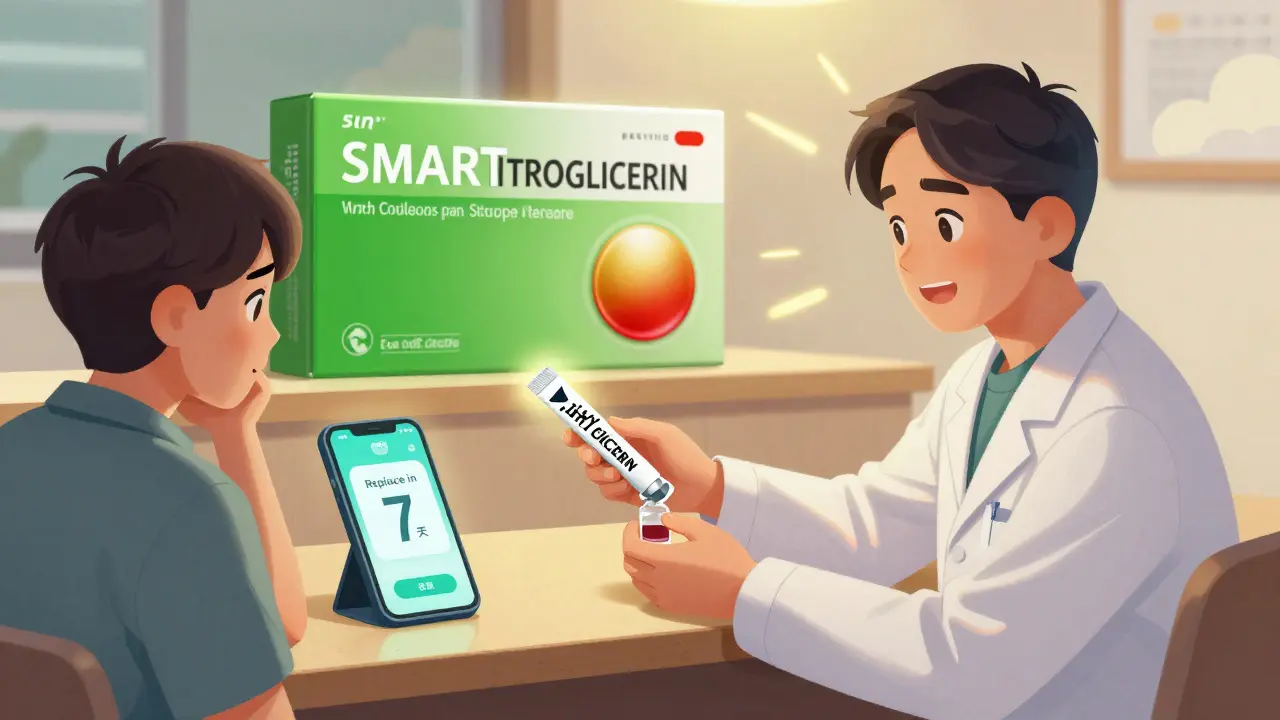
And the most exciting? Vericel Corporation is testing “smart nitroglycerin” with color-changing indicators. When potency drops below 90%, the tablet turns a different shade. It’s still in trials, but if it hits the market, it could end guesswork forever.
The FDA is also pushing for shorter expiration dates on EpiPens-from 18 to 12 months-to reflect real-world use. Europe already did it. The U.S. is following.
Final Rule: When in Doubt, Toss It
You wouldn’t drive a car with worn brakes. You wouldn’t wear a helmet that’s cracked. So why risk your life with expired medication?Insulin, EpiPens, and nitroglycerin aren’t like ibuprofen or antibiotics. They’re emergency tools. And emergency tools must work-every time.
Set reminders. Label your bottles. Replace them before they expire. Talk to your pharmacist. Ask about financial help. Don’t wait for a crisis to realize you’re out of time.
Your life isn’t worth the gamble.
Can I still use an expired EpiPen if I have no other option?
Yes-but only as a last resort during a life-threatening allergic reaction. The American College of Allergy, Asthma & Immunology says using an expired EpiPen is better than doing nothing. But you must call 911 immediately after. Expired EpiPens often deliver less than half the needed dose, so emergency responders may need to give additional epinephrine. Never rely on an expired device as your primary treatment.
How long does insulin last after opening?
Most insulins are good for 28 to 42 days after opening, regardless of the printed expiration date. This depends on the type: rapid-acting insulins like Humalog last 28 days, while long-acting ones like Lantus can last up to 42 days. Always check your manufacturer’s guidelines. Store opened vials at room temperature, away from direct heat or sunlight. Never use insulin that’s been frozen or looks cloudy or clumpy.
Why does nitroglycerin expire so quickly after opening?
Nitroglycerin is highly sensitive to air, light, and heat. Once the bottle is opened, the tablets begin to break down. Studies show they lose 20% of their potency within 30 days. By six months past expiration, most are nearly useless. That’s why the American Heart Association recommends replacing nitroglycerin every 3-6 months after opening-even if you haven’t used it. Always keep it in its original amber glass bottle to protect it from degradation.
Can I store insulin in the fridge if I’m not using it right away?
Yes. Unopened insulin vials should always be refrigerated at 2-8°C (36-46°F) until first use. Once opened, you can keep it at room temperature for its 28-42 day window. But if you’re not using it daily, you can return it to the fridge to extend its shelf life-just let it warm up to room temperature before injecting. Never freeze insulin. If it freezes, throw it out.
What should I do with expired insulin, EpiPens, or nitroglycerin?
Don’t flush them or throw them in the trash. The FDA recommends returning expired medications to a pharmacy for safe disposal. Many pharmacies have take-back programs for sharps and biologics. If your pharmacy doesn’t offer this, contact your local hazardous waste facility. These medications can contaminate water supplies or harm wildlife if improperly discarded.

12 Comments
Just had to replace my EpiPen after realizing the solution was slightly cloudy-scary how fast it degrades even if the date looks fine. 🤢 I check mine monthly now. Also, storing it in my purse during summer? Big mistake. Heat kills epinephrine faster than you think.
People in India dont even know what expiration means for meds they just buy whatever is cheapest and hope for the best. I saw a guy use 3 year old insulin and he was fine so why worry? Pharma companies just want you to buy more. Its all profit.
There’s something deeply human about how we cling to expired meds-not out of ignorance but out of fear. Fear of cost. Fear of being a burden. Fear that tomorrow might not come. But here’s the quiet truth: your life isn’t a budget line item. It’s the only one you get. And sometimes, letting go of the old thing-whether it’s insulin or a belief-is the bravest thing you can do.
I started using a simple phone app to track all my meds-insulin, nitro, EpiPen. Set reminders 10 days before expiry. It’s changed everything. No more panic at 2 a.m. wondering if that vial’s still good. You don’t need to be perfect. Just consistent. And you’re not alone in this.
My dad’s a diabetic and he used to keep his insulin in the glovebox. I nearly lost him last winter when his sugar spiked after a road trip. Now he keeps it in a cooler with him. Simple fix. But it takes someone else saying ‘this is dangerous’ to make you listen.
My mom used expired nitroglycerin during chest pain and thought it was just stress. She didn't call 911 until she collapsed. She's fine now but I'll never forget how she said 'it was just a little past' like it was a milk carton. These aren't supplements. They're lifelines.
USA is weak. In India we dont waste money on fancy pills. We use what we have. If it works its fine. You people are too soft. This is why your healthcare costs so much.
As a clinical pharmacist, I’ve seen too many patients who use expired insulin because they can’t afford new vials. The FDA’s 90% stability stat doesn’t apply here. These are biologics-unstable, temperature-sensitive, and unforgiving. Please, if you’re struggling, ask your provider about patient assistance programs. You’re not alone.
THIS IS WHY WE NEED TO CRACK DOWN ON PHARMA PRICE-GOUGING. EXPIRATION DATES ARE A SCAM. THEY’RE NOT SCIENTIFICALLY VALIDATED-THEY’RE MARKETING TOOLS. I’VE USED 3-YEAR-OLD INSULIN. I’M STILL ALIVE. THE SYSTEM IS BROKEN. STOP BLAMING PATIENTS.
How quaint. Americans treat life-saving drugs like expired yogurt. In the UK, we have NHS supply chains. No one uses expired nitroglycerin. We don’t gamble with physiology. You’re not brave-you’re negligent.
bro i had a friend in delhi who used old insulin for 6 months and he was fine but then he got a infection from the needle so maybe its not the med its the storage? also u can get generic epipen for like 25 bucks now on amazon. just sayin
My grandma died from an expired EpiPen. Not because she was careless-because she couldn’t afford a new one. We need real solutions, not guilt trips. If we want people to stop risking their lives, we need to make these meds affordable. Not just ‘use it anyway’-but ‘you can actually get it’.
Write a comment