
High blood pressure doesn’t announce itself with symptoms. It just creeps up-until it’s too late. By 2021, hypertension affected more than 1.28 billion adults worldwide, according to the World Health Organization. And while medications can bring numbers down fast, many people are looking for ways to manage it without relying solely on pills. The truth? You don’t have to choose between natural strategies and medication. The best approach combines both-safely, smartly, and with real results.
What Counts as High Blood Pressure Today?
The definition of hypertension changed in 2017. Now, if your systolic (top number) is consistently above 130 mm Hg or your diastolic (bottom number) is above 80 mm Hg, you’re classified as hypertensive. This isn’t just a number on a screen. It’s a silent risk factor for stroke, heart attack, and kidney damage. Lowering your blood pressure by just 5 mm Hg systolic can cut stroke deaths by 14% and heart disease by 9%, according to a 2014 JAMA study. That’s why managing it matters-even if you feel fine.
How Medications Actually Work
First-line drugs for hypertension include ACE inhibitors, ARBs, calcium channel blockers, and diuretics. These aren’t just pills you take forever-they’re tools that target specific pathways in your body. For example, ACE inhibitors relax blood vessels by blocking a hormone that narrows them. Calcium channel blockers slow down the movement of calcium into heart and blood vessel cells, which reduces pressure. Diuretics help your kidneys flush out extra sodium and water, cutting volume in your bloodstream.
Medications work fast. Most people see a drop in blood pressure within 2 to 4 weeks. Amlodipine, a common calcium channel blocker, can lower systolic pressure by 20 to 25 mm Hg. That’s significant. But they come with side effects: dizziness, fatigue, swelling in the legs, or even coughing. In 2022, the NIH recorded over 1,200 serious adverse events linked to antihypertensive drugs. That’s why many people look for alternatives-or at least ways to reduce their dose.
The Science Behind Natural Strategies
Natural approaches don’t replace medication for everyone-but they do help. And the evidence is growing. The DASH diet (Dietary Approaches to Stop Hypertension) isn’t a fad. It’s a scientifically proven eating plan developed by the National Heart, Lung, and Blood Institute in 1997. When followed strictly for 30 days, it can drop systolic pressure by 8 to 14 mm Hg. That’s comparable to a single medication.
The key? More fruits, vegetables, whole grains, and low-fat dairy. Less salt, sugar, and processed food. The diet targets 4,700 mg of potassium, 1,250 mg of calcium, and 500 mg of magnesium daily. Most people fall far short. Replacing chips with almonds, soda with water, and white bread with oatmeal makes a measurable difference.
Sodium reduction is another powerhouse. The average American eats 3,400 mg of sodium daily. The recommended limit? 1,500 mg. Cutting that in half can lower systolic pressure by 5 to 6 mm Hg. It’s not about never eating salt-it’s about reading labels. Canned soup, bread, deli meats, and frozen meals are the hidden culprits.
Supplements That Actually Help
Not all supplements work. But some have solid data behind them.
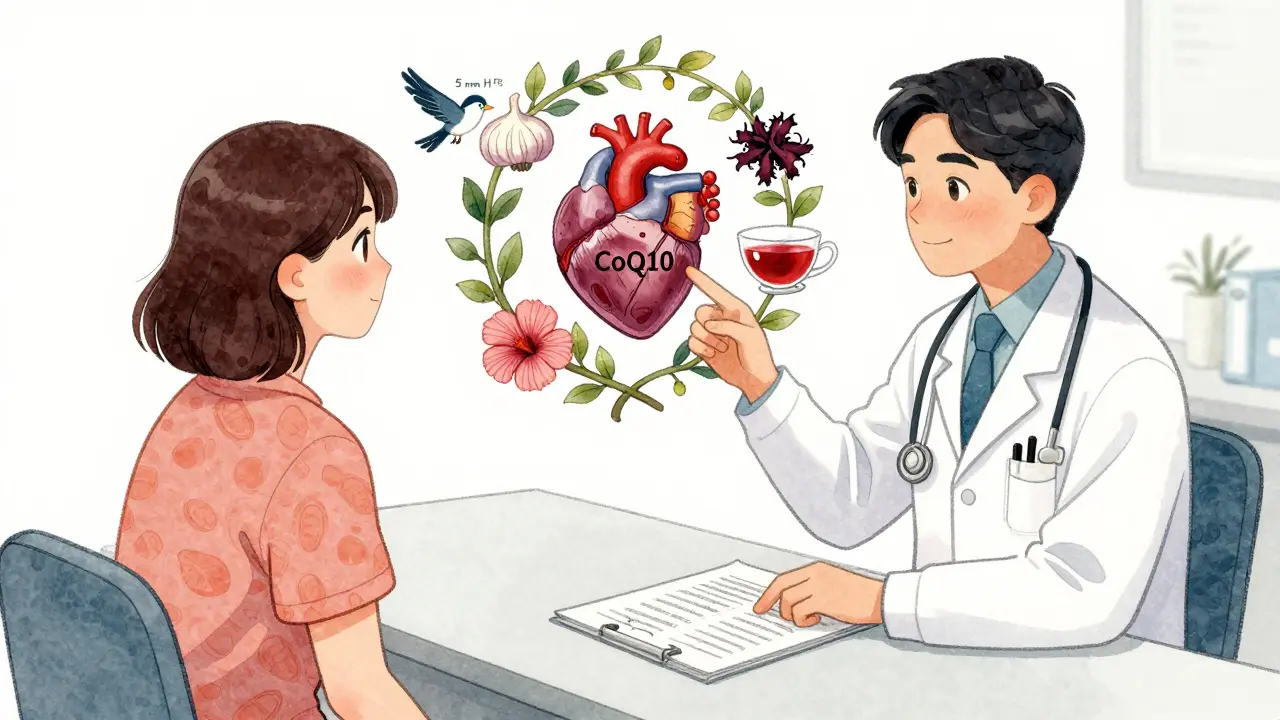
- Coenzyme Q10: At 100-225 mg daily, it’s shown to reduce systolic pressure by 11-17 mm Hg and diastolic by 8-10 mm Hg. It’s especially helpful for people on statins, which can deplete CoQ10 levels. Take it with a meal containing fat-it absorbs better.
- Garlic (aged extract): 600-1,200 mg daily can lower systolic pressure by 7-10 mm Hg. But don’t mix it with blood thinners like warfarin. There are documented cases of dangerous bleeding from this combo.
- Hibiscus tea: Drinking 3-4 cups daily for 6 weeks lowered systolic pressure by 7.2 mm Hg in a 2021 trial. One Reddit user reported dropping from 148 to 135 systolic in just six weeks. It’s safe, cheap, and tastes like tart cranberry.
- Magnesium: 368 mg daily reduces systolic by 2 mm Hg and diastolic by 1.8 mm Hg. Magnesium glycinate is the best form for absorption and doesn’t cause diarrhea like magnesium oxide. It also helps with leg cramps and sleep.
Some supplements don’t belong on your shelf. Licorice root can spike blood pressure and drain potassium. St. John’s wort and yohimbine can interfere with meds and raise pressure. The FDA has issued warning letters to 15 supplement makers for false claims about blood pressure. Stick to what’s been studied.
Exercise and Weight Loss: The Real Game-Changers
Exercise isn’t optional. It’s medicine. Aiming for 150 minutes of brisk walking, cycling, or swimming per week can lower systolic pressure by 5-8 mm Hg. That’s the same as a low-dose pill. And you don’t need to run marathons. Just move more. Take the stairs. Walk after dinner. Park farther away.
Weight loss is even more powerful. Lose 5-10% of your body weight, and you could drop systolic pressure by 5-20 mm Hg. Every kilogram (2.2 pounds) lost equals about 1 mm Hg reduction. That means if you weigh 200 pounds and lose 10 pounds, you could lower your blood pressure by 10 mm Hg. Combine that with the DASH diet, and the results compound.
Mind-Body Practices That Lower Pressure
Stress doesn’t cause chronic hypertension-but it keeps it high. Transcendental meditation, practiced 20 minutes twice a day, has been shown to reduce systolic pressure by 4.7-5.5 mm Hg in clinical trials. Deep breathing, yoga, and even guided mindfulness apps can help. One 2021 study found that people who meditated daily had better sleep, less anxiety, and more stable blood pressure readings over time.
It’s not about becoming a monk. It’s about creating a daily pause. Even five minutes of slow breathing-inhale for four counts, hold for four, exhale for six-can activate your parasympathetic nervous system and bring down pressure within minutes.
When to Use Natural Strategies vs. Medication
Here’s the bottom line: medication is essential for stage 2 hypertension (140/90 or higher) or if you already have heart disease, diabetes, or kidney damage. For these people, delaying drugs increases risk.
But if you’re in stage 1 (130-139/80-89) and have low cardiovascular risk, a 3-6 month trial of intensive lifestyle changes may be appropriate before starting pills. That means: DASH diet, sodium under 1,500 mg, daily exercise, weight loss, and proven supplements like CoQ10 or hibiscus tea.
Dr. Deepak Bhatt from Harvard says this approach works for some. But he adds: “Don’t wait too long. If your pressure doesn’t drop after 3 months, start medication.”
The Dangerous Mix: Supplements and Pills
Natural doesn’t mean safe when mixed with meds. Garlic can make lisinopril too strong, causing dizziness. Hibiscus tea can boost the effect of beta-blockers. Magnesium can increase the risk of low blood pressure when taken with diuretics. Licorice with a diuretic? Dangerous potassium loss.
A 2023 survey found that 42% of people taking supplements don’t tell their doctor. That’s a problem. Your pharmacist can check for interactions. Your doctor needs to know everything you’re taking-even herbal tea.
Real People, Real Results
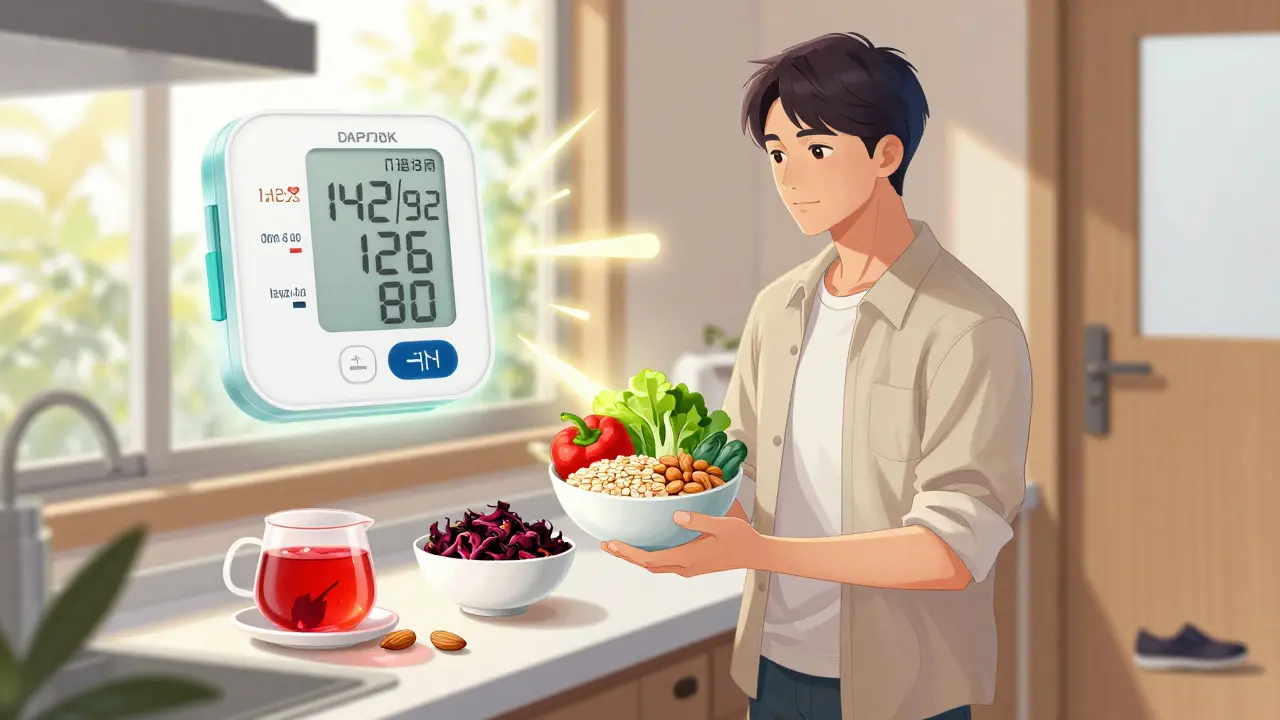
On Reddit’s r/hypertension, users report success with hibiscus tea and magnesium. One person wrote: “I cut out processed food, started walking 30 minutes a day, and drank hibiscus tea. My BP dropped from 142/92 to 126/80 in 8 weeks. My doctor was impressed.”
Another said: “I took garlic supplements with my blood pressure pill. Got dizzy. Stopped both. Now I just do DASH and walk. No meds needed.”
But not everyone succeeds. Amazon reviews show hawthorn berry supplements have a 42% negative rate. People expect miracles. They don’t get them. Natural strategies take time. They require consistency. They’re not quick fixes.
What Works Best Together
The most successful people don’t pick one thing. They layer strategies:
- 73% of those who followed the DASH diet saw improvement
- 65% who exercised regularly lowered their pressure
- 68% of people who combined natural methods with meds avoided needing higher doses
The 2023 SPRINT-2 trial proved this: people who combined lifestyle changes with reduced medication doses had the same blood pressure control as those on full doses-but with 32% fewer side effects.
What to Do Next
Start with your doctor. Don’t quit meds without talking to them. Then pick one thing to change:
- Track your sodium intake for a week. Use a food diary app.
- Replace one processed snack with fruit or nuts daily.
- Walk 20 minutes after dinner, five days a week.
- Try hibiscus tea instead of afternoon coffee.
- Ask your doctor about checking your magnesium levels.
Small steps add up. Blood pressure doesn’t change overnight. But with consistent effort, it can change for the better-without always needing more pills.
Can I stop my blood pressure medication if I start natural remedies?
No. Never stop prescribed medication without your doctor’s guidance. Natural strategies like diet, exercise, and supplements can help reduce your dose over time-but only under medical supervision. Stopping meds suddenly can cause dangerous spikes in blood pressure. Even if your numbers improve, your doctor needs to monitor you and adjust your treatment plan safely.
How long does it take for natural methods to lower blood pressure?
It usually takes 4 to 8 weeks to see measurable results from natural approaches. The DASH diet and exercise often show changes within 2-4 weeks, but full effects take longer. Supplements like CoQ10 and garlic need consistent daily use for at least 6 weeks. Medications, by comparison, often work in 2-4 weeks. Patience and consistency are key.
Are there any supplements I should avoid with high blood pressure?
Yes. Avoid licorice root, ephedra, yohimbine, and St. John’s wort. These can raise blood pressure or interfere with your meds. Licorice can cause potassium loss and fluid retention, especially when combined with diuretics. St. John’s wort can reduce the effectiveness of many blood pressure drugs. Always check with your doctor before starting any new supplement.
Is the DASH diet hard to follow?
It’s not as hard as people think. The DASH diet doesn’t require special foods-it’s about swapping out processed items for whole ones. Eat more vegetables, fruits, beans, nuts, whole grains, and lean proteins. Cut back on salt, sugary drinks, and red meat. Start by replacing one meal a day with a DASH-friendly option. Gradual changes lead to long-term success. Most people find it sustainable after a few weeks.
Can I rely on hibiscus tea alone to control my blood pressure?
Hibiscus tea can help lower blood pressure by about 7 mm Hg systolic, but it’s not enough on its own for most people with stage 1 or higher hypertension. It works best as part of a broader plan that includes diet, exercise, and possibly medication. Think of it as a helpful tool, not a cure. Many users report success when they combine it with other lifestyle changes.
13 Comments
The 2017 AHA/ACC guidelines redefined hypertension thresholds based on SPRINT trial data, which demonstrated significant cardiovascular risk reduction at SBP <120 mm Hg. However, generalizability remains contested due to exclusion criteria that omitted elderly patients with multimorbidity. The clinical utility of population-wide reclassification is debatable when NNT for primary prevention exceeds 100 over five years.
Oh please, the DASH diet? That’s just the USDA’s way of pushing dairy and grain subsidies. Real people eat meat, fat, and salt-look at the Inuit, they had near-zero hypertension before processed food. The real villain is insulin resistance from fructose and seed oils, not sodium. Stop pretending this is science.
If you’re taking supplements with your meds, you’re playing Russian roulette. Just say no.
Let’s be honest-most people who swear by hibiscus tea are just avoiding doctor visits because they’re terrified of being labeled ‘hypertensive.’ The article glosses over how many of these ‘success stories’ are from people who were never truly in stage 2 to begin with. It’s confirmation bias dressed as wellness.
And don’t get me started on the CoQ10 hype. It’s not a magic bullet. It’s a supplement with a decent RCT or two, but the effect size is clinically marginal. If your BP drops 12 mm Hg on CoQ10, you probably had borderline hypertension and lost weight without realizing it.
The real issue is systemic: we’ve turned chronic disease management into a consumer product. Buy this tea. Take this pill. Do this yoga. Meanwhile, food deserts, chronic stress, and lack of sleep are the actual epidemics.
Everyone talks about DASH like it’s some revolutionary American innovation. Funny how the Mediterranean diet-used for centuries by Greeks and Italians-has the same effect and doesn’t require you to eat low-fat yogurt and whole wheat bread. We’ve been sold a lie that science = American dietetics. The truth? Traditional diets from cultures that didn’t have hypertension didn’t need a 30-page NIH pamphlet to tell them to eat vegetables and not salt everything.
Also, garlic supplements? In my village in the Balkans, we just crushed garlic into olive oil and ate it with bread. No capsules. No pharmacy. No FDA warning letters. Just food. Maybe we should stop over-medicalizing everything.
They don’t want you to know this, but the WHO’s hypertension numbers are inflated because pharmaceutical companies fund the studies. The real cause? Fluoride in the water. It disrupts endothelial function and mimics hypertension symptoms. That’s why countries with fluoridated water have higher rates. And hibiscus tea? It’s just a distraction. The real fix is removing fluoride. Check your local water report.
Also, the FDA issued those warning letters? That’s just to scare you away from natural cures so you keep buying pills. Big Pharma owns the FDA. You think they want you to heal?
My cousin’s BP dropped 30 points after she switched to spring water and stopped using toothpaste. Coincidence? I think not.
Let’s cut through the BS. If you’re on a beta-blocker and drinking hibiscus tea, you’re asking for a trip to the ER. I’ve seen it happen. My uncle passed out at the grocery store because he was doing ‘natural healing’ while on lisinopril. He thought tea was ‘safe.’ It’s not. Your body doesn’t care if it’s a pill or a plant-it reacts to the chemistry.
And no, you don’t get to decide when to quit meds. That’s not empowerment, that’s stupidity. You don’t get to be a hero when your brain bleeds because you ‘trusted the internet.’
The only ‘natural’ thing that works is exercise. Walking. Not yoga. Not breathing apps. Just walking. And if you’re overweight, losing weight. That’s it. Everything else is noise.
I’ve been on blood pressure meds for 7 years. I tried everything-DASH, hibiscus, magnesium, garlic, meditation, even a 30-day juice cleanse. Nothing worked until I found out I had sleep apnea. My BP was 168/102. After CPAP, it dropped to 124/78 in 3 weeks. No meds changed. No supplements. Just breathing at night.
Why does no one talk about this? Because sleep apnea isn’t sexy. You can’t sell a tea for it. You can’t post a before-and-after on Instagram with hibiscus. It’s boring. But it’s the #1 hidden cause of resistant hypertension in middle-aged men. Get a sleep study. Seriously. Your doctor won’t bring it up unless you ask.
And yes, I still take one pill. But only because my doctor says so. I’m not proud. I’m just alive.
Also, the supplement industry is a scam. Most CoQ10 brands have 30% less than what’s on the label. I tested mine with a third-party lab. Don’t trust brands. Don’t trust influencers. Trust labs.
And yes, I’m tired of people saying ‘natural’ means better. My grandma died of a stroke because she took ‘herbal remedies’ instead of going to the hospital. Natural doesn’t mean safe. It means unregulated. And that’s terrifying.
I wish people would stop romanticizing ancient diets. My great-grandparents ate lard, white bread, and salted meat. They died at 62. Not because of hypertension. Because of infections and malnutrition. We live longer now because of medicine, not because we ate more kale.
So yes-exercise. Yes-reduce sodium. Yes-talk to your doctor. But stop pretending you’re a rebel for drinking tea instead of taking a pill. You’re just another data point in Big Pharma’s profit margin.
The tension between pharmacological intervention and lifestyle modification reflects a deeper epistemological divide in modern medicine: reductionism versus holism. While pharmaceuticals target discrete physiological pathways-ACE inhibition, calcium channel modulation-lifestyle interventions operate at the level of systemic homeostasis, influencing autonomic tone, endothelial function, and inflammatory cascades through synergistic mechanisms.
It is therefore reductive to frame this as a binary choice. The most robust evidence supports a biopsychosocial model wherein pharmacotherapy reduces acute risk, while behavioral changes restore long-term resilience. The SPRINT-2 trial’s 32% reduction in adverse events with combination therapy underscores this synergy.
Moreover, cultural context matters. The DASH diet’s efficacy is contingent on access to fresh produce, refrigeration, and nutritional literacy-privileges not universally available. In low-resource settings, even modest sodium reduction via traditional fermentation techniques (e.g., pickled vegetables, fermented dairy) may offer comparable benefits without requiring a full dietary overhaul.
Finally, the emphasis on supplements as ‘alternatives’ risks obscuring the primary driver of hypertension: chronic psychosocial stress. In collectivist cultures, community-based practices-shared meals, intergenerational caregiving, rhythmic labor-may confer protective effects that no isolated supplement can replicate. The cure may lie not in the pill or the tea, but in the rhythm of human connection.
In India, we’ve known for generations that turmeric and ginger tea helps. No one needed a clinical trial to tell them that. Just common sense.
I’ve been tracking my BP with a home monitor for 2 years. I started with 140/90. After 6 weeks of walking daily, cutting out soda, and adding magnesium glycinate, I’m at 128/82. No meds. But I didn’t do it alone-I joined a local walking group and shared recipes. Community made the difference.
Per the Joint National Committee on Prevention, Detection, Evaluation, and Treatment of High Blood Pressure (JNC 7), lifestyle modification is recommended as initial therapy for Stage 1 hypertension in low-risk individuals. However, adherence rates in clinical populations are consistently below 20%. This is not a failure of science, but of behavioral economics.
Someone said hibiscus tea is safe. It’s not if you’re on diuretics. You’re asking for hyponatremia.
Write a comment