
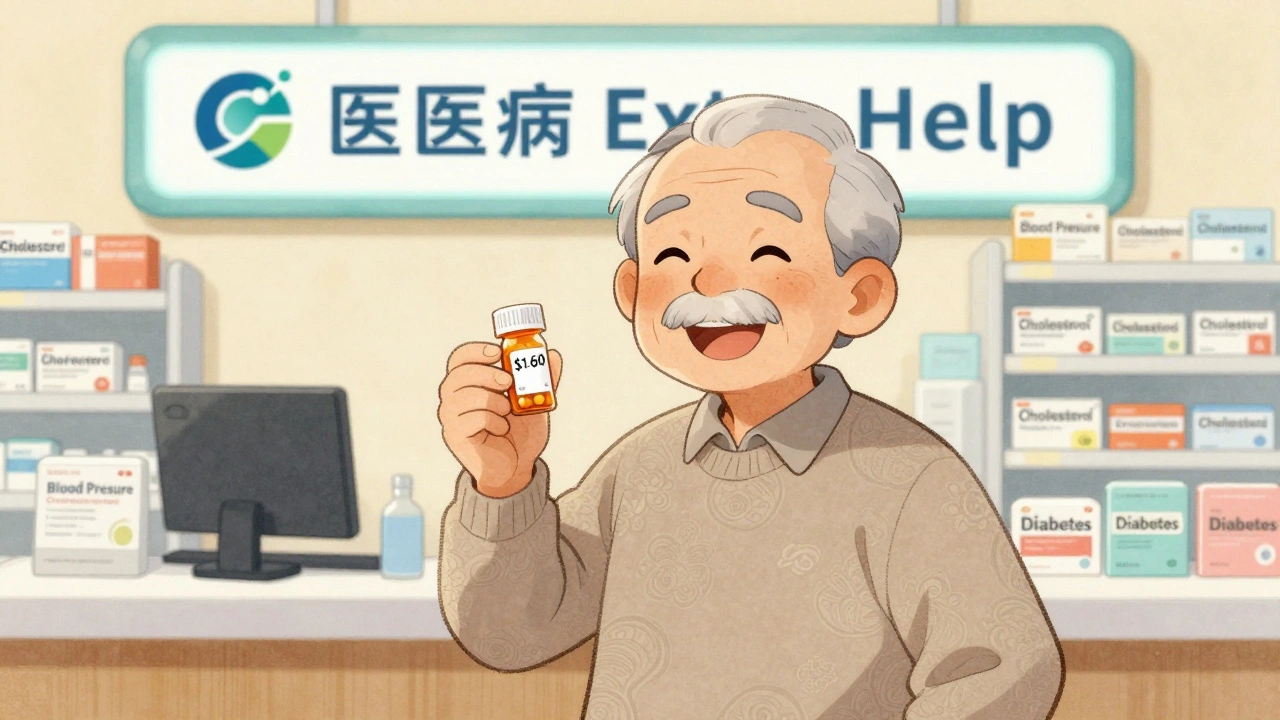
For many seniors on Medicare, paying for daily medications can feel like a second mortgage. If you take multiple generic drugs - like blood pressure pills, cholesterol medicine, or diabetes tablets - your out-of-pocket costs can add up fast. But there’s a federal program designed exactly for this: Medicare Extra Help. It’s not a secret. It’s not hard to get. And if you qualify, it cuts your generic prescription costs to as little as $1.60 per fill.
What Medicare Extra Help Actually Does for Generic Drugs
Medicare Extra Help, officially called the Part D Low-Income Subsidy (LIS), is a government program that pays for most of your prescription drug costs. In 2025, if you qualify, you pay nothing for your Part D plan premium. You don’t pay the deductible either. And for every generic drug you pick up at the pharmacy, your maximum copay is $4.90. That’s it. No matter if the drug costs $10 or $100, you pay $4.90. For people who qualify for both Medicare and Medicaid - and have income under 100% of the Federal Poverty Level - the copay drops even lower: just $1.60 per generic. That’s less than the price of a cup of coffee. Compare that to standard Medicare Part D. Without Extra Help, you’d first have to pay a $595 deductible before your plan starts covering anything. After that, you’d pay 25% of the drug’s cost. A $50 generic? That’s $12.50 out of your pocket - and that’s after you’ve already paid nearly $600 just to get coverage started. Multiply that by 12 prescriptions a month, and you’re spending over $700 just on copays - not counting premiums and the deductible. Extra Help wipes all that away.Who Qualifies for Extra Help in 2025
The income and resource limits for Extra Help in 2025 are strict, but they’re also clear. If you’re single, your annual income must be $23,475 or less. If you’re married and living with your spouse, your combined income must be $31,725 or less. Income includes Social Security, pensions, wages, and veterans’ benefits - but not housing assistance or Medicaid payments. Resources are what you own. The limit is $17,600 for individuals and $35,130 for couples. This includes bank accounts, stocks, bonds, and IRAs. But your home, car, and personal belongings don’t count. You also get a $1,500 allowance for burial expenses that doesn’t count against your limit. You’re automatically enrolled if you get Supplemental Security Income (SSI), full Medicaid, or a Medicare Savings Program. If you’re not automatically enrolled, you still might qualify. Many people think they make too much, but they forget to count all their income sources - or they don’t realize some assets don’t count.How to Apply - Step by Step
Applying for Extra Help is simpler than most people think. You have three options:- Apply online at ssa.gov (the fastest way)
- Call Social Security at 1-800-772-1213
- Visit your local Social Security office
What Happens After You Apply
Once you apply, it takes 3 to 6 weeks to get a decision. If approved, your benefits start the month after your application date. You’ll get a letter from Social Security confirming your approval and your copay amounts. You’ll also get a Special Enrollment Period (SEP). That means you can switch your Medicare Part D plan once a month - and you should. Not all plans are created equal. Even with Extra Help, your drug list (formulary) and pharmacy network matter. Make sure your prescriptions are covered and your local pharmacy is in-network. You can compare plans for free at medicare.gov.Annual Review - Don’t Miss This
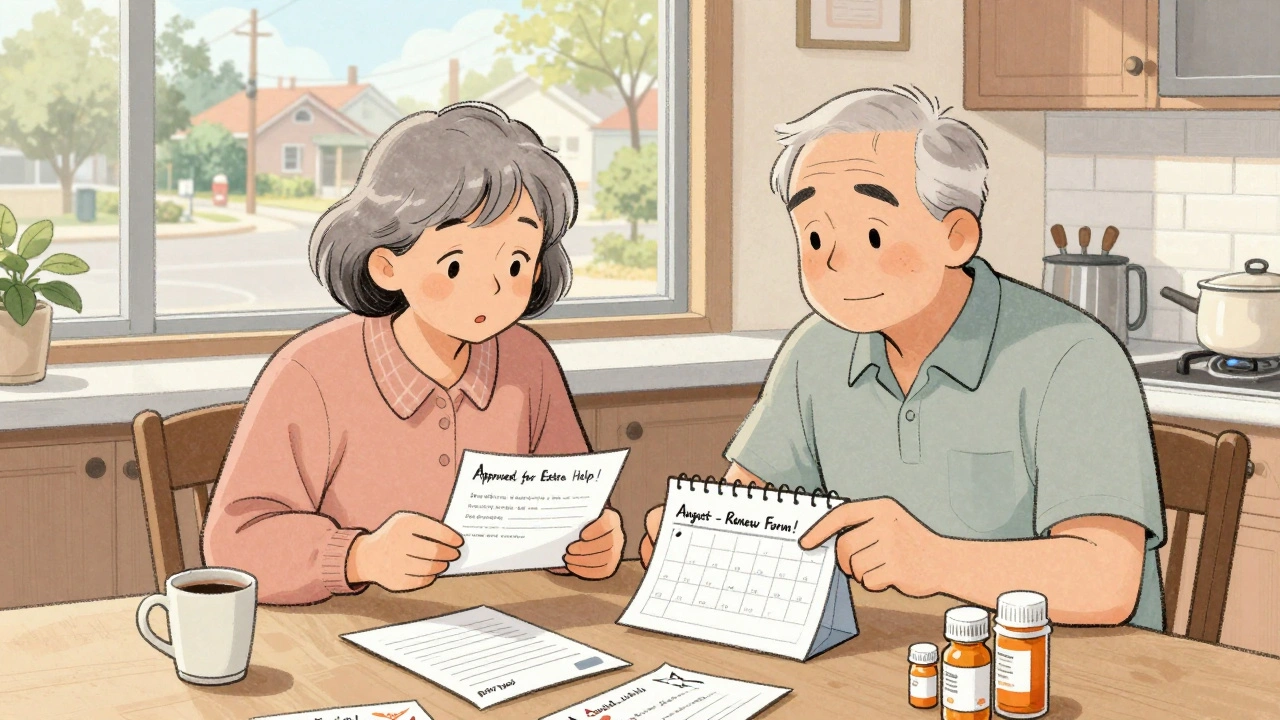
Extra Help isn’t a one-time thing. Every August, you’ll get a form in the mail asking you to update your income and resources. You have 30 days to return it. If you don’t, your benefits stop on January 1. This is where many people lose coverage. A small raise in Social Security, a one-time bonus, or even a small increase in interest from a savings account can push you over the limit. You won’t get a warning. You’ll just show up at the pharmacy and be told your copay is back to $12.50 - or worse, $30. If you think you might be close to the limit, update your info early. You can call Social Security or reapply online. Even if you’re slightly over, it’s worth trying. Sometimes, the system recalculates and you still qualify.Real Stories - The Good, the Bad, and the Ugly
One woman in Ohio, 78, takes six generic drugs for heart disease, diabetes, and arthritis. Before Extra Help, she was skipping doses because she couldn’t afford the $80 monthly copays. After getting approved, her cost dropped to $4.90 per pill. She says, “I don’t have to choose between medicine and groceries anymore.” But then there’s the flip side. A man in California, 72, got a small raise in his pension. He made $500 over the income limit. He lost Extra Help overnight. His monthly generic drug cost jumped from $60 to $748. He couldn’t afford it. He went to the emergency room three times in six months because his blood pressure spiked. He didn’t realize the system didn’t give him a grace period. These aren’t rare cases. In 2024, nearly 40% of eligible seniors didn’t enroll - not because they didn’t qualify, but because they didn’t know how, or they were afraid of the paperwork.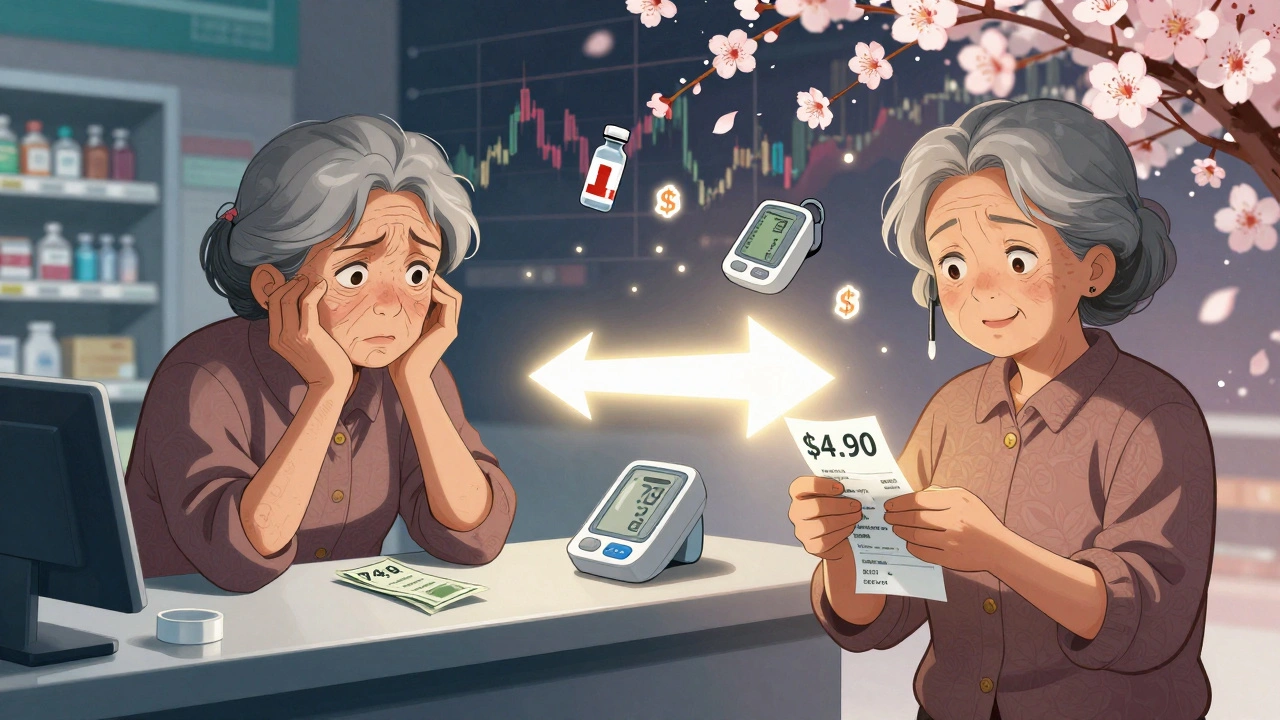
What Extra Help Doesn’t Cover
Extra Help doesn’t cover everything. It only applies to Medicare Part D drugs. It won’t pay for over-the-counter meds, vitamins, or non-prescription supplements. It also doesn’t cover drugs not on your plan’s formulary - unless you get an exception. If your doctor says you need a brand-name drug that’s not covered, you can ask for a formulary exception. Extra Help beneficiaries get priority review. Also, Extra Help doesn’t change which pharmacies you can use. You still need to use a pharmacy in your plan’s network. Some plans have preferred pharmacies with lower copays. Check your plan’s website or call them before you fill a prescription.What’s Changing in 2025 and Beyond
In 2025, the Part D “donut hole” - that gap where you pay full price after hitting your plan’s coverage limit - is gone for Extra Help beneficiaries. You never enter it. That’s huge. You get full coverage all year. Also, insulin is now capped at $35 per month for all Medicare Part D users - including those with Extra Help. So if you’re on insulin, you’re paying $35, not $4.90. But if you’re on other generics, you’re still paying $4.90. That’s still a massive savings. There’s talk of expanding Extra Help to cover people with incomes up to 175% of the Federal Poverty Level - that’s about $28,500 for a single person. If that happens, over a million more seniors could qualify. But for now, the current limits are still in place.What to Do Next
If you’re on Medicare and take one or more generic prescriptions, you should check if you qualify - even if you think you make too much. Use the Medicare Extra Help calculator on Social Security’s website. It takes 10 minutes. You don’t have to apply right away. Just see where you stand. If you’re close to the limit, don’t wait. Call your local SHIP. They can help you understand what counts as income and what doesn’t. Many people qualify after they learn how to report their finances correctly. And if you’re already enrolled? Don’t ignore that August form. Fill it out. Send it in. Keep your benefits. Your health depends on it.
11 Comments
just applied for extra help last month after my insulin bill hit $120. i thought i made too much but turns out my pension doesn't count the same way i thought. now i pay $1.60 per script. life changing. also the shiptacenter guy walked me through it in 15 mins. no stress.
the government is just trying to get you hooked on free stuff so they can track your every pill. next thing you know they'll be scanning your medicine cabinet and taxing your vitamins. this program is a trap. i pay full price and i'm proud of it. freedom isn't free and neither is healthcare. they want you dependent. don't fall for it.
if you're reading this and you're on meds, just apply. seriously. it's not complicated. i helped my aunt do it over the phone while she was cooking dinner. she was crying she was so relieved. the system isn't perfect but this one actually works. and if you're worried about income limits remember: your home car and personal stuff don't count. even if you think you're over you might not be. call 1-800-772-1213. they don't bite.
the 40% who don't enroll? they're the ones who think 'i don't need help' until they're choosing between insulin and groceries. this isn't charity. it's a basic human right. if you're not applying you're either lying to yourself or you're one of those people who thinks seniors should suffer for being old. shame on you.
Dear fellow seniors, I am from India and I wish my country had such a program. In the US, this is a blessing. Please do not hesitate to apply. The process is simple. Your health is priceless. 🙏
you got this. i know it feels overwhelming but you're not alone. i did it. my mom did it. we cried happy tears. one step at a time. apply today. your future self will thank you. you deserve to breathe without worrying about the next pill.
ugh i hate paperwork. why do i have to prove i'm poor? can't they just give it to everyone? this is ridiculous. i just want my pills without jumping through hoops. why is everything so complicated?
you all are missing the point. the real scam is that the drug companies still charge $100 for generics and the government only补贴 $95.10. they're laughing all the way to the bank. i checked the stock prices of the top 5 pharma companies since 2020. they're up 200%. this program is just a bandaid. the real fix is price controls. but nobody wants to talk about that.
my husband lost his extra help last year because his social security increased by $27. he ended up in the ER. they told him it was his fault for not updating. i cried for three days. now i check the income limits every week. i'm terrified. this system is cruel. they don't care if you die as long as the paperwork is filed.
the fact that you need a government program to afford basic medicine says everything about this country. i'm not surprised. the system is broken. but don't expect me to celebrate a program that treats healthcare like a charity. it should be a right. not a privilege you apply for.
my dad is 82 and lives in rural Kansas. he didn't even know this existed until i found it for him. we applied online in 20 minutes. he's on 8 meds. now he pays $1.60 each. he says he feels like he got his dignity back. if you're reading this and you're hesitating because you think you're not 'poor enough' - you are. you're already struggling. this isn't about poverty. it's about survival. please apply. you're worth it.
Write a comment