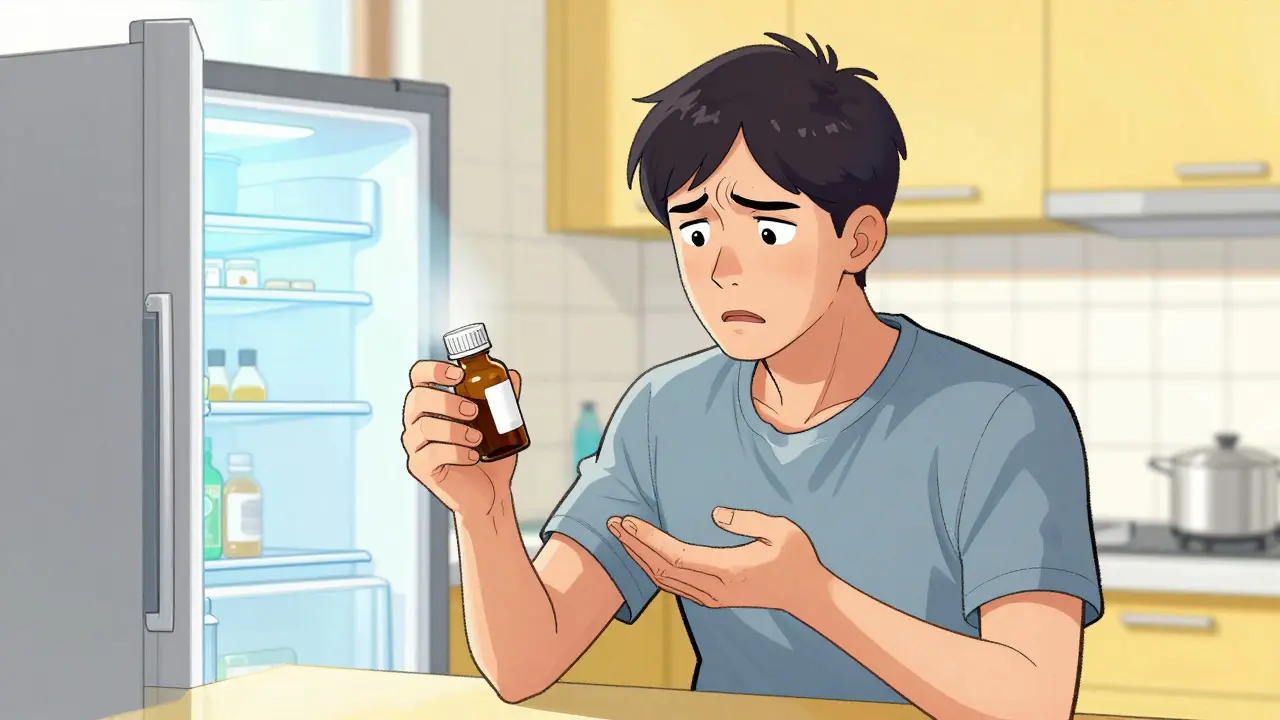
You just picked up a prescription for your child or yourself. It’s a dry powder in a bottle with instructions to mix it with water. You shake it, measure the dose, and then you face the most common question: do I put this in the fridge?
The answer isn’t as simple as yes or no. Getting it wrong doesn’t just mean wasting money; it means the medicine might not work. If an antibiotic loses its potency because it was stored incorrectly, the infection can linger, get worse, or even develop resistance. With liquid antibiotics making up nearly 20% of pediatric prescriptions, understanding how to handle these medications is a critical skill for any caregiver.
This guide breaks down exactly where to store your meds, how long they last, and what to do when the course is finished. No jargon, just clear rules based on pharmaceutical stability standards.
Reconstitution: The Starting Line
Before we talk about storage, we need to talk about mixing. Most liquid antibiotics come as a powder because the active ingredients are unstable in liquid form over long periods. This process is called reconstitution, which is the act of adding a specific amount of water to a dry powder to create a usable liquid suspension.
When you add water, the clock starts ticking. The expiration date printed on the original bottle applies to the powder, not the mixed liquid. Once reconstituted, the drug begins to degrade. This is why pharmacists often write a new "Beyond Use Date" (BUD) on the label. Always check that handwritten date first. If there is no handwritten date, follow the general rules below, but call your pharmacist to confirm.
- Add only distilled or tap water: Use only the water specified by the pharmacist. Never use hot water, as heat destroys the drug immediately.
- Shake vigorously: Antibiotic suspensions settle. Shake the bottle well before every single dose to ensure you’re getting the right amount of medicine.
- Use the right tool: Household spoons are inaccurate. Use the oral syringe or dosing cup provided. Under-dosing leads to treatment failure.
Refrigerator vs. Room Temperature: Which Is Right?
Here is the biggest myth in home medicine storage: All liquid antibiotics must be refrigerated. This is false. In fact, refrigerating some antibiotics can make them less effective or change their consistency so they become hard to swallow.
The rule depends entirely on the specific chemical structure of the drug. Here is how to decide:
| Antibiotic Type | Storage Location | Typical Shelf Life (After Mixing) |
|---|---|---|
| Amoxicillin | Fridge preferred; Room temp okay if necessary | 14 days |
| Amoxicillin/Clavulanate (Augmentin) | Must Refrigerate | 10 days |
| Azithromycin (Z-Pak) | Room Temperature | 10 days |
| Cephalexin | Room Temperature | 14 days |
| Erythromycin | Room Temperature | 14 days |
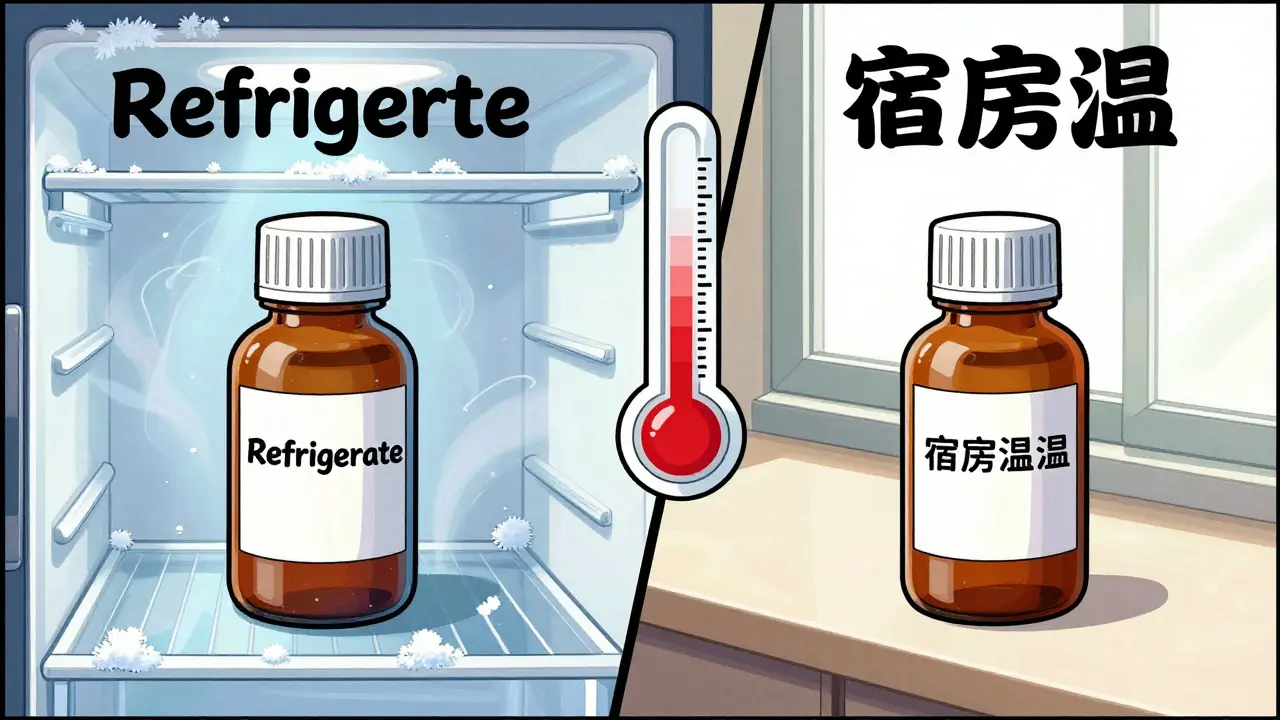
Key Takeaway: If the label says "Refrigerate," do it. If it says "Store at Controlled Room Temperature," keep it in a cool, dry place away from sunlight. Do not guess. When in doubt, ask your pharmacist.
The Danger Zones: Heat, Cold, and Light
Temperature fluctuations are the enemy of drug stability. The FDA requires manufacturers to prove that drugs remain stable within specific ranges. For most room-temperature meds, that range is 68°F to 77°F (20°C to 25°C). For refrigerated meds, it’s 36°F to 46°F (2°C to 8°C).
Avoid these common mistakes:
- The Bathroom Cabinet: Bathrooms are humid and hot due to showers. This environment accelerates chemical breakdown. Keep meds in a bedroom or kitchen cabinet instead.
- The Windowsill: Direct sunlight degrades many compounds. UV light can break down the molecular structure of antibiotics, rendering them useless.
- The Car Glove Box: In summer, cars can reach temperatures above 140°F (60°C). Even a short trip can ruin a bottle of suspension. In winter, freezing temperatures can cause crystals to form, changing the drug’s efficacy.
- The Freezer Section: Never freeze liquid antibiotics unless explicitly instructed. Freezing can alter the suspension’s base, making it impossible to dissolve properly when shaken.
How Long Does Reconstituted Medicine Last?
Once mixed, liquid antibiotics have a short lifespan. This is known as the "beyond-use date." Unlike solid pills that last years, liquid suspensions degrade quickly because water promotes bacterial growth and chemical hydrolysis.
Most reconstituted suspensions are good for 10 to 14 days. After this period, the concentration of the active ingredient drops below therapeutic levels. Taking expired or degraded antibiotic won’t kill the bacteria causing your infection. Instead, it exposes your body to sub-lethal doses, which encourages antibiotic resistance-a major global health threat.
If you finish the course early, throw the rest away. Do not save it for "next time you have a sore throat." Each infection requires a specific type and duration of treatment. Leftover antibiotics are never safe to reuse.
Safe Disposal: Don’t Flush It
Disposing of leftover liquid antibiotics safely is part of responsible stewardship. Flushing medications down the toilet contributes to water contamination and affects aquatic ecosystems. Throwing them loosely in the trash risks accidental ingestion by children or pets.
Follow these steps for safe disposal:
- Check for take-back programs: Many pharmacies and local law enforcement agencies offer drug take-back boxes. This is the safest option.
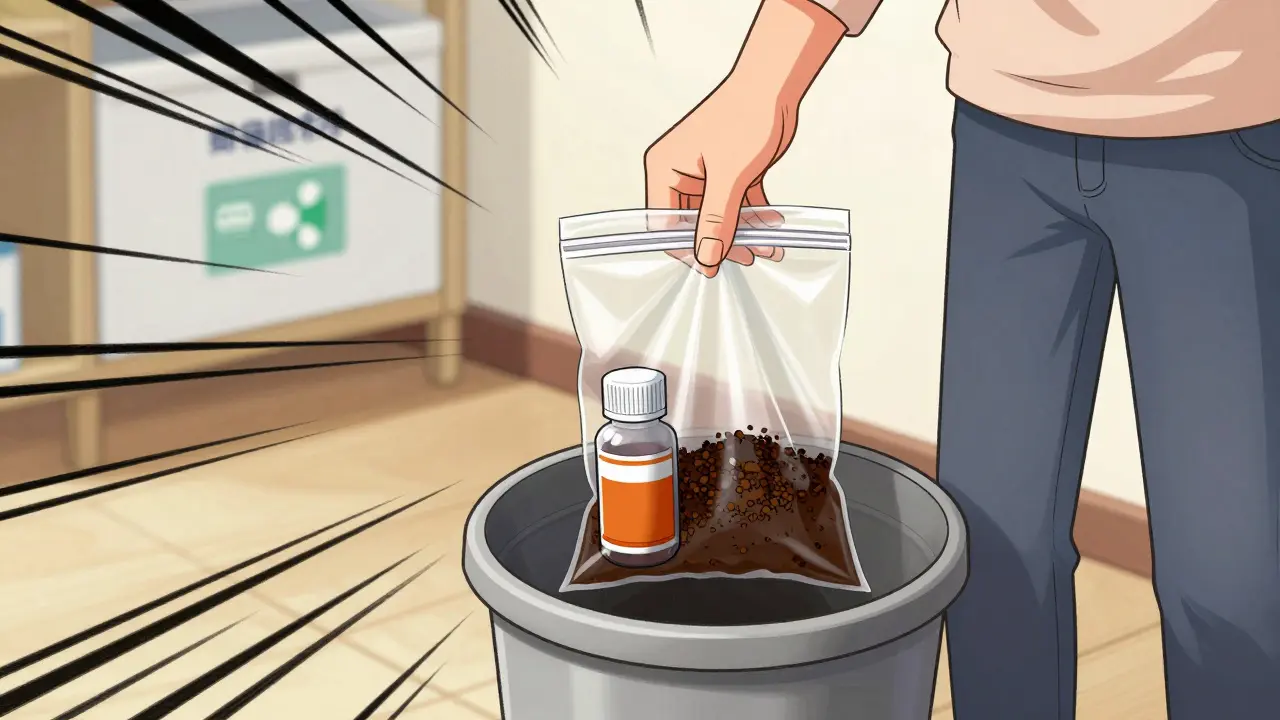
- Mix with undesirable substances: If no take-back program is available, mix the liquid antibiotic with dirt, cat litter, or used coffee grounds in a sealed plastic bag. This makes the medication unappealing and difficult to extract.
- Remove personal info: Scratch out or peel off the patient’s name and details on the bottle label before discarding it.
- Dispose in household trash: Place the sealed bag in your regular garbage bin.
Traveling with Liquid Antibiotics
If you are traveling while on a course of liquid antibiotics, you need a plan. Temperature control becomes harder when you’re on the move.
If your medication requires refrigeration, use an insulated cooler bag with ice packs. However, ensure the ice packs do not touch the bottle directly to prevent freezing. Monitor the temperature if possible. If you are flying, declare the medication at security. TSA allows medically necessary liquids in reasonable quantities, even if they exceed the standard 3.4-ounce limit. Carry the prescription label to prove medical necessity.
If your medication is room-temperature stable, simply keep it in a shaded, cool place in your luggage. Avoid leaving it in direct sun on a beach or in a hot car trunk.
Can I freeze liquid antibiotics to extend their life?
No. Freezing can damage the chemical structure of the antibiotic and alter the suspension's base. Once thawed, the medication may not mix properly, leading to inconsistent dosing. Always discard frozen antibiotics.
What happens if I accidentally leave my antibiotic out overnight?
If a refrigerated antibiotic was left out for less than 24 hours in a cool room (below 77°F), it is likely still safe. However, if it was in a hot environment or left out for more than 24 hours, contact your pharmacist. They may advise you to replace it to ensure efficacy.
Why does the label say "shake well"?
Liquid antibiotics are suspensions, meaning the solid drug particles settle at the bottom over time. If you don't shake the bottle thoroughly, the first few doses will be too weak, and the last few will be too strong. Shaking ensures each dose contains the correct amount of medicine.
Can I use tap water to reconstitute the antibiotic?
Yes, unless the pharmacist specifies distilled water. Tap water is generally safe for reconstitution. Just ensure the water is at room temperature, not hot or cold, to avoid damaging the drug.
Is it safe to give leftover antibiotics to someone else with similar symptoms?