
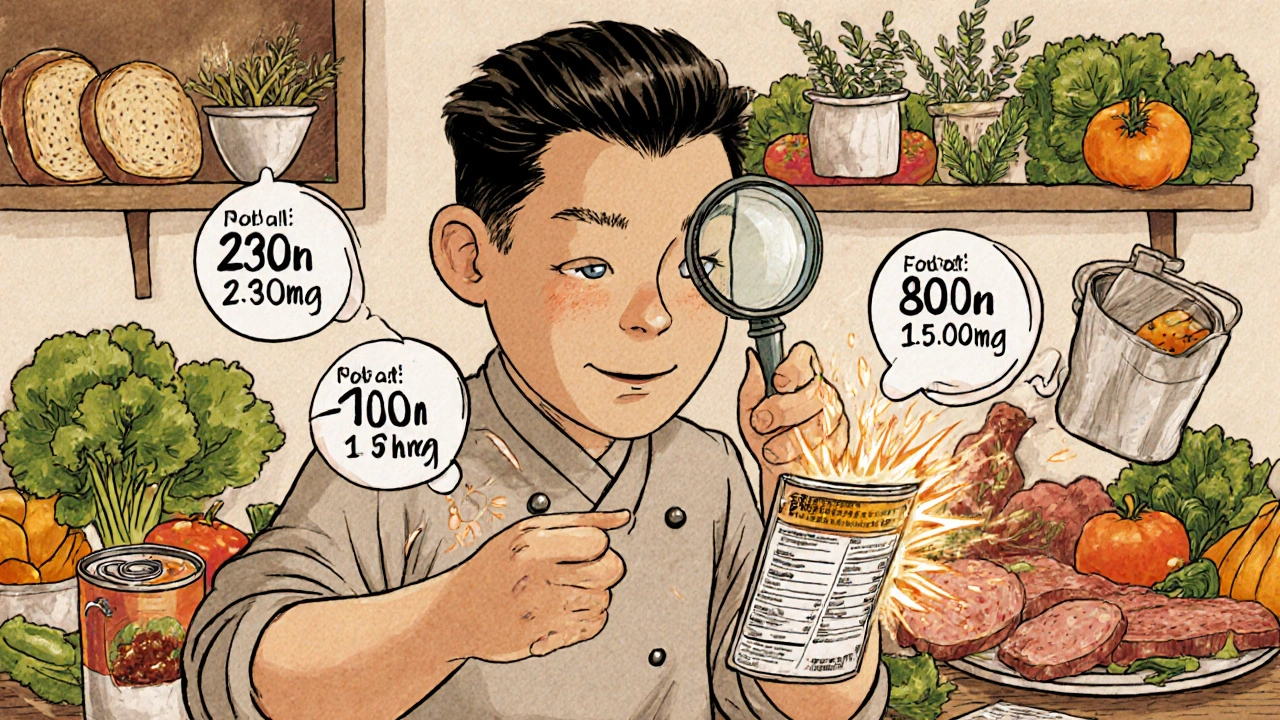
Most people think salt is just that little shaker on the table. But the real problem? It’s hiding in your bread, soup, canned beans, deli meat, and even that ‘healthy’ granola bar. About 70% of the sodium Americans eat comes from packaged and restaurant food-not from your kitchen. And if you have high blood pressure, that hidden salt is quietly making it worse.
Why Sodium Raises Blood Pressure
When you eat too much sodium, your body holds onto water to dilute it. That extra fluid increases the volume of blood in your vessels. More blood + same-sized arteries = higher pressure on your artery walls. That’s hypertension.
It’s not just about volume, though. High sodium also makes your blood vessels stiffer and less able to relax. It reduces nitric oxide, a natural chemical that helps arteries widen. Over time, this forces your heart to work harder, increasing your risk of heart attack, stroke, and kidney damage.
Research shows that cutting sodium by just 1.75 grams a day (about 3/4 teaspoon of salt) lowers blood pressure by an average of 4.2 mmHg systolic and 2.1 mmHg diastolic. For people already with hypertension, the drop is even bigger-up to 5.4 mmHg systolic. And here’s the surprising part: one week of eating low-sodium food can drop systolic pressure by 8 mmHg, according to a 2023 JAMA study. That’s as effective as starting a first-line blood pressure pill.
Who Is Most Sensitive to Sodium?
Not everyone reacts the same way. About half of people with high blood pressure and one in four with normal blood pressure are “salt sensitive.” That means their blood pressure rises and falls sharply with sodium intake. Older adults, Black individuals, and people with kidney disease or diabetes are more likely to be salt sensitive.
But here’s what most don’t realize: extremely low sodium intake (under 1,500 mg/day) isn’t better for everyone. Some studies suggest it might trigger stress hormones in people with advanced heart failure or kidney disease. The goal isn’t to go zero-it’s to get into the sweet spot: 1,500 to 2,300 mg per day.
The Real Culprits: Where Sodium Hides
If you think you’re eating low-sodium because you don’t add salt, you’re probably wrong. Here’s what’s really flooding your system:
- One slice of packaged bread: 230 mg
- One cup of canned soup: 800-1,200 mg
- Two ounces of deli turkey: 600-800 mg
- A single fast-food burger with cheese: 1,500-2,000 mg
- One serving of frozen pizza: 1,200-1,800 mg
- Even “low-fat” yogurt: 150-300 mg per cup
That’s before you even add salt at the table. A typical day of processed food easily hits 3,000-4,000 mg. The American Heart Association says the ideal limit is 1,500 mg. Even cutting it to 2,300 mg-a level many still think is fine-is a major win.
How to Actually Reduce Sodium: 6 Practical Steps
Reducing sodium doesn’t mean eating bland food. It means eating smarter.
- Read labels like a detective. Look at the sodium content per serving-not the whole package. The FDA now requires sodium to be bolded on labels. Anything over 20% of the daily value (460 mg) per serving is high. Skip it.
- Choose fresh over packaged. A home-cooked chicken breast has 70 mg sodium. The pre-seasoned one from the store? 500 mg. Fresh vegetables, fruits, eggs, beans (rinsed), and plain meats are your allies.
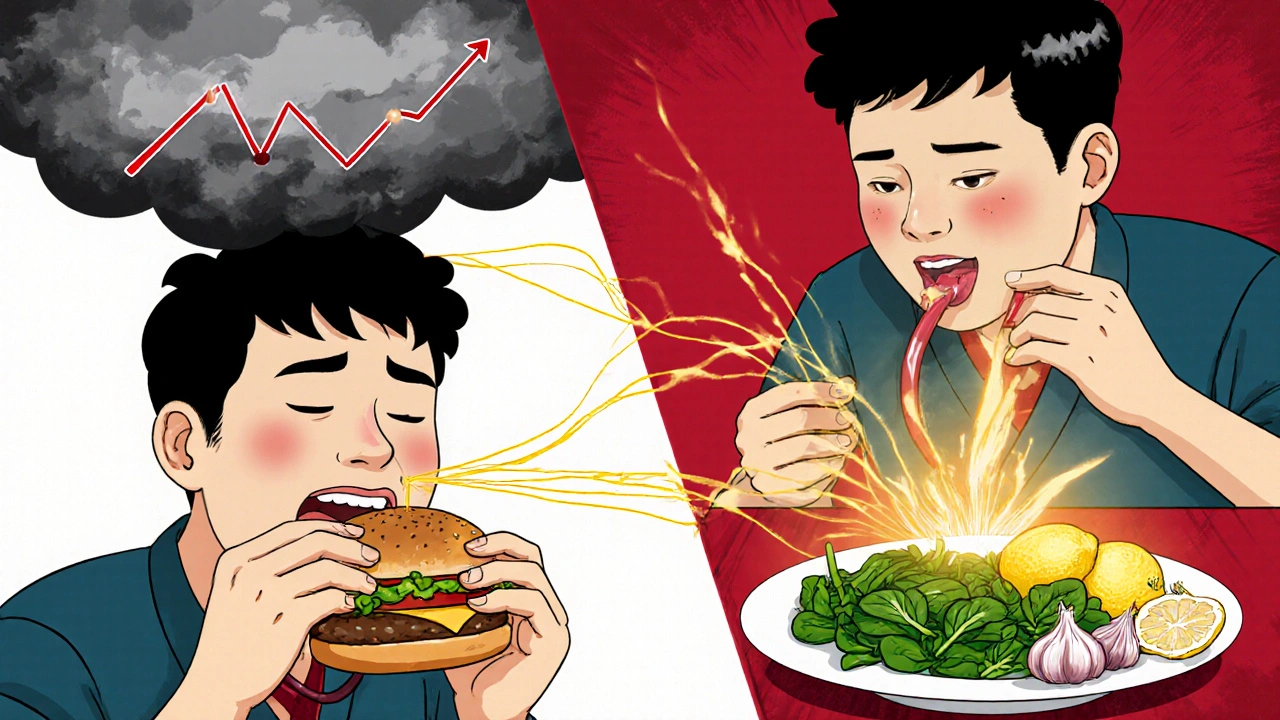
- Use herbs, citrus, and vinegar instead of salt. Lemon juice, garlic, black pepper, smoked paprika, cumin, and apple cider vinegar add bold flavor without sodium. Try a squeeze of lime on fish or a splash of balsamic on roasted veggies.
- Try the DASH diet. This isn’t a fad-it’s a clinically proven plan backed by decades of research. It focuses on vegetables, fruits, whole grains, low-fat dairy, nuts, and lean protein. When combined with sodium reduction, it lowers systolic blood pressure by 8-14 mmHg. That’s more than most medications.
- Be smart at restaurants. Ask for sauces and dressings on the side. Choose grilled, steamed, or baked over fried. Skip the bread basket. Avoid “healthy” salads with croutons, bacon bits, and processed cheese-they can have over 1,200 mg sodium. Order a side of steamed broccoli instead.
- Gradually reduce, don’t quit cold turkey. Your taste buds adapt. If you cut salt by 10% each month, you’ll stop noticing the lack of salt in 6-8 weeks. Many people report that after a few months, salty foods taste overwhelming.
Don’t Forget Potassium
Lowering sodium isn’t the whole story. Increasing potassium helps your body flush out excess sodium and relaxes blood vessel walls. Aim for 3,500-5,000 mg daily.
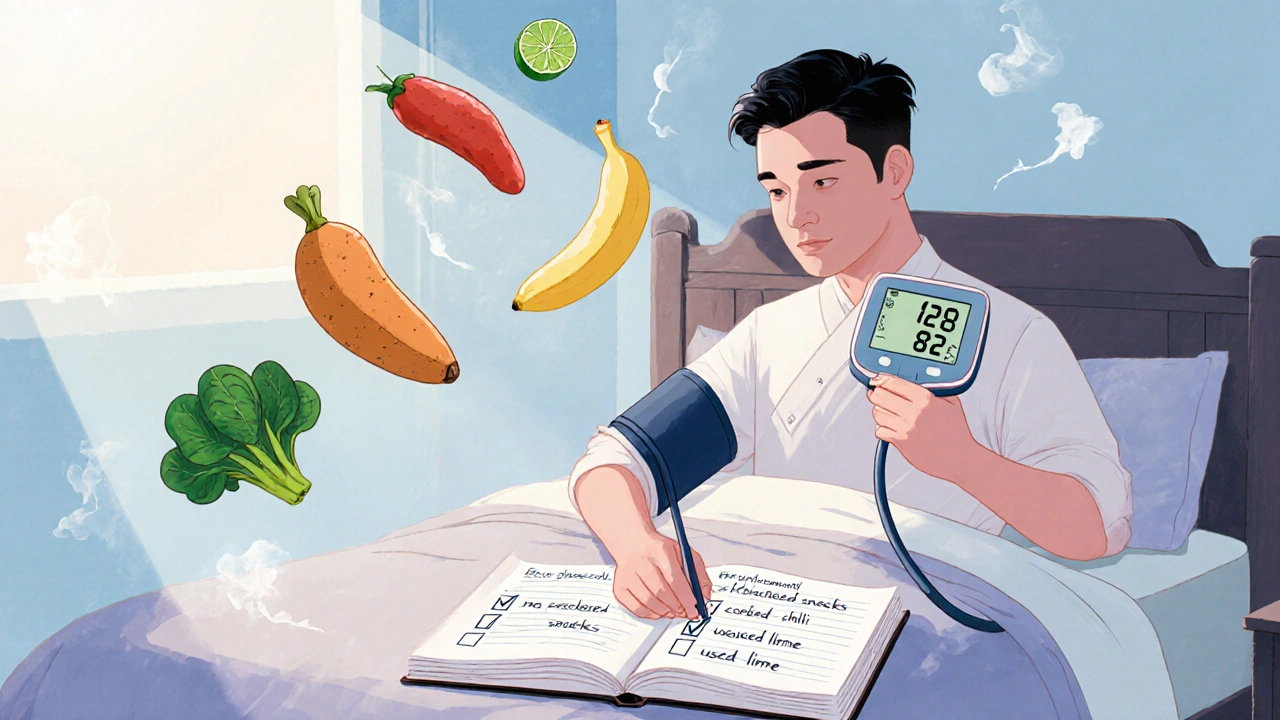
Good sources: sweet potatoes, spinach, white beans, bananas, avocados, yogurt, and salmon. One medium baked potato with skin has 900 mg. A cup of cooked spinach? 800 mg. A banana? 420 mg.
Studies show that combining low sodium with high potassium cuts blood pressure more than sodium reduction alone. The PREMIER trial found a 7.2 mmHg greater drop in systolic pressure with this combo.
What About Salt Substitutes?
Potassium chloride-based salt substitutes (like Mrs. Dash or NoSalt) can help reduce sodium by 300-500 mg per meal. But they’re not for everyone. If you have kidney disease or take certain blood pressure meds (like ACE inhibitors or spironolactone), potassium can build up to dangerous levels. Talk to your doctor before using them.
Real People, Real Results
On Reddit’s r/HighBloodPressure, users share stories like: “I stopped eating packaged snacks and started cooking. After three weeks, my BP dropped from 152/94 to 128/82. I didn’t change anything else.”
A 2023 AHA survey found that 78% of people who tracked sodium for 30 days using their app saw a drop in blood pressure-average systolic decrease: 6.3 mmHg. Many said the hardest part was the first two weeks. After that, food tasted better.
Cost is a concern. Fresh food can cost $1.25 more per meal than processed. But batch-cooking on weekends saves time and money long-term. A big pot of low-sodium chili or lentil stew lasts all week.
It’s Not Perfect. But It Works.
Some people don’t respond to sodium reduction. About 5% in studies actually saw their blood pressure rise when they cut salt-possibly due to other factors like stress, sleep, or medication interactions. That’s why personalized care matters.
But for the vast majority, cutting sodium is one of the most powerful, low-cost, drug-free tools available. The World Health Organization estimates that reducing population-wide sodium intake by 3 grams per day could prevent 1.5 million heart attacks and strokes globally each year.
You don’t need to be perfect. Even cutting 1,000 mg a day-from 3,500 to 2,500-lowers stroke risk by 8% and heart disease risk by 6% over 10 years, according to the AHA.
Start small. Swap one processed item this week. Read one label. Cook one meal without salt. Your heart doesn’t need a revolution. It just needs a little less sodium.
Can I still eat out if I’m trying to lower sodium?
Yes, but you need to be strategic. Ask for sauces and dressings on the side, choose grilled or steamed over fried, and avoid items with words like “cured,” “smoked,” “pickled,” or “seasoned.” Skip the bread basket and skip the soup-both are sodium bombs. A simple grilled chicken salad with vinaigrette on the side can be under 800 mg sodium if you’re careful.
Is sea salt or Himalayan salt better than table salt?
No. They’re still sodium chloride. Sea salt, Himalayan salt, kosher salt-they all contain about 40% sodium by weight. The trace minerals in them are negligible and don’t offset the health risks. If you’re counting sodium, it all adds up the same.
How long does it take to see results after cutting sodium?
You can see changes in as little as one week. The CARDIA-SSBP study showed an average 8 mmHg drop in systolic blood pressure after just seven days on a low-sodium diet. For most people, noticeable changes happen within 2-4 weeks. Taste buds adapt around the same time, making food taste better without salt.
Should I use salt substitutes?
They can help-but only if you don’t have kidney disease or take certain blood pressure medications like ACE inhibitors, ARBs, or potassium-sparing diuretics. These can cause potassium to build up to dangerous levels. Always check with your doctor before switching to a potassium-based salt substitute.
Does exercise help with sodium sensitivity?
Yes. Regular physical activity helps your kidneys excrete sodium more efficiently and improves blood vessel function. It also helps with weight control, which further reduces blood pressure. Aim for 150 minutes a week of brisk walking or similar moderate activity. It’s not a replacement for diet changes, but it’s a powerful partner.
What if I’m on blood pressure medication? Will cutting sodium help?
Absolutely. In fact, reducing sodium can make your medication work better. Many diuretics and ACE inhibitors work by helping your body get rid of sodium. If you’re still eating a lot of salt, your body fights back-making the drugs less effective. Cutting sodium can allow your doctor to lower your dose or even eliminate one medication in some cases.

19 Comments
I don't care what the studies say I eat salt like it's my job and my BP is fine so stop preaching to me
The pathophysiological cascade triggered by elevated sodium intake involves volume expansion, endothelial dysfunction, and RAAS modulation. The clinical implications are non-trivial.
I'm from the Philippines and we use fish sauce and soy sauce all the time. I switched to low-sodium versions and added more garlic and chili. My mom thought I was crazy but her BP dropped 10 points. It works if you give it a shot.
Tried this for a week. My blood pressure dropped. I didn't even notice I was eating better. Life changed.
I work with patients who have hypertension daily. The biggest barrier isn't knowledge-it's access. Fresh food costs more. Cooking takes time. And if you're working two jobs? You grab what's quick. We need policy changes, not just personal responsibility.
I tried cutting salt and my husband said I was "losing my soul" 😭 I cried for three days. But then I made roasted sweet potatoes with cinnamon and it tasted like heaven 🙏 I’m not going back. You’re worth it.
I used to think I didn't eat much salt until I started reading labels. Turns out my "healthy" oatmeal had 200mg. My "low-fat" yogurt had 180. I was shocked. Small changes add up.
You can do this. I did. I started by just swapping one thing a week. One week it was canned soup. Next week it was deli meat. Now I cook everything from scratch and I feel like a new person. Your heart will thank you. Go get 'em!
This whole thing is a scam. Salt is life. Without salt, we're just soggy meat. The government wants you weak. They want you docile. They don't want you strong. Eat the salt. Be a man.
Interesting how the AHA conveniently ignores the J-curve data. Studies show U-shaped mortality risk with sodium intake. Too low can be just as dangerous as too high. Why aren't we talking about that? Because the narrative is simpler than the science.
I didn't realize how much sodium was in bread until I started checking. Now I buy unsalted butter and make my own toast. It's not perfect but I'm trying. Thanks for the reminder.
In India we use rock salt and spices. No problem. You Americans overthink everything. Just eat real food. Stop buying packaged junk. Simple.
While the empirical evidence supporting sodium reduction in hypertensive populations is statistically significant, one must consider the heterogeneity of response. Individual variability, genetic polymorphisms, and comorbidities must be accounted for before implementing population-wide mandates.
I know what they're not telling you. The salt industry funds these studies. The FDA is in bed with Big Food. They want you dependent on meds so they can keep selling them. I found out my BP dropped when I stopped eating "low-sodium" processed food and started eating REAL food. No labels. No tricks. Just food. 🕵️♀️
Sodium is not the villain. It's the system. The modern food environment is engineered to hijack our dopamine pathways. We're not addicted to salt-we're addicted to convenience. The real question: who benefits when we blame the individual?
I eat salt all day and my bp is 110 70. This is fake news
Have you considered that sodium reduction is just the tip of the iceberg? What about glyphosate in our food? The EMFs from our phones? The fluoride in the water? The real cause of hypertension is systemic toxicity-and no one wants to talk about it. They just want you to buy more salt substitutes.
I love how people act like this is some new discovery. My grandpa was cooking with herbs in the 50s and he lived to 92. We just forgot how to cook. And now we blame salt? Nah. We just lost our way.
I'm from Singapore. We eat a lot of soy sauce and preserved foods. I cut back and added more fish and greens. My BP went from 145/90 to 126/80 in 6 weeks. It's not about being perfect. It's about being consistent. 🙏
Write a comment