
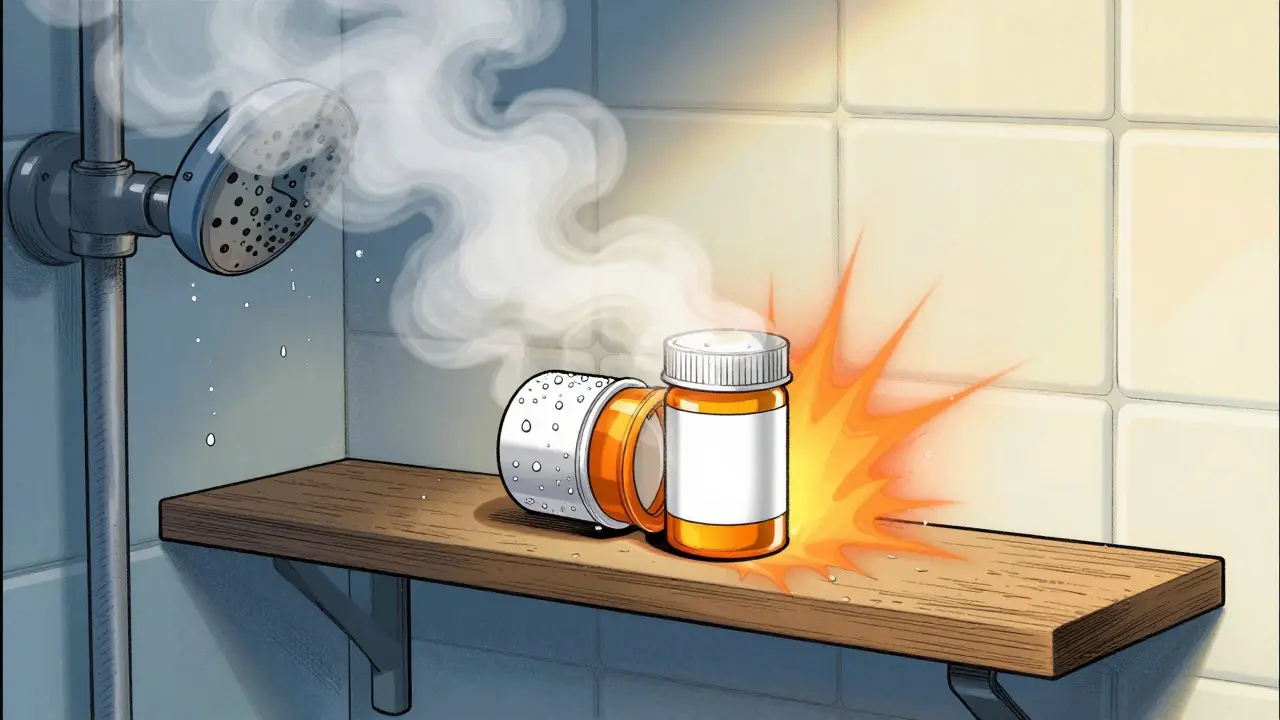
You probably keep your daily vitamins and prescriptions in that convenient shelf above the sink. It seems practical until you realize that spot creates an oven-like environment every time you take a hot shower. This isn't just about comfort; it is chemistry. When you leave pills in a warm, damp room, their expiration dates lie to you. The "best by" date stamped on the bottle assumes perfect storage conditions. In a humid bathroom or a hot car, that chemical clock ticks much faster than the calendar.
This issue has become more critical as global temperatures rise. Even in places like Vancouver, unexpected heat waves push indoor temperatures beyond safe limits. Understanding exactly how environmental stress breaks down active ingredients helps you protect your health and avoid ineffective treatment when you need it most.
The Science Behind Drug Breakdown
Medication Stability is a property determining how long a drug maintains its intended strength and safety. Manufacturers calculate this based on controlled testing environments, typically keeping humidity between 35% to 65% and temperature steady at around 20-25°C. When you move those pills into a kitchen near the stove or a bathroom full of steam, you violate those parameters.
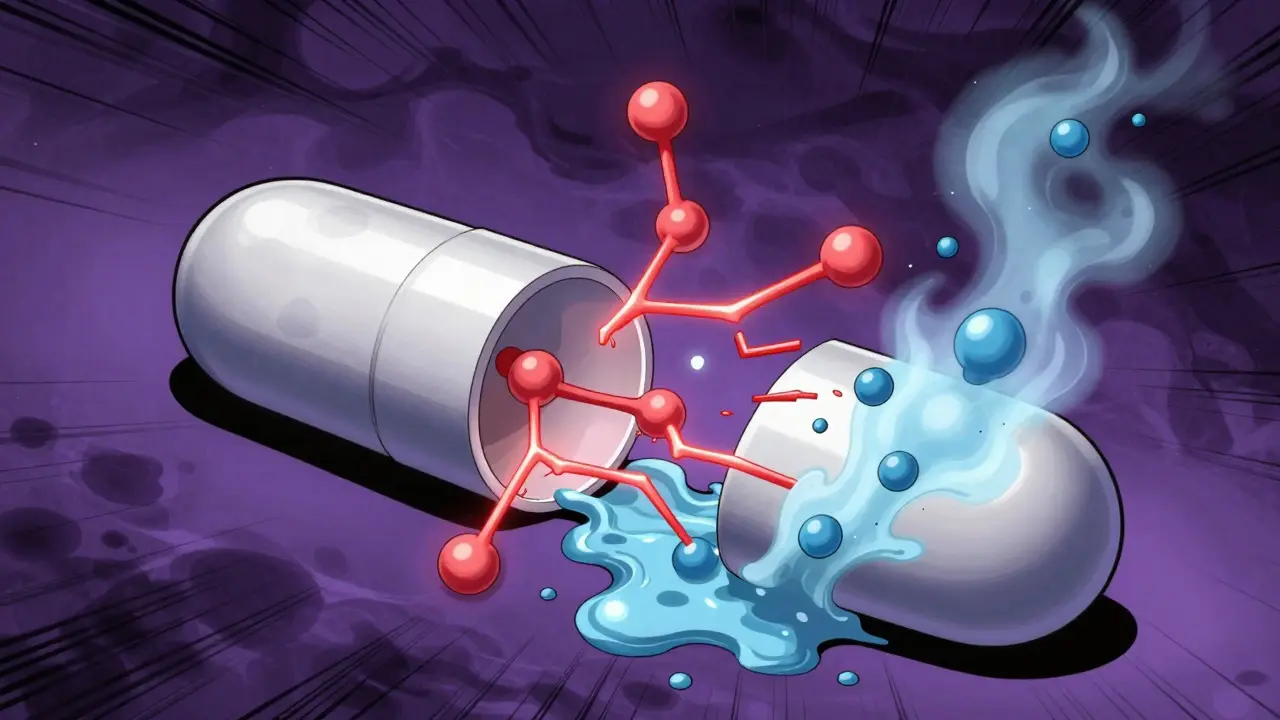
Heat acts as an accelerator for chemical reactions inside the tablet or liquid. Think of molecules vibrating rapidly; eventually, they snap apart or bond incorrectly. For many solid tablets, brief exposure to temperatures up to 40°C might not destroy them immediately, but prolonged heat causes irreversible damage. Moisture is often the silent killer. Hygroscopic materials in capsules absorb water vapor from the air. This triggers hydrolysis, where the medicine essentially dissolves itself from the inside out before you even swallow it.
Some formulations are far more resilient than others. A hard-shell capsule offers better protection than an uncoated tablet, which offers better protection than a syrup or cream. Liquid antibiotics, for example, can lose 30-40% of their potency within just three days if left on a counter instead of refrigerated. The breakdown isn't always visible to the naked eye. You might look at a pill, see nothing wrong, and swallow it, unaware that the active ingredient has degraded significantly.
Most Vulnerable Medications
Not all drugs react the same way to stress. Some act like sturdy bricks; others crumble like wet cardboard. Knowing which category your prescription falls into determines how strictly you must control the environment.
| Medication Type | Storage Requirement | Risk of Heat/Humidity |
|---|---|---|
| Insulin & Biologics | Refrigerated (2-8°C) | Very High: Denatures proteins rapidly |
| Nitroglycerin | Cool, tight cap | High: Volatilizes quickly |
| Liquid Antibiotics | Fridge after mixing | High: Loses potency in days |
| Solid Statins/Acetaminophen | Room temp, dry | Moderate: More resilient to short spikes |
| Inhalers/EpiPens | Avoid extreme heat | Critical: Mechanical failure or explosion |
Insulin Degradation happens when temperature exposure alters the protein structure required for blood sugar control. Studies show insulin can lose up to 20% of its potency in less than 24 hours if kept at body temperature (37°C) or higher. Once denatured, it won't lower blood sugar, leaving patients dangerously hyperglycemic. Similarly, Nitroglycerin is a heart medication used to treat angina that is highly volatile.
Thyroid medications, such as levothyroxine, require storage below 27°C. If stored in a warm drawer, they may degrade silently. The patient feels no relief, thinking the dosage is too low, when actually the pill hasn't done its job. Inhalers contain propellants that expand under heat. Temperatures exceeding 49°C can cause the canister to rupture, while even lower sustained heat reduces the amount of medication delivered per puff.
Identifying Household Danger Zones
Your home has microclimates that act differently than the rest of the house. Identifying these spots prevents accidental destruction of your supply. The bathroom is the number one offender. While humidity spikes during a shower can hit 90%, the residual heat lingers longer. This fluctuation creates condensation on pill bottles inside, trapping moisture directly against the medicine.
Kitchens are second only to bathrooms in terms of danger. Proximity to ovens, dishwashers, or sunlight streaming through windows raises local temperatures well past the 25°C safety limit. Even cupboards above the fridge aren't safe, as the motor vents heat. Vehicles present the most extreme risk. On a sunny day, the interior of a parked car easily exceeds 60°C. Leaving a pack of medicine on the dashboard is equivalent to baking it slowly.
Dr. Hani Jneid from Baylor College of Medicine noted in a 2023 publication that medications should be kept away from direct light and moisture. He specifically warned against storing thyroid medication in high-humidity areas. Light exposure also contributes to photo-degradation, meaning clear plastic vials in a bright window sill offer zero protection.
Recognizing Signs of Spoilage
Sometimes, the damage is obvious, though sometimes it is invisible. Before taking a medication that has been exposed to extreme conditions, perform a sensory inspection. Do not rely solely on the date printed on the bottle if you suspect exposure.
- Texture Changes: Tablets that stick together, feel crumbly, or have a gritty coating often indicate moisture absorption. Capsules that have cracked or split open expose the powder inside to air.
- Color Shifts: Any deviation from the original color on the blister pack or tablet surface suggests chemical alteration. Yellowing aspirin, for instance, means it is turning into salicylic acid and acetic acid.
- Odors: An unusual smell, particularly a vinegar-like scent from aspirin, signals decomposition. Sweet syrups that smell sour or fermented should be discarded immediately.
- Physical Integrity: Look for chips or cracks in tablets. If the compression seal is broken, the interior is exposed to the environment, accelerating the breakdown process.
If a medication looks normal but was left in a hot car overnight, discard it anyway. Visual checks cannot detect microscopic changes in molecular structure that affect potency.
Best Practices for Safe Storage
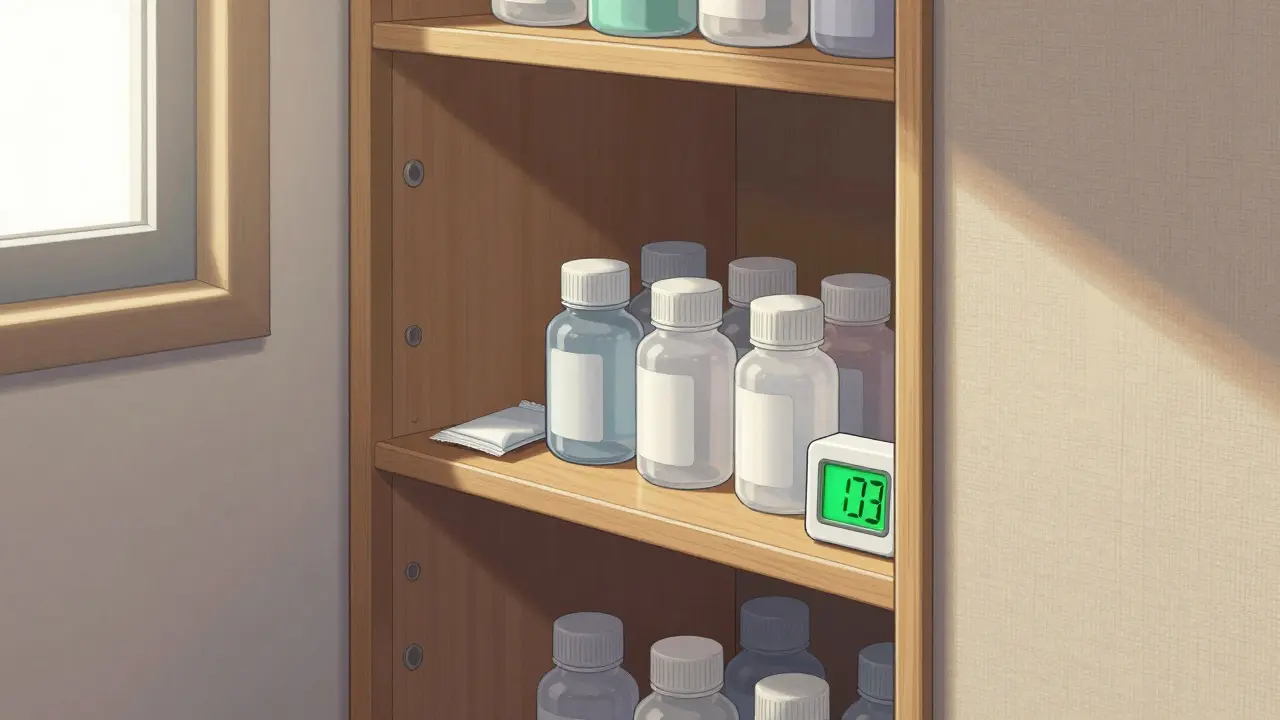
To maximize the life and effectiveness of your prescriptions, you must recreate the conditions of the lab test. The ideal environment is cool, dark, and dry. A bedroom closet away from the floor usually works better than a kitchen cabinet. Avoid attics and garages, as these spaces experience the widest temperature swings.
Keep medications in their original containers. These bottles are designed to be opaque and tightly sealed to block moisture and light. Transferring pills into a small travel container should be limited to immediate needs only. Desiccants-those little silica gel packets-are not toys; put them back in the bottle to absorb ambient moisture.
For sensitive items like insulin or biologics, specialized cool packs available at pharmacies help maintain range during travel. Never freeze these unless explicitly instructed, as ice crystals can shatter protein structures. Regularly check the label for storage instructions. Some drugs require refrigeration from the first dispense, while others are stable at room temperature until opened.
Impact on Health Outcomes
The consequences of using degraded medication range from reduced efficacy to acute toxicity. Sub-potent antibiotics, for example, allow bacteria to survive, potentially fostering antibiotic resistance. If your infection clears slower than expected, it might not be the bug fighting back; it could be the weak medicine failing to attack. Heart medications like nitrates failing during chest pain can lead to severe cardiac events.
Life-saving devices like EpiPens rely on precise pressure mechanisms. Research indicates mechanical failure rates climb to nearly 20% if these pens sit in a hot environment for extended periods. During an allergic reaction, a malfunctioning injector provides no adrenaline, which can be fatal. Always check your emergency kit before summer arrives.
Can I save expired medicine if I stored it properly?
Expiration dates represent the last date a manufacturer guarantees full potency under standard conditions. Generally, you should not use medication past this date. However, some solid oral doses may retain potency for years after expiry if stored perfectly. Consult your pharmacist before using expired drugs, especially for treating infections or chronic conditions.
Is it safe to store medicine in the fridge?
Only store medication in the fridge if the label specifically says so. Refrigerators are humid environments; opening the door introduces condensation. Most room-temperature medicines will degrade in the cold, damp air of a fridge, causing clumping or chemical breakdown.
What happens if my insulin gets hot?
Heat damages the protein chains in insulin, rendering it ineffective. If insulin turns cloudy or thick, or if it has been left in a hot car, dispose of it safely and use a new vial or pen. Using compromised insulin leads to dangerously high blood sugar levels.
How long does it take for humidity to ruin pills?
Moisture damage depends on the formulation, but hygroscopic capsules can begin absorbing water vapor within hours of exposure to high humidity. Visible changes might take weeks, but internal degradation starts much sooner, making prompt transfer to a dry location essential.
Does the expiration date change if I open the bottle?
The expiration date generally refers to the product in a sealed container. Once opened, exposure to air and handling begins the clock sooner. For eye drops and topical solutions, contamination risk increases after opening, often requiring disposal within 28 days regardless of the printed date.

10 Comments
The engineering principles behind building climate control systems apply directly to pharmaceutical storage requirements here. Most residential bathrooms lack the necessary ventilation to manage peak humidity levels effectively. Shower events create transient spikes that exceed the tolerance limits listed on standard drug packaging. We observe similar failure modes in electronic components exposed to uncontrolled moisture ingress. Preventive maintenance of storage areas mirrors the preventive care strategies required for medical adherence protocols. It is fascinating how domestic architecture often conflicts with industrial preservation standards unintentionally. Structural modifications could mitigate some of the thermal variance observed in near-sink locations.
i live in a place where rain comes every day and the air feels wet even inside so keeping pills dry is really hard work we try our best but the cabinets always smell damp after a week sometimes the bottles get wet too you cannot trust the label if the bottle feels sticky inside i found a few pills melted together once
While the premise regarding environmental degradation is certainly correct and well articulated within the main text it does require us to consider the broader implications of household infrastructure design which often fails to account for the volatile nature of chemical compounds stored within domestic walls; consequently we must acknowledge that the average consumer lacks the technical expertise required to diagnose these failures without professional consultation and that relying on visual cues alone presents a significant risk factor for potential toxicity events arising from improperly stored medication supplies.
People ignore the label because reading is boring and taking a pill is routine enough to assume safety. You think you know better than the lab tech who tested stability for six months under stress conditions. The data shows clear decay curves that do not lie regardless of your personal anecdotal experience. Stop guessing and follow the rules written right there on the box.
The general populace; unfortunately:: demonstrates a profound:: ignorance regarding:: the delicate:: equilibrium:: of pharmaceutical:: chemistry!!! It is:: frankly: appalling:: that common sense:: eludes so many:: citizens!! One would expect:: a higher:: standard:: of intellectual:: rigor:: from:: society!!!
Looks like my family photos in the glovebox were safer than my blood pressure meds.
It is imperative that individuals understand the degradation risks associated with improper storage environments. Moisture absorption occurs rapidly in humid environments surrounding common household areas. Many patients neglect the desiccant packets included in prescription bottles routinely. These packets serve a critical function in maintaining optimal dryness within the container. Removing them compromises the chemical stability of the contained pill formulations. Storage instructions on the original label constitute legally binding guidelines from manufacturers. Ignoring these warnings leads to suboptimal therapeutic outcomes for the patient eventually. Refrigerators should generally be avoided unless specifically designated by the attending physician. Cold temperatures cause condensation upon removal from cold storage units frequently. This cycle of temperature fluctuation damages active ingredients further through repeated expansion. Visual inspection remains a primary method for detecting visible spoilage signs externally. Color changes indicate significant chemical breakdown has already occurred visibly. Texture alterations suggest structural integrity is compromised internally without warning. You cannot rely solely on the printed expiration date alone for safety assurance today. Proper vigilance ensures medication efficacy when required most during treatment windows.
Leave your medicine outside the shower room or the bathroom. The water kills the pill inside the bottle fast. If you keep it in the car it explodes or melts. Just put it in a dark drawer away from the kitchen stove. You want the medicine to work so stop storing it wrong.
There is something deeply unsettling about realizing our daily routine puts our safety at risk due to simple oversight. I remember finding an inhaler that had leaked propellant onto the counter years ago. It felt like a betrayal of trust between the patient and the pharmacy supply chain management system. We assume stability until the moment we need the dose most critically.
You bear full responsibility for the condition of your own medical supplies regardless of external circumstances. Ignoring basic physics leads to predictable failures in treatment efficacy later down the road.
Write a comment