
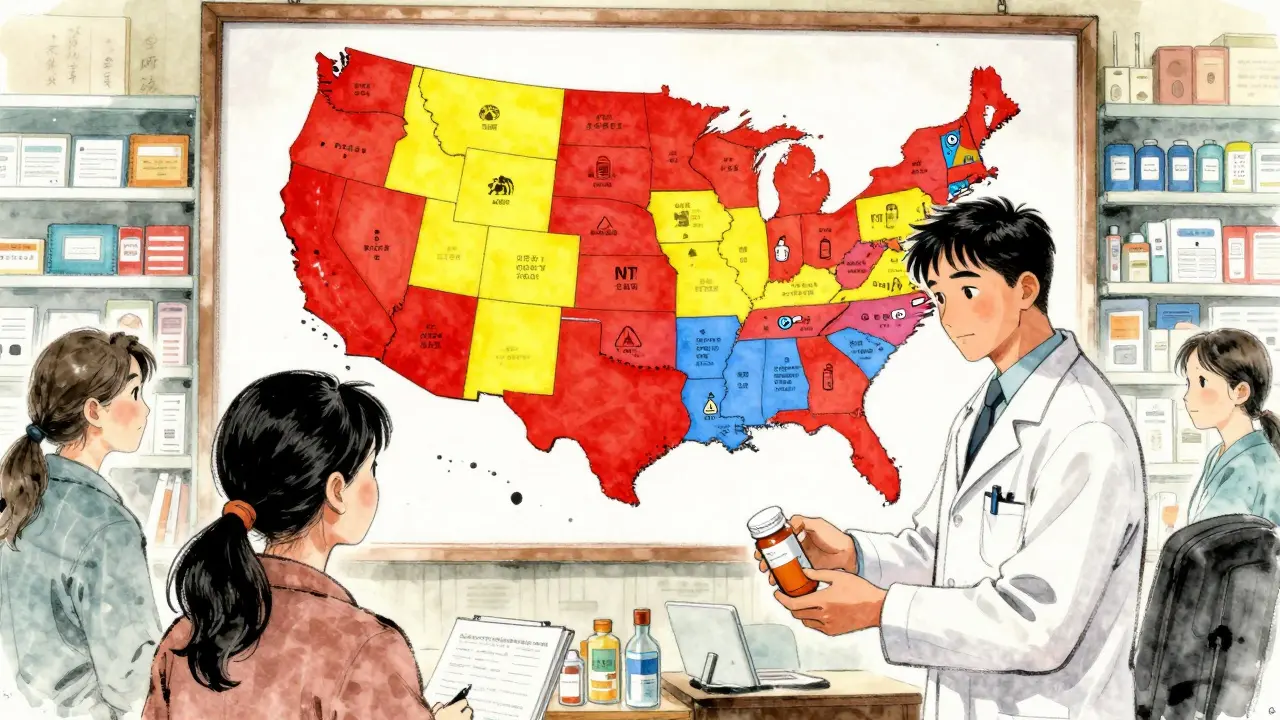
When you pick up a prescription, you might not realize that the pill in your bottle wasn’t necessarily the one your doctor wrote on the script. In most cases, it’s a generic drug-a cheaper version of the brand-name medicine. But whether that switch happens automatically, only with your permission, or not at all depends entirely on where you live. Across the United States, 51 different sets of rules govern how pharmacists can substitute generics for brand-name drugs. These aren’t just minor policy tweaks-they affect your out-of-pocket costs, your safety, and even whether you get the right medication at all.
Why These Laws Exist
Generic drugs are chemically identical to their brand-name counterparts. The FDA requires them to have the same active ingredient, strength, dosage form, and route of administration. They’re just cheaper because they don’t carry the cost of research, marketing, or patent protection. In 2022, generics made up 90.7% of all prescriptions filled in the U.S., saving patients an average of $313 per script. But even though the science is clear, the law isn’t.Back in the 1970s, most states had laws that forced pharmacists to dispense exactly what the doctor ordered-no substitutions allowed. That changed as drug costs rose and policymakers looked for ways to cut spending. Louisiana led the way in 1980 with the first modern substitution law, letting pharmacists swap in generics unless the doctor said no. Since then, every state and Washington, D.C., has passed some version of a drug product selection law. But the rules vary wildly.
Three Main Types of Laws
State laws fall into three broad categories: mandatory, permissive, and hybrid.
- Mandatory substitution (19 states): The pharmacist must substitute a generic if it’s available and the prescription doesn’t say "dispense as written." States like California, New York, and Texas fall into this group. If a generic is listed in the FDA’s Orange Book as therapeutically equivalent, the pharmacist has no choice but to switch.
- Permissive substitution (31 states + D.C.): The pharmacist can substitute, but doesn’t have to. In these states, the decision often comes down to pharmacy policy, patient preference, or whether the prescriber has flagged the drug as sensitive.
- Hybrid rules: Some states combine both. For example, substitution might be mandatory for common drugs but require consent for narrow therapeutic index (NTI) drugs like warfarin or levothyroxine.
The difference isn’t just legal-it’s financial. States with mandatory substitution see generic use rates 8-12 percentage points higher than permissive states. That translates to $50-$150 saved per prescription annually for patients.
When You Need to Say Yes
Not all substitutions happen without your knowledge. Seven states plus Washington, D.C., require explicit patient consent before a substitution can occur. That means the pharmacist has to ask you directly-verbally or in writing-and you have to agree. These states include Connecticut, Hawaii, Maine, Maryland, New Hampshire, Vermont, and West Virginia.
Why? Because some drugs are tricky. Drugs with a narrow therapeutic index (NTI) mean even small changes in dosage can cause serious side effects or make the drug ineffective. For example, switching from one brand of levothyroxine to another-even if both are generic-can throw off thyroid levels. That’s why Hawaii specifically bans substitution for antiepileptic drugs without both doctor and patient approval. Kentucky keeps a list of NTI drugs that can’t be swapped without special authorization.
Even in states without consent rules, 31 states plus D.C. require pharmacists to notify you after the substitution happens. You might get a slip in your bag, a note on your receipt, or a call from the pharmacy. But many patients don’t notice these messages-or don’t understand them.
Who’s Liable If Something Goes Wrong?
Here’s where things get risky. In 24 states-including Alabama, Arizona, Illinois, Massachusetts, Missouri, Nebraska, New Mexico, Oregon, and Rhode Island-pharmacists have no legal protection if a substitution leads to harm. That means if you have a bad reaction after a generic was switched in, the pharmacist could be sued, even if they followed every rule.
This creates a chilling effect. Pharmacists in those states often delay or avoid substitutions out of fear. A 2022 study from the Medicare Rights Center found patients in liability-risk states experienced delays in filling prescriptions, especially for NTI drugs. One pharmacist in Ohio told a researcher: "I’d rather risk the patient paying more than risk them ending up in the ER."
Meanwhile, 26 states have clear liability shields. If the pharmacist follows state law and uses an FDA-approved generic, they’re protected from lawsuits. That’s one reason why generic use is higher in those states.
Biologics and Biosimilars: A New Layer of Complexity
Biologic drugs-like Humira, Enbrel, or insulin-used to be the last frontier for substitution. These are complex, large-molecule drugs made from living cells. Until recently, no generic version could be made. Now, biosimilars (similar, but not identical) are entering the market.
But substitution rules for biosimilars are stricter than for small-molecule generics. Forty-five states have tougher requirements for biosimilars. For example, 48 states plus D.C. require pharmacists to notify the prescribing doctor within 2-7 days after switching a patient to a biosimilar. Six states that mandate generic substitution for pills still make biosimilar substitution optional.
And here’s the kicker: the FDA only designates a biosimilar as "interchangeable" if it can be substituted without the prescriber’s involvement. As of 2023, only a handful of biosimilars have that designation. But even then, state laws vary. In Florida, Indiana, Massachusetts, New Jersey, Pennsylvania, and Tennessee, substitution of interchangeable biosimilars is allowed-but not required. That means a patient might get the brand-name drug even if a cheaper, FDA-approved biosimilar is sitting on the shelf.
What Pharmacists Deal With Daily
Imagine you work at a pharmacy chain that spans three states. You fill a prescription for a patient from Pennsylvania who lives in Maryland. The drug is a generic antihypertensive. In Pennsylvania, you can substitute automatically. In Maryland, you must notify the patient. In Delaware, you have to post a sign and get consent.
That’s the reality for many pharmacists. A 2021 survey by the National Community Pharmacists Association found 68% of independent pharmacists spend 15-30 minutes a day just managing substitution rules. Border towns are especially messy. One pharmacist on Reddit said: "I have to check my phone five times a day to see which state’s rules apply. I’ve had patients walk out angry because I didn’t substitute when they expected it."
Electronic health record systems like Epic have tried to help. Their "State Substitution Rules Engine," rolled out in 2019, auto-applies the correct rules based on pharmacy location. It cut substitution errors by 37% in internal audits. But not every pharmacy uses it. Smaller, independent shops still rely on paper handbooks and outdated training.
What You Can Do
Here’s how to take control:
- Ask: When you get your prescription, ask: "Is this the brand-name drug, or a generic?" Don’t assume.
- Check your receipt: Look for phrases like "substituted" or "generic dispensed."
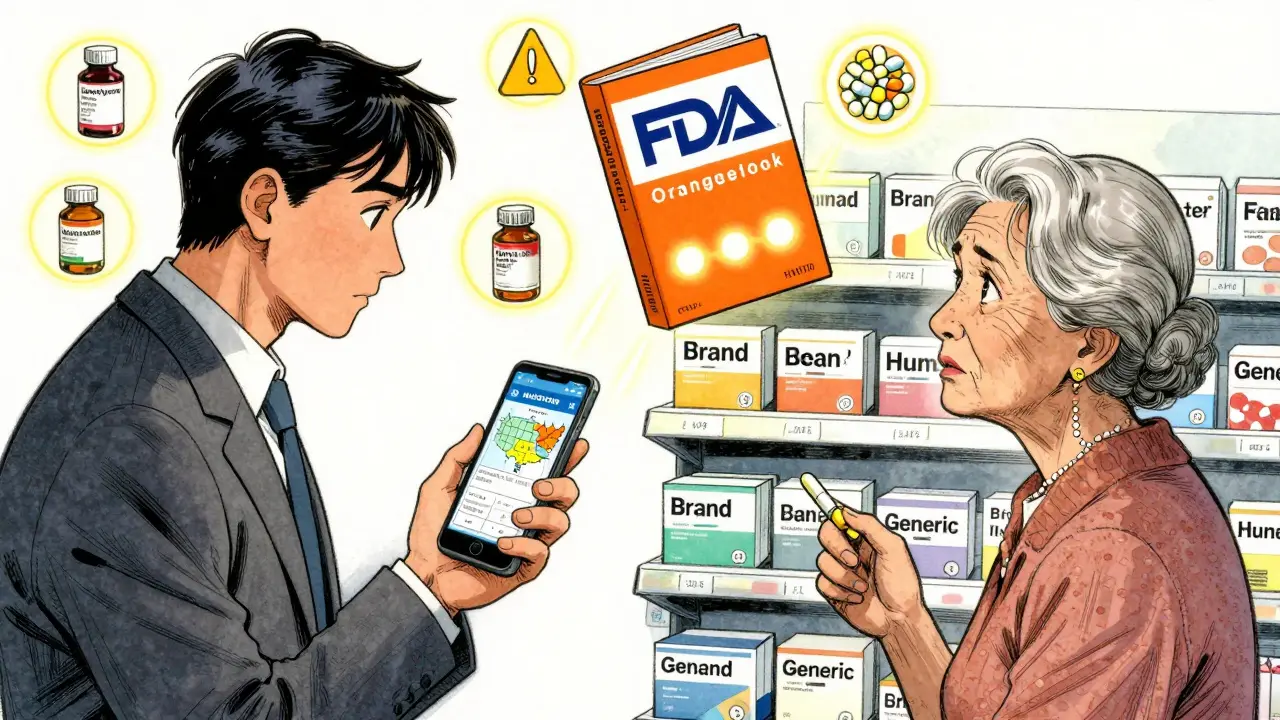
- Know your state’s rules: Visit the National Association of Boards of Pharmacy’s interactive map. It’s updated quarterly and shows exactly what applies where.
- Speak up about NTI drugs: If you take warfarin, levothyroxine, or seizure meds, insist on staying on the same product. Tell your doctor to write "dispense as written" on the prescription.
- Ask about biosimilars: If you’re on a biologic like Humira, ask if a biosimilar was substituted. You have a right to know.
The bottom line: Your medication isn’t just a pill. It’s shaped by state laws that are outdated, inconsistent, and sometimes dangerous. You’re not powerless. You just need to know what to ask for.
What’s Changing in 2026
The push for standardization is growing. In 2023, 12 states introduced bills to harmonize substitution rules. The FDA updated its Orange Book in 2022 to include new "interchangeability" ratings for complex generics. Eighteen states are reviewing their laws in response.
But change is slow. A 2023 Health Affairs study found that states that simplified their rules between 2018 and 2022 saw generic use jump by 6.8 percentage points on average. The biggest gains? States that removed consent requirements for most drugs.
The Congressional Budget Office estimates that without national standardization, the U.S. will waste $4.7 billion annually on unnecessary brand-name prescriptions by 2030. That’s money patients, insurers, and taxpayers could save.
Can a pharmacist substitute my brand-name drug without telling me?
In 44 states and Washington, D.C., pharmacists are required to notify you after substitution, even if they don’t need your permission first. But in 7 states plus D.C., they must get your explicit consent before swapping the drug. In the remaining states, substitution may happen silently-unless your doctor wrote "dispense as written." Always check your prescription label and receipt.
Are generic drugs always safe to substitute?
For most drugs, yes. The FDA requires generics to match brand-name drugs in strength, quality, and performance. But for drugs with a narrow therapeutic index-like warfarin, levothyroxine, or certain epilepsy medications-even small differences can cause problems. Many states restrict or ban substitution for these drugs. If you take one of these, ask your doctor to write "dispense as written" on the prescription.
What’s the difference between a generic and a biosimilar?
Generics are chemically identical copies of small-molecule drugs (like aspirin or metformin). Biosimilars are similar-but not identical-to complex biologic drugs (like Humira or Enbrel). They’re made from living cells, so they can’t be exact copies. The FDA only approves biosimilars as "interchangeable" if they’ve passed strict testing. Even then, state laws often require extra steps before substitution.
Why do some states require patient consent for substitution?
These states prioritize patient autonomy and safety, especially for drugs where small changes can cause harm. For example, switching antiepileptic drugs without consent could trigger seizures. States like Hawaii and Vermont require consent because of documented cases where substitutions led to adverse events. The goal is to ensure patients are informed and involved in decisions about their care.
How can I find out my state’s substitution rules?
The National Association of Boards of Pharmacy (NABP) offers a free, interactive map on their website that shows current laws for every state and D.C. It’s updated quarterly and includes details on consent, notification, NTI restrictions, and biosimilar rules. You can also ask your pharmacist-they’re required to know the rules in their state.
If you’re managing chronic conditions like thyroid disease, epilepsy, or autoimmune disorders, don’t let state law decide your treatment. Stay informed. Ask questions. Advocate for consistency. Your health depends on it.

15 Comments
Pharmacists shouldn't have to play state law roulette. One script, three different rules. It's absurd. The FDA already certifies generics as equivalent. Let them substitute. End of story.
bro i just got my med switched and didnt even notice. i mean its the same pill right? why u gotta make it so complicated. #pharmacylife
😂 i love how my pharmacy just slaps a little "generic dispensed" sticker on the bag like its a secret handshake. i dont even read it anymore.
the real issue here is systemic fragmentation. we have a national healthcare system with 51 different rulebooks. pharmacists are stuck in compliance hell. imagine being a pharmacist in a border town-every prescription is a geography quiz. we need federal standardization. it's not just about cost, it's about safety and dignity. the FDA already does the science. let them do the policy too.
the fact that we treat medication substitution like a legal puzzle instead of a public health imperative is deeply troubling. we optimize for cost savings but ignore the psychological burden on patients who must constantly monitor their meds. a person on levothyroxine shouldn't need to become an expert in state pharmacy codes to feel safe. the system is designed to make you doubt yourself. that's not healthcare. that's institutional gaslighting.
i just came back from india and i swear, here they just give you the generic and say "this is the same" and you believe them. no paperwork, no consent forms, no "notify the prescriber in 72 hours." why are we making such a simple thing into a bureaucratic nightmare? we're drowning in red tape while people go without meds because they can't afford the brand. it's not about control. it's about compassion. and i'm tired of pretending otherwise.
if you're paying more because some pharmacist in alabama is scared of getting sued, then you're being robbed. this isn't medicine. this is insurance fraud disguised as liability.
the fact that biosimilars are treated like second-class citizens while generics are shoved down our throats is the most absurd thing i've ever seen. we're talking about life-saving drugs for autoimmune diseases. and yet, in 48 states, you need a signed permission slip just to switch to a cheaper, FDA-approved version. this isn't innovation. this is pharmaceutical lobbying in slow motion.
patients should be informed. not because they're incapable, but because autonomy matters. the problem isn't consent. it's that consent is often buried in fine print or delivered in rushed whispers at the counter. if we're going to require notification, make it visible. make it understandable. make it a conversation. not a footnote.
just ask your doc to write "dispense as written" and you're golden. easy fix. why make it harder?
the real agenda here? big pharma and state pharmacy boards are in bed together. mandatory substitution laws? they're designed to keep generics from competing too hard. the "therapeutic equivalence" label? a marketing ploy. the orange book? outdated. the FDA doesn't test bioequivalence the same way for every drug. they're letting you think it's safe. it's not. and if you're on warfarin or levothyroxine-you're playing russian roulette with your life. someone's profit margin is more important than your stability.
Oh, so now we’re trusting “generics” because “the FDA says so”? The FDA is a revolving door for Big Pharma executives. Did you know that the same lab that tests the brand-name drug also tests the generic? Same equipment. Same technicians. Same results. But they don’t tell you that the active ingredient is the same, but the fillers? The binders? The dyes? Those are different. And those are what cause the reactions. The system is rigged. You think you’re saving money? You’re just being used as a guinea pig for corporate cost-cutting. Wake up.
why do we even have 51 systems? it's like having 51 different traffic laws. you drive from california to texas and suddenly you're breaking the law for something that was fine 100 miles ago. this isn't healthcare. it's chaos. and pharmacists? they're just trying not to get fired. nobody wins.
india has one national drug policy. one standard. one system. no state-by-state nonsense. we don’t need 51 rulebooks. we need ONE. america’s obsession with fragmentation is why we’re falling behind. if we had a unified system, we’d save billions. instead, we’re stuck in bureaucratic purgatory. this isn’t freedom. it’s failure.
you think this is bad? wait till you find out that some pharmacies still use paper logs from 2008. one guy in rural kentucky told me his pharmacy has a laminated sheet taped to the wall that says "if it says "DAW 1" don't substitute" but they don't even know what DAW means. this isn't regulation. it's a carnival sideshow. and we're the clowns paying for the tickets.
Write a comment