
Blood Thinner & Garlic Risk Calculator
Assess Your Bleeding Risk
This tool estimates your risk of bleeding when combining garlic supplements with anticoagulant medications. Based on clinical research from the article.
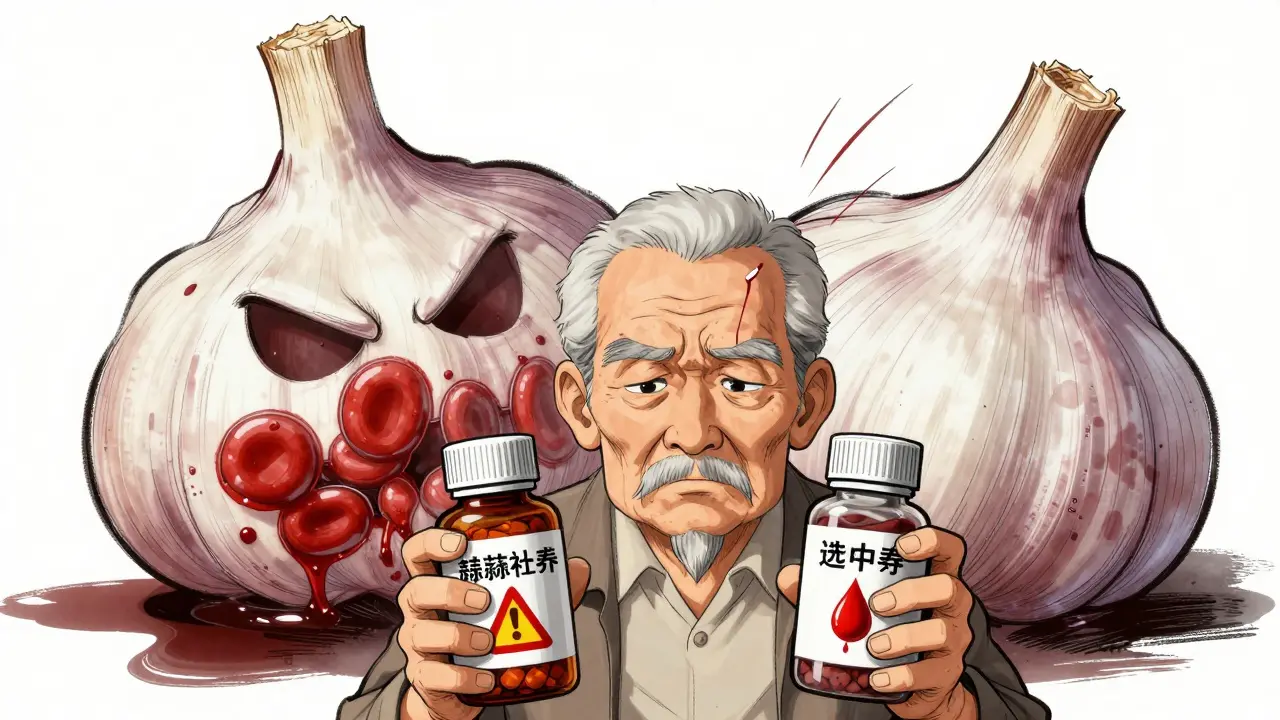
Many people take garlic supplements hoping to lower blood pressure, boost immunity, or improve heart health. But if you're on a blood thinner like warfarin, apixaban, or rivaroxaban, garlic supplements could be putting you at serious risk. The problem isn't just theoretical-it's backed by real cases of uncontrolled bleeding during surgery, emergency room visits for nosebleeds lasting over 30 minutes, and spontaneous spinal hemorrhages linked directly to high-dose garlic use.
How Garlic Interferes with Blood Clotting
Garlic doesn't just taste strong-it acts strong in your body. The active ingredient behind the bleeding risk is ajoene, a sulfur compound formed when garlic is crushed or processed into supplements. Ajoene doesn't just slow down clotting-it shuts it down by blocking platelets from sticking together. Platelets are your body's first responders to cuts and injuries. When they can't clump, even small wounds can bleed longer.
Studies show that standard garlic supplement doses (600-1,200 mg daily) reduce platelet function by 20-40%. The effect kicks in within 2-4 hours and lasts up to 72 hours. That means even if you take garlic only once a day, your blood stays thinner for days. This isn't like aspirin, which wears off faster. Garlic's effect lasts until your body makes new platelets-which takes 7 to 10 days.
When you combine this with anticoagulants, the risk multiplies. Anticoagulants work on different parts of the clotting process, so garlic and medications like warfarin don't just add up-they amplify each other. In one case series, patients on warfarin who took garlic supplements saw their INR levels jump by 1.0 to 2.5 points. An INR over 4.0 is considered dangerous. At that level, you're at high risk for internal bleeding without any injury at all.
Real Cases, Real Consequences
It's not just numbers. Real people have been hospitalized because of this interaction.
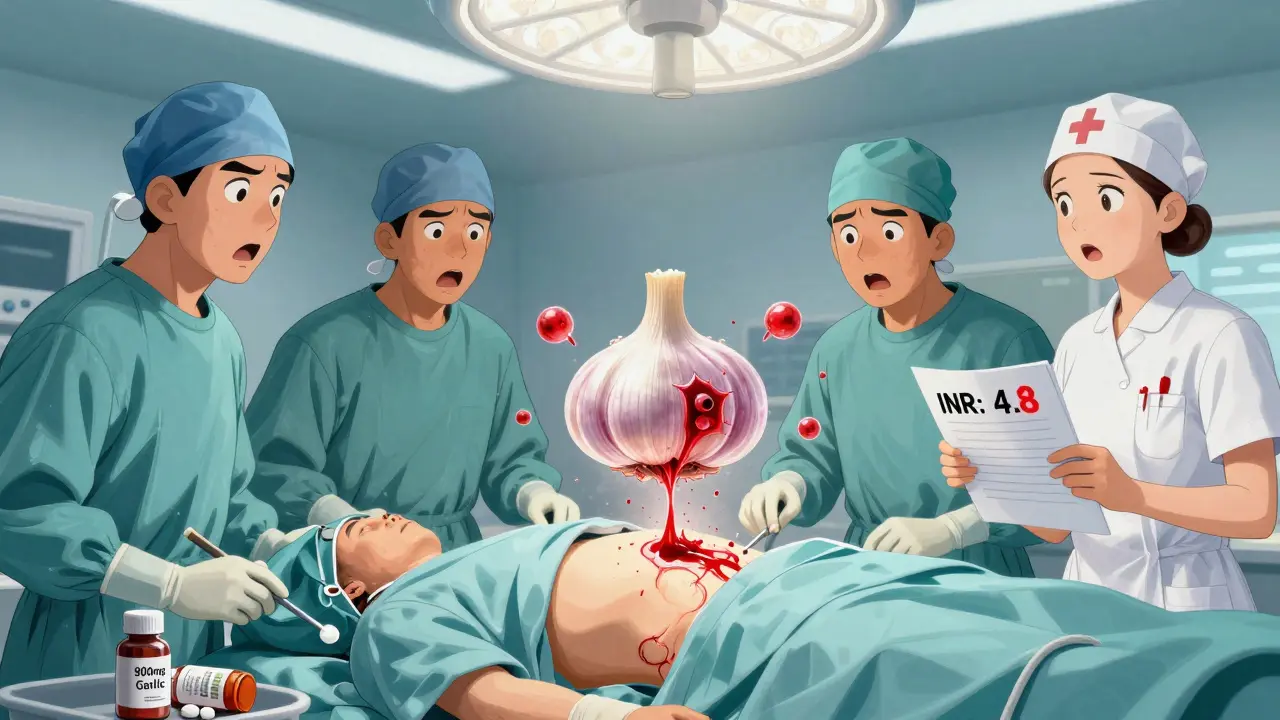
In 2012, two patients undergoing laparoscopic colorectal surgery developed uncontrolled oozing from capillaries. Neither had a history of bleeding disorders. Both admitted, after the fact, that they took garlic pills daily for "heart health." Surgeons had to switch to open surgery and create temporary ileostomies just to stop the bleeding.
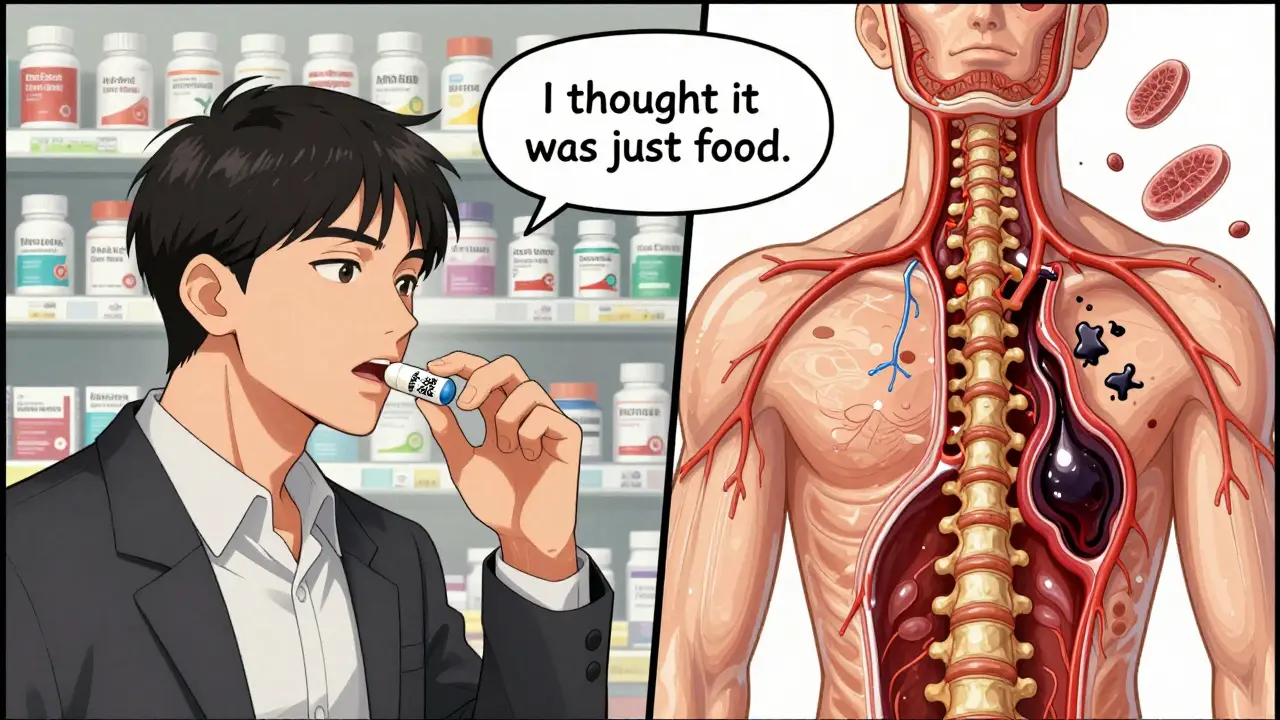
In 2019, an elderly man developed a spinal epidural hematoma-bleeding around his spine-after taking 2,400 mg of garlic supplements daily. He didn't fall, didn't get hurt. He just woke up with severe back pain. Emergency surgery saved him, but he spent weeks in recovery.
On Reddit, a user reported nosebleeds lasting over half an hour after combining 900 mg of garlic with apixaban. He ended up in the ER. Another patient in a 2021 case report had 4 hours of bleeding after prostate surgery because he didn't stop his garlic pills.
These aren't rare outliers. A 2017 study found that 68% of patients scheduled for surgery kept taking garlic supplements-even after being asked about herbal use. Why? Because most people don't think of garlic as a "supplement." They think of it as food.
Not All Garlic Supplements Are the Same
The risk depends heavily on what kind of garlic product you're taking.
- Oil macerates (garlic soaked in oil) contain the highest levels of ajoene-up to 1.0 mg per gram. These are the most dangerous.
- Powdered garlic pills (the most common type) have 0.1-0.3 mg/g of ajoene. Still risky.
- Aged garlic extract (like Kyolic) has almost no ajoene. Studies show it has minimal effect on platelets. This may be the safest option-if you're set on taking garlic.
Here's the catch: supplement labels rarely say how much ajoene they contain. A 2019 FDA review found that potency varies by up to 15-fold between brands. One bottle might be harmless. Another could be a ticking time bomb. And only 42% of manufacturers comply with labeling standards.
Who’s at Highest Risk?
The danger isn't equal for everyone. People most at risk include:
- Those on warfarin (INR levels are especially sensitive to garlic)
- Patients preparing for surgery (even minor dental work)
- Adults over 65 (18.3% take garlic supplements; 22.7% of them also take anticoagulants)
- People taking multiple supplements (garlic + fish oil + ginkgo = triple risk)
Over 3.1 million Americans are estimated to be taking both garlic supplements and anticoagulants. That’s more than the population of Vancouver. And 83% of them have no idea they’re at risk.
What Doctors Say
Experts are unified on one thing: stop garlic supplements before surgery.
The American Society of Anesthesiologists recommends stopping garlic supplements at least 14 days before any procedure. The European Society of Anaesthesiology says 7 days is enough-but they're still cautious.
Dr. Pieter Cohen from Harvard Medical School says garlic supplements can "increase the levels and effects of some medications for heart health, such as blood thinners (causing bleeding)." The American Heart Association warns that garlic should be used with "extreme caution" if you're on anticoagulants.
But here’s the problem: most doctors don’t ask. A 2020 study found that providers rarely ask about garlic specifically. They ask, "Do you take herbal supplements?" And patients say no-because they don’t think of garlic as a supplement.
Ask yourself: If your doctor asked, "Do you take garlic pills, garlic oil, or garlic extract?" would you say yes?
What Should You Do?
If you're on a blood thinner:
- Stop garlic supplements at least 7-14 days before any surgery or dental procedure.
- Don’t assume" aged garlic" is safe-ask your pharmacist or doctor. Some brands still contain trace ajoene.
- Talk to your doctor before starting any new supplement. Even if it’s "natural."
- Check your labels. If it doesn’t say how much ajoene or allicin it contains, assume it’s risky.
- Monitor for signs of bleeding: unexplained bruising, nosebleeds, blood in urine or stool, prolonged bleeding from cuts.
If you're not on a blood thinner but take garlic for heart health, you're probably fine. But if you're over 65, have high blood pressure, or take other medications, it's still worth a conversation with your provider.
The Bigger Picture
Garlic supplement sales hit $1.27 billion in 2022. Demand is growing fast. But regulation isn’t keeping up. The FDA is working on new labeling rules for ajoene content, expected in 2024. Some companies are now making "ajoene-free" garlic extracts. But until those become standard, you’re playing a guessing game with your safety.
There’s no doubt garlic has health benefits. But when you're on anticoagulants, the risks outweigh them. You can get the same heart-healthy effects from eating real garlic in food-without the concentrated, unpredictable doses found in pills.
Supplements aren’t regulated like drugs. That means you can’t trust what’s on the label. And when your life depends on your blood clotting properly, that’s not a gamble worth taking.

12 Comments
they let this stuff on the shelves like its candy and then act shocked when people bleed out? lol we got more regulation on energy drinks than on garlic pills. this is america baby, if you wanna die from a supplement go right ahead
so garlic = bad?? 🤔 i thought it was like the holy grail of natural healing?? like i take it every day for my immune system 😅 maybe i’m the one who’s wrong??
oh wow a 12-page essay on garlic. next up: "the terrifying truth about celery and your kidneys"
Platelet inhibition via ajoene is dose-dependent and reversible. The real issue isn’t garlic-it’s the lack of pharmacovigilance in OTC supplements. We treat nutraceuticals like food, but they’re pharmacologically active. That’s the systemic failure.
yo i’m from nigeria and we use garlic like salt here. no one dies. but yeah if you’re on blood thinners? maybe chill on the pills. real garlic in food? fine. pills? nah. also why do u guys even have this many types of garlic supplements??
Thanks for laying this out clearly. I’ve seen patients come in after surgery with unexplained bruising and never thought to ask about garlic. This is a quiet epidemic. Doctors need better protocols to screen for this. It’s not just about pills-it’s about perception.
so let me get this straight… you’re saying natural = dangerous? and synthetic drugs = safe? what a joke. if you’re scared of garlic, maybe you should stop being a slave to big pharma. this is just fearmongering dressed up as science.
It’s not about demonizing garlic. It’s about awareness. You can still enjoy garlic in your food. The problem is the unregulated pills that pack a punch no one sees coming. We need better labeling, not bans. And we need doctors to actually ask about it.
my uncle took garlic pills for 10 years and had a stroke. they said it was the warfarin. i told them it was the garlic. they laughed. now he’s in a nursing home. don’t be that guy.
my dr told me to stop garlic before my knee surgery. i thought it was a joke. i didn’t even know it counted as a supplement. thanks for the wake up call.
you americans overthink everything. in india we crush garlic with salt and eat it raw every morning. no bleeding. no hospital. maybe your bodies are weak? or maybe you just need to stop taking 10 supplements a day?
I come from Nigeria, where garlic is part of every meal. We don’t have pills-we have food. Maybe the real issue isn’t garlic. Maybe it’s how we’ve turned medicine into a product. We need to return to whole foods, not isolate compounds and sell them as magic bullets. Your body knows how to handle garlic in food. It doesn’t know how to handle 1,200 mg of concentrated ajoene in a capsule labeled "natural".
Write a comment