
When you’re looking for a cheaper version of a brand-name drug, you might think all generics are the same. But there’s a hidden category of generic drugs that aren’t listed in the usual places - authorized generics. These are exact copies of brand-name medications, made by the same company, but sold without the brand name on the label. They’re not in the FDA’s Orange Book. They don’t get the same attention as regular generics. And if you don’t know where to look, you’ll never find them - even if they’re sitting on your pharmacy shelf.
What Exactly Is an Authorized Generic?
An authorized generic is the same pill, capsule, or liquid as the brand-name drug - same active ingredient, same dosage, same manufacturer. The only difference? No brand name on the bottle. It’s like buying a store-brand soda that’s actually made by Coca-Cola. The FDA defines it clearly: an authorized generic is marketed under the original brand’s New Drug Application (NDA), not through the standard generic approval process (ANDA). That’s why you won’t see it in the Orange Book, which only lists traditional generics approved under ANDAs.
These drugs enter the market when the brand-name company decides to launch its own generic version to compete with other generics. Why? To keep market share. If a competitor is about to launch a generic, the brand company can release its own version at a lower price - often undercutting the competition before it even gets started. This isn’t fraud. It’s legal. And it’s common.
For example, ACTIQ lozenges (fentanyl) and ARTHROTEC tablets (diclofenac + misoprostol) both have authorized generic versions. Pfizer, Teva, and Mylan (now Viatris) are among the top manufacturers. The FDA’s list includes over 850 authorized generics launched between 2010 and 2019 alone.
Where to Find the Official FDA List
The only official source for authorized generics is the FDA’s dedicated page: fda.gov/drugs/abbreviated-new-drug-application-anda/fda-list-authorized-generic-drugs. This is the only place where the FDA publishes the full, legally required list.
The list comes as a downloadable PDF - about 1.09 MB - updated quarterly. As of October 10, 2025, it includes:
- Brand name (trade name)
- Dosage form (tablet, capsule, gel, etc.)
- Strength (e.g., 50 mg/200 mcg)
- Name of the NDA holder (the original brand manufacturer)
- Date the authorized generic entered the market
For instance, you’ll find CLEOCIN T topical gel (1%) listed with Pfizer as the manufacturer and a market entry date of June 11, 2003. But here’s the catch: that date doesn’t mean it launched exactly on that day. The FDA says the date reflects the reporting period in the annual submission, not the real launch date. Many companies don’t report the exact day they started selling.
Why the FDA List Isn’t Enough
Don’t mistake this list for a real-time inventory. The FDA admits it doesn’t track whether an authorized generic is still being sold. If a drug was pulled from the market last month, it might still show up on the list. That’s a major problem for pharmacists and patients trying to find affordable options.
Independent pharmacy owner Michael Rodriguez found this out the hard way. He checked eight authorized generics on the FDA list, and five weren’t available through his wholesaler. Same with Sarah Chen, a market access director: her team found 17 new authorized generics on the list, but had to verify each one manually because 3 were no longer being distributed.
The list is great for competitive intelligence - if you’re a pharma analyst, a health plan, or a large pharmacy chain. But if you’re a patient trying to save money, it’s not reliable. A 2023 survey by the National Community Pharmacists Association showed 68% of independent pharmacists found the list “somewhat or very difficult” to use for actual purchasing.
How to Use the List Effectively
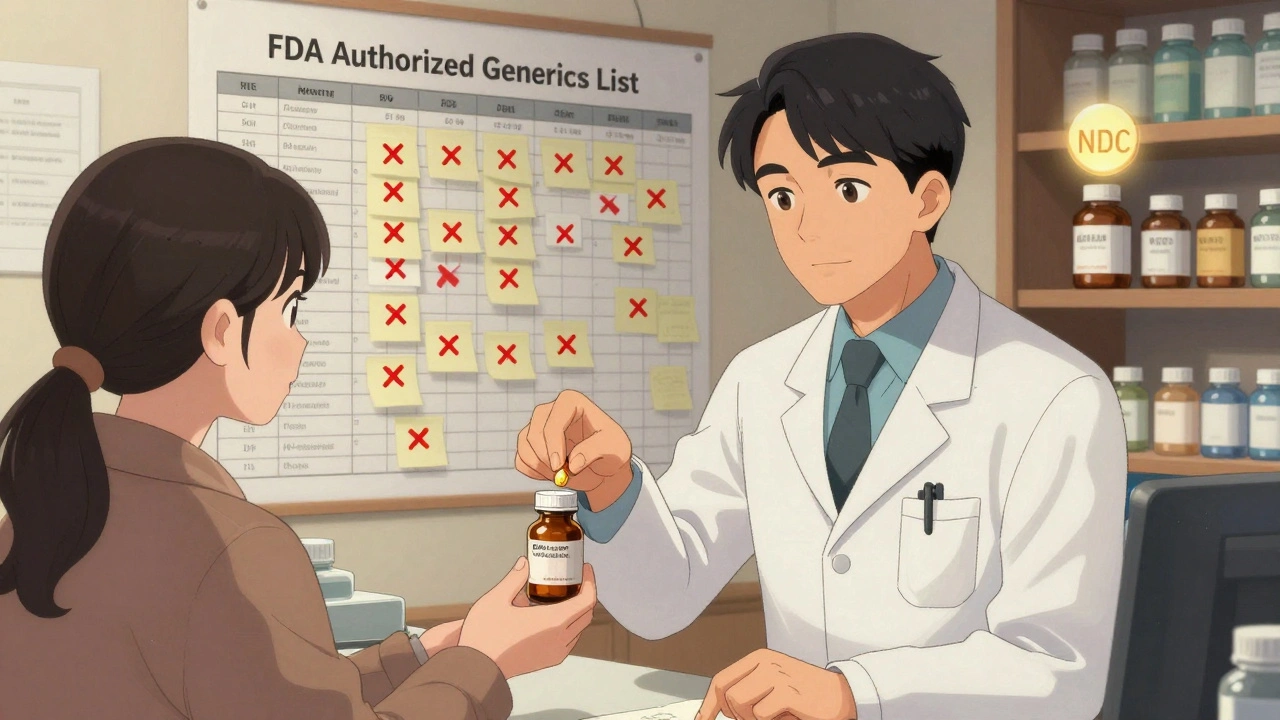
If you’re a patient or caregiver, here’s how to make this work for you:
- Find the brand-name drug you’re taking.
- Go to the FDA’s authorized generics list and search for the brand name.
- If it’s listed, note the manufacturer and strength.
- Call your pharmacy and ask: “Do you carry the authorized generic of [brand name]?”
- Ask for the NDC code - it’s the 11-digit number on the bottle. Use the FDA’s NDC Directory to confirm it matches the authorized generic.
Pharmacists can cross-check the FDA list with weekly NDC deactivation reports from wholesalers like McKesson or Cardinal Health. That’s the industry best practice - combining FDA data with real-time distribution data.
For researchers or analysts, pair the FDA list with the Drugs@FDA database and the Orange Book. Authorized generics won’t show up in the Orange Book’s therapeutic equivalence codes. But if you see a brand-name drug with no ANDA-approved generics - yet it has an authorized generic listed - that’s your signal: there’s a cheaper version out there, just not labeled as generic.
Authorized Generics vs. Regular Generics: What’s the Difference?
It’s easy to confuse them. Here’s a quick breakdown:
| Feature | Authorized Generic | Traditional Generic |
|---|---|---|
| Manufacturer | Same as brand-name company | Separate generic manufacturer |
| Approval Path | Under brand’s NDA | Through ANDA |
| Appears in Orange Book? | No | Yes |
| Label | No brand name | Generic name only |
| Price | Usually lower than brand, sometimes higher than traditional generic | Typically lowest price |
| Market Entry Timing | Can launch immediately, even during 180-day exclusivity | Must wait out exclusivity period |
Authorized generics can undercut traditional generics during the 180-day exclusivity window - the period when the first generic company has exclusive rights to sell after challenging a patent. That’s why Pfizer might launch its own authorized version of a drug even before another company’s generic hits the market.
Why Authorized Generics Matter
They’re not just a corporate tactic. They’re a real option for patients who need lower-cost meds. In 2024, about 30% of brand drugs facing generic competition had an authorized generic version, according to IQVIA data.
Some experts, like Dr. Richard T. Epstein from NYU Law, argue they help prevent price gouging by traditional generics during exclusivity. Others, like Dr. Aaron S. Kesselheim from Harvard, say they often don’t save much money - sometimes only 5-10% less than the brand. But even that can matter for someone paying out of pocket.
And if you’re on Medicare Part D or a private plan, your copay for an authorized generic might be the same as for a traditional generic - meaning you get the same drug, same quality, lower cost. No paperwork. No special request. Just ask your pharmacist.
What’s Coming Next
The FDA is planning to replace the PDF list with a searchable online database by mid-2026. That’s a big step. Right now, you have to scroll through hundreds of entries in a static PDF. No filtering. No search bar. No way to know if a drug is still active.
Industry feedback was clear: 22 out of 28 stakeholders at the FDA’s 2024 Public Meeting on Drug Competition asked for better tools. The FTC also found that 10-15% of authorized generics may be missing from the list because companies don’t report them accurately.
Future updates may link the list to the FDA’s Drug Shortage Portal and price transparency rules from the Inflation Reduction Act. That could finally connect authorized generics to real-time availability and cost data.
Final Tips
- Don’t assume your pharmacy knows about authorized generics. Many don’t.
- Always ask for the NDC code - it’s the only way to confirm you’re getting the right version.
- Use the FDA list as a starting point, not the final answer. Cross-check with your pharmacist or wholesaler.
- If you find a discrepancy - like a drug listed as active but unavailable - report it to [email protected].
The system isn’t perfect. But the information is there. You just have to know where to look - and how to use it.
Are authorized generics the same as brand-name drugs?
Yes. Authorized generics are chemically identical to their brand-name counterparts - same active ingredient, strength, dosage form, and manufacturer. The only difference is the label. They’re made on the same production line, often in the same factory, just without the brand name on the packaging.
Why aren’t authorized generics in the Orange Book?
The Orange Book only lists drugs approved through the Abbreviated New Drug Application (ANDA) process. Authorized generics are marketed under the original brand’s New Drug Application (NDA), so they’re excluded. That’s why the FDA created a separate list specifically for authorized generics.
Can I trust the FDA’s authorized generics list to know what’s available?
Not fully. The list shows which authorized generics have been reported to the FDA, but it doesn’t track whether they’re still being sold or distributed. Many drugs listed are no longer on the market. Always verify availability with your pharmacy or wholesaler using the NDC code.
Do authorized generics cost less than traditional generics?
Sometimes, but not always. Authorized generics are usually cheaper than the brand-name version, but they may cost the same or even more than traditional generics. Their price depends on the manufacturer’s strategy - sometimes they’re priced to compete with other generics, other times they’re priced just below the brand to protect market share.
How do I find the NDC code for an authorized generic?
Ask your pharmacist for the 11-digit National Drug Code (NDC) on the bottle. Then go to the FDA’s NDC Directory (fda.gov/drugs/drug-approvals-and-databases/national-drug-code-directory) and search by NDC. It will tell you the product name, manufacturer, and whether it matches the authorized generic listed by the FDA.
Is there a mobile app or tool to search the FDA authorized generics list?
Not yet. As of 2025, the list is only available as a downloadable PDF. The FDA plans to launch a searchable database in Q2 2026. Until then, use the PDF and search with Ctrl+F (or Command+F on Mac) for the brand name or manufacturer.

12 Comments
Okay but like… I just found out my blood pressure med is an authorized generic and I’ve been paying $40 a month for it? My pharmacist had no idea. Now I’m getting it for $8. I feel like I’ve been scammed my whole life. 😅
This is an absolutely critical disclosure for consumers navigating the pharmaceutical landscape. The opacity surrounding authorized generics represents a systemic failure in price transparency and patient education. I urge all healthcare professionals to integrate this knowledge into routine counseling protocols.
I spent 3 hours last week trying to find the authorized version of my antidepressant. Called 5 pharmacies. One said ‘we don’t carry those.’ Another said ‘what’s that?’ I cried in the parking lot. This post should be mandatory reading.
Most people don’t realize that authorized generics are often manufactured on the exact same line as the brand-name drug. The only difference is the label. If your pharmacy doesn’t stock them, ask for the NDC code from the FDA list - that’s the only way to be sure. And yes, it’s legal. It’s just corporate strategy disguised as consumer savings.
So the FDA lets Big Pharma make their own generic to crush competition? That’s not free market, that’s corporate bullying. And now we’re supposed to be grateful they’re selling it cheaper? LOL. I’d rather pay full price than support this rigged system.
USA spends so much on pharma and still can’t make a simple searchable database? In India, we just ask the pharmacist - they know what’s what. This PDF is a joke. 2025 and we’re still scrolling through 1000-line documents like it’s 1999.
so i just found out my zoloft is an authorized generic?? like… i’ve been taking it for 5 years and no one ever told me?? my pharmacist just shrugged and said ‘eh, same thing’… but now im scared to switch back to brand cause i dont know if its really the same??
Look, the Orange Book is outdated. Authorized generics are NDA-based, not ANDA - that’s why they’re excluded. The FDA’s list is basically a compliance artifact, not a real-time inventory. You need to cross-reference with NDC deactivation logs from McKesson or Cardinal - otherwise you’re just chasing ghosts. And yeah, the 180-day exclusivity loophole? That’s where the real price manipulation happens.
So the FDA has a list but no one tells you about it? That’s like having a treasure map but burying the treasure and then charging people to dig in random spots
my mom just got her diabetes med switched to the authorized generic and now she’s saving $200/month. she didn’t even know it was possible. this should be on every pharmacy’s website. like, right under the price list. why is this so hidden??
I appreciate the effort to clarify this, but the fact that patients have to do this much legwork to access affordable medication… it’s not just inconvenient - it’s unethical. The system is designed to obscure, not inform. I’m glad the FDA is working on a database, but until then, this information should be mandated in prescribing workflows.
Thank you for this detailed breakdown. I’ve been researching this for my thesis on pharmaceutical equity, and this is one of the most under-discussed issues in drug access. The distinction between NDA and ANDA is legally sound, but ethically murky - especially when patients are unaware they’re paying more for the exact same pill. The upcoming searchable database is a step forward, but it must be paired with mandatory pharmacist training and patient-facing education materials. This isn’t just about cost - it’s about dignity in healthcare.
Write a comment