
Pain Medication Selector
Find Your Best Pain Relief Option
Answer a few questions about your health and pain to see which medication might be best for you.
Your Recommendations
Based on your answers, here are medications that may work best for you.
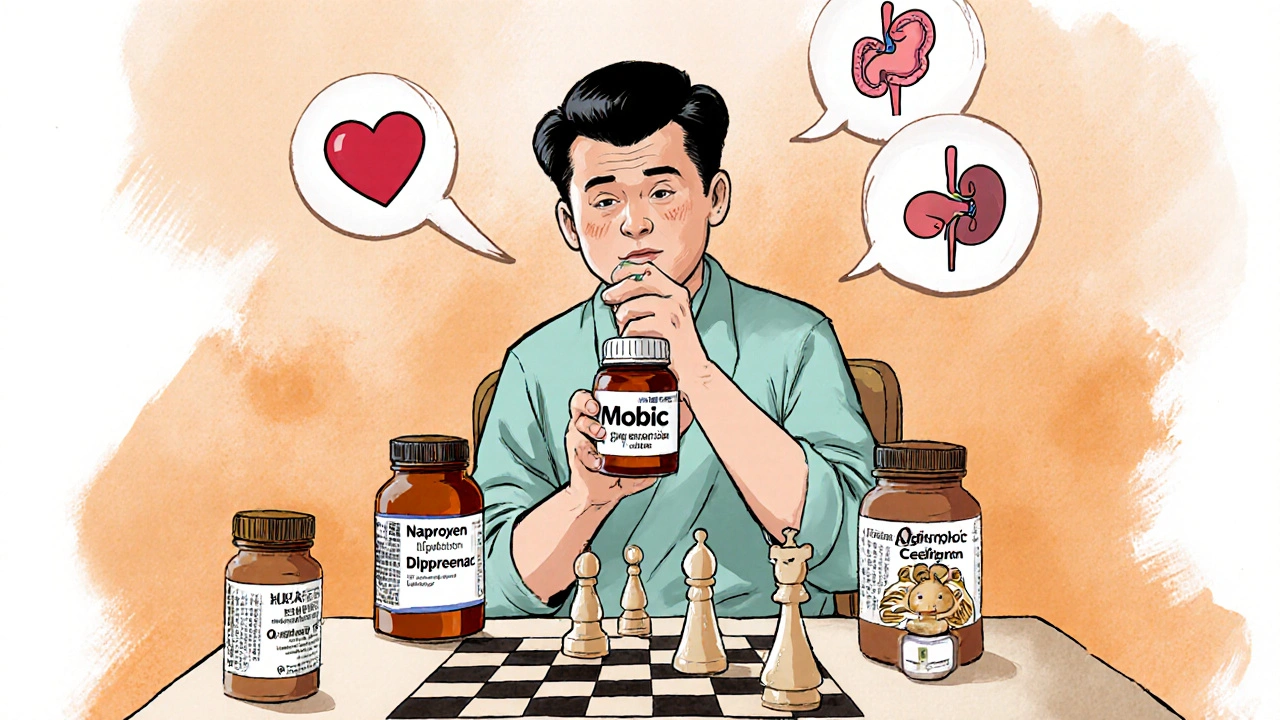
When you’re dealing with chronic joint pain from arthritis or a sudden flare-up of inflammation, finding the right pain reliever can feel like a constant trial-and-error process. Mobic, the brand name for meloxicam, is one of the most commonly prescribed NSAIDs for this reason. But it’s not the only option-and for many people, it’s not the best one. Whether you’re experiencing side effects, it’s not working well enough, or your doctor wants to try something different, knowing how Mobic stacks up against other pain meds can help you make smarter choices with your treatment plan.
What is Mobic (meloxicam) and how does it work?
Mobic is a nonsteroidal anti-inflammatory drug (NSAID) that reduces pain, swelling, and stiffness caused by osteoarthritis and rheumatoid arthritis. Its active ingredient, meloxicam, works by blocking enzymes called COX-2, which are mainly responsible for producing prostaglandins-the chemicals that trigger inflammation and pain in your body.
Unlike older NSAIDs like ibuprofen or naproxen, meloxicam is considered more selective for COX-2, which means it’s less likely to cause stomach irritation-though it still carries risks. Most people take one pill a day, usually 7.5 mg or 15 mg, depending on their condition and tolerance. It’s not a quick fix; it can take up to two weeks to reach full effect, but once it does, many users report steady relief throughout the day.
But here’s the catch: even though Mobic is often prescribed as a “gentler” NSAID, it still increases your risk of heart attack, stroke, high blood pressure, and stomach bleeding-especially if you’re over 65, have kidney problems, or take it for long periods.
Top alternatives to Mobic: How do they compare?
There are several other NSAIDs and non-NSAID options that doctors turn to when Mobic doesn’t fit a patient’s needs. Here are the most common ones, ranked by how often they’re prescribed and how they differ from meloxicam.
Naproxen (Aleve, Naprosyn)
Naproxen is one of the oldest NSAIDs still widely used today. It’s available over the counter as Aleve (220 mg) and by prescription in higher doses. Unlike meloxicam, naproxen blocks both COX-1 and COX-2 enzymes, which makes it more likely to cause stomach upset-but it also lasts longer. A single 500 mg dose can provide up to 12 hours of pain relief, meaning you take it only twice a day.
Studies show naproxen has a slightly lower risk of heart problems compared to other NSAIDs, including meloxicam. A 2023 analysis in The BMJ found naproxen had the most favorable cardiovascular safety profile among NSAIDs. If you’re at risk for heart disease, your doctor might prefer naproxen over Mobic.
Ibuprofen (Advil, Motrin)
Ibuprofen is the go-to NSAID for most people because it’s cheap, accessible, and works fast. It’s great for headaches, muscle aches, or menstrual cramps. But for chronic arthritis pain? It’s not ideal. You have to take it every 4 to 6 hours, which makes it harder to stick with long-term.
Compared to Mobic, ibuprofen has a higher risk of stomach ulcers and kidney damage with daily use. It’s also less effective for moderate to severe arthritis pain in clinical trials. But if you only need pain relief occasionally, ibuprofen is still a solid, low-cost option.
Diclofenac (Voltaren, Cataflam)
Diclofenac is stronger than meloxicam in terms of anti-inflammatory power. It’s often used for acute gout flares, severe tendonitis, or post-surgical pain. You can get it as a pill, gel, or patch. The topical gel (Voltaren Gel) is especially useful if you want pain relief without systemic side effects.
But here’s the downside: diclofenac carries the highest cardiovascular risk of any NSAID in its class. The FDA added a black box warning in 2015 after studies linked it to increased heart attack risk. It’s usually avoided in people with existing heart disease. If Mobic isn’t working and you’re healthy otherwise, diclofenac might be a short-term option-but not for daily, long-term use.
Celecoxib (Celebrex)
Celecoxib is the only COX-2 inhibitor still available in the U.S. after others like rofecoxib (Vioxx) were pulled from the market due to heart risks. Like Mobic, it targets COX-2 specifically, so it’s easier on the stomach. But unlike meloxicam, celecoxib is a prescription-only drug with a higher price tag.
Studies show celecoxib and meloxicam are equally effective for arthritis pain. However, celecoxib has a slightly higher risk of heart complications than naproxen but lower than diclofenac. It’s often chosen for patients who can’t tolerate stomach issues from other NSAIDs but still need strong inflammation control.
Acetaminophen (Tylenol)
Acetaminophen isn’t an NSAID-it doesn’t reduce inflammation at all. But it does relieve pain and fever. For people with mild osteoarthritis who don’t have much swelling, acetaminophen is often the first-line recommendation. It’s gentler on the stomach and doesn’t raise blood pressure like NSAIDs do.
Here’s the trade-off: it’s less effective for inflammatory pain. If your knees are hot, swollen, and stiff, Tylenol won’t touch that. But if you’re dealing with bone-on-bone pain without much redness or heat, acetaminophen can be a safer long-term choice. The maximum daily dose is 3,000 mg for most adults (lower if you drink alcohol or have liver issues).
Non-drug alternatives to consider
Medications aren’t the only way to manage pain. Many patients find better results by combining drugs with lifestyle changes. Here’s what actually works:
- Physical therapy: Strengthening muscles around affected joints reduces pressure and improves mobility. A 2024 study in Arthritis Care & Research found that patients who did 12 weeks of PT reduced their NSAID use by 40%.
- Weight loss: Losing just 10 pounds can cut knee pain by 50% in overweight people with osteoarthritis.
- Heat and cold therapy: Warm showers or heating pads relax stiff joints. Ice packs reduce swelling after activity.
- Topical creams: Capsaicin cream (from chili peppers) and menthol-based gels can numb pain locally without affecting your stomach or heart.
- Supplements: Glucosamine and chondroitin show mixed results, but some users report reduced stiffness. Omega-3s from fish oil have real anti-inflammatory effects-studies show they can lower CRP levels (a marker of inflammation) similarly to low-dose NSAIDs.

When to switch from Mobic
You don’t need to stay on Mobic just because your doctor prescribed it. Here are clear signs it’s time to reconsider:
- You’re having stomach pain, nausea, or black stools (signs of bleeding).
- Your blood pressure has gone up since starting Mobic.
- You’ve been on it for more than 6 months without noticeable improvement.
- You’ve developed swelling in your ankles or reduced urine output (possible kidney issues).
- You’ve had a heart attack, stroke, or have uncontrolled heart disease.
If any of these apply, talk to your doctor about switching. Don’t stop cold turkey-NSAIDs can cause rebound pain if stopped suddenly.
Which alternative is right for you?
Choosing between Mobic and its alternatives isn’t about which drug is “best.” It’s about which one fits your body, lifestyle, and health risks.
Here’s a quick guide:
| Drug | Frequency | Stomach Risk | Heart Risk | Best For |
|---|---|---|---|---|
| Mobic (meloxicam) | Once daily | Moderate | Moderate | Chronic arthritis, once-daily convenience |
| Naproxen | Twice daily | High | Lowest | Long-term use, heart disease risk |
| Ibuprofen | Every 4-6 hours | High | Moderate | Occasional pain, budget-friendly |
| Diclofenac | Twice daily | High | Highest | Short-term, severe inflammation |
| Celecoxib | Once daily | Lowest | Moderate | Stomach sensitivity, needs strong anti-inflammatory |
| Acetaminophen | Every 6-8 hours | Very low | Very low | Non-inflammatory pain, liver-safe users |
If you’re older, have heart issues, or take blood thinners, naproxen or acetaminophen might be safer. If your stomach is sensitive but you need strong inflammation control, celecoxib could be worth the cost. If you’re young and healthy with occasional flare-ups, ibuprofen might be all you need.

What to ask your doctor
Don’t just accept the first prescription. Ask these questions:
- Why did you choose Mobic over other options for me?
- What are my risks for stomach bleeding or heart problems on this drug?
- Is there a non-drug approach I should try first?
- How will we know if this isn’t working?
- Can we try a lower dose or switch to a topical version?
Doctors don’t always know what’s working-or not working-for you unless you tell them. Keep a pain journal: note what you take, when, how much relief you get, and any side effects. That’s the best way to guide your treatment.
Final thoughts: There’s no one-size-fits-all painkiller
Mobic is a useful tool, but it’s not the only one-and it’s not always the safest. The right pain medication depends on your age, health history, what kind of pain you have, and how long you need relief. Many people find better results by mixing low-dose NSAIDs with physical therapy, weight management, and topical treatments. The goal isn’t just to numb the pain-it’s to keep you moving, reduce inflammation long-term, and protect your body from the side effects of the drugs you’re taking.
If Mobic isn’t working-or if it’s causing problems-don’t just endure it. Talk to your doctor. There’s almost always another option that’s better suited to your life.
Is Mobic stronger than ibuprofen?
Mobic (meloxicam) is generally considered stronger for chronic arthritis pain because it lasts longer and is more selective in targeting inflammation. Ibuprofen works faster but needs to be taken every few hours and is less effective for long-term joint pain. For occasional headaches or muscle soreness, ibuprofen is fine. For daily arthritis, Mobic is often preferred-but not always safer.
Can I take Mobic and Tylenol together?
Yes, many people safely take Mobic and acetaminophen (Tylenol) together. They work differently: Mobic reduces inflammation, while Tylenol only reduces pain and fever. Combining them can give better relief with lower doses of each, reducing side effect risks. But don’t exceed 3,000 mg of acetaminophen per day, and avoid alcohol while using both.
What’s the safest NSAID for long-term use?
Based on current research, naproxen has the lowest risk of heart complications among NSAIDs, making it the safest for long-term use in most people without existing heart disease. However, it still carries a risk of stomach bleeding. For people with stomach sensitivity, celecoxib may be better. Always use the lowest effective dose for the shortest time possible.
Does Mobic cause weight gain?
Mobic doesn’t directly cause weight gain, but it can lead to fluid retention, which may make you feel bloated or see a temporary increase on the scale. If you notice sudden swelling in your legs or ankles, or gain more than 5 pounds in a week, tell your doctor-it could be a sign of heart or kidney strain.
Are there natural alternatives to Mobic?
Yes. Omega-3 fatty acids from fish oil can reduce inflammation similarly to low-dose NSAIDs. Turmeric (curcumin) has shown promise in studies for osteoarthritis pain, though it’s not as strong. Topical capsaicin, physical therapy, and weight loss are proven non-drug options that reduce reliance on NSAIDs. They work best when combined-not as replacements for severe pain.
9 Comments
Mobic isn't magic, it's just chemistry. The real issue isn't which NSAID you pick-it's whether you're treating the symptom or the cause. Pain is your body screaming for attention, not a glitch to be silenced. If you're popping pills for years without addressing mobility, weight, or inflammation triggers, you're just delaying the inevitable. The body doesn't forget. It accumulates. And no pill fixes what movement, rest, and respect for your joints won't.
bro i took meloxicam for 3 months and my stomach felt like a dumpster fire 🤢 but naproxen? 10/10. no cap. i take 500mg twice a day and my knees feel like they got a massage from god. also celecoxib is overpriced garbage unless you got cash to burn. tylenol? fine for headaches but if your knee looks like a balloon? nah. also i heard fish oil works? i think my dog takes it 🐶
While the comparison provided is thorough, it is critical to emphasize that individual physiology varies significantly across populations. In many African contexts, access to prescription NSAIDs is limited, and natural alternatives such as turmeric, ginger tea, and physical therapy through community-based exercises are often the primary interventions. The emphasis on cost and accessibility in Western medicine should not overshadow the efficacy of traditional, low-resource strategies that have sustained generations. Always consult local healthcare providers who understand your environment.
so let me get this straight… i’m supposed to trade my $10 ibuprofen for a $200 celecoxib prescription so i don’t get a stomach ulcer… but also my heart might explode? and my doctor just shrugs and says ‘try PT’ like i have time to go to yoga while working two jobs?? 😭 i just wanna walk to my car without crying. someone please tell me the truth: is there ANY safe way to be 55 and not feel like a broken toaster?
Most of you are missing the point entirely. Mobic is for the clinically lazy. If you're relying on NSAIDs long-term, you're not managing arthritis-you're avoiding it. Real progress comes from functional movement, proprioceptive training, and understanding biomechanics. I've seen patients with worse degeneration than yours walk pain-free after 12 weeks of eccentric loading and gait retraining. No pills. No gimmicks. Just discipline. You're not sick-you're negligent.
It’s not about which drug is better. It’s about whether you’re willing to face the truth: your body is breaking down because you stopped moving like a human. You sit. You eat processed food. You scroll. Then you wonder why your knees sound like popcorn. Mobic doesn’t fix that. It just lets you keep ignoring it. The real alternative isn’t naproxen-it’s getting off your ass. Not hard. Just uncomfortable. And that’s why you won’t do it.
Topical diclofenac is the real MVP if you can tolerate the smell. No stomach issues no heart risks just pain gone where it hurts. Also fish oil 3g daily changed my life. No joke. My CRP dropped 40% in 8 weeks. Tylenol + ice + PT = my new holy trinity. Stop overthinking the pill. Start moving. Your joints don’t need more chemistry. They need more motion.
There’s a deeper question here we’re all avoiding. Why do we treat pain as a problem to be solved with chemicals instead of a signal to be understood? Arthritis isn’t just wear and tear-it’s a conversation your body is having with you about your lifestyle, your stress, your sleep, your diet. Meloxicam muffles the message. Naproxen muffles it louder. But the only thing that truly listens? Awareness. Movement. Presence. The drugs are just noise. The real healing happens when you stop trying to silence the pain and start listening to why it’s there.
Y’all are overcomplicating this. NSAIDs are for weak people who can’t handle real pain. In America we medicate everything. In my country we just walk through it. My grandpa had arthritis for 50 years and never took a pill. He drank whiskey and lifted crates at the dock. You want relief? Stop being a baby. Move. Lift. Sweat. Cry a little. Then come back and tell me Tylenol is the answer. Also I’m not paying $200 for celecoxib. That’s corporate greed disguised as medicine.
Write a comment