
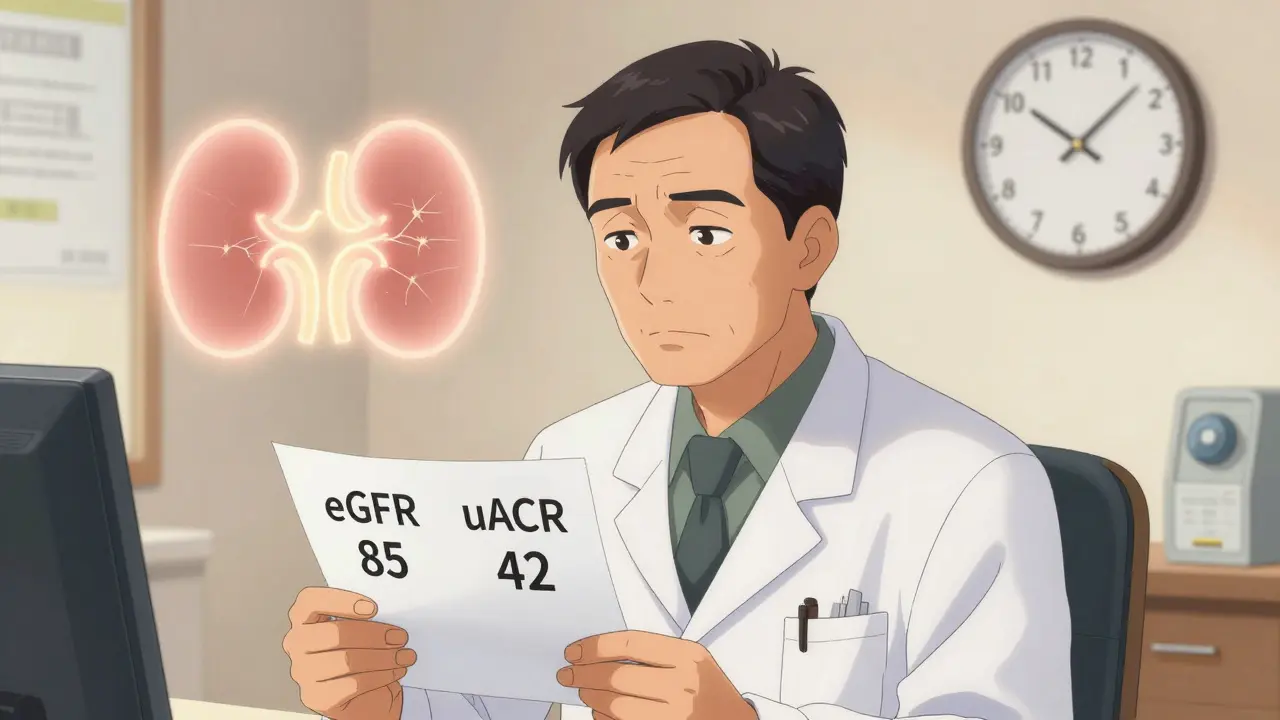
Most people with chronic kidney disease (CKD) don’t know they have it - until it’s too late. By the time symptoms like fatigue, swelling, or changes in urination show up, the kidneys have already lost half their function. But here’s the truth: chronic kidney disease can be caught early, and when it is, progression can often be slowed or even stopped. It’s not about waiting for a crisis. It’s about two simple tests, done regularly, that can change your future.
What Chronic Kidney Disease Really Means
Chronic kidney disease isn’t a single event. It’s a slow, silent breakdown of kidney function over months or years. The kidneys don’t just filter waste. They regulate blood pressure, balance electrolytes, make red blood cells, and activate vitamin D. When they start failing, your whole body feels it - even if you feel fine. The official definition is simple: any sign of kidney damage or reduced function lasting longer than three months. That damage can show up as protein in your urine (albuminuria) or a drop in your estimated glomerular filtration rate (eGFR). You don’t need to feel sick to have it. In fact, most people with stage 1 or 2 CKD have zero symptoms. The numbers are startling. About 1 in 7 American adults - roughly 37 million people - have CKD. And more than half of them don’t know it. Why? Because for years, doctors relied mostly on a blood test for creatinine. But creatinine levels vary wildly based on muscle mass, age, diet, and race. A healthy-looking creatinine reading can hide serious kidney damage. That’s why the game changed in 2012.The Two Tests That Save Kidneys
There’s no single test for early CKD. You need two. And both are cheap, non-invasive, and covered by most insurance. The first is eGFR - estimated glomerular filtration rate. It’s calculated from your blood creatinine level, but adjusted for your age, sex, and race. The current standard uses the CKD-EPI equation, which replaced older formulas because it’s more accurate. An eGFR below 60 mL/min/1.73 m² for three months or more signals reduced kidney function. But here’s the catch: if your eGFR is above 60, you might still have kidney damage. That’s where the second test comes in: uACR - urine albumin-to-creatinine ratio. This measures how much albumin (a type of protein) leaks into your urine. Healthy kidneys don’t let albumin pass. If your uACR is 30 mg/g or higher, it’s a red flag. The key insight? You need both. A normal eGFR with high uACR? You have early CKD. A low eGFR with normal uACR? You might have other issues - muscle loss, dehydration, or aging - but not necessarily kidney damage. That’s why the old “just check creatinine” approach missed 30-40% of early cases. For people with diabetes, hypertension, or a family history of kidney failure, these two tests aren’t optional. They’re your best defense.Stages of CKD - And Why Stage 1 Matters
CKD is broken into five stages based on eGFR and the presence of kidney damage:- Stage 1: eGFR ≥90, but uACR ≥30 mg/g - kidneys are working fine, but damage is already there.
- Stage 2: eGFR 60-89, with uACR ≥30 mg/g - mild loss, still reversible.
- Stage 3a: eGFR 45-59 - mild to moderate loss.
- Stage 3b: eGFR 30-44 - moderate to severe loss.
- Stage 4: eGFR 15-29 - severe loss.
- Stage 5: eGFR <15 - kidney failure. Dialysis or transplant needed.
Who Should Be Screened - And How Often
You don’t need to be screened if you’re healthy and under 50 with no risk factors. But if you have any of these, you should be tested annually:- Type 1 or type 2 diabetes - get tested at diagnosis (type 2) or five years after diagnosis (type 1).
- High blood pressure - check eGFR and uACR at every visit, or at least once a year.
- Family history of kidney failure.
- Heart disease, obesity, or autoimmune conditions like lupus.
- Black, Native American, or Hispanic heritage - these groups are 2-4 times more likely to develop CKD.
- Long-term use of NSAIDs (like ibuprofen) or certain antibiotics.
What Happens After Diagnosis
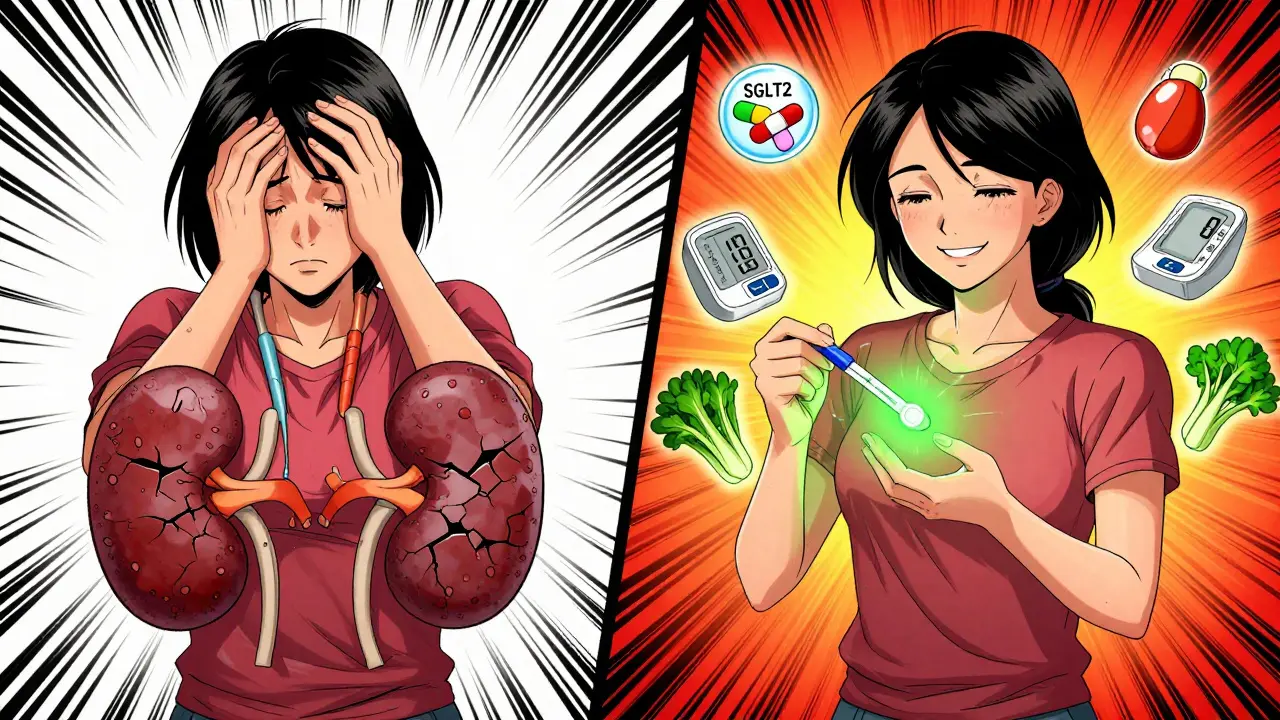
Finding CKD early isn’t just about knowing the number. It’s about what you do next. The first step? Control blood pressure. The SPRINT trial showed that keeping systolic pressure below 130 mmHg (instead of the old 140) cuts CKD progression by 27%. ACE inhibitors or ARBs are often the first-line drugs - they do double duty by lowering blood pressure and reducing protein in the urine. The second? Medications that protect kidneys. SGLT2 inhibitors (like dapagliflozin or empagliflozin), originally for diabetes, now have FDA approval for CKD - even if you don’t have diabetes. The CREDENCE trial found they reduce the risk of kidney failure by 32% in people with albuminuria. The third? Diet. Reducing sodium (under 2,300 mg/day), avoiding processed foods, and moderating protein intake helps. You don’t need to go keto or vegan. Just cut out the soda, chips, and frozen meals. A 2022 meta-analysis found that people who got dietary counseling slowed their eGFR decline from 3.5 to 1.2 mL/min/year. And don’t underestimate education. One study found that patients who saw a visual chart of their kidney stage - not just numbers - were 28% more likely to follow their treatment plan. When you see your kidneys as a dial that’s dropping, you act.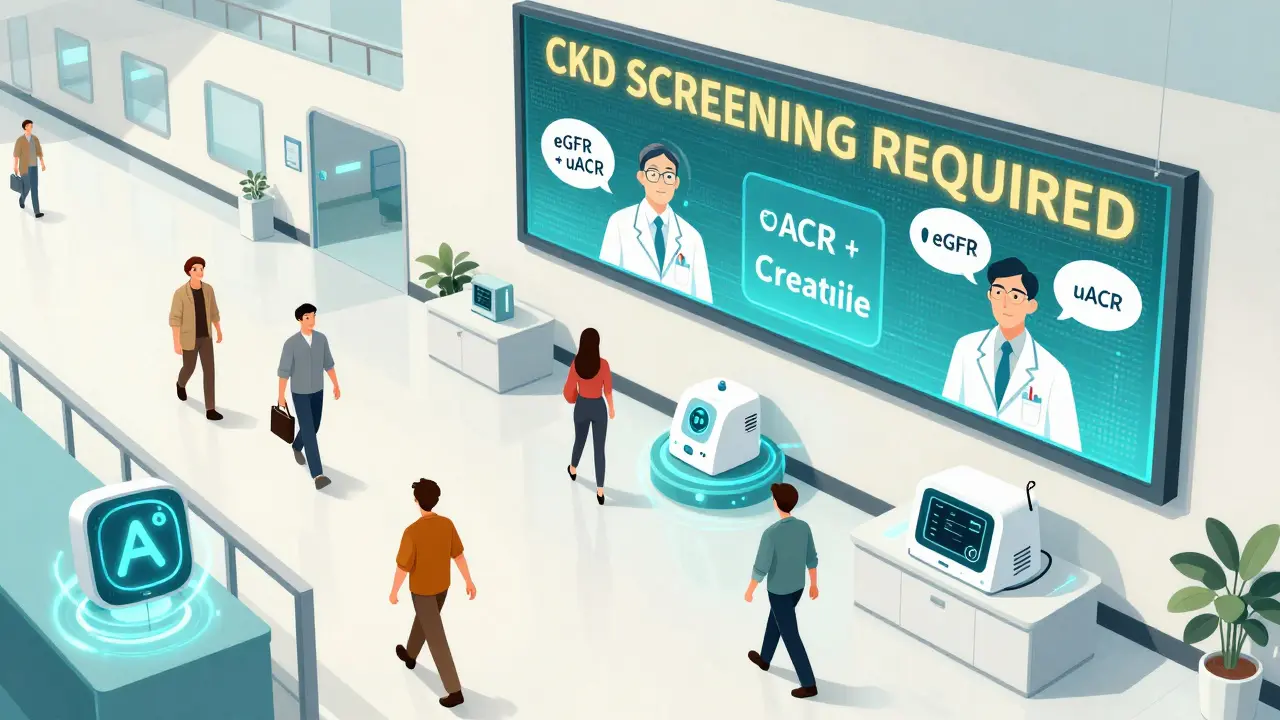
Why Most Doctors Still Miss It
Despite clear guidelines, most primary care doctors don’t order both tests. A 2022 study in the Annals of Internal Medicine found only 53% of providers consistently ordered both eGFR and uACR. In rural clinics? It was under 32%. Why? Electronic health records don’t remind them. Many systems still prompt for creatinine only. Some doctors think “normal creatinine = normal kidneys.” Others don’t know how to interpret the combo. One doctor on a medical forum admitted: “I didn’t realize uACR was required for diagnosis until I read the KDIGO guidelines last year. I’ve been missing cases for a decade.” The fix? Systems. Clinics that use a “CKD dashboard” in their EHR - automatically flagging high-risk patients - saw screening rates rise by 50%. And training matters. Providers who completed just 4 hours of CKD education improved their diagnostic accuracy by 41%.The Future: AI, Point-of-Care Tests, and Policy Shifts
The tools are getting smarter. In May 2023, the FDA cleared the first AI tool - NephroSight by Renalytix - that predicts CKD risk before eGFR drops. It analyzes 32 data points: lab values, medications, age, even walking speed. Early trials showed it caught 89% of future CKD cases six months before traditional tests. By 2025, point-of-care uACR devices - like a urine dipstick that gives a digital readout in minutes - will be available in primary care offices. The Veterans Health Administration pilot cut screening time from two weeks to five minutes. That’s huge. And policy is catching up. The Biden administration’s 2023 Executive Order on Kidney Health is funding $150 million to roll out mandatory dual-testing in Federally Qualified Health Centers by 2026. That could identify over a million undiagnosed cases. The message is clear: early detection isn’t optional anymore. It’s the standard.What You Can Do Today
If you’re at risk - and you probably are if you’re over 50, diabetic, or hypertensive - ask your doctor for two things:- Check my eGFR - not just creatinine.
- Test my urine for albumin (uACR).
Can you have chronic kidney disease with normal creatinine?
Yes. Creatinine levels can be normal even when kidneys are damaged, especially in early stages. That’s why the urine albumin-to-creatinine ratio (uACR) is just as important. If uACR is 30 mg/g or higher, you may have CKD even if your eGFR is above 60.
How often should I get tested for CKD?
If you have diabetes, hypertension, a family history of kidney disease, or are Black, Native American, or Hispanic, get tested annually. If you’re over 60 with no risk factors, talk to your doctor - testing every 2 years is often recommended.
Is CKD reversible in early stages?
Damage can’t be undone, but progression can be stopped or slowed significantly. With blood pressure control, medications like SGLT2 inhibitors, and lifestyle changes, many people in stage 1 or 2 CKD never progress to stage 3.
Do I need a kidney biopsy to diagnose CKD?
No. Most cases are diagnosed with eGFR and uACR alone. A biopsy is only needed if the cause is unclear - for example, if there’s blood in the urine with no diabetes or high blood pressure - and it’s done in fewer than 2% of cases.
Can I prevent CKD if I’m diabetic?
Yes. Tight blood sugar control, regular uACR testing, blood pressure management under 130/80, and using SGLT2 inhibitors (if appropriate) can reduce your risk of developing CKD by up to 60%. It’s not guaranteed, but it’s highly preventable.

12 Comments
Just got my uACR results back - 38 mg/g, eGFR 89. Doctor said 'no big deal' but I'm doubling down on the water and cutting out the midnight chips. If you're reading this and have diabetes? Don't wait. Ask for both tests. Seriously.
There's a fundamental flaw in relying on eGFR and uACR as standalone diagnostics. The CKD-EPI equation is racially calibrated, which introduces bias, and uACR has significant diurnal variability. Without standardized timing, hydration control, and central lab validation, these metrics are statistically noisy. You're optimizing for false positives in populations with low prevalence.
Why are we even talking about this? If you're not a diabetic or on blood pressure meds, stop wasting healthcare dollars. The system is broken because we're testing everyone instead of treating the real problem - obesity and soda consumption. My cousin had stage 2 CKD and he drank 3 liters of Coke a day. No wonder.
This is one of the most important public health messages I've seen in years. Early detection saves lives, not just kidneys. I work in primary care, and I've seen patients go from stage 1 to stage 5 in 18 months because no one ordered the urine test. I now have a checklist in my EHR. If you're over 40, ask for eGFR and uACR. It takes 2 minutes. Do it.
It is imperative to note that the KDIGO guidelines clearly state that both eGFR and albuminuria must be confirmed on at least two occasions separated by a minimum of three months to establish a diagnosis of chronic kidney disease. Many clinicians erroneously rely on a single abnormal result, leading to overdiagnosis and unnecessary anxiety. Furthermore, the use of SGLT2 inhibitors in non-diabetic CKD patients is supported by robust evidence from the DAPA-CKD and EMPA-KIDNEY trials, which demonstrated a statistically significant reduction in composite renal endpoints. A multidisciplinary approach involving nephrology, dietetics, and pharmacy is optimal for early-stage management.
My mom was diagnosed with stage 1 CKD after a routine checkup. She didn't even know she was at risk. The doctor just asked if she wanted the two tests. She said yes. Three months later, she started an SGLT2 inhibitor. Now her uACR is down to 12. It's not magic. It's just being proactive. If you care about your future self, ask.
Most people dont understand that creatinine is not a reliable marker because it is influenced by muscle mass and dietary intake. The eGFR equation was developed based on Caucasian populations and is less accurate for South Asians. The uACR test is more sensitive but requires a first morning void for accuracy. Many clinics use random samples which leads to false positives. Also, NSAIDs are not the main cause - its hypertension and diabetes that are the real killers. You need to control those first before you even think about diet.
Did you know the FDA approved AI tools like NephroSight because Big Pharma wanted to sell more SGLT2 inhibitors? The whole 'early detection' push is a money scheme. Kidney disease is natural with aging. Why are we pathologizing it? My uncle lived to 92 with 'stage 3' - no meds, no diet changes. They just wanted to turn healthy people into patients. The real conspiracy? They don't want you to know that hydration and avoiding processed salt is all you need.
It's fascinating how the medical community has elevated two simple, low-cost tests into a paradigm shift, while ignoring the fact that 70% of CKD progression is driven by uncontrolled hypertension and insulin resistance. The obsession with eGFR and uACR distracts from the real issue: systemic failure in primary care delivery. We have the tools - we just don't have the political will to fund community health workers or incentivize preventive care. This is performative medicine at its finest.
Okay I need to say something because I'm sick of people acting like this is just about 'getting tested.' My dad was diagnosed with stage 1 CKD after a routine visit - he was 63, had diabetes for 15 years, and his doctor had never ordered a urine test. He went from stage 1 to stage 4 in 18 months because he didn't know he was losing kidney function. Then he got on an SGLT2 inhibitor, cut out the soda, started walking 45 minutes a day, and guess what? His uACR dropped 60% in 8 months. He's now stable. I'm not saying this to brag. I'm saying this because if you're over 50 and you have any risk factor - ANY - you are one doctor's oversight away from dialysis. Don't wait. Don't assume. Don't let your doctor skip the urine test because 'your creatinine is fine.' It's not enough. It's never been enough. This isn't a suggestion. It's a lifeline.
It's not just about testing - it's about epistemology. The entire framework of 'CKD staging' is rooted in a reductionist biomedical model that ignores psychosocial determinants: food deserts, chronic stress, racialized healthcare disparities, and pharmaceutical gatekeeping. The fact that we're celebrating 'early detection' while 40% of at-risk patients in rural America can't access a lab, or afford an SGLT2 inhibitor (which costs $400/month without insurance), is grotesque. We're treating symptoms of a broken system as if they're medical problems to be solved with algorithms and dipsticks. The real solution isn't more tests - it's universal healthcare, food justice, and dismantling structural racism in medicine.
They're calling it 'early detection' but what they're really doing is expanding the patient population so insurance companies can charge more. Did you know that before 2012, CKD was diagnosed in 1 in 10 people? Now it's 1 in 7? Coincidence? I think not. The labs make money on urine tests. The drug companies profit from SGLT2 inhibitors. The hospitals bill for 'renal consultations.' And you? You're being turned into a 'high-risk patient' so they can monetize your fear. They don't want you healthy - they want you monitored. Always monitored. Always paying. Always afraid.
Write a comment