
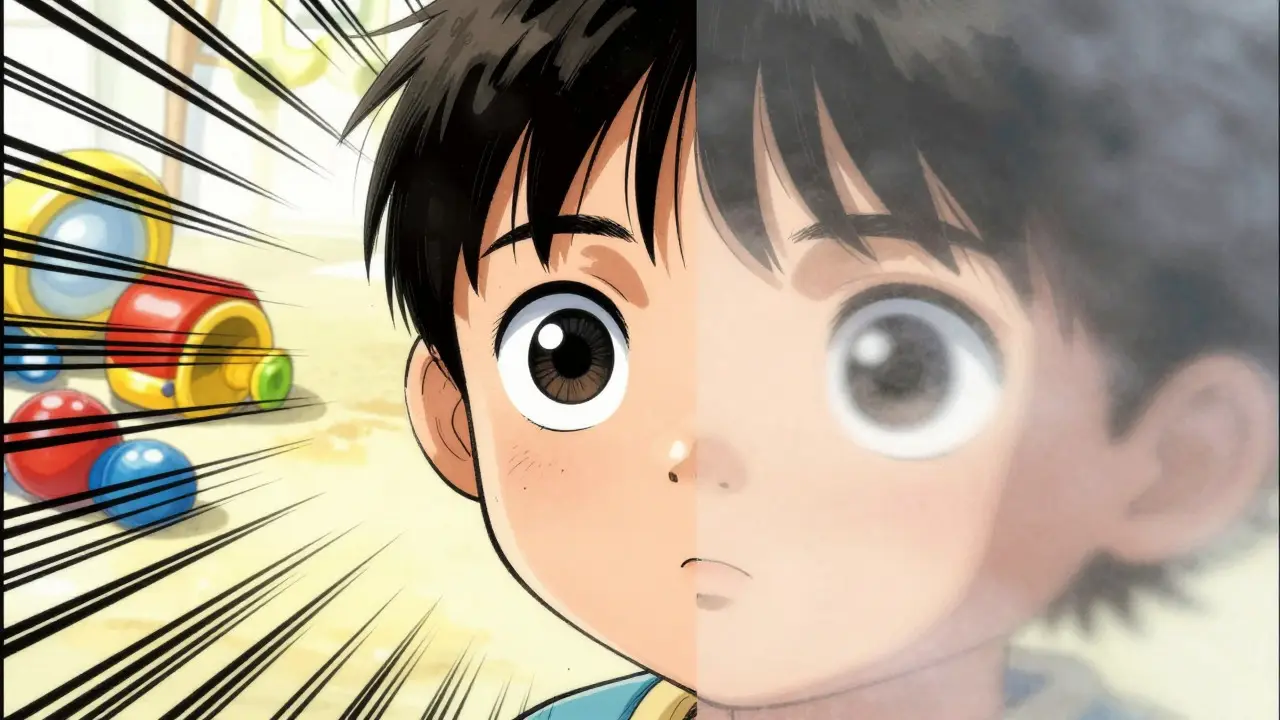
Imagine looking at the world through a frosted window while your other eye sees everything in sharp detail. For millions of children, this isn't just an imagination exercise-it is their daily reality. This condition, known as Amblyopia, commonly referred to as lazy eye, affects approximately 2% to 4% of the pediatric population. It is not merely a problem with the eye itself but a disconnect between the eyes and the brain. During early childhood, the visual system is highly plastic, meaning it can change and adapt rapidly. However, if one eye sends a blurry or misaligned image to the brain, the brain may start ignoring that input entirely to avoid confusion. This suppression leads to reduced best-corrected visual acuity (BCVA) that cannot be fixed with glasses alone.
The stakes are high because the window for effective treatment is narrow. The critical period for visual development spans from birth through approximately age 7 years. While older beliefs suggested that nothing could be done after this window closed, recent clinical evidence challenges this absolute timeline. Nevertheless, early detection remains the single most important factor in successful outcomes. If you suspect your child has vision issues, waiting for a school screening might be too late. Comprehensive pediatric eye examinations should happen well before kindergarten.
How Amblyopia Develops: The Three Main Types
To treat amblyopia effectively, you first need to understand why it happens. The condition manifests in three primary clinical types, each with distinct causes and implications for treatment. Understanding these differences helps parents and caregivers recognize specific risk factors.
| Type | Cause | Prevalence | Key Characteristic |
|---|---|---|---|
| Strabismic Amblyopia | Eye misalignment (strabismus) | ~50% | Brain suppresses image from the turned eye to prevent double vision |
| Anisometropic Amblyopia | Significant difference in refractive error between eyes | ~30% | One eye is significantly more nearsighted, farsighted, or astigmatic than the other |
| Deprivation Amblyopia | Physical obstruction of the visual axis | 10-15% | Caused by congenital cataracts, ptosis (droopy eyelid), or corneal opacities |
Strabismic amblyopia is the most common form. When a child’s eyes do not align properly, they see two different images. To cope, the brain shuts off the signal from the deviating eye. Over time, the neural pathways for that eye weaken. Anisometropic amblyopia is trickier to spot because there is no visible eye turn. One eye might have a prescription of -1.00 diopters while the other is -5.00 diopters. The brain favors the clear image, leaving the weaker eye underdeveloped. Deprivation amblyopia is the most severe. It occurs when something physically blocks light from entering the eye, such as a congenital cataract. This requires urgent surgical intervention followed by intensive rehabilitation, as the brain starves for visual input during crucial developmental months.
Risk factors extend beyond genetics. Premature birth increases the risk by 2.3 times, and low birth weight (under 2,500 grams) is another significant marker. Family history also plays a role; having a parent or sibling with amblyopia increases a child’s risk by 30-40%. If you fall into any of these categories, proactive screening is non-negotiable.
Patching Therapy: The Gold Standard Treatment
When it comes to treating amblyopia, Patching therapy remains the cornerstone of evidence-based management. The logic is straightforward: force the brain to use the weak eye by covering the strong one. This occlusion therapy stimulates the dormant neural pathways associated with the amblyopic eye.
The duration of patching is not one-size-fits-all. Clinical protocols specify occluding the fellow (stronger) eye for 2 to 6 hours daily, depending on the severity of the amblyopia and the child’s age. A landmark multicenter clinical trial, the Amblyopia Treatment Study (ATS), published findings between 2002 and 2011 that changed how doctors prescribe patching. They discovered that for moderate amblyopia (visual acuity between 20/40 and 20/100), just 2 hours of daily patching produced equivalent visual outcomes to 6 hours. This was a game-changer, reducing the treatment burden on families while maintaining efficacy.
However, knowing what works is different from getting it done. Compliance is the biggest hurdle. Studies show that only 40-60% of children aged 3 to 7 adhere strictly to patching schedules. Why? Because kids hate wearing patches. They face social stigma, skin irritation, and simple resistance. Successful implementation requires creativity. Incorporating patching into daily routines-like watching a favorite show or playing video games-can make the time fly. Some parents organize "patching parties" where friends join in, turning a medical chore into a social activity.

Alternatives to Patching: Atropine and Filters
If patching feels like an uphill battle, you are not alone. Fortunately, there are effective alternatives that work on similar principles without the adhesive tape. Atropine penalization involves administering 1% atropine sulfate drops to the stronger eye once daily. This medication temporarily paralyzes the eye’s focusing mechanism, blurring near vision. As a result, the child is forced to use the amblyopic eye for reading and close-up tasks.
The ATS Pediatric Eye Disease Investigator Group (PEDIG) study published in 2002 validated this approach, finding atropine equally effective as patching for moderate amblyopia. In fact, 79% of children achieved 20/30 vision or better after six months of treatment. Atropine is particularly useful for older children who reject patches due to peer pressure. However, it comes with side effects: light sensitivity and temporary blurred distance vision. Parents must ensure their children wear sunglasses outdoors and be aware that the child will struggle to see the whiteboard in class.
Another option is the Bangerter filter. This is a graded adhesive sticker applied directly to the spectacle lens of the stronger eye. It creates a controlled blur, similar to atropine, but without the pharmacological effects. Research from 2019 indicates a 60-70% efficacy rate. It is less visible than a patch, making it a popular choice for school-aged children who want to avoid standing out. However, it is generally less effective than patching for severe cases and is often used as a maintenance tool rather than a primary treatment.
The Critical Role of Age and Neuroplasticity
Time is the enemy in amblyopia treatment. Expert consensus emphasizes that treatment efficacy correlates directly with early intervention. Data from clinical practices indicates that children treated before age 5 achieve vision recovery rates of 85-90%. In contrast, those treated between ages 5 and 7 see success rates drop to 50-60%, with diminishing returns after age 8.
This decline is due to the closing of the critical period for neuroplasticity. As the brain matures, its ability to rewire visual pathways decreases. However, hope is not lost for older patients. Recent studies suggest that adults with amblyopia may achieve modest improvements through intensive perceptual learning protocols. While these outcomes are substantially inferior to childhood treatment, they challenge the old dogma that adult brains are rigid. The key takeaway remains: the earlier you start, the better the outcome. The American Academy of Ophthalmology states that 97% of children with amblyopia will show some improvement with appropriate treatment, though complete normalization occurs in only 65-75% of cases.
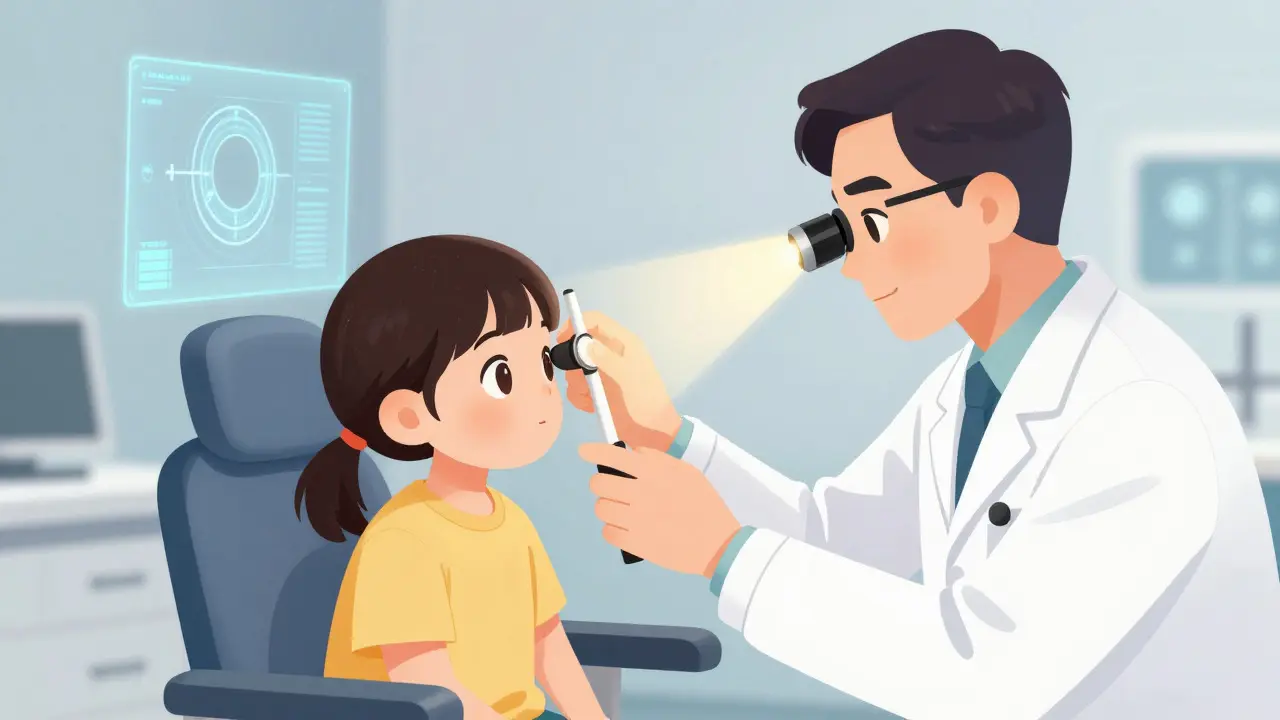
Enhancing Outcomes: Vision Therapy and Technology
Patching alone is often not enough to restore full binocular function. Vision therapy incorporates specific exercises to improve eye focusing, tracking, and spatial skills. When combined with occlusion therapy, it demonstrates additional benefits. Clinical outcomes data shows a 15-20% greater improvement in stereopsis (depth perception) compared to patching alone.
Vision therapy typically involves 45-60 minute sessions, 2-3 times weekly, for 12-24 weeks. These sessions are supplemented by home reinforcement exercises. The goal is not just to improve acuity but to teach the two eyes to work together as a team. For strabismic amblyopia, surgical correction of eye misalignment may be necessary before other treatments can be effective. About 70-80% of these patients require subsequent patching therapy to achieve optimal visual outcomes.
Technology is also reshaping treatment. Digital therapeutic platforms like AmblyoPlay, which received FDA clearance in 2021, leverage gamified vision exercises. Real-world data from European clinics in 2023 showed compliance rates of 75%, significantly higher than traditional patching. These apps turn training into engaging games, appealing to digital-native children. Additionally, emerging research into transcranial random noise stimulation (tRNS) has shown promise. A 2023 study found that combining tRNS with patching resulted in 40% greater visual acuity improvement compared to patching alone. While still in clinical trials, these innovations hint at a future where treatment is faster and more effective.
Navigating the Treatment Journey: Practical Tips for Parents
Treating amblyopia is a marathon, not a sprint. Most children require treatment for at least 6-12 months. Regular follow-ups every 4-8 weeks are essential to monitor progress and adjust treatment intensity. Here are practical strategies to stay on track:
- Educate Yourself: Parental education is critical. Data shows 89% adherence rates when parents receive comprehensive counseling about the neuroplasticity basis of treatment, compared to 45% with minimal education. Understand that you are rewiring your child’s brain, not just fixing an eye.
- Use Tracking Tools: Digital tracking apps like 'LazyEye Tracker' are used by 22% of pediatric ophthalmology practices. They help log patching time and celebrate milestones, providing positive reinforcement.
- Address Social Stigma: Prepare your child for questions. Role-play answers so they feel confident. Consider using patterned patches or decorative frames to make the patch look like a cool accessory rather than a medical device.
- Skin Care: Skin irritation is a common reason for discontinuation. Use hypoallergenic adhesives or paper tape cutters to create rounded edges that pull less on the skin. Apply a barrier cream around the eye area if needed.
- Graduated Exposure: If your child resists, start small. Begin with 30-minute intervals and gradually increase the time. Consistency matters more than intensity in the early stages.
Remember, the goal is functional vision. Even if perfect 20/20 vision is not achieved, improving depth perception and preventing lifelong dependency on the good eye is a massive victory. With patience, consistency, and the right medical guidance, most children overcome amblyopia and enjoy a lifetime of clear, binocular vision.
What is the best age to start amblyopia treatment?
The ideal time to start treatment is before age 5. Children treated in this window achieve vision recovery rates of 85-90%. The critical period for visual development ends around age 7, after which treatment becomes less effective, though some improvement is still possible in older children and even adults.
How many hours a day should my child wear an eye patch?
For moderate amblyopia, 2 hours of daily patching is often sufficient and produces results equivalent to 6 hours. For severe cases, doctors may recommend 6 hours or more. The exact duration depends on the severity of the vision loss and the child’s age, so always follow your ophthalmologist’s specific prescription.
Is atropine penalization as effective as patching?
Yes, for moderate amblyopia, atropine drops are equally effective as patching. Studies show that 79% of children achieve 20/30 vision or better after six months of atropine treatment. It is a great alternative for children who resist wearing patches due to social stigma or skin irritation.
Can amblyopia be cured in adults?
While childhood is the optimal time for treatment, recent evidence suggests adults can achieve modest visual improvements through intensive perceptual learning protocols. However, outcomes are substantially inferior to childhood treatment, and complete normalization is rare. Early intervention remains the best strategy.
What are the signs of amblyopia in young children?
Signs include squinting, tilting the head, closing one eye, poor depth perception (bumping into objects), or an eye that turns inward or outward. However, anisometropic amblyopia often has no visible signs, which is why regular pediatric eye exams are crucial even if the child seems fine.
Does vision therapy help with amblyopia?
Yes, vision therapy can enhance outcomes when combined with patching or atropine. It focuses on improving binocular vision, focusing, and tracking. Clinical data shows a 15-20% greater improvement in stereopsis (depth perception) when vision therapy is added to standard occlusion therapy.
Why does my child resist wearing the patch?
Resistance is common due to social stigma, discomfort, or frustration. Only 40-60% of children adhere strictly to schedules. Strategies to improve compliance include using gamified apps, creating reward systems, choosing decorative patches, and explaining the "superpower" aspect of strengthening the weak eye.
What is deprivation amblyopia?
Deprivation amblyopia is the most severe type, caused by physical obstructions like congenital cataracts or droopy eyelids (ptosis) that block light from entering the eye. It accounts for 10-15% of cases and requires urgent surgical intervention followed by intensive rehabilitation to prevent permanent vision loss.

13 Comments
honestly this stuff is wild. my nephew had the patch thing for like a year and it was a nightmare but he sees fine now so i guess it worked out in the end lol
The concept of neuroplasticity is truly fascinating when you consider how our brains adapt to sensory deprivation during early development. It reminds me of ancient philosophical texts that spoke about the malleability of the human spirit. We are not fixed entities but rather evolving systems shaped by experience. The fact that we can rewire neural pathways through simple occlusion therapy is a testament to the resilience of the human body. It makes one wonder what other latent potentials lie dormant within us, waiting for the right stimulus to awaken them. Perhaps we should view medical interventions not just as repairs but as opportunities for growth and transformation.
people always think atropine is some miracle cure but they ignore the side effects. light sensitivity is no joke if your kid has to go outside. also the blurring effect ruins their ability to see the board in class which means parents have to deal with teachers complaining. its not as clean as the internet makes it seem. most doctors push patches because its cheaper and easier for them to manage compliance metrics even though kids hate it. typical medical system prioritizing convenience over patient comfort.
nah forget all this patching nonsense 🙄 the real issue is screen time destroying our kids eyes from birth. big tech wants blind consumers who cant tell the difference between reality and an ad. these apps mentioned are just another way to keep them hooked on dopamine hits while their vision deteriorates further. classic distraction technique. wake up sheeple 👁️👄👁️
I found the section on social stigma particularly insightful. It is often overlooked how much psychological pressure children face when undergoing treatment. Using decorative patches or gamified apps seems like a brilliant approach to mitigate this. Parents should definitely explore those options to make the process less daunting for their children.
you know why they dont tell you the truth about amblyopia? because the pharmaceutical companies want to sell more eye drops forever. the patch works too well so they push the expensive alternatives. its all a conspiracy to keep parents dependent on specialists. look at the funding sources for those studies. its always the same players. trust nothing they say.
i mean sure early detection is good but lets be real most parents are too busy scrolling tiktok to notice their kid squinting. the system is broken. schools do screenings but they miss half the cases anyway. then u get blamed for not taking ur kid to the doctor sooner. its frustrating. need better public health campaigns not just more expensive treatments. maybe free eye exams for all kids under 5 would help instead of blaming parents.
It is imperative to note that the distinction between strabismic and anisometropic amblyopia is clinically significant. Many laypersons conflate the two, leading to delayed intervention. The absence of visible signs in anisometropic cases is particularly insidious. Regular pediatric ophthalmological assessments are not merely recommended; they are essential for preserving binocular vision. One cannot afford to rely solely on school screenings, which are notoriously inconsistent.
While the article provides a comprehensive overview of the clinical aspects of amblyopia, I believe it is crucial to emphasize the importance of parental consistency in the treatment regimen. The success of any therapeutic intervention, whether it be patching or atropine penalization, hinges largely on the adherence to the prescribed schedule. This requires a level of dedication and patience that many families may find challenging to maintain over several months. However, the long-term benefits of restored binocular vision far outweigh the temporary inconveniences. It is also worth noting that open communication with healthcare providers can help address any concerns or difficulties that arise during the treatment process, ensuring that adjustments can be made as necessary to optimize outcomes.
Oh honey, let me tell you something about my cousin's daughter. She was seven and still getting patched. People said it was too late but her mom refused to give up. Now she's twenty and has perfect vision. You guys need to stop listening to these rigid timelines. If you love your kid you fight for them. Also did you know that stress affects healing? So calm down and just do the patching. Why are you even reading this instead of checking your child's eyes right now?
Furthermore, one must consider the ethical implications of delaying treatment until the critical period closes. Is it not negligent to wait for school screenings when the window for optimal neuroplasticity is so narrow? The data presented clearly indicates that early intervention yields superior results. Therefore, proactive measures should be mandated rather than optional. The current system places an undue burden on parents to navigate complex medical guidelines without adequate support. This needs to change immediately.
Interesting read. I didn't realize the Bangerter filter was an option for older kids who hate patches. Seems like a decent compromise.
You guys are missing the point! This is amazing news for anyone struggling with vision issues. The new tech like AmblyoPlay is a game changer. Stop being negative and start supporting each other. We can beat this together! My niece used the app and loved it. It turned her chore into fun. Let's spread the word and help more kids get their sight back. Positivity wins!
Write a comment