
Imagine waking up with a stuffy nose, itchy eyes, and that familiar sneezing fit. You reach for your usual allergy pill, then pause. The box warns about pregnancy. Suddenly, simple relief feels like a high-stakes gamble. You aren't alone in this hesitation. About one in four pregnant people deals with allergies, from seasonal hay fever to year-round dust sensitivity. The good news? You don't have to suffer through symptoms, nor do you need to guess which pills are safe. Decades of clinical research have mapped out clear paths for managing allergies without putting your baby at risk.
The key isn't avoiding all medication-it's choosing the right ones at the right time. Your body changes dramatically during pregnancy, affecting how drugs are absorbed and processed. What worked before conception might behave differently now. This guide breaks down exactly which allergy medications have strong safety data, which ones to skip, and how to navigate each trimester with confidence. We’ll look at specific drug names, dosages, and the latest guidelines from major health organizations so you can make informed decisions alongside your doctor.
Understanding the Landscape: Why Allergy Relief Matters
It’s easy to think that skipping medication is the safest option. But uncontrolled allergies can actually stress your body. Severe congestion can disrupt sleep, leading to fatigue that impacts both you and your developing baby. In cases where allergies trigger asthma attacks, the lack of oxygen becomes a serious concern. The goal is balance: keeping symptoms manageable while minimizing exposure to unnecessary chemicals.
Historically, doctors relied on FDA letter categories (A, B, C, D, X) to judge drug safety. These were useful but often too blunt. Today, we rely on more nuanced data. The FDA’s Pregnancy and Lactation Labeling Rule, fully effective since 2018, requires detailed narrative descriptions instead of simple letters. However, many older studies still reference these categories, so you might see them mentioned. For instance, a "Category C" label doesn't mean "dangerous"; it means animal studies showed some risk, but human data was limited or mixed. Modern guidelines from the American Academy of Allergy, Asthma & Immunology (AAAAI) and the American College of Obstetricians and Gynecologists (ACOG) prioritize real-world epidemiological data over these old labels.
A landmark meta-analysis published in Pharmacotherapy in 2010 reviewed data from over 200,000 pregnancies. It found no significant increase in congenital malformations associated with most common antihistamines. This large-scale evidence gives us a solid foundation for recommending specific treatments. Still, timing matters. The first trimester (weeks 1-12) is when major organs form, making it the most sensitive period. Later trimesters allow for slightly broader options as the fetus becomes less vulnerable to structural defects.
First-Line Defenses: Antihistamines and Nasal Sprays
When picking an allergy med, start with the simplest effective option. For most people, oral antihistamines or nasal corticosteroids are the go-to choices. Let’s break down what the data says about specific brands and ingredients.
| Medication Type | Brand/Ingredient | Safety Profile | Key Considerations |
|---|---|---|---|
| Oral Antihistamine | Diphenhydramine (Benadryl) | Highly Safe | Decades of use data. Causes drowsiness. Safe in all trimesters. |
| Oral Antihistamine | Cetirizine (Zyrtec) | Safe | Non-sedating. Strong safety data after first trimester. Preferred by many doctors. |
| Oral Antihistamine | Loratadine (Claritin) | Safe | Non-sedating. Reassuring data, though slightly less extensive than Zyrtec. |
| Nasal Corticosteroid | Budesonide (Rhinocort) | Safest Steroid | Most robust pregnancy safety data among steroids. Preferred choice. |
| Nasal Corticosteroid | Fluticasone (Flonase) | Safe | Good alternative if Rhinocort isn’t available. Minimal systemic absorption. |
| Decongestant | Pseudoephedrine (Sudafed) | Avoid in 1st Trimester | Linked to gastroschisis risk early on. Raises blood pressure. Use only later if approved. |
| Nasal Spray | Oxymetazoline (Afrin) | Limited Use Only | Max 3 days. Risk of rebound congestion. Insufficient long-term safety data. |
Benadryl is a first-generation antihistamine known for its extensive safety record during pregnancy. Because it has been used for decades, we have massive amounts of data showing it does not cause birth defects. The trade-off? It makes you sleepy. If you’re trying to get rest because of nighttime coughing or congestion, this side effect might actually help. Standard dosing is 25-50 mg every 4-6 hours as needed.
If drowsiness isn’t your friend, second-generation antihistamines like Zyrtec (cetirizine) and Loratadine (Claritin) are excellent alternatives. They don’t cross the blood-brain barrier as easily, so you stay alert. Studies show they are generally safe, particularly after the first trimester. While fexofenadine (Allegra) is also popular, it carries a Category C designation due to limited human data, so doctors often prefer Zyrtec or Claritin unless you’ve tolerated Allegra well before pregnancy.
For nasal congestion that pills don’t touch, nasal corticosteroids are powerful tools. Rhinocort (budesonide) stands out as the preferred steroid spray. It has the most comprehensive safety data among intranasal steroids. Other options like Flonase (fluticasone) and Nasonex (mometasone) are also considered safe because very little of the drug enters your bloodstream. However, avoid Nasacort (triamcinolone) for now, as safety data is less established compared to budesonide.
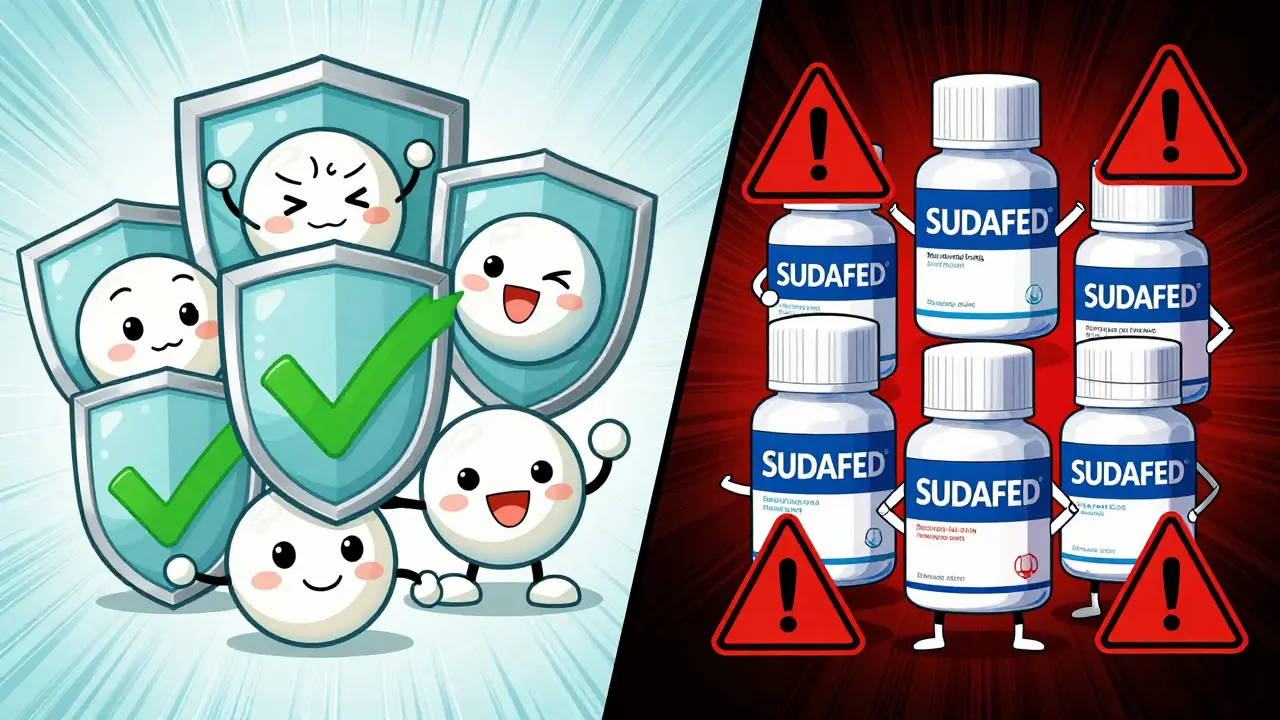
The Decongestant Dilemma: What to Avoid
Here is where things get tricky. Many people turn to decongestants for instant relief from a blocked nose. But not all decongestants are created equal, and some carry real risks.
Sudafed (pseudoephedrine) is the big one to watch. A 2009 study in the American Journal of Obstetrics and Gynecology linked first-trimester exposure to a 2.4-fold increased risk of gastroschisis, a rare abdominal wall defect. That’s why most experts advise avoiding it entirely during weeks 1-12. Even later in pregnancy, it can raise blood pressure, which is dangerous if you’re prone to preeclampsia. Dr. Matthew J. Ziff, an OB/GYN at Nebraska Medicine, notes that he generally avoids prescribing it unless absolutely necessary, and even then, only in small doses (30-60 mg) during the second or third trimester for patients with normal blood pressure.
Watch out for combination products. If you see a "D" in the name-like Claritin-D or Zyrtec-D-that means it contains a decongestant, usually pseudoephedrine or phenylephrine. Phenylephrine, found in many store-brand decongestants, has weak efficacy and unclear safety data, carrying a Category C rating. The American Academy of Family Physicians advises against relying on it. Stick to single-ingredient antihistamines unless your doctor specifically approves a combo.
Nasal spray decongestants like Afrin (oxymetazoline) offer another pitfall. While they work fast, using them for more than three days can cause rebound congestion, making your nose stuffier than before. Because long-term safety data in pregnancy is scarce, guidelines suggest limiting use to short bursts (3 days max) only if other methods fail.
Trimester-by-Trimester Strategy
Your approach should shift as your pregnancy progresses. Here is a practical roadmap:
First Trimester (Weeks 1-12)
This is the organ-building phase. Be conservative. Prioritize non-drug methods first. Saline nasal rinses, HEPA air filters, and showering before bed to remove pollen can reduce symptom triggers significantly. If you must medicate, stick to the safest bets: Benadryl for itching/sneezing or Rhinocort for congestion. Avoid new medications entirely if possible. If you were already on a stable dose of an allergy drug before conceiving, talk to your doctor before stopping abruptly, as sudden withdrawal can sometimes be stressful.
Second and Third Trimesters (Weeks 13-40)
As the fetus’s organs are formed, the window for safe medication opens slightly. Cetirizine (Zyrtec) and Loratadine (Claritin) become stronger candidates here due to their non-sedating nature and reassuring data. If congestion is severe and affecting your breathing or sleep, your doctor might approve limited use of pseudoephedrine, provided your blood pressure is healthy. Always check the label for "SA" (Sustained Action) or "ER" (Extended Release). These formulations keep drugs in your system longer and are harder to control; stick to immediate-release versions for precise dosing.

Non-Drug Strategies and Long-Term Management
Medication isn't the only tool in your kit. Environmental control plays a huge role. If you’re allergic to dust mites, washing bedding in hot water weekly and using allergen-proof mattress covers can cut symptoms by half. For pet dander, keeping pets out of the bedroom is a game-changer. HEPA filters in your main living areas capture airborne particles that standard HVAC systems miss.
What about allergy shots? If you were already undergoing immunotherapy before getting pregnant, you can usually continue maintenance doses. The benefits of preventing severe reactions often outweigh the minimal risks. However, do not start new allergy shots during pregnancy. The initial buildup phase carries a higher risk of anaphylaxis, which is dangerous for both you and the baby.
If you have asthma, don’t ignore it. Uncontrolled asthma poses a greater threat to fetal oxygen supply than most allergy meds. Inhaled corticosteroids like Flovent (fluticasone) are considered safe throughout pregnancy. Oral steroids (like prednisone) should be avoided unless necessary for acute flare-ups, as they carry higher risks.
FAQ
Is it safe to take Zyrtec during pregnancy?
Yes, cetirizine (Zyrtec) is generally considered safe, especially after the first trimester. It is a non-sedating antihistamine with a strong safety profile supported by multiple studies. Many doctors prefer it over first-generation options because it doesn’t cause drowsiness, helping you stay functional during the day.
Can I use Sudafed in my second trimester?
Use caution. Pseudoephedrine (Sudafed) is best avoided in the first trimester due to a slight risk of birth defects. In the second and third trimesters, it may be used sparingly (30-60 mg every 4-6 hours, max 240 mg/day) if you do not have high blood pressure. Always consult your OB-GYN first, as it can raise blood pressure and heart rate.
Which nasal spray is safest for pregnancy?
Budesonide (Rhinocort) is widely regarded as the safest nasal corticosteroid during pregnancy due to the most extensive safety data. Fluticasone (Flonase) is also considered a safe alternative. Avoid Nasacort (triamcinolone) until more data is available, and limit decongestant sprays like Afrin to no more than 3 days to prevent rebound congestion.
Are natural remedies like neti pots safe?
Yes, saline nasal irrigation using a neti pot or squeeze bottle is very safe and highly recommended. It helps flush out allergens and mucus without introducing any drugs into your system. Just ensure you use distilled, sterile, or previously boiled water to avoid infection risks.
Should I stop my allergy meds when I find out I'm pregnant?
Not necessarily. Abruptly stopping medication can lead to a flare-up of symptoms, which might stress your body. Instead, contact your healthcare provider immediately. They will review your current regimen and switch you to the safest equivalent if needed. For example, if you’re on a newer antihistamine with less data, they might move you to Zyrtec or Benadryl.
Does Benadryl cause birth defects?
No. Diphenhydramine (Benadryl) has been used for decades, and large-scale studies involving hundreds of thousands of pregnancies have found no link between Benadryl use and congenital malformations. It is considered one of the safest oral antihistamines available for pregnant individuals.